


The pervasive hum of digital devices has not merely become background noise; it is actively shaping the cognitive landscape of modern humanity. Our attention, once a focused beam, is increasingly a fragmented, diffuse state, constantly drawn and quartered by an incessant stream of notifications, updates, and algorithmic suggestions. This persistent digital engagement, far from enriching our understanding, often obscures the very reality it purports to mediate. The consequence is not merely distraction, but a deeper epistemic confusion where the distinction between information and noise, signal and static, becomes perilously blurred.

The Erosion of Rectified Attention
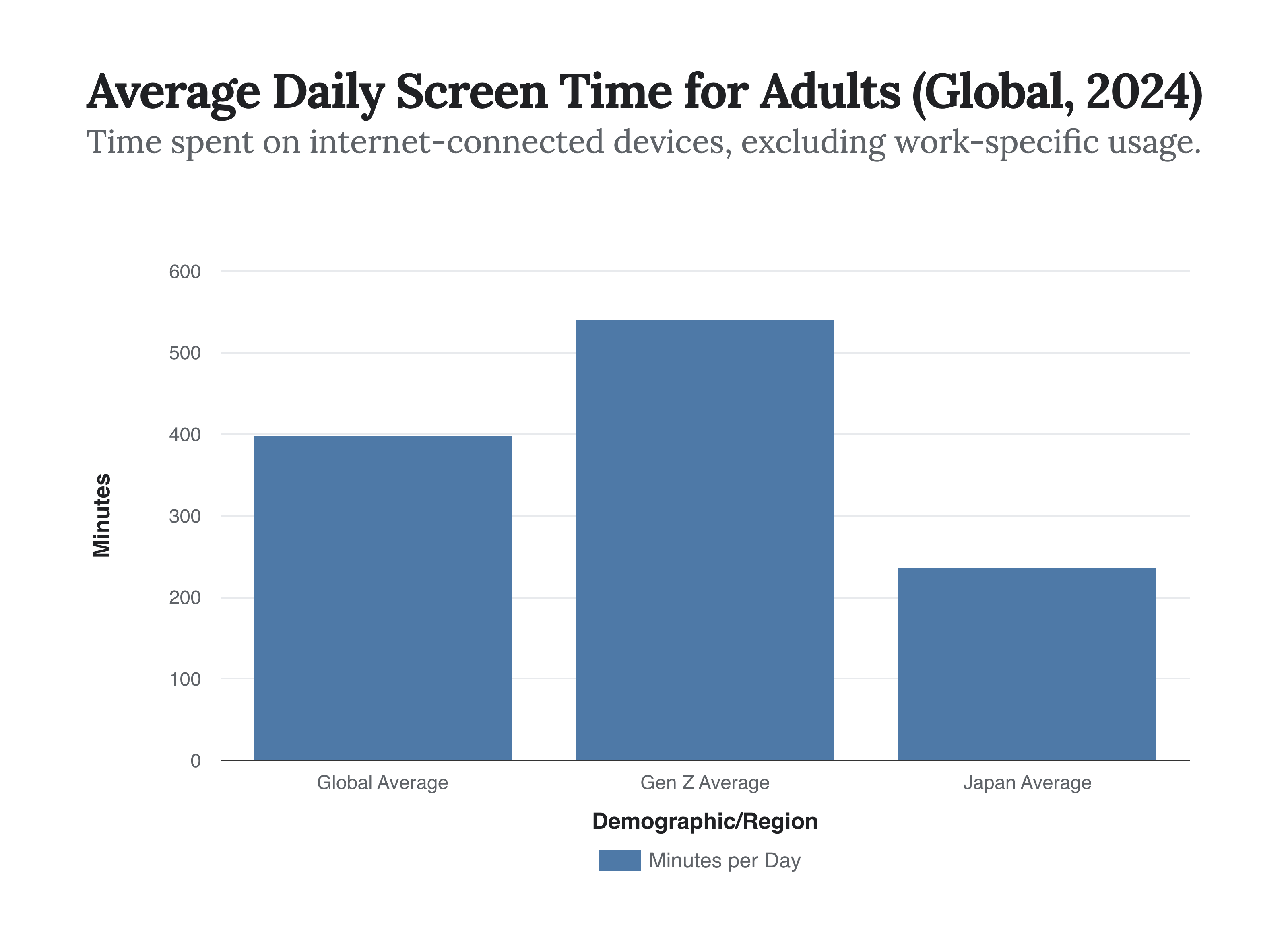
Confucius, in his doctrine of the “Rectification of Names” (正名, zhèngmíng), posited that societal order and moral clarity depend fundamentally on ensuring that words accurately reflect reality. When names are not rectified, he argued, language loses its meaning, actions become confused, and disorder ensues. This ancient philosophical tenet finds a startling contemporary echo in the digital sphere, where the sheer volume and velocity of information often prevent genuine understanding. Concepts are reduced to hashtags, complex arguments to soundbites, and nuanced realities to polarized binaries. The very act of perceiving is conditioned by algorithms designed not for truth, but for engagement, fostering an environment where clarity is sacrificed for stimulation. Globally, adults now spend an average of 6 hours and 38 minutes daily on internet-connected devices, equating to approximately 27% of their waking hours surrendered to digital interfaces. This overwhelming dedication to the digital realm makes the Confucian ideal of rectified attention — a clear, undistracted apprehension of reality — an increasingly elusive commodity.
Just as the Confucian ideal emphasizes continuous self-cultivation, a paid subscription to The Intel Briefing unlocks the advanced frameworks and synthesized insights to truly transform your digital environment into a space of mindful productivity.
Digital Rituals and Cultivating the Self
Confucius emphasized the transformative power of ritual (禮, lǐ) and self-discipline (克己復禮, Kèjǐ fùlǐ - “restrain oneself and return to ritual”) as pathways to moral cultivation and social harmony. These are not merely external formalities, but internal disciplines that shape character and attention. In the digital age, the absence of such deliberate rituals has allowed unbounded access to become the norm, rather than a conscious choice. To reclaim mindful attention, individuals must consciously implement new forms of digital ‘ritual’: scheduled periods of intentional device use, designated ‘offline’ hours, or practices of single-tasking rather than constant context-switching. This involves a rigorous self-restraint, a conscious effort to return to a more ordered interaction with technology. The cultivation of digital etiquette, both personal and societal, is not a quaint anachronism but a critical survival mechanism for human cognition. By imposing structure and intentionality, we can transform our relationship with online spaces from one of passive consumption to active, discerning engagement, thereby fostering a more rectified and focused digital self.If attention is the currency of consciousness, and digital platforms increasingly orchestrate its distribution, what profound shifts in human experience will necessitate the reclamation of coherent, ‘rectified’ attention from the profit-driven fragmentation of the online world?