


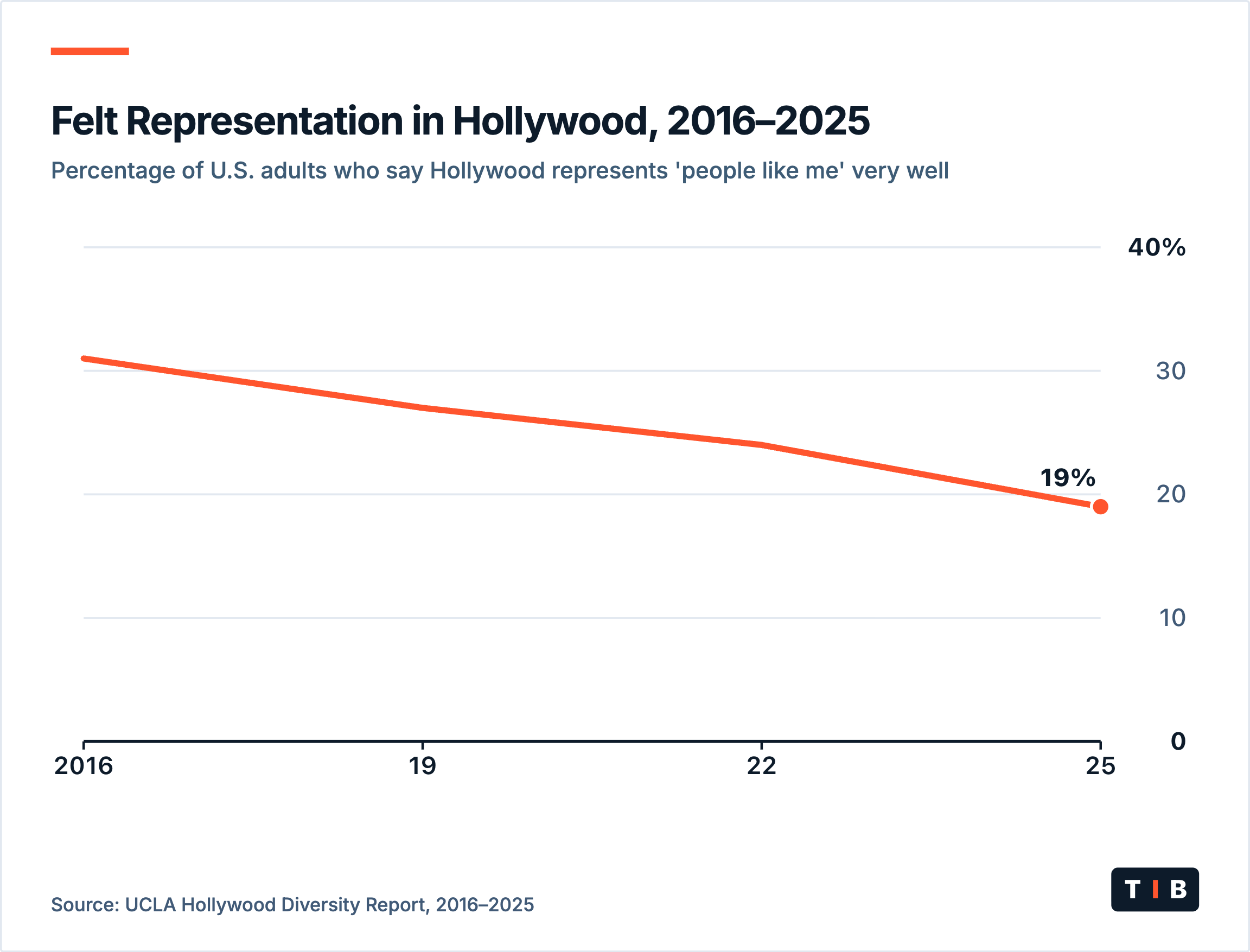
The 2025 UCLA Hollywood Diversity Report found that only 19% of Americans say Hollywood represents “people like me” very well. That is down from 31% in 2016, a collapse of 12 percentage points across nine years, even as on-screen demographic diversity increased over the same period. The number names the phenomenon: more diverse casting has not produced more felt representation. The disconnect is the subject of this analysis.
The Artist Against the Delusion
James Baldwin wrote that the American artist is caught between two impossible demands: to tell the truth about the particular, and to satisfy the market’s appetite for the universal. In his 1962 essay “The Creative Process,” collected in The Price of the Ticket (1985), Baldwin argues: “The purpose of art is to lay bare the questions that have been hidden by the answers.” Hollywood inverts this. The industry’s diversity programming substitutes the answer of visible difference for the question of whether anyone is actually being addressed. Baldwin’s point is not that representation is useless; it is that representation without authorship is a mirror with no one behind it.
The False Universal
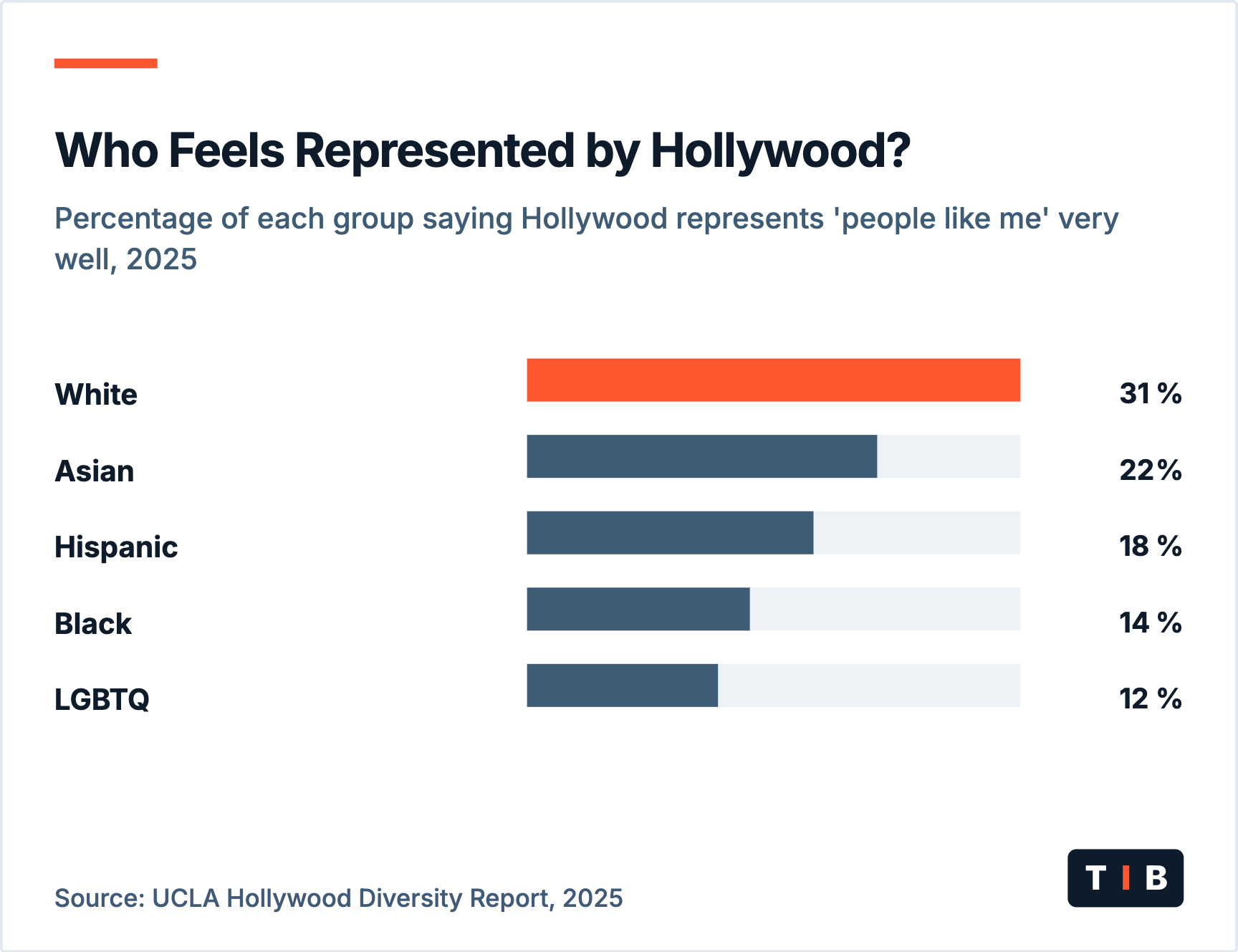
The 2025 UCLA report shows that audiences have learned to distinguish demographic presence from narrative recognition. Among Black Americans, only 14% say they feel very well represented, compared with 31% of white Americans. Hispanic and Asian Americans fall at 18% and 22%, respectively. These figures are not a rejection of diversity; they are a measure of its shallowness. Baldwin called this the “false universal”—the white-authored version of Black life that claims to speak for everyone while addressing no one. When Hollywood cast more non-white faces but kept the same storytelling grammar, it produced what Baldwin predicted: audiences who see themselves on screen but do not recognize themselves in the story.
Baldwin knew that being seen is not a metric; paid subscribers get the full synthesis of what that 19% means for identity, storytelling, and your own interior life—not another headline.
Join thousands of readers who refuse to confuse visibility with representation.
The rest of this briefing — the synthesis, the implications, and what to do with it — is for paid subscribers.

The Mechanism of Looking
Baldwin’s concept of the “gaze” explains the discrepancy. In The Devil Finds Work (1976), he writes that the camera “does not lie, but it does not tell the whole truth, either; it tells the truth about whoever is behind it.” The UCLA data
