


The ink is dry on the deal of the decade, but the real story isn’t in the equity tables—it’s on the front doors. As TikTok finalizes its transition to TikTok USDS Joint Venture LLC, a subtle but seismically significant transformation is taking place across its 1.2 million square feet of American real estate. The removal of legacy ByteDance branding and the installation of new “USDS” (United States Data Security) signage is not merely a cosmetic update; it is the physical manifestation of a $1.5 billion geopolitical firewall. This briefing analyzes the strategic signal hidden in the signage: a desperate, high-stakes attempt to convert a digital platform into a sovereign American fortress.
The Semiotics of Sovereignty: Decoding the New Identity
For the casual observer, the new plaques appearing outside the Culver City headquarters and the massive San Jose sublease might seem bureaucratic. However, for the strategic analyst, they represent a definitive “cleaving” of corporate identity. The shift from the playful, global “TikTok” note merely to the austere, acronym-heavy “TikTok USDS” signals a pivot from consumer delight to national security compliance.
Our analysis suggests this is the first “defensive rebrand” of this magnitude in the 21st century. The signage serves a dual purpose: it is a shield against regulators and a partition for employees. The physical environment is being engineered to reinforce the legal reality that ByteDance now holds only a 19.9% passive stake, while the operational control sits firmly behind the USDS shield.
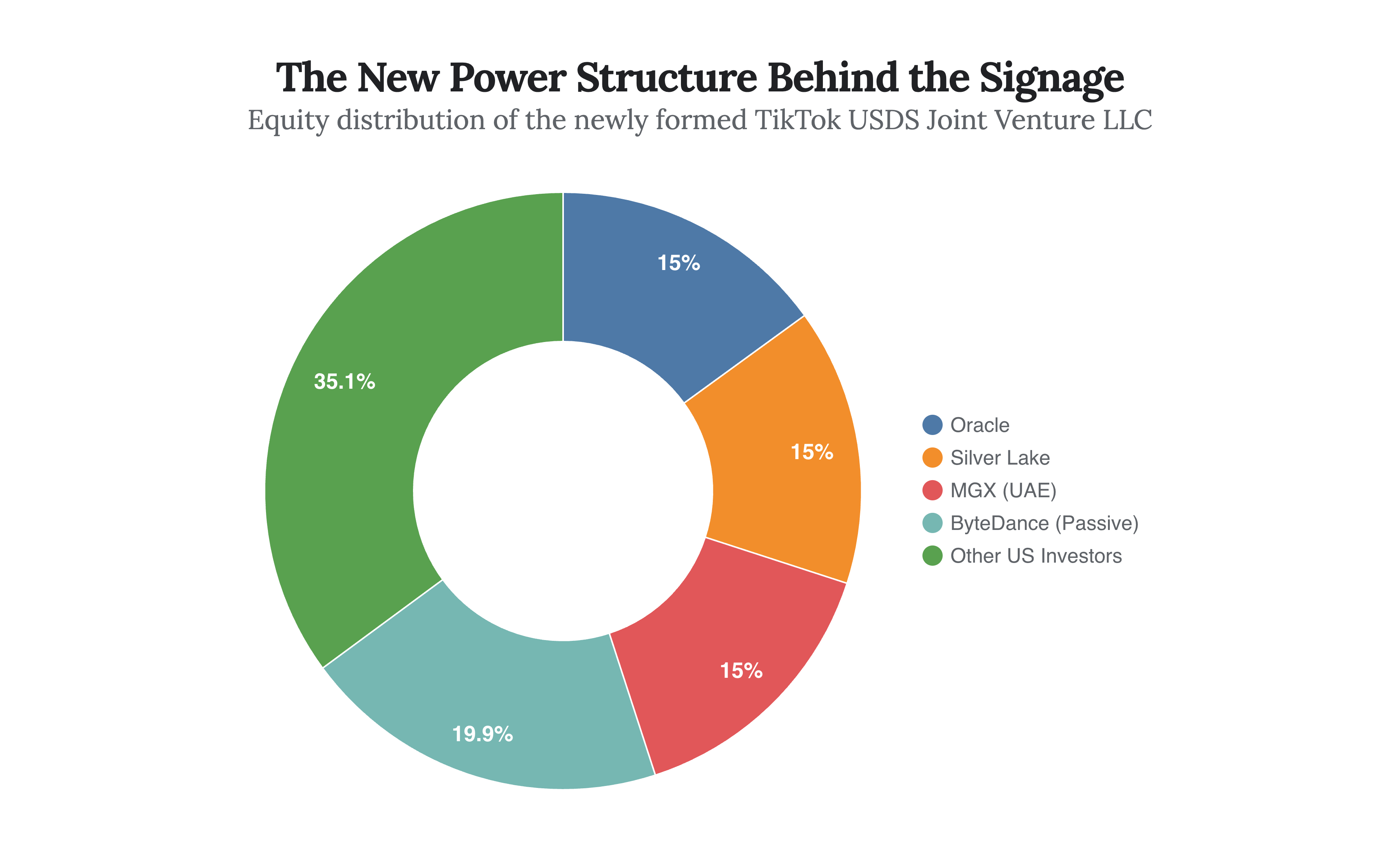
The chart above illustrates the new reality that the office signage must reflect. The “USDS” branding is designed to highlight the 80.1% non-ByteDance majority, effectively erasing the Chinese parent company’s visual dominance from the American workspace.
The Physical Footprint: Where the Signs are Changing
The logistics of this spinoff are staggering. It is not just a matter of changing a logo on a website; it involves physically rebranding a massive corporate footprint that has expanded aggressively over the last three years. The “Project Texas” initiative has now moved from server racks to reception desks.
The Silicon Valley “Iron Curtain”
The most critical signage changes are happening in San Jose and Culver City. The San Jose office, a massive 650,000+ square foot sublease, is the engineering heart of the new entity. The signage here is more than decoration; it marks the boundary of the “secure zone” where Oracle-monitored code review takes place.
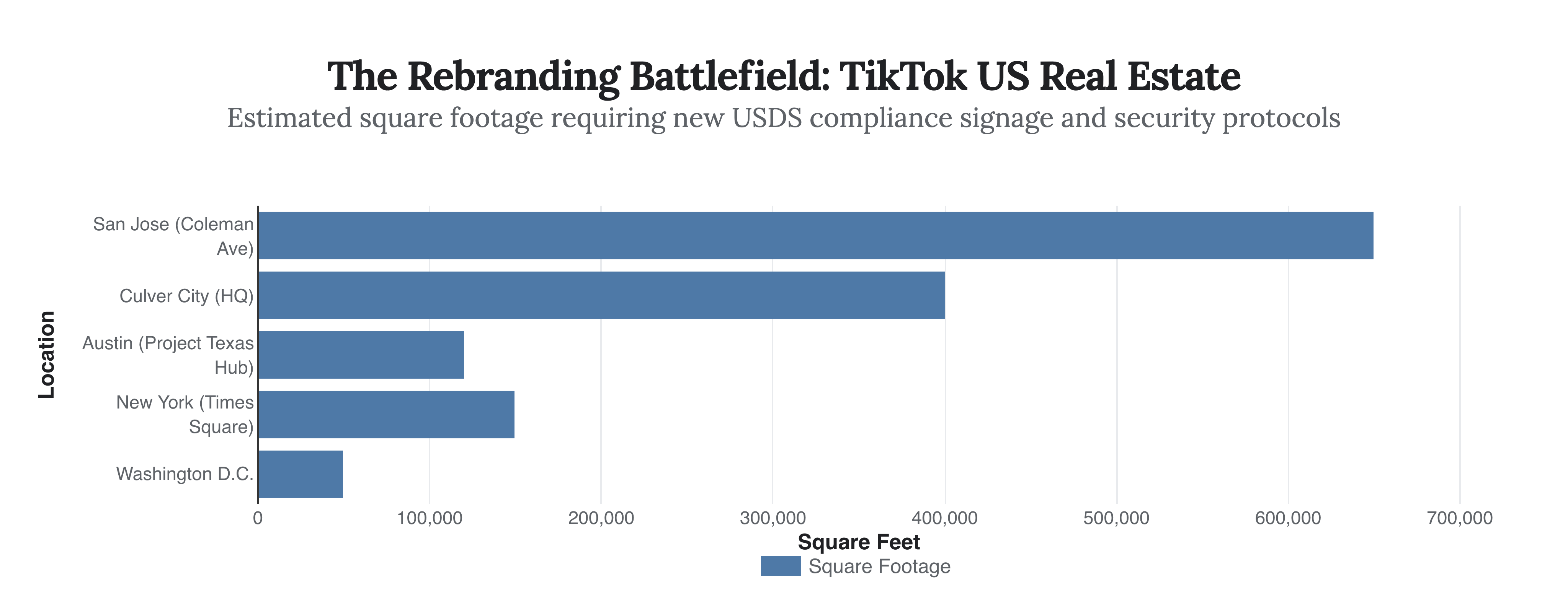
The disparity in function across these locations dictates the “severity” of the signage. Austin and San Jose are expected to feature “Restricted Access” and “USDS Personnel Only” signage that rivals defense contractor facilities, further bifurcating the company culture.
The High Cost of Compliance
To understand why the signage is changing, one must follow the money. The creation of TikTok USDS is arguably the most expensive compliance project in corporate history. The “Project Texas” initiative alone saw an initial investment of $1.5 billion. The physical rebranding—estimated here to cost upwards of $45 million when including physical security upgrades—is a rounding error in the grand scheme, yet it is the only visible evidence of the spend.
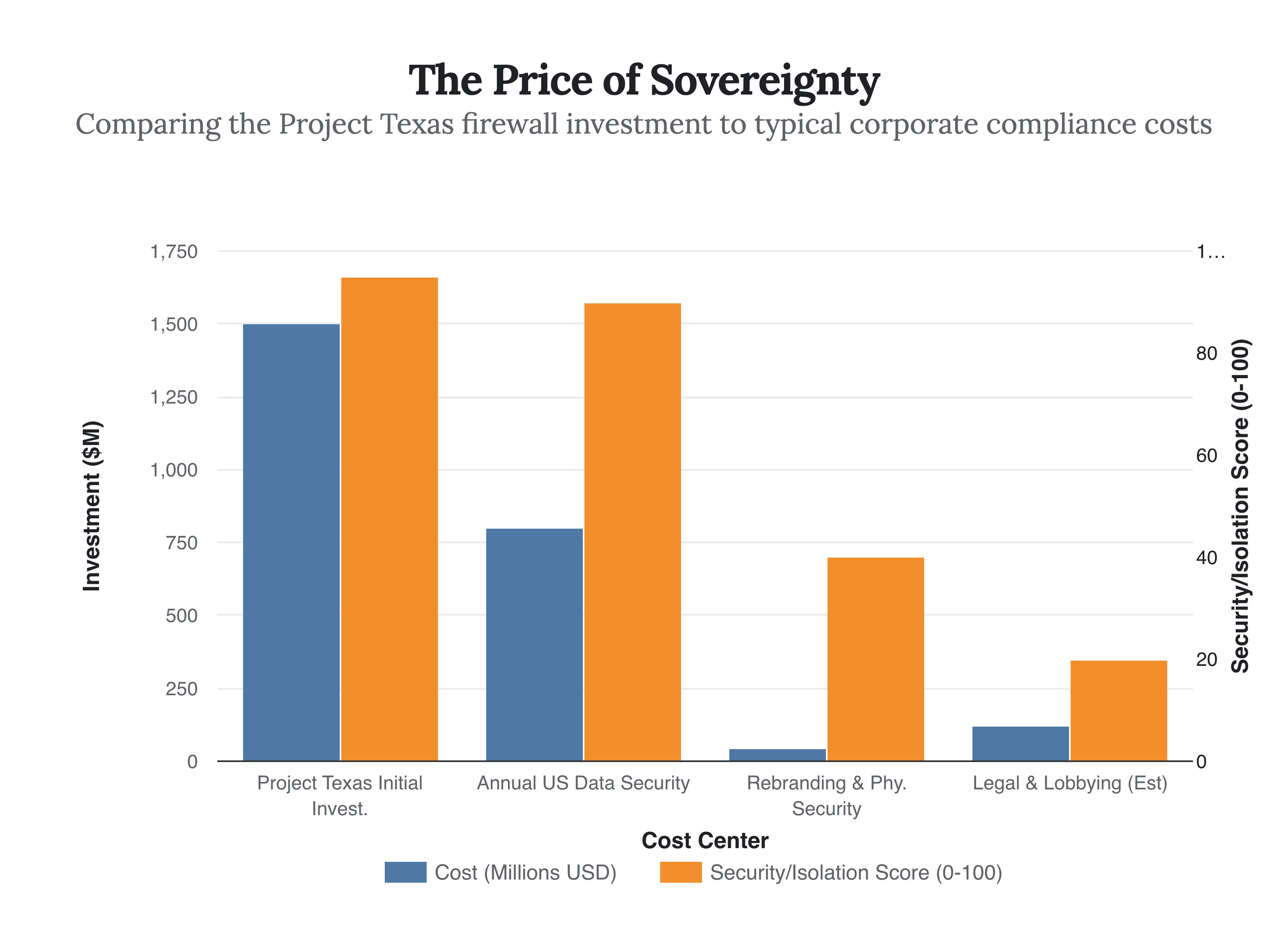
The data reveals a stark truth: the physical “USDS” signage is the tip of a billion-dollar iceberg. It is the “security theater” designed to reassure the 7-member, majority-American board that the firewall holds.
Strategic Implications: The Fragmented Workplace
The signage change creates a profound “Us vs. Them” dynamic within the company. We are witnessing the creation of a two-tier workforce: those with “USDS” badges who can access the Oracle-cloud environments, and legacy employees who cannot.
“The new signage isn’t just about branding; it’s about access control. It visually demarcates who is trusted with American data and who is not.”
The Timeline of Separation
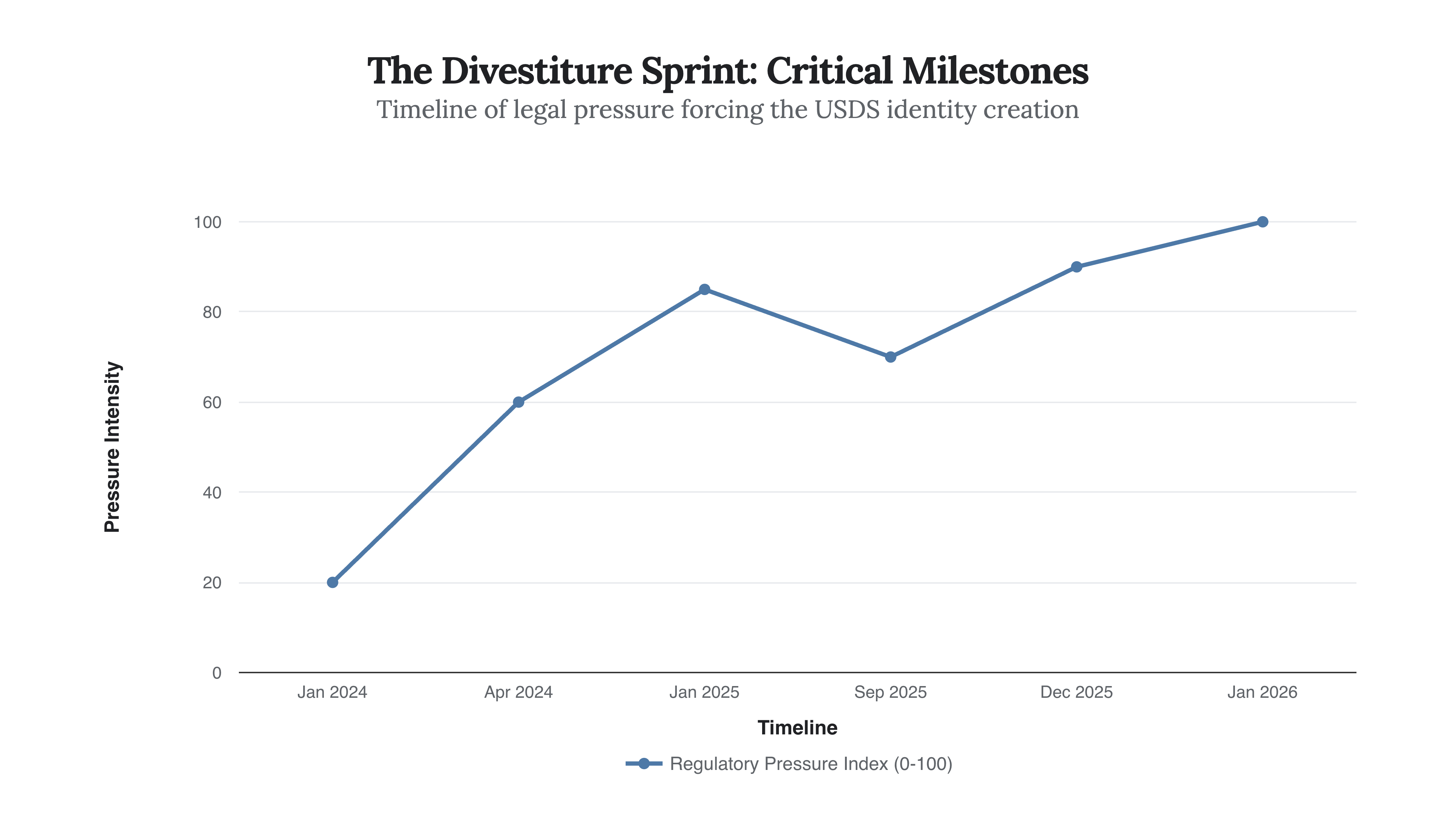
The rush to install this new identity was driven by the January 2026 deadline. The timeline below illustrates the compression of this corporate divorce, highlighting how the physical rebranding had to occur in lockstep with the legal restructuring.
Future Outlook: The Signage as a Template
We predict that the “TikTok USDS” signage model will become the industry standard for foreign-owned tech companies operating in critical sectors. The “sovereign office”—demarcated by distinct branding, separate access cards, and physically segregated servers—will replace the open-plan global campus.
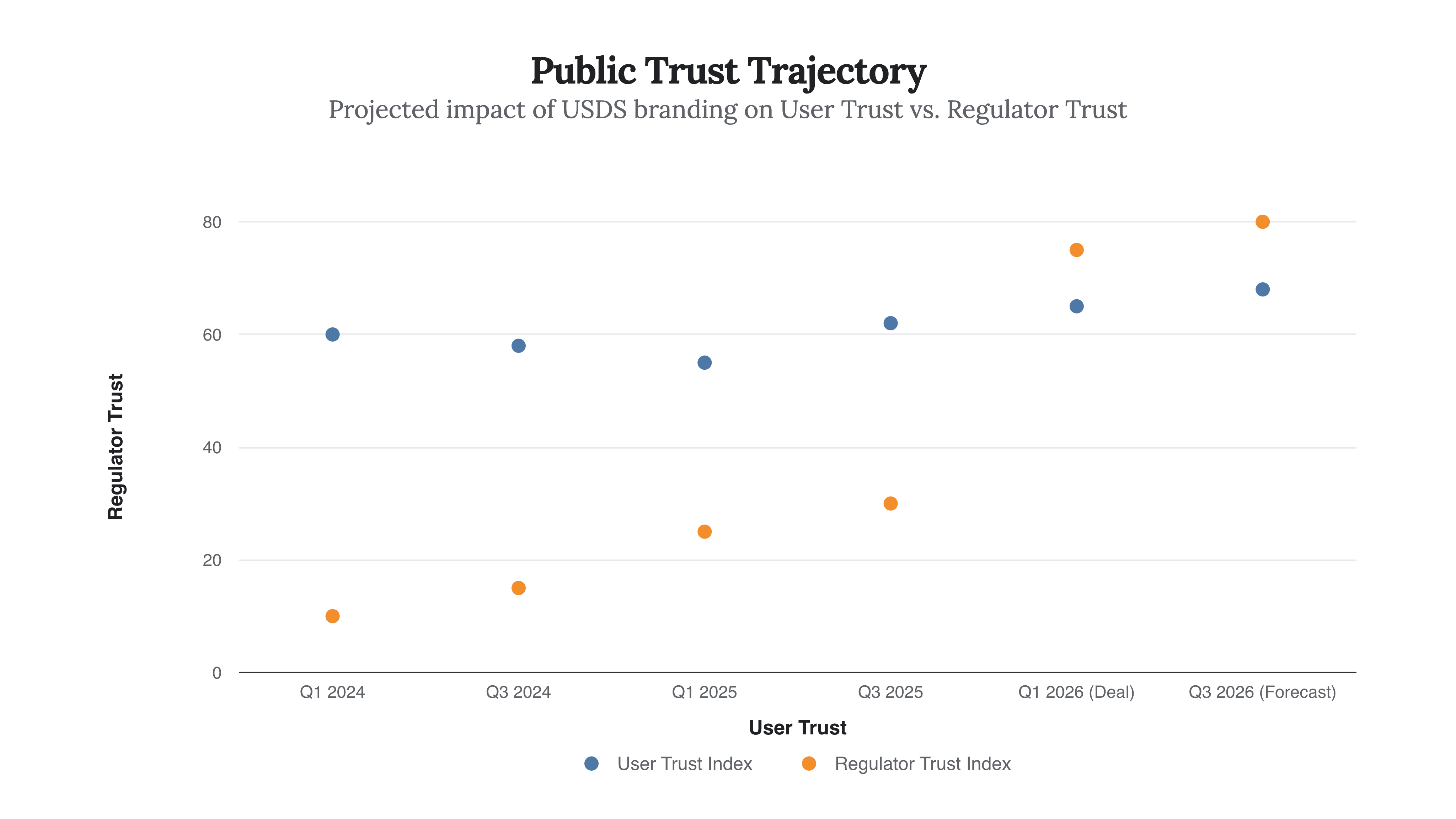
As the scatter plot indicates, the primary beneficiary of this rebrand is not the user, but the regulator. The “USDS” signage buys regulatory peace, even if the user experience remains largely unchanged.
The bottom line: The new TikTok office signage is the most expensive wallpaper in history, covering a $1.5 billion structural separation that may redefine the global internet.