


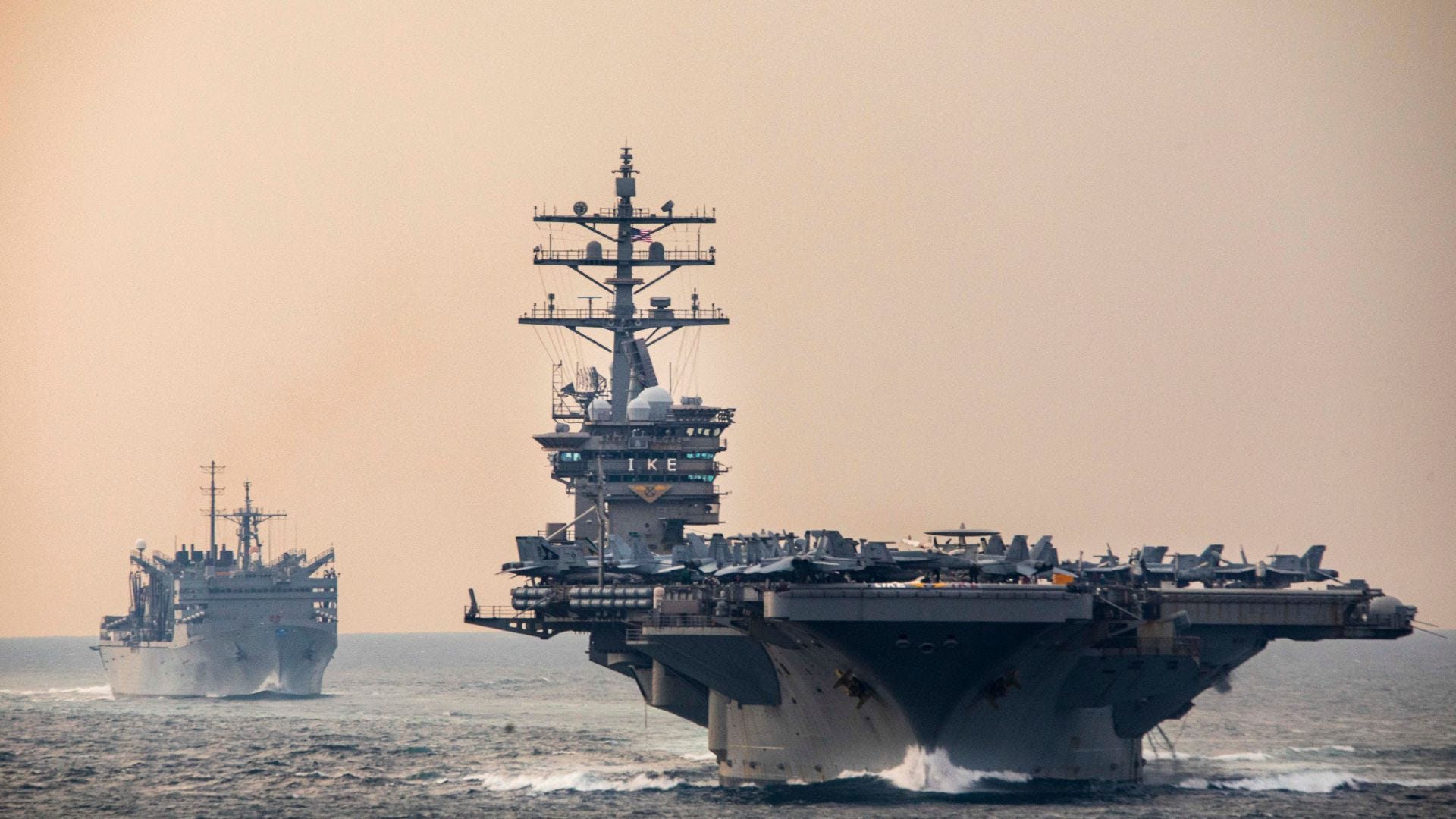
As of May 14, 2026, the diplomatic theater unfolding inside Beijing’s Great Hall of the People is a masterclass in strategic misdirection. While public-facing communiqués herald a new era of what President Xi Jinping terms “constructive strategic stability,” the underlying data reality is brutally transactional. The United States and China are not negotiating a long-term geopolitical settlement; they are haggling over the immediate price of global energy survival. With a U.S. naval blockade paralyzing the Strait of Hormuz and Brent crude blowing past $105 per barrel, the fundamental geometry of the U.S.-China relationship has been inverted.
The administration’s initial posture of unilateral economic decoupling has violently collided with the realities of modern warfare. Secretary of War Pete Hegseth is currently enduring intense Senate scrutiny over the $25 billion price tag of the Iranian invasion and the vulnerability of the Diego Garcia base, but the true cost of the conflict is being calculated in Beijing. Speaking on the tarmac prior to departure, President Donald Trump maintained a defiant posture, asserting he would “win this war one way or the other.” However, the raw mathematics of global energy markets dictate a different reality. The United States is now functionally dependent on the Chinese Communist Party to enforce a shadow embargo, pressuring Beijing to halt its consumption of 90% of Iranian oil exports to prevent a global energy collapse.
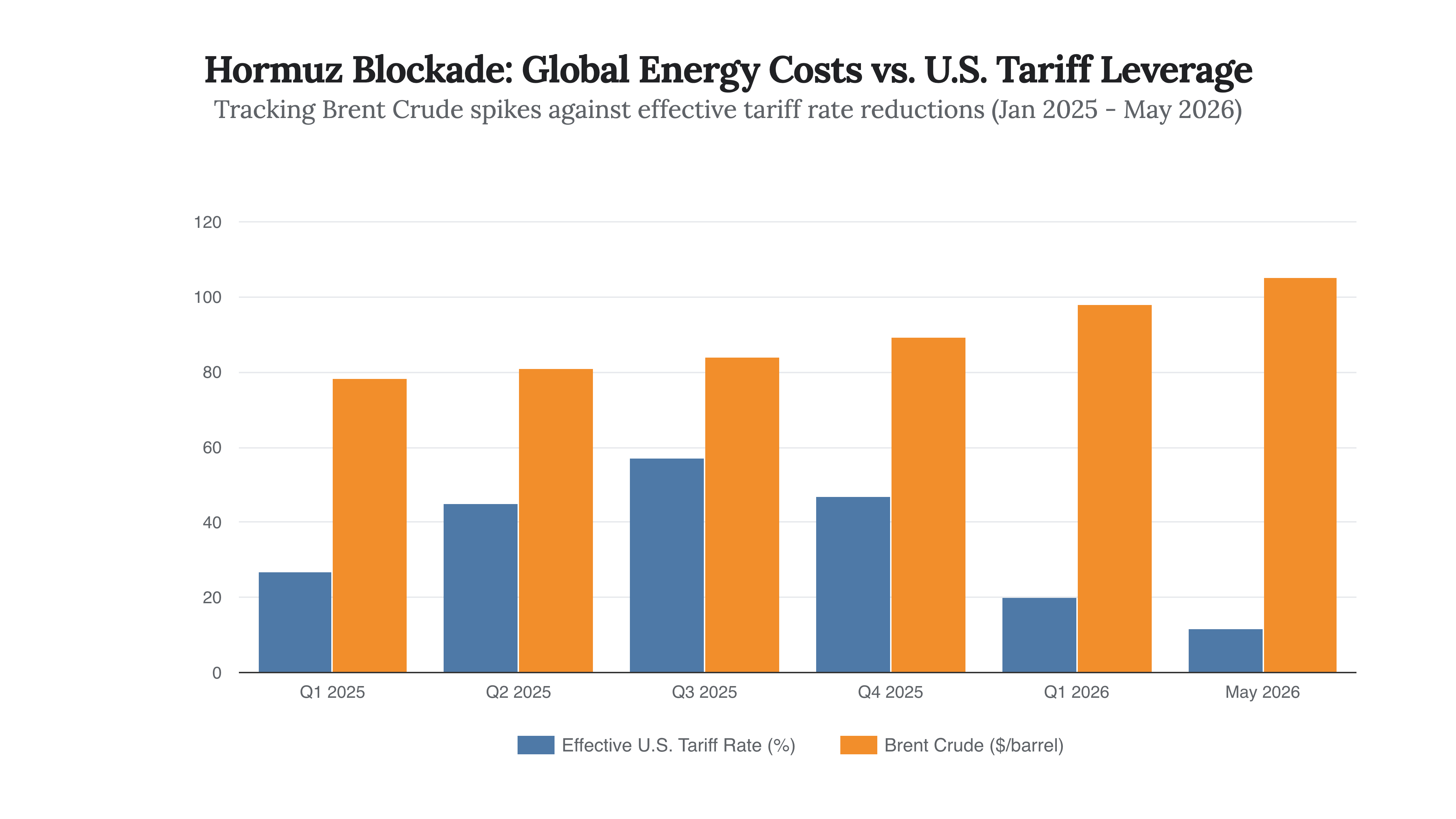
Every argument for sustained American unipolarity is currently anchored by the supply chain realities visually mapped in the chart above. As the kinetic reality of the Middle East conflict pushes oil prices to unsustainable heights, the United States has been forced to systematically dismantle its tariff regime to secure diplomatic leverage. The data clearly shows an inverse correlation: as Brent Crude surges past the $100 threshold in early 2026, the overall effective U.S. tariff rate collapses down to 11.8%.
The Technological Capitulation
When examining the corporate delegation accompanying the President—featuring executives like Nvidia CEO Jensen Huang and Tesla’s Elon Musk—the narrative of aggressive technological containment fractures. Behind the combative posturing of the U.S. State Department, the administration has quietly cleared roughly ten Chinese firms to purchase Nvidia’s second-most powerful artificial intelligence chips. This concession clears the path for ending the standoff over tech rivalry, but it reveals the immense pressure the administration is under to deliver visible economic victories amid the broader geopolitical crisis.
The presence of America’s leading tech industrialists in Beijing is not a victory lap; it is a concession to the structural realities of the semiconductor supply chain. By allowing the export of advanced computing hardware, Washington is trading its long-term strategic advantage in artificial intelligence for short-term compliance in the global oil markets. The quiet approval of advanced Nvidia chip sales to ten Chinese firms signals the definitive capitulation of the American strategy to monopolize the next generation of artificial intelligence hardware.

The Judicial Reversal and the Inflation Shock
The legal architecture that defined the administration’s first year of aggressive economic nationalism has simultaneously collapsed, forcing a radical recalibration of U.S. trade policy. The Supreme Court’s landmark February 2026 ruling in Learning Resources, Inc. v. Trump struck down the sweeping use of the International Emergency Economic Powers Act (IEEPA) to unilaterally impose tariffs. This judicial intervention forced the federal government to issue an estimated $166 billion in mandated refunds to over 330,000 American businesses.
