



The 2026 Baseline: A State of Total Neuro-Economic Fatigue
As of February 2026, the global workforce is no longer merely “stressed.” It is undergoing a systemic transition into what institutional analysts are calling The Great Disconnection. Data realized in Q1 2026 indicates that Gen Z, the cohort born between 1997 and 2012, has hit a terminal velocity of burnout. Unlike previous cycles where burnout was a cyclical byproduct of economic boom-and-bust, the current metrics suggest a structural failure in the human-labor interface.
Real-time data from February 5, 2026, reveals that 38% of Gen Z workers report active, debilitating burnout—a figure that rises to a staggering 83% among frontline employees. This is not a matter of “resilience training” or better sleep hygiene; it is a physiological response to an environment that has become neurologically expensive to inhabit. The convergence of algorithmic management, the Fear of Becoming Obsolete (FOBO) driven by the 2025-2026 AI rollout, and the absolute decoupling of wages from the cost of essential assets has rendered the traditional work-reward loop obsolete.
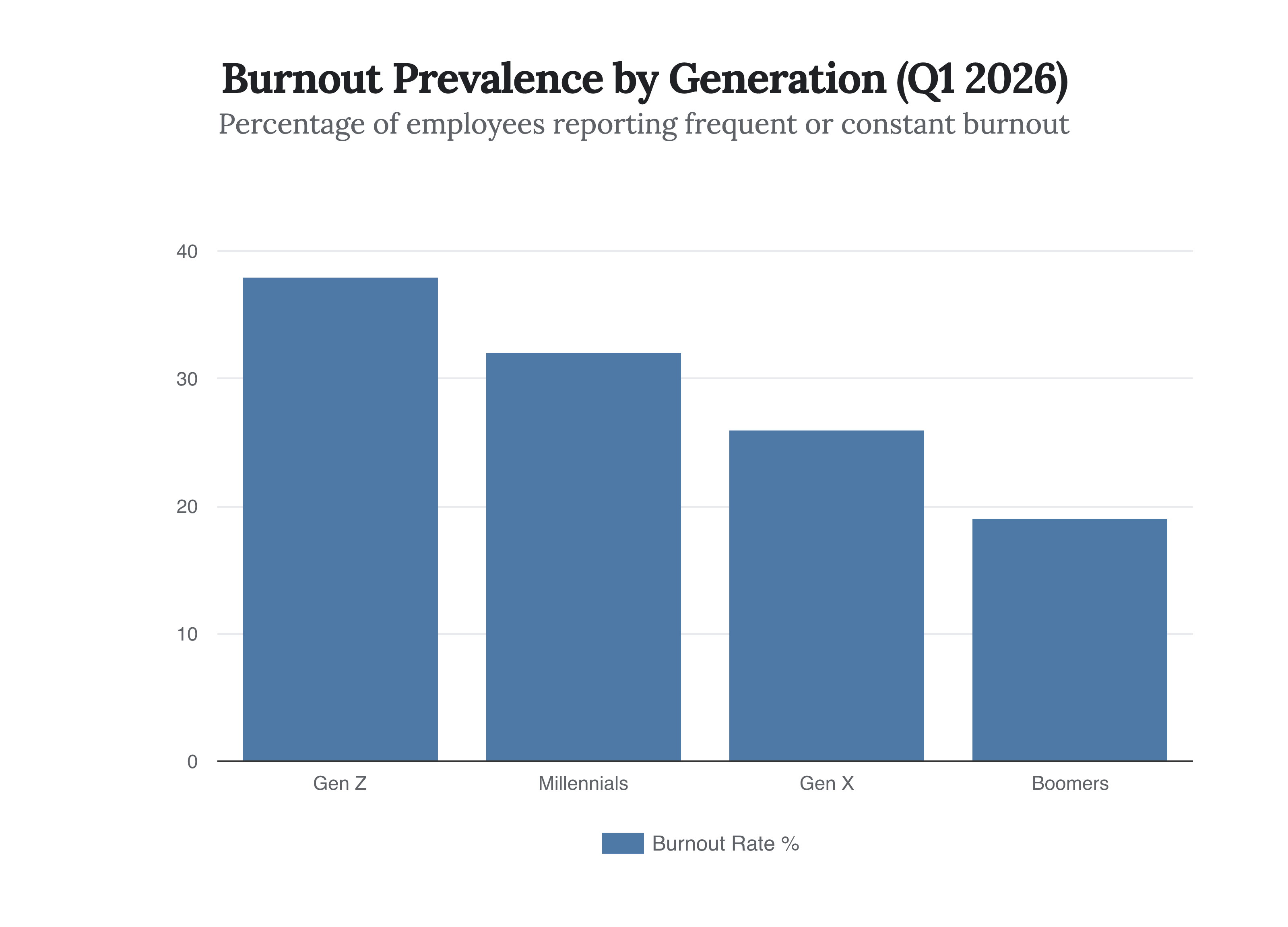
The strategic implication is clear: the modern workplace is no longer designed for human biology. While Gen X reports higher productivity and digital confidence in the hybrid era, Gen Z is struggling with focus, isolation, and a perceived lack of professional relevance. For the first time in labor history, the youngest cohort is reaching peak burnout at age 25, whereas the historical average for this psychological threshold has been age 42.
The FOBO Paradox: AI Anxiety and the Death of Entry-Level Growth
The primary driver of the 2026 burnout surge is not just workload, but the rapid degradation of professional utility. In mid-2025, the narrative was centered on job displacement; by February 2026, that fear has morphed into FOBO—the Fear of Becoming Obsolete. According to Pew Research data contextualized for the current quarter, 52% of workers worry about their skills losing relevance in real-time.
For Gen Z, this is particularly acute. The “grunt work” that traditionally served as the apprenticeship for judgment—pattern recognition, data cleaning, and basic synthesis—has been entirely automated by Agentic AI models. Consequently, entry-level workers are expected to perform senior-level synthesis without the years of developmental friction required to build that capacity. This “competency gap” creates a state of perpetual high-cortisol anxiety. The window to stay relevant is closing faster than a 22-year-old can define what ‘relevance’ even means in a post-LLM economy.
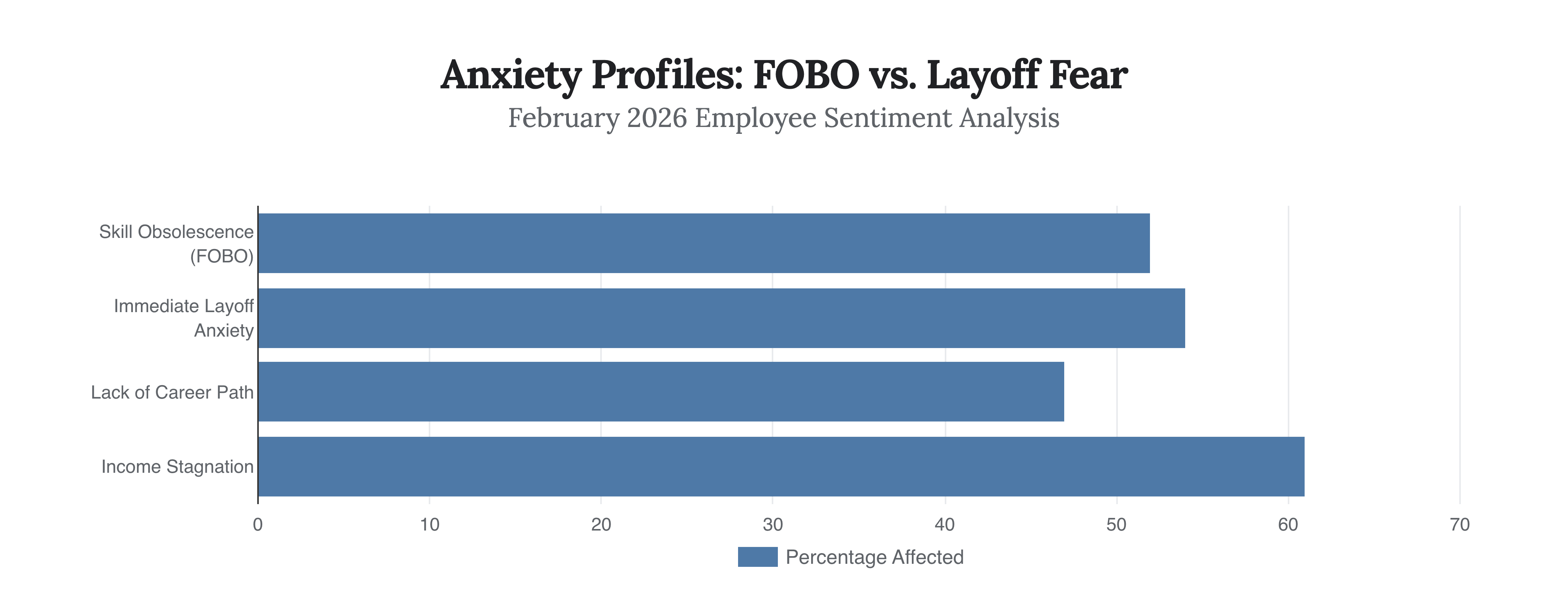
This anxiety has led to a counter-intuitive market behavior: “Job Hugging.” Despite reporting record-high burnout, 64% of employees are clinging to roles they actively dislike because they no longer trust their ability to compete in the open market. This creates a workforce of “The Walking Dead”—physically present, digitally logged-in, but psychologically evacuated.
The Economic Futility Trap: Real Wages vs. Asset Inflation
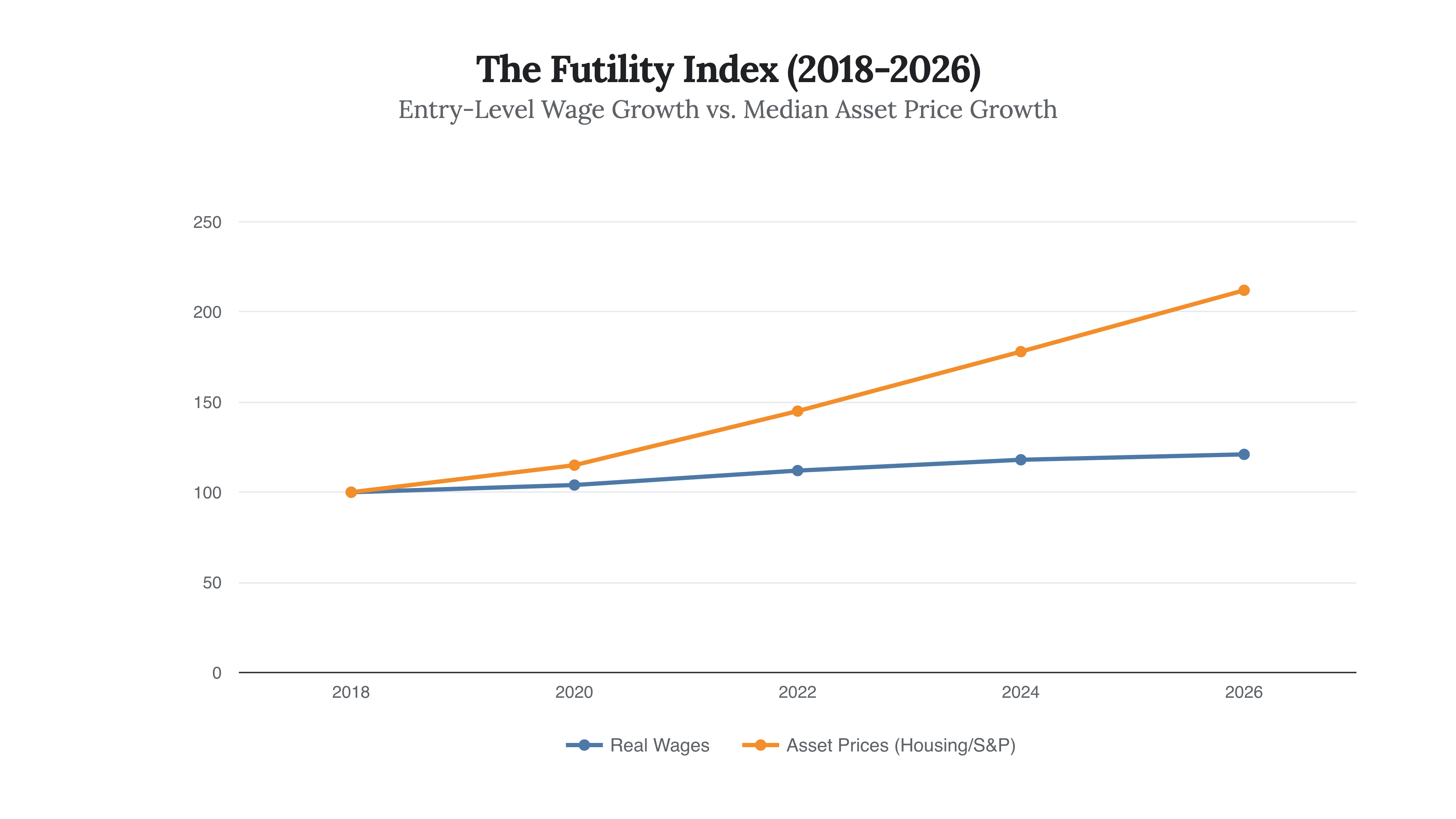
Burnout is often misdiagnosed as a psychological defect when it is actually an economic calculation. In Q1 2026, the ratio between entry-level salaries and median home prices has reached its most distorted point in 70 years. For a Gen Z worker, the “carrot” of homeownership or financial independence has been moved so far out of reach that the “stick” of overwork no longer produces the desired behavior.
Data from the World Economic Forum (WEF) and Morgan Stanley indicates that while overall joblessness remains low (around 4.3% in the US), youth unemployment and underemployment are surging. In the US, youth unemployment hit 10.8% in late 2025, while in China and India, the figures range from 16.5% to 17%. The resulting sentiment is one of economic futility. When the reward for high performance is a slightly more expensive rental and no path to equity, the logical bio-evolutionary response is the conservation of energy—better known as burnout.
This economic reality leads to “Quiet Cracking,” a 2026 trend where employees silently struggle with mental health until a total systemic collapse occurs, often manifesting as sudden, unexplained resignations or long-term medical leave. In 2025/2026, 35% of workers aged 18-24 reported needing time off specifically for mental health crises caused by work-related stress.
Unlock deeper strategic alpha with a 10% discount on the annual plan.
Support the data-driven foresight required to navigate an era of radical uncertainty and join a community of institutional-grade analysts committed to the truth.
The Frontline Crisis: A Two-Tier Burnout Reality
The divide between desk-based “Zoomers” and the frontline Gen Z workforce has widened into a chasm. According to UKG data from late 2025, 83% of frontline employees in retail, healthcare, and logistics are currently burned out. While corporate employees struggle with digital isolation, frontline workers are battling “Schedule Despair.”
