


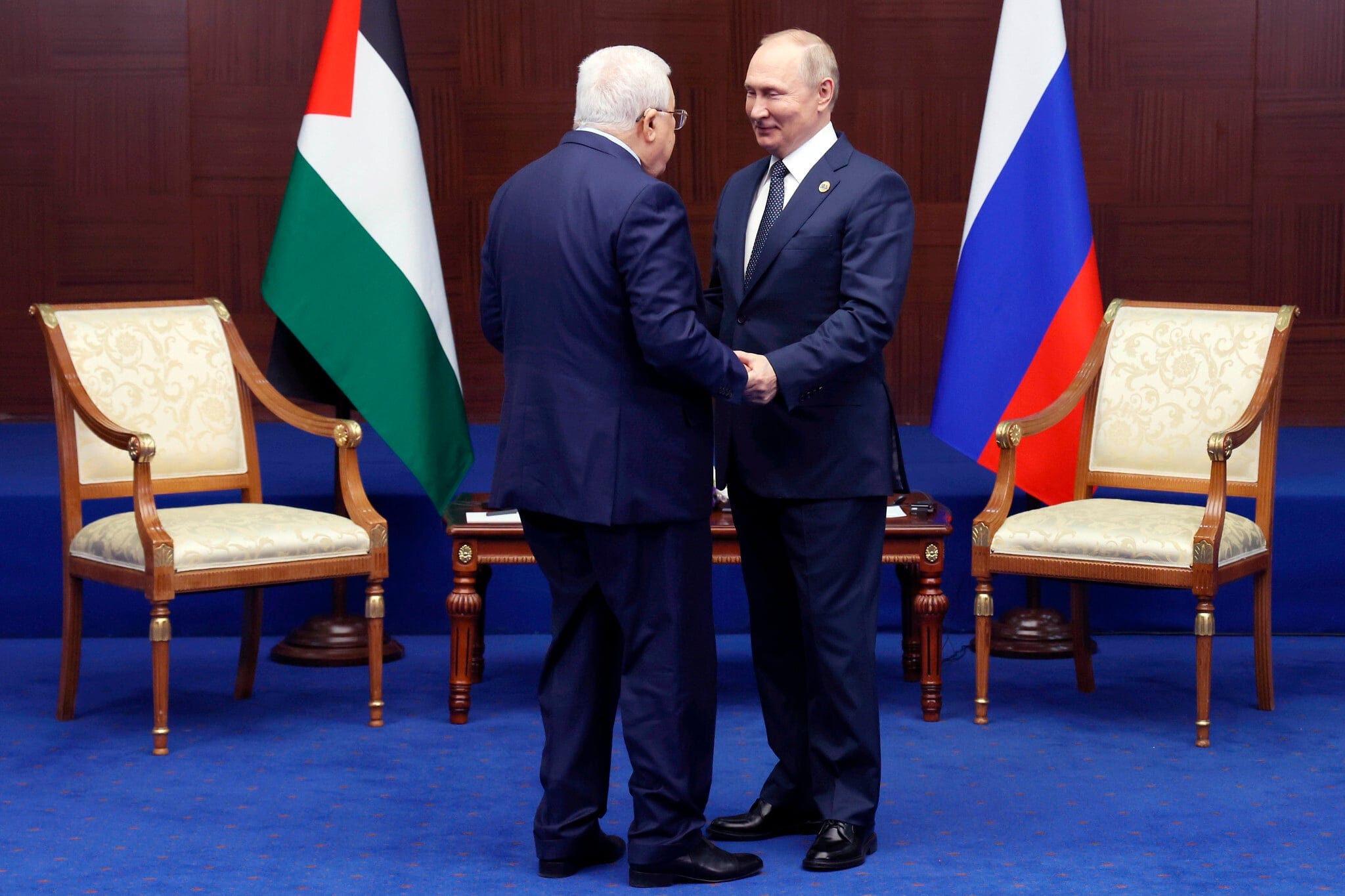
On May 10, 2025, the visuals from Moscow’s Victory Day celebrations told a story that no diplomatic cable could adequately capture. Standing beside Vladimir Putin at the Kremlin wasn’t an Israeli Prime Minister—a common sight in the previous decade—but Palestinian Authority President Mahmoud Abbas. This wasn’t merely a ceremonial courtesy; it was the culmination of a two-year strategic pivot that has seen Russia abandon its post-Soviet balancing act in the Middle East.
For years, analysts argued that the Kremlin played a cynical game of equidistance, maintaining warm ties with Netanyahu while courting the Arab street. That era is over. According to the latest data available in January 2026, the Kremlin’s alignment with Abbas is no longer just a foreign policy choice; it is a reflection of a profound shift in the Russian domestic psyche. The numbers are stark: Russian public sympathy for Israel has evaporated, creating a vacuum that Putin has eagerly filled with a renewed, albeit calculated, embrace of the Palestinian cause.
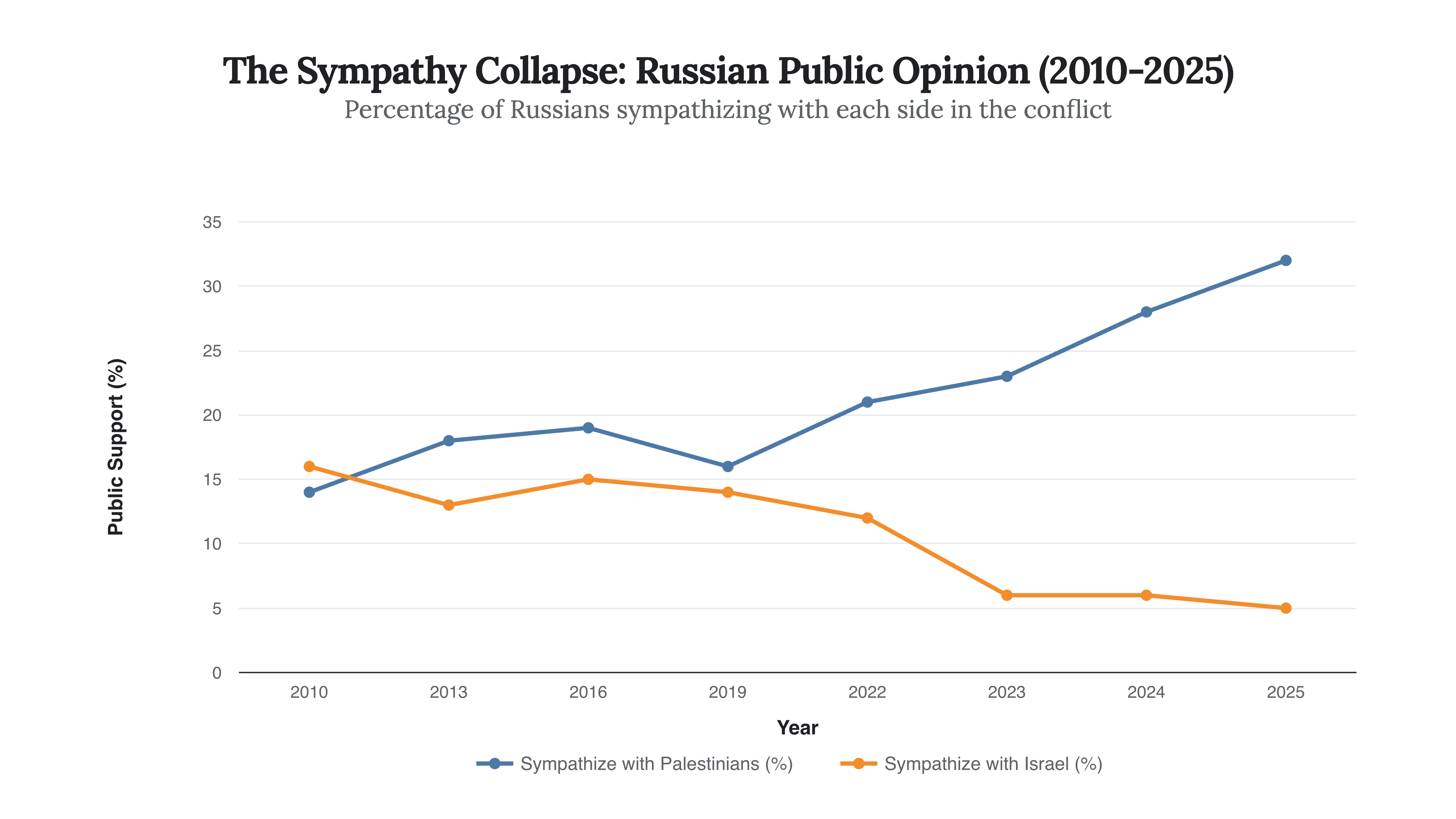
The chart above, derived from longitudinal studies by the Levada Center, reveals the magnitude of this collapse. As of late 2025, only 5% to 6% of Russians expressed sympathy for the Israeli side—a historic low. Meanwhile, sympathy for the Palestinians has more than doubled since 2010, crossing the 30% threshold. This divergence allows Putin to frame his meetings with Abbas not as foreign adventurism, but as a reflection of the popular will. The “neutral” block remains large, but the active constituency for a pro-Israel policy in Russia has effectively ceased to exist.
“We believe that in order to ensure lasting, reliable, and stable peace in the region, it is necessary to create a full-fledged Palestinian state.” — Vladimir Putin, Kremlin Meeting, August 2024
This rhetorical support has been matched by a conspicuous change in the Kremlin’s guest list. Diplomatic frequency is a currency in international relations, and Putin is spending his entirely on the Palestinian Authority and its regional backers. The “hotline” between Moscow and Jerusalem, once boasting frequent summits between Putin and Netanyahu, has gone cold. In its place, a new rhythm has emerged, centered on annual high-level receptions for Abbas.
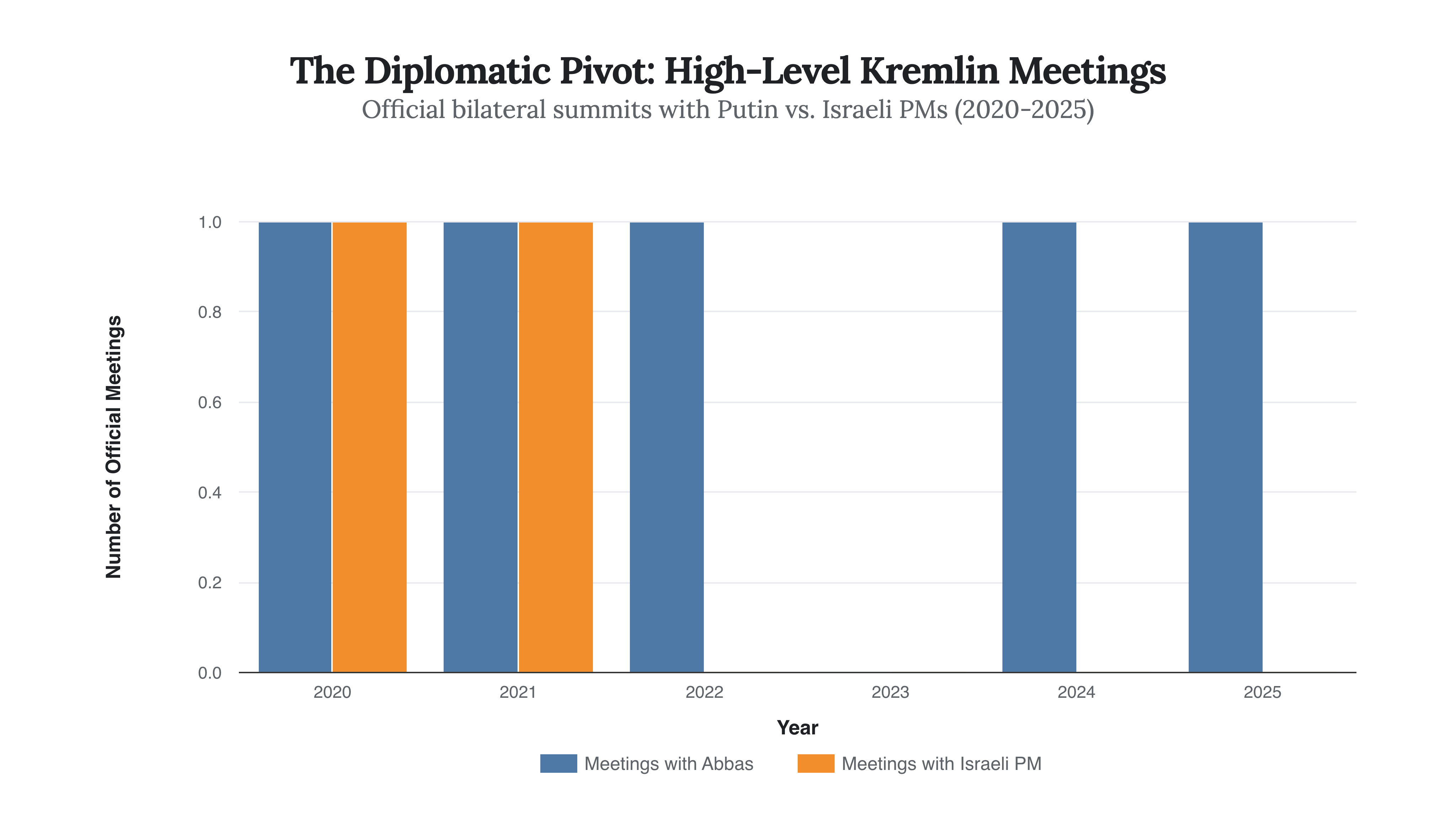
The asymmetry is striking. While 2020 and 2021 saw a diplomatic parity, the post-2022 landscape shows a complete shutout of Israeli leadership from the Kremlin, contrasted with consistent engagement with Abbas. This isn’t accidental ghosting; it is a structural realignment. By hosting Abbas in August 2024 and again in May 2025, Putin is signaling to the Global South that Russia is the alternative guarantor of Palestinian sovereignty.
However, this support is not merely performative. While Russia cannot match the financial volume of Western aid, its humanitarian logistics have ramped up significantly to match the diplomatic rhetoric. The Kremlin has utilized the Ministry of Emergency Situations to create a steady, visible stream of aid to Gaza, using these shipments as tangible proof of its commitment during talks with Abbas.
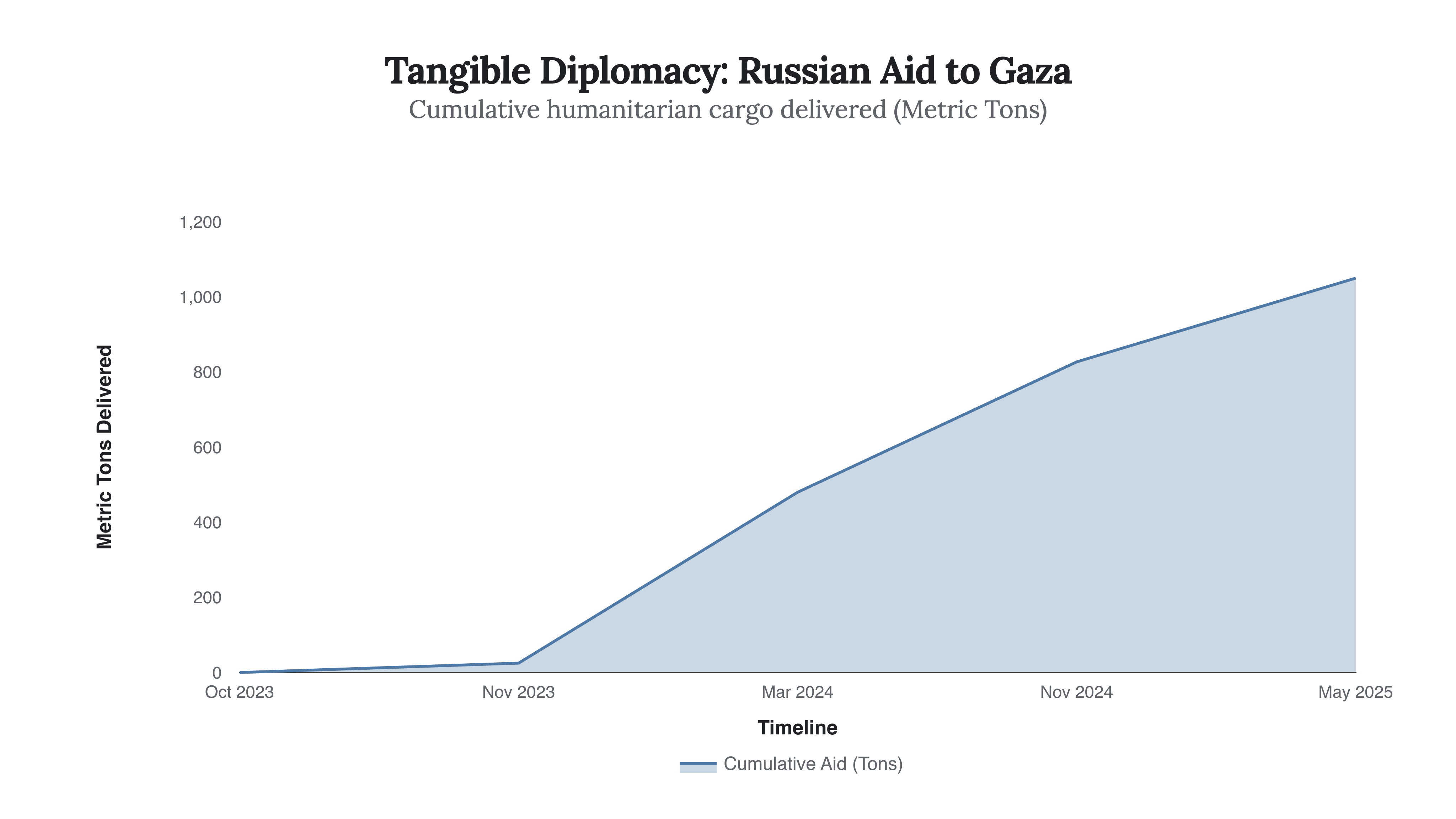
The cumulative delivery of over 1,000 tons of aid by mid-2025 serves a dual purpose: it provides relief, but more importantly, it provides political cover. It allows Abbas to demonstrate to his people that he has powerful international backers outside the West, while allowing Putin to project Russian benevolence to the Arab world without engaging in direct military confrontation.
“We are watching with great pain and anxiety the humanitarian catastrophe... For our part, we are doing everything to support the Palestinian people.” — Vladimir Putin
The data is unambiguous: The Kremlin has abandoned the middle ground. Driven by a domestic populace that has turned its back on Israel and a geopolitical strategy focused on the Global South, Putin’s partnership with Abbas has evolved from a legacy Soviet relationship into a central pillar of Russia’s 2026 foreign policy. The era of the “special relationship” with Israel is dead; the era of the “friend of Palestine” has been resurrected.
Putin plays chess not checkers