



On Wednesday morning, the abstract race for artificial general intelligence (AGI) crashed into the physical reality of the American power grid. In a press release that will likely define the industrial strategy of the next decade, OpenAI announced its “Community Energy Plan,” a concession aimed at quelling the growing panic among local utilities and ratepayers. The headline promise is simple: OpenAI will explicitly fund the grid upgrades necessary to support its $500 billion “Stargate” project, ensuring that the lights stay on in Texas and Wisconsin without skyrocketing bills for locals.
But buried beneath the diplomatic language of “being good neighbors” is a number that should stop every energy policymaker in their tracks: 10 gigawatts. That is the target capacity for the Stargate infrastructure buildout by 2029. To put that figure in perspective, it exceeds the peak power demand of entire European nations. We are no longer talking about server farms; we are talking about cities of silicon that consume more energy than the actual cities they reside next to.
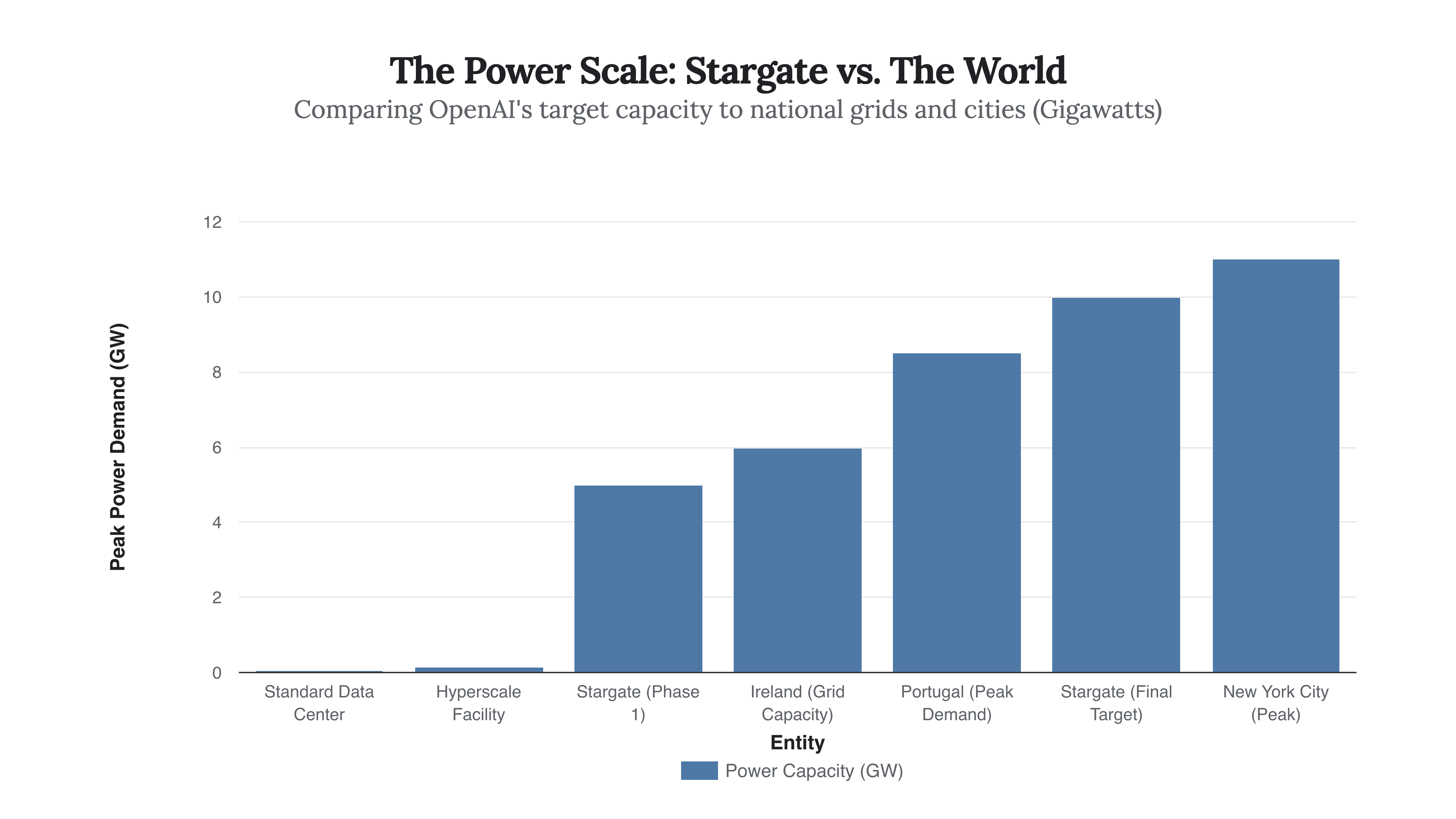
The chart above illustrates the sheer magnitude of what Sam Altman and his partners—Microsoft, Oracle, and SoftBank—are attempting to build. A standard data center is a 50-megawatt blip on the grid. The Stargate project, currently under construction in phases across Texas, New Mexico, and the Midwest, targets a 100-fold increase. When fully operational, this single distributed project will consume nearly as much electricity as New York City does on a sweltering July afternoon.
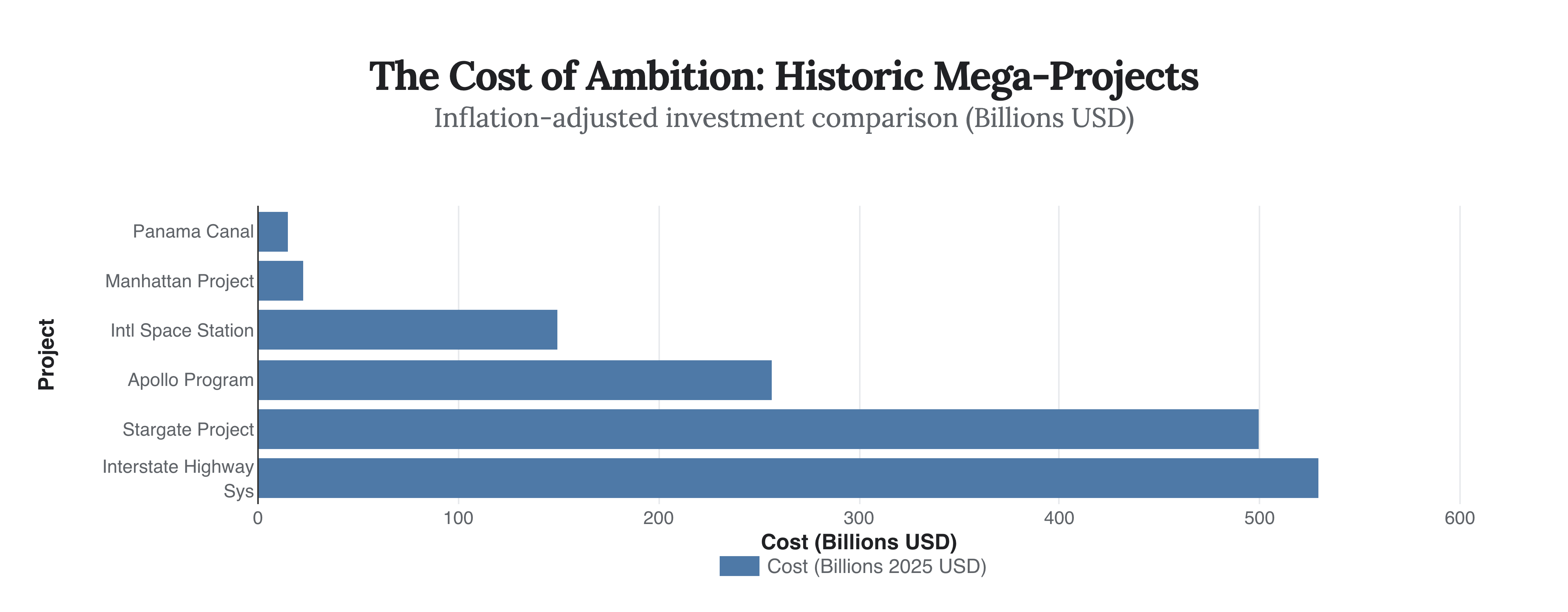
This is not just a technological bet; it is an economic mobilization that rivals the largest public works in human history. With a projected price tag of $500 billion, Stargate effectively creates a new asset class. We often speak of the Apollo Program or the Manhattan Project as the gold standards of American ambition. Adjusted for inflation, Stargate dwarfs them both.
The capital requirements are so extreme that they have forced a realignment of global finance. With backers like MGX and SoftBank involved, OpenAI is effectively sovereign in its spending power. However, money cannot buy physics—at least, not instantly. The “Electron Gap,” a term coined by OpenAI’s policy team in their blueprint to the White House, refers to the widening chasm between AI’s thirst for power and the U.S. grid’s ability to supply it.
“We commit to paying our own way on energy, so that our operations don’t increase your electricity prices. Depending on the site, this can range from bringing new dedicated power... to adding and paying for new energy generation.” — OpenAI Community Energy Plan, Jan 21, 2026
This statement is an admission of fragility. The U.S. power grid is currently straining under the load of electrification and manufacturing onshoring. OpenAI’s internal analysis suggests that failing to build this infrastructure will cede the AI future to China, yet building it requires an annual addition of power generation that the U.S. has not achieved in decades. The latest forecasts from the Electric Power Research Institute (EPRI) and McKinsey paint a stark picture of this demand curve.
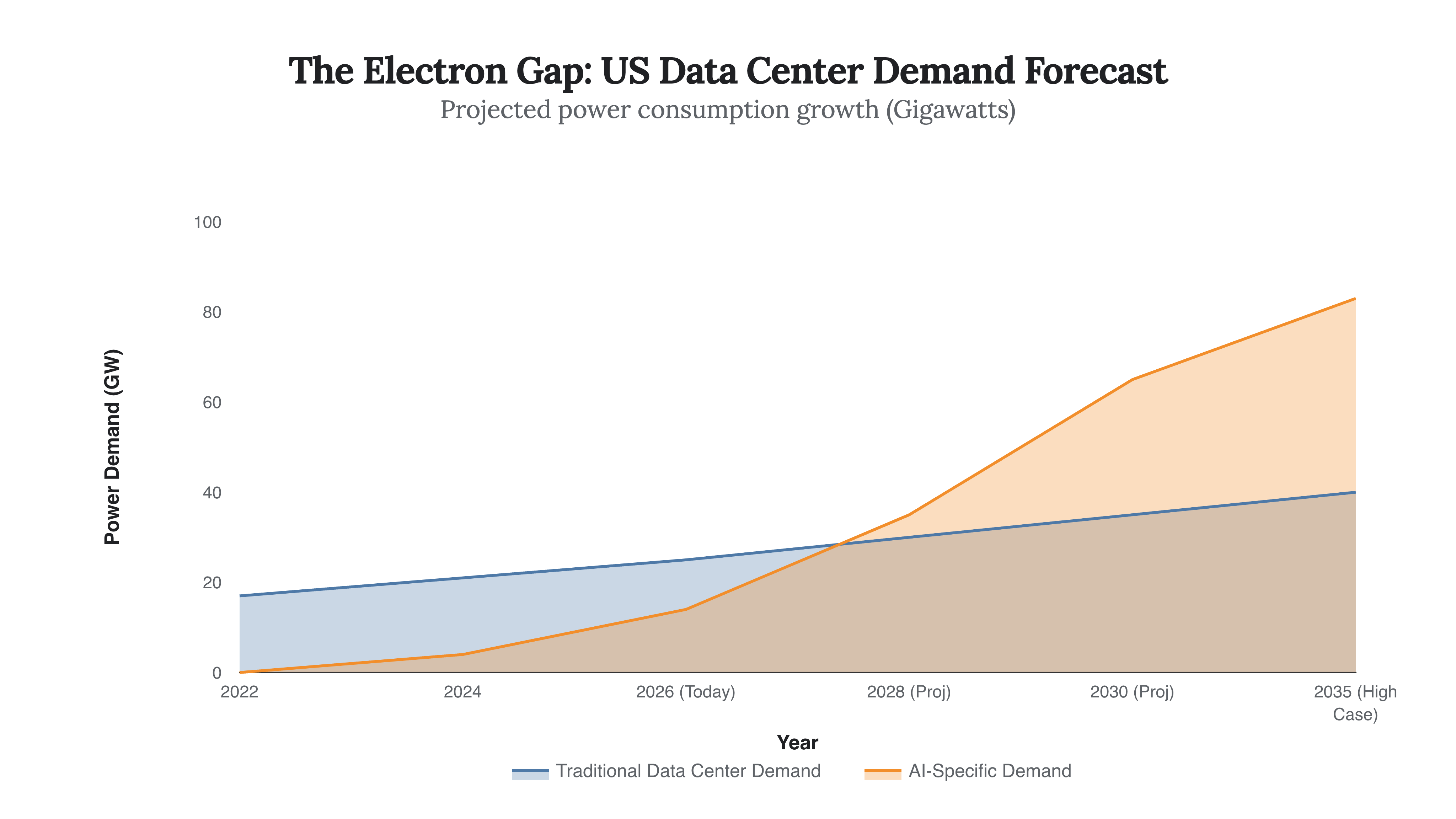
By 2030, AI-specific demand alone could double the current total power consumption of all U.S. data centers. This exponential growth explains why OpenAI is aggressively lobbying for nuclear recommissioning and “AI Economic Zones” with streamlined permitting. The “Community Energy Plan” released today is a strategic maneuver to prevent local regulatory backlash from slowing down this timeline.
We are witnessing the end of the “cloud” metaphor. The cloud is no longer ethereal; it is concrete, copper, and uranium. It is 40,000 construction workers in the Midwest and massive transmission lines cutting across the Southwest. OpenAI has realized that to build the mind of the future, they must first rebuild the body of the American industrial base.