


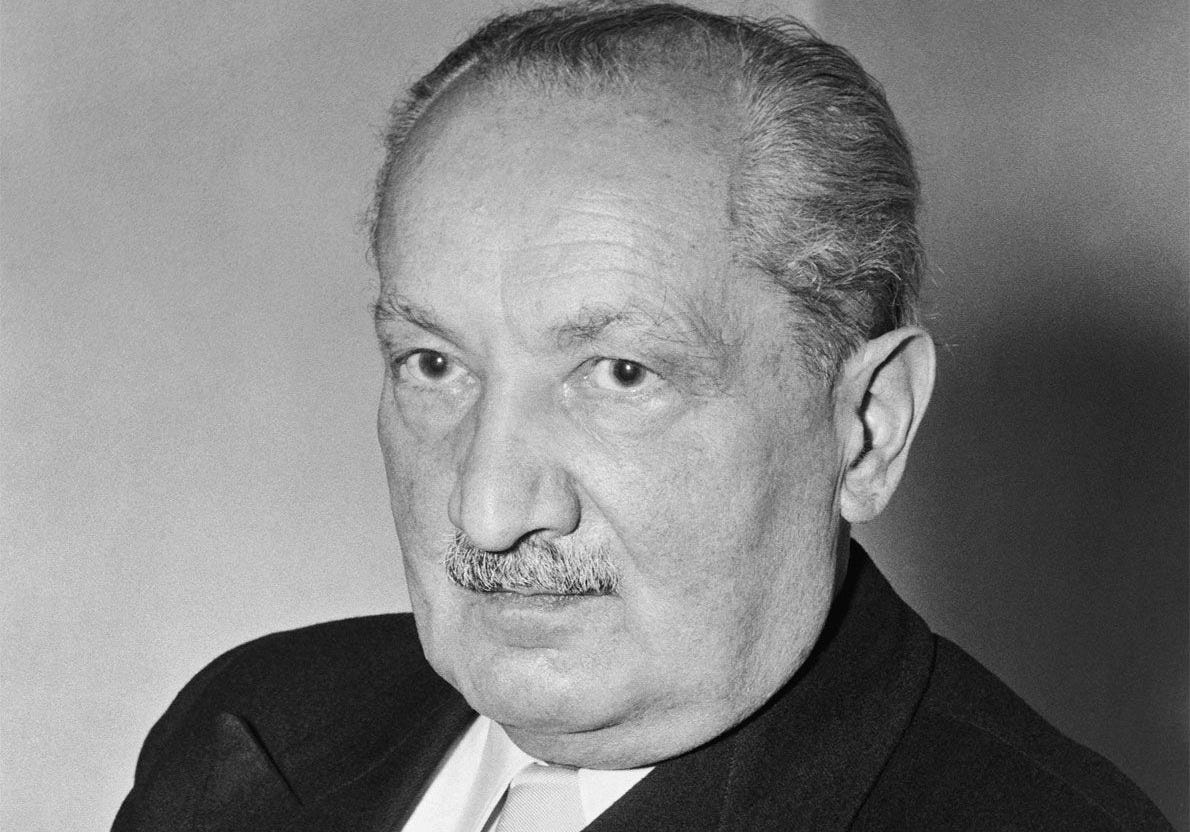
We are witnessing the industrialization of human consciousness. For decades, the German philosopher Martin Heidegger warned that the supreme danger of modern technology was not the destruction of nature, but the reduction of humanity into Bestand—’standing-reserve.’ He feared a world where everything, including human beings, would be viewed solely as raw material waiting to be processed, ordered, and optimized. Today, that philosophical abstraction has hardened into a quantifiable economic reality. The modern knowledge worker is no longer a sovereign thinker; they are a resource being mined in 47-second increments.
This is not merely a crisis of productivity; it is an ontological fracture. Recent intelligence confirms that the average screen focus duration has collapsed to just 47 seconds, while the recovery time for deep cognitive re-engagement remains stubbornly fixed at 23 minutes. We have engineered a temporal environment where ‘Meditative Thinking’—the deep, slow contemplation Heidegger argued was essential to our humanity—is mathematically impossible. Instead, we are trapped in a loop of ‘Calculative Thinking,’ processing inputs at a speed that precludes understanding.
The following briefing deconstructs the mechanics of this decline. We analyze the latest data on attention fragmentation, the exorbitant ‘switching costs’ dismantling global GDP, and the emergence of a new ‘Analog Elite’ who will monopolize the scarce resource of deep focus.
The Mathematics of Enframing: The 47-Second Ceiling
Heidegger described the essence of technology as Gestell (’Enframing’)—a way of revealing the world that demands everything stand by for immediate use. In the digital attention economy, this demand is absolute. The user is not the customer; the user is the standing-reserve, waiting to be harvested by the next notification.
Intelligence gathered from longitudinal studies by Dr. Gloria Mark and recent 2024 behavioral analytics reveals a catastrophic decay in our capacity to dwell on a single object of thought. In 2004, the average duration of focus on a single screen was 150 seconds. By 2012, it had halved to 75 seconds. As of late 2024, it has stabilized at a critical low of 47 seconds.
