



It began innocuously enough. At 8:55 AM on Friday, December 5, the digital pulse of the global workforce skipped a beat. For millions of professionals, the morning ritual of logging into LinkedIn or joining a Zoom stand-up was met not with connection, but with a stark, white void. Across the globe, screens flashed “500 Internal Server Error,” and within minutes, the silence became deafening. This wasn’t a localized hiccup; it was a systemic failure that briefly wiped out access to nearly a fifth of the internet’s active infrastructure.
The culprit was not a state-sponsored cyberattack or a catastrophic hardware failure. It was a well-intentioned firewall update. Cloudflare, the invisible giant that secures and accelerates approximately 20% of the web, had deployed a patch to mitigate a newly discovered vulnerability in React Server Components. Instead of protecting the network, the update inadvertently choked it, causing a cascading failure that severed connections for services ranging from Canva and Shopify to the critical communication tools of the modern enterprise.
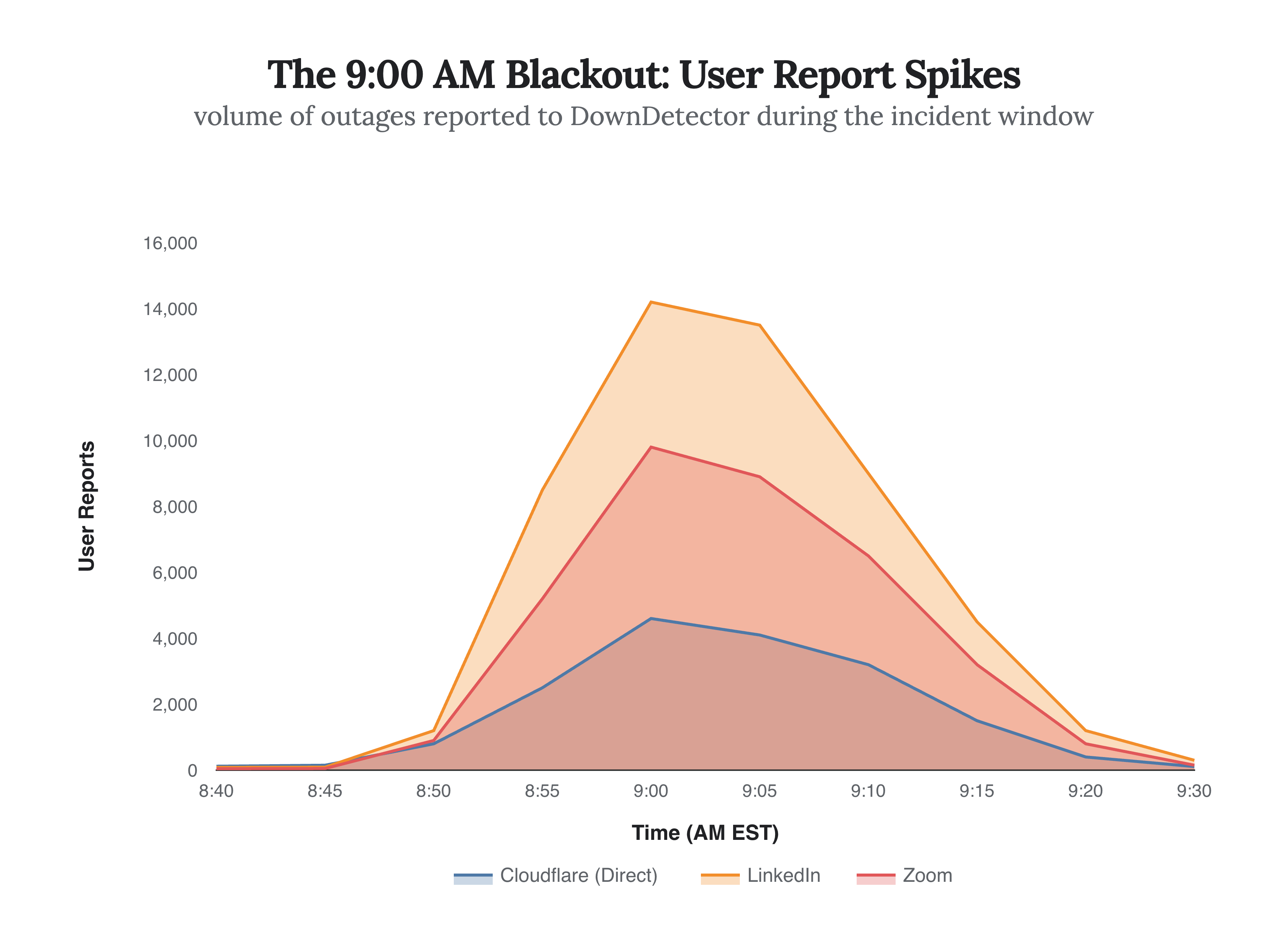
The chart above visualizes the sudden violence of the outage. In the span of ten minutes, report volumes for LinkedIn and Zoom skyrocketed by over 10,000%, perfectly mirroring the spike in reports for Cloudflare itself. The synchronization of these failures illustrates a sobering reality: when a core utility like Cloudflare stumbles, the downstream effects are immediate and indiscriminate. While the technical resolution came relatively quickly—Cloudflare announced a fix by 9:20 AM—the incident shattered the illusion of a distributed, decentralized internet.
“Any outage of our systems is unacceptable, and we know we have let the internet down again.”
This admission from Cloudflare’s leadership highlights a growing tension in the tech ecosystem. This was the second major disruption for the company in less than a month, following a November incident that impacted services like ChatGPT and Spotify. The repetition of these events has begun to erode market confidence. Investors, reacting to the fragility exposed by the outage, sent Cloudflare’s stock tumbling in pre-market trading.
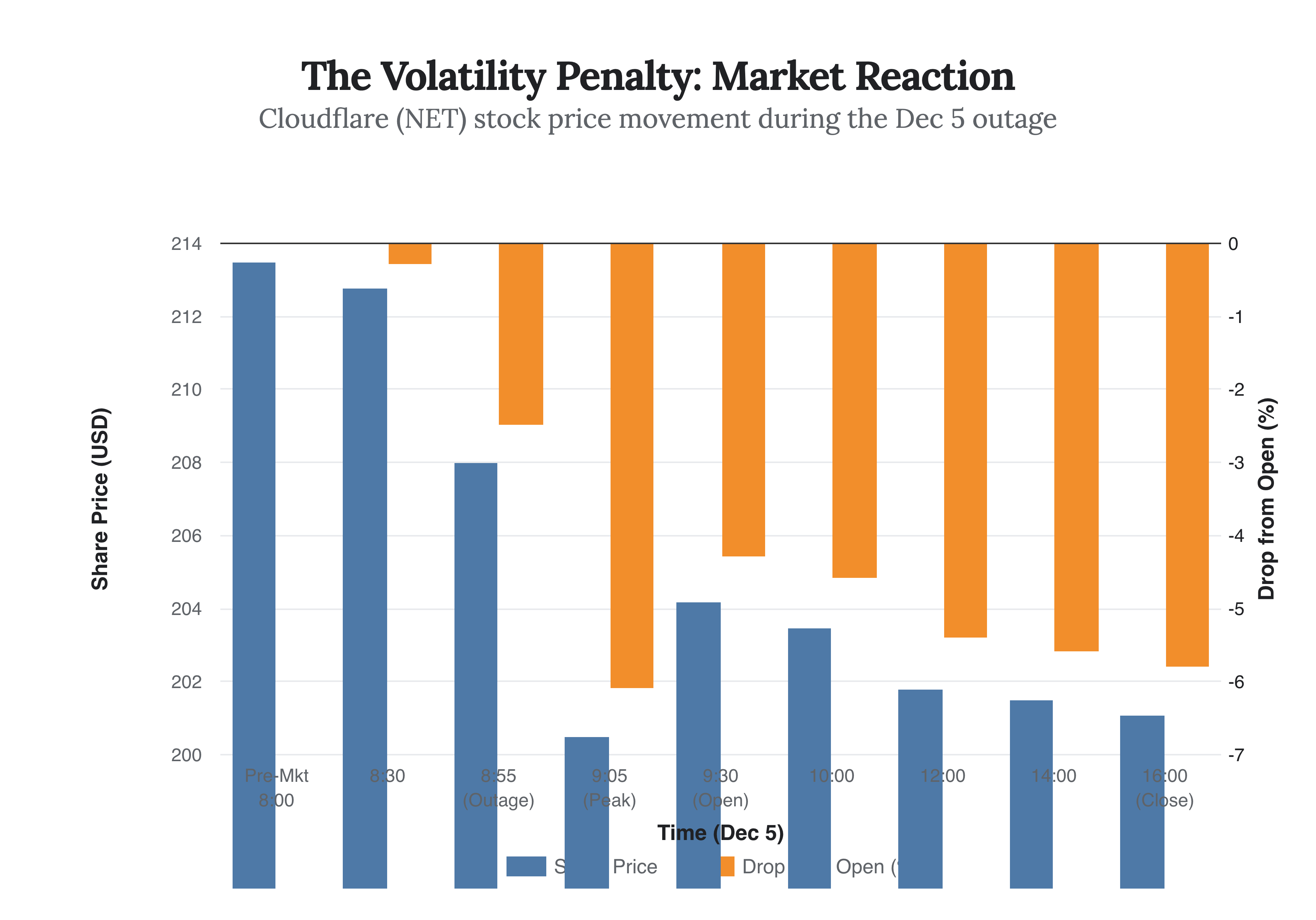
As the data shows, the market exacted a swift penalty, wiping out nearly $4 billion in market capitalization at the trough of the drop. While the price stabilized slightly after the fix was verified, the 6% pre-market plunge serves as a financial quantification of the internet’s fragility. The market was not just pricing in lost minutes of service; it was pricing in the risk of concentration.
The deeper story here is not about a single bad line of code, but about the architecture of the modern web. We have traded the resilience of a truly distributed network for the efficiency and speed of centralized content delivery networks (CDNs). Cloudflare’s dominance means that a single point of failure now creates a blast radius that encompasses banking, social media, healthcare, and transport infrastructure—Edinburgh Airport, for instance, saw flights briefly grounded as critical systems went dark.
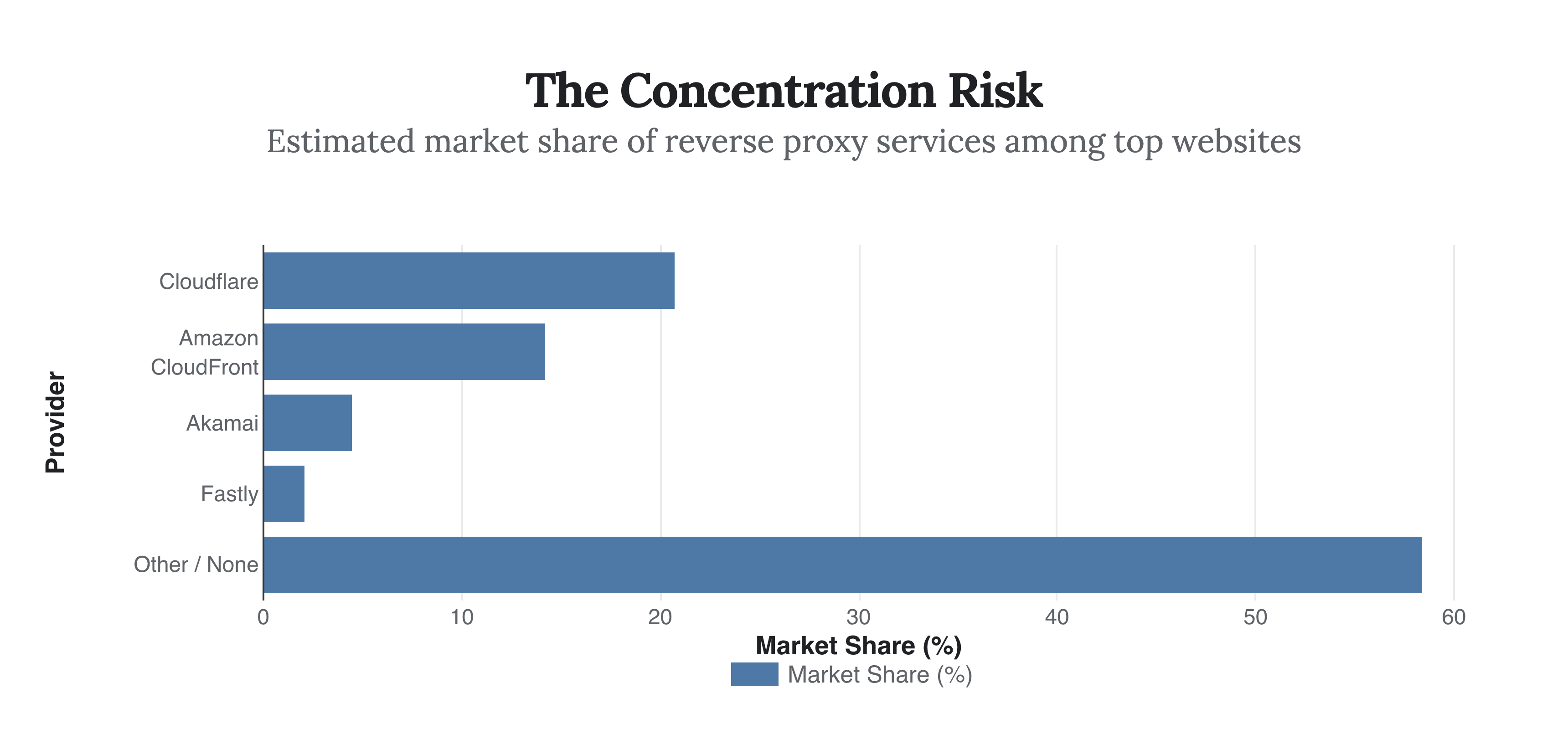
The chart above reveals the structural anomaly at the heart of the problem. With over 20% of the web’s traffic funneled through Cloudflare’s reverse proxies, the company has effectively become a “too big to fail” utility for the digital age. Unlike a bank, however, there is no federal reserve to step in when the servers stop responding.
“This was not an attack; the change was deployed by our team to help mitigate the industry-wide vulnerability disclosed this week.”
The irony is palpable: the outage was caused by a proactive security measure. In attempting to shield its clients from a React vulnerability, Cloudflare accidentally demonstrated that hyper-efficiency is indistinguishable from fragility. As we move forward, the question for CIOs at companies like LinkedIn and Zoom is no longer just about uptime; it is about diversification. Until the architecture of the web changes, we remain just one configuration error away from the next great silence.