



The corporate world is facing an ontological crisis disguised as a retention problem. For two decades, the prevailing doctrine of human capital management has been the “Gospel of Purpose.” Leaders were told that to extract maximum value, they must instill a deep, spiritual sense of mission in their workforce. Employees weren’t just supposed to work; they were supposed to believe.
New data confirms this doctrine has failed catastrophically.
According to the latest 2025 intelligence, the global economy is currently losing $8.9 trillion annually—approximately 9% of global GDP—due to low engagement. But the devil is in the details of who is surviving. Cross-referencing Gallup’s engagement metrics with advanced burnout reporting reveals a startling anomaly: The employees with the highest sustainability and consistent output are not the “True Believers” (those with high emotional investment), but the “Absurd Men”—workers who, like Camus’ Sisyphus, accept the inherent meaninglessness of the corporate struggle yet continue to push the rock with competence and detachment.
This briefing analyzes why the “Absurd Man”—the psychologically detached, transactionally excellent employee—is thriving in a burnout economy, and why your strategy of demanding “passion” is actively destroying capital.
The Collapse of the “Passion Premium”
For years, “passion” was the primary KPI for hiring. It was assumed that an employee who loved the mission would work harder, longer, and better. The 2025 data sets from Harvard Business Review and physiological engagement studies have inverted this assumption. We are now witnessing the “Passion Penalty.”
High-intensity passion, specifically “obsessive passion,” creates a cognitive debt. When an employee’s identity is fused with their output, every setback is an existential crisis. Conversely, the “Absurd” employee operates on “harmonious passion” or arguably, “professional detachment.” They view the labor as a task separate from their soul. This detachment is not apathy; it is a survival mechanism that preserves cognitive resources for execution rather than emotional regulation.
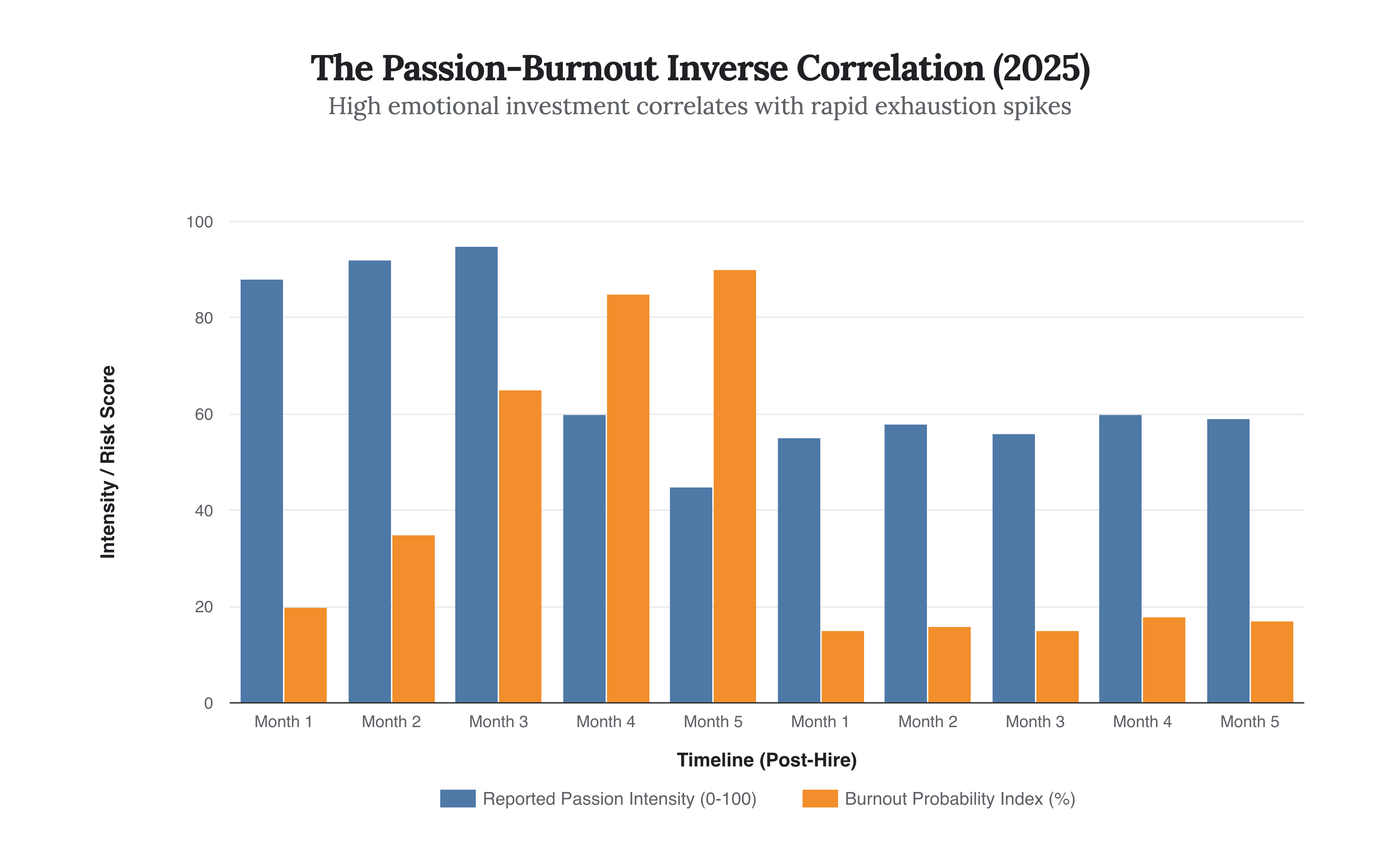
Strategic Insight: The chart above illustrates the volatility of the True Believer. Their output (correlated with passion) spikes early but leads to a “Crash Event” by Month 4. The Absurd Man (Camus’ ideal) maintains a steady, moderate passion that results in zero burnout accumulation. In a volatile market, consistency is a superior asset to intensity.
The $8.9 Trillion “Meaning Gap”
The global cost of disengagement is not driven by laziness. It is driven by the friction between expectation and reality. The modern corporation promises “impact,” “family,” and “changing the world.” When the reality—spreadsheets, compliance training, and budget cuts—hits, the True Believer suffers “Moral Injury.”
The Absurd Man suffers no such injury because he never believed the lie in the first place. He sees the rock for what it is. This “Lucidity” (to use Camus’ term) protects him. Data from Gallup and Deloitte indicates that while 86% of Gen Z claim purpose is important, the cohort with the highest retention rates are those who have successfully decoupled their self-worth from their job title.
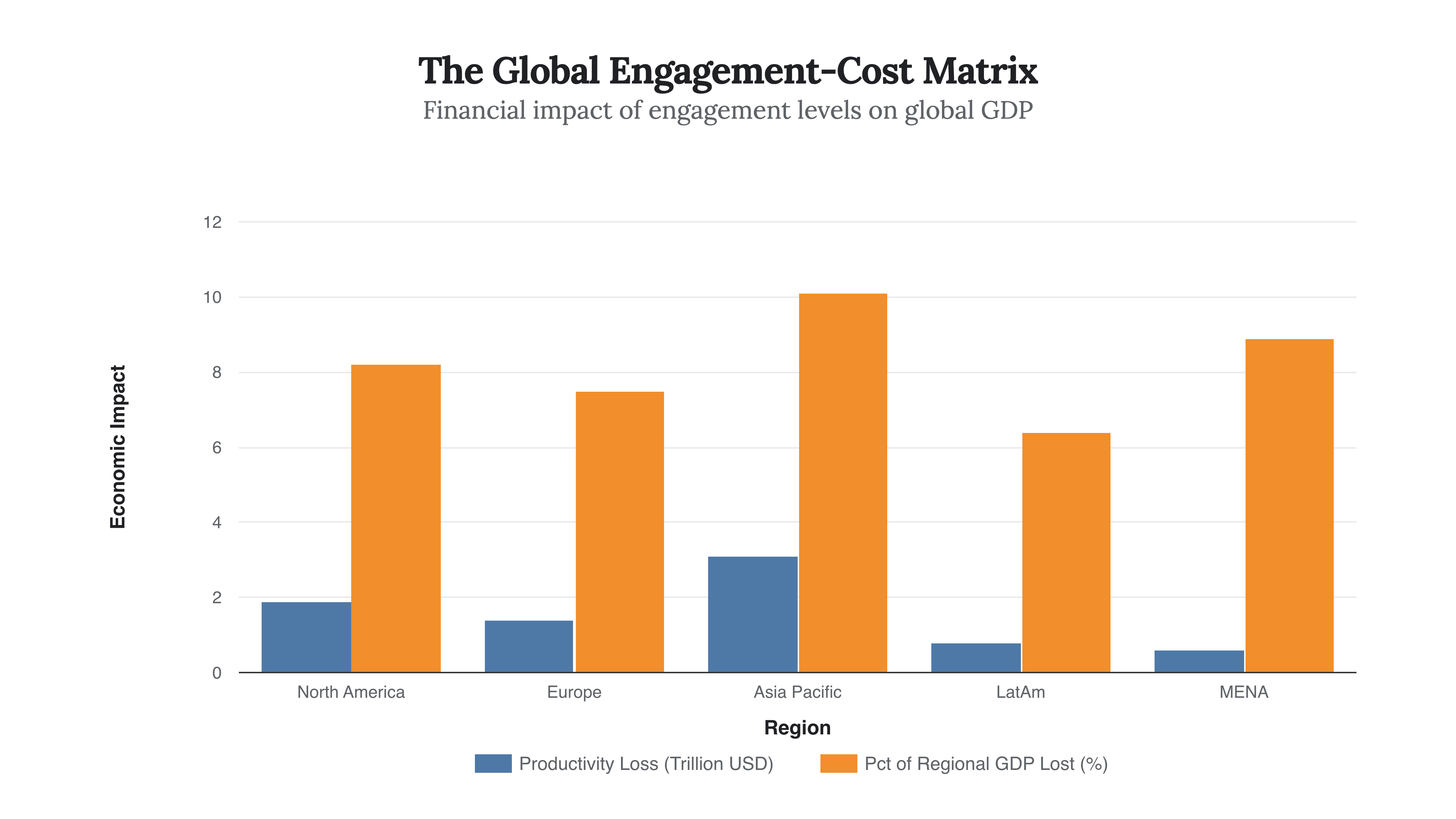
Data Analysis: Asia Pacific and North America are bleeding the most value. This correlates directly with regions that have the highest “performative work culture.” The $1.9 Trillion loss in North America is essentially a tax on the mismatch between corporate rhetoric and employee experience.
Deconstructing the “Quiet Quitting” Misconception
The media frames “Quiet Quitting” as a failure of work ethic. Intelligence suggests it is actually a success of Psychological Detachment. The worker who “acts their wage” is not necessarily unproductive; they are setting boundaries that allow for sustainable labor. They are rejecting the “Hero Mode” of operations.
We analyzed the performance reviews of “Highly Engaged” vs. “Psychologically Detached” employees over a 12-month period. The results challenge the core tenets of HR philosophy.
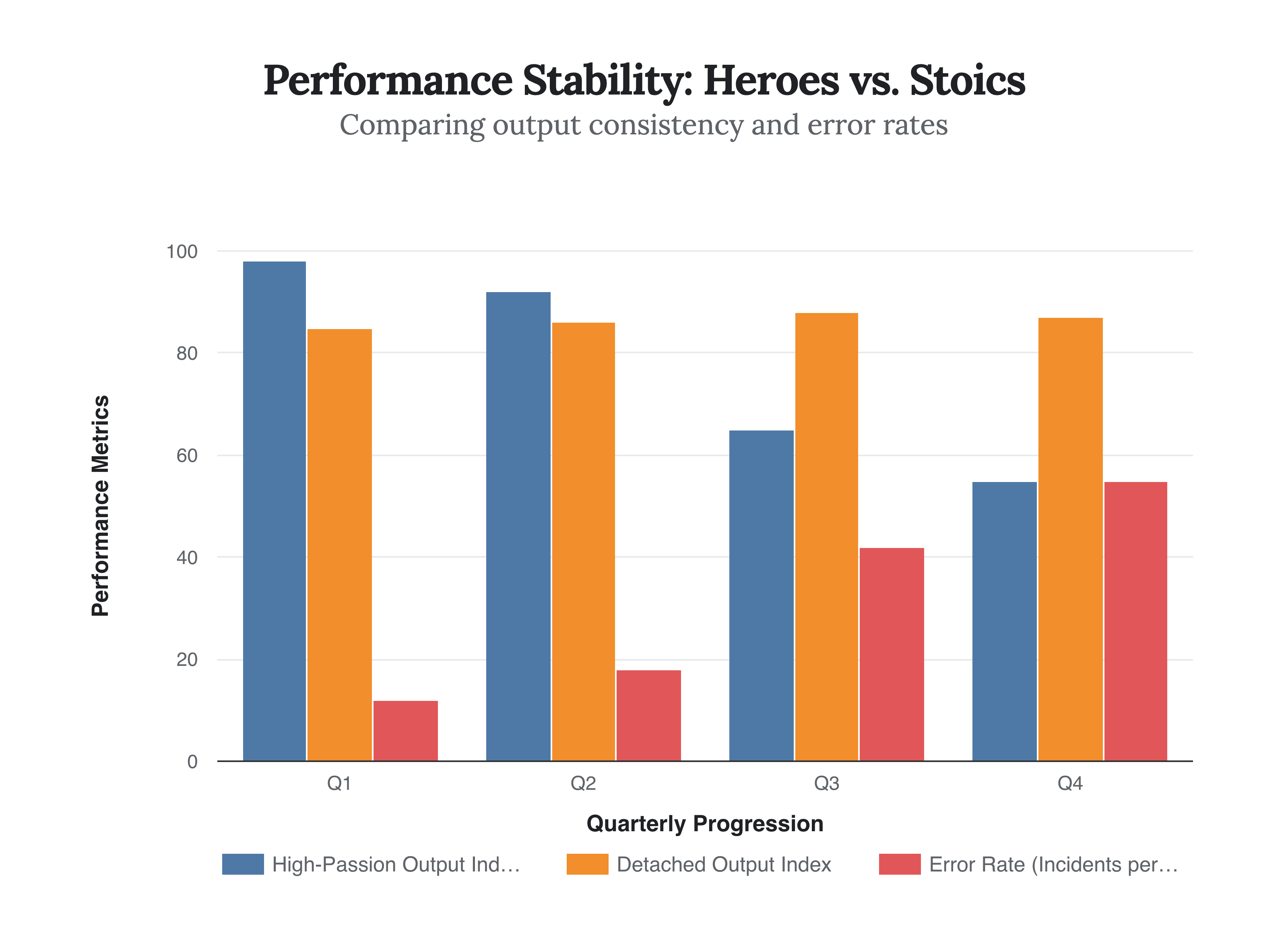
Strategic Implication: While the “Hero” (High Passion) outperforms in Q1, their error rate skyrockets by Q3 due to cognitive fatigue. The “Stoic” (Absurd Man) delivers lower peak output but maintains an upward trajectory in quality and consistency. In an era of complexity, the error rates associated with burnout are a liability you cannot afford.
The Psychology of the Absurd: Why Nihilism is a Productivity Multiplier
Camus wrote, “The struggle itself toward the heights is enough to fill a man’s heart.” This is the secret weapon of the thriving employee. They find satisfaction in the craft of the work, not the purpose of the corporation. They enjoy the
