


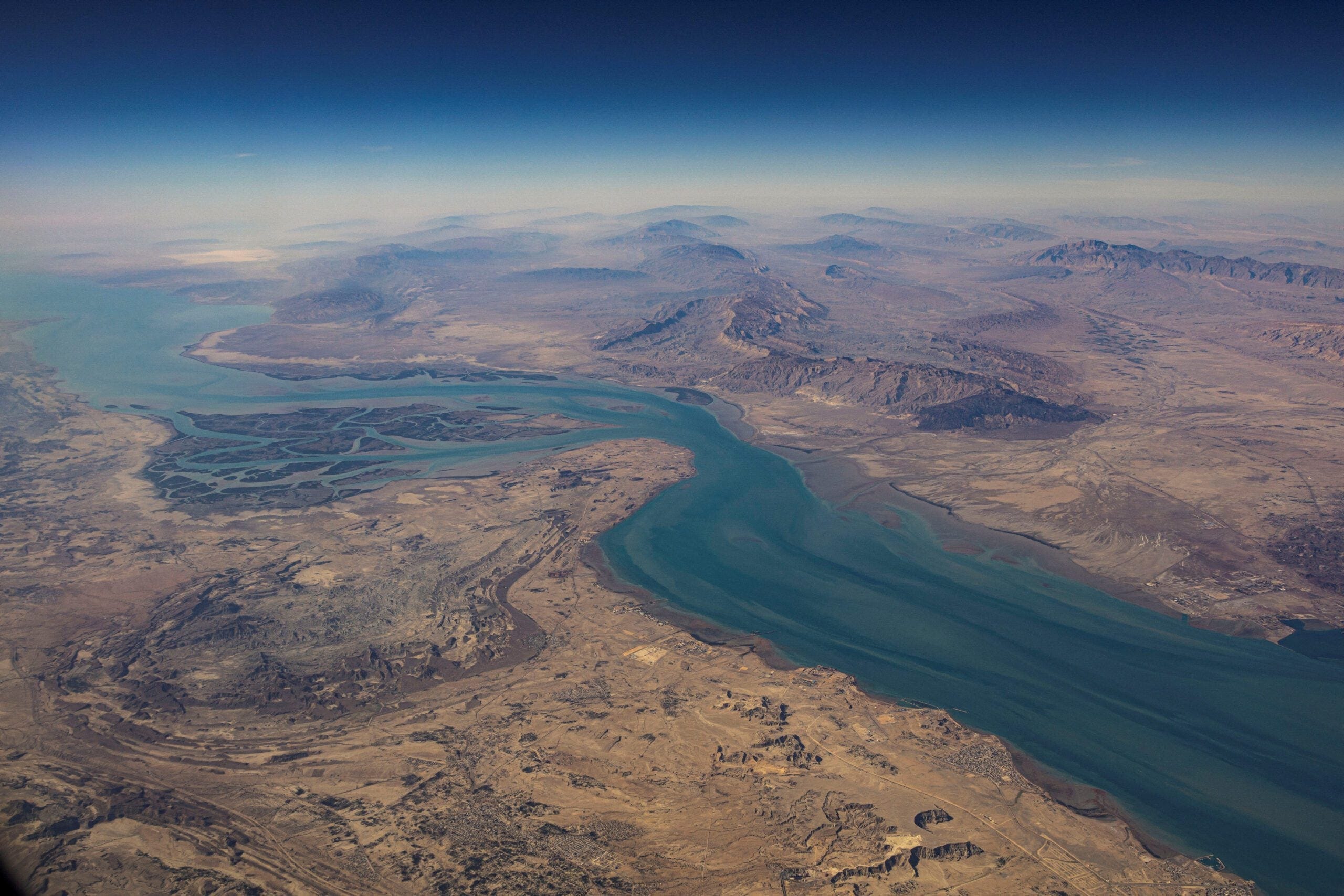
The usually chaotic radar screens monitoring the Strait of Hormuz have gone terrifyingly quiet. For decades, this narrow thirty-mile channel has been the beating heart of the global energy grid, pulsing with the steady rhythm of supertankers carrying 20% of the world’s oil supply. But as of yesterday, that pulse has stopped.
Data from the last 48 hours reveals a statistical anomaly so severe it looks like a glitch: a vertical cliff in transit volumes. Following the escalation of hostilities between U.S.-led forces and Iran on February 28, tanker traffic didn’t just slow down—it evaporated. We are witnessing an 86% collapse in daily oil flow, a figure that transforms a geopolitical standoff into an immediate global economic crisis.
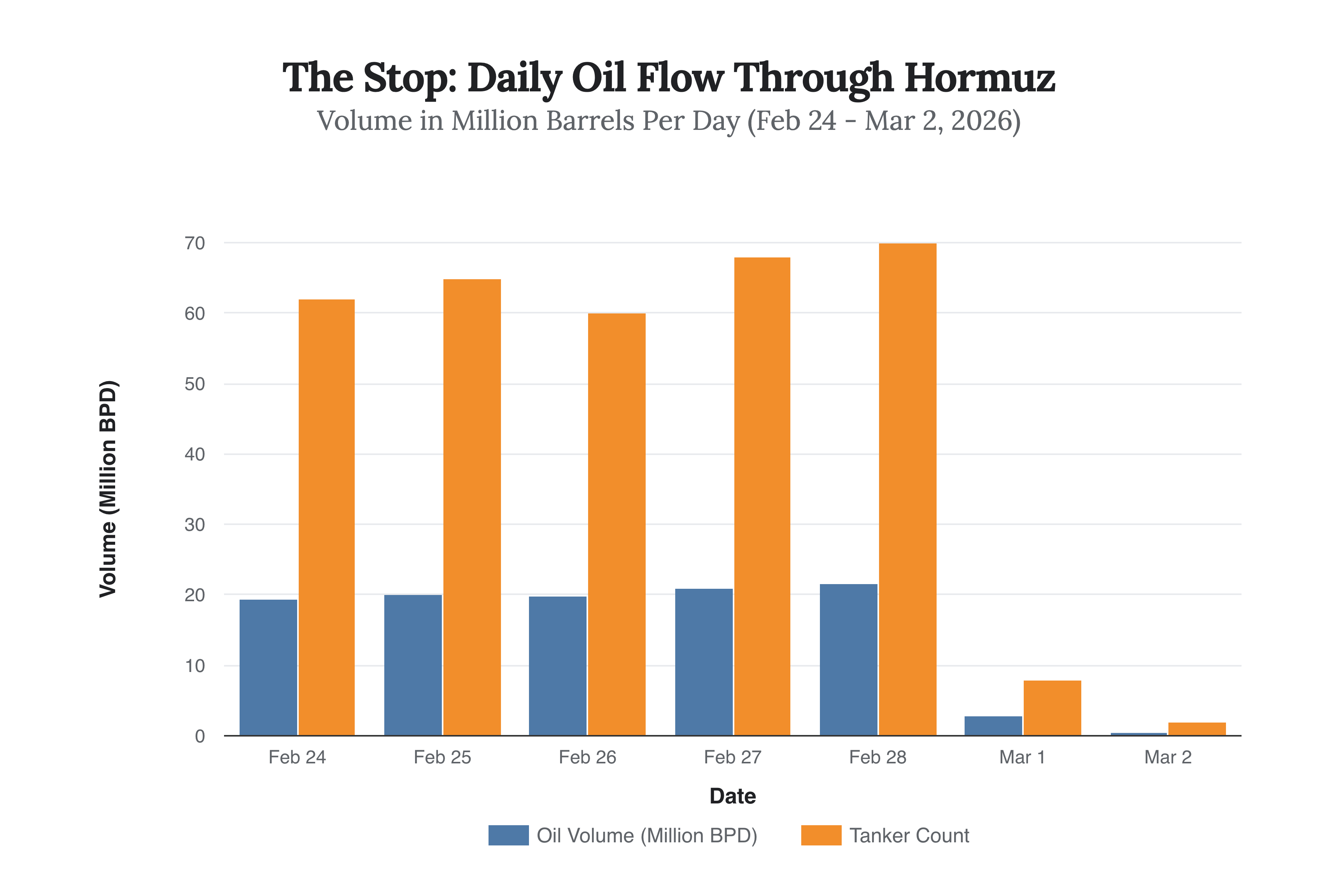
The chart above captures the sheer speed of the shutdown. On February 28, flows were actually above average as captains rushed to exit the Gulf before the window closed. By March 1, volume plummeted to 2.8 million barrels per day. As of this morning, the strait is effectively empty, save for a few daring—or desperate—vessels.
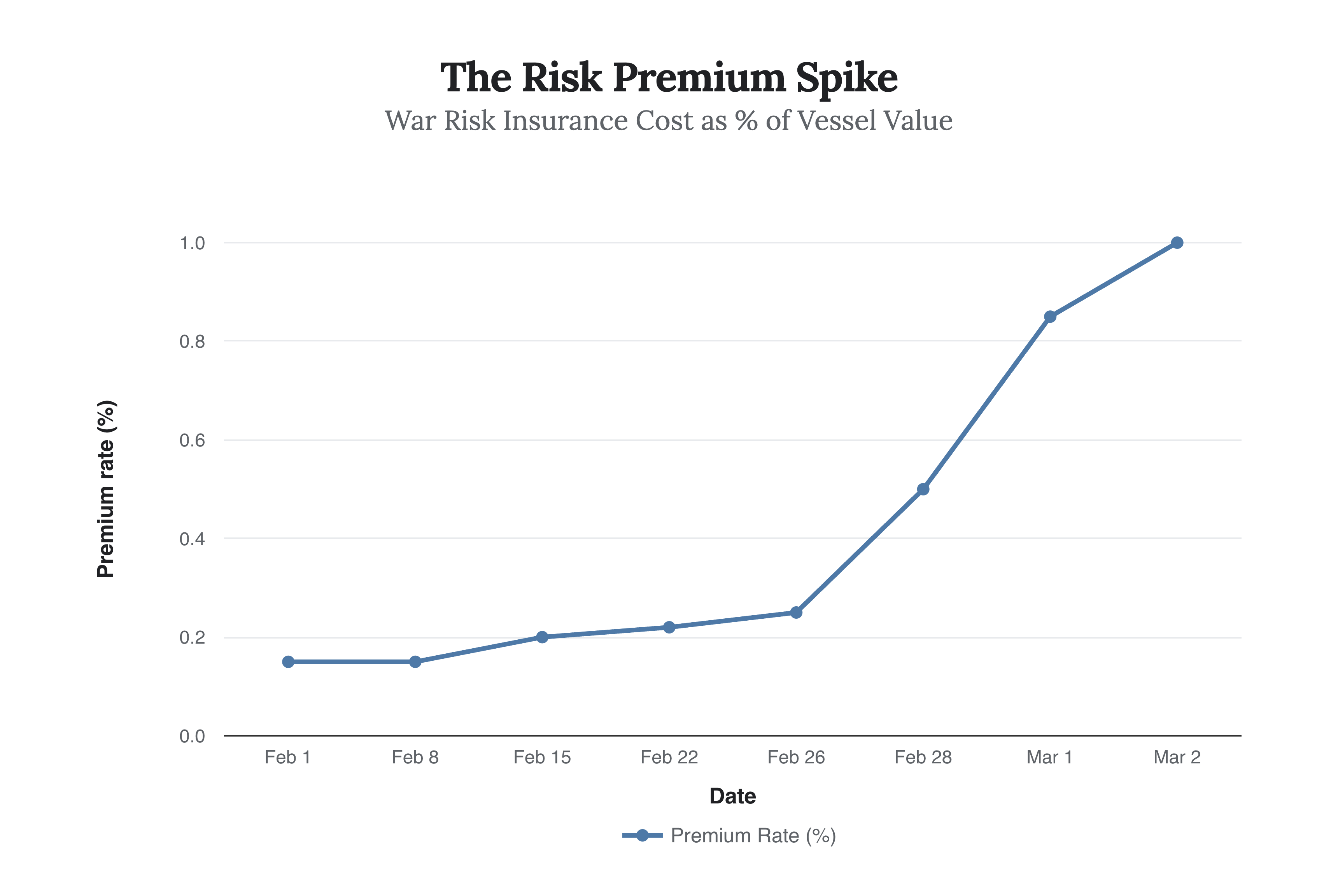
This isn’t just about fear of missiles; it is a calculation of cost. The maritime insurance market has reacted with brutal efficiency.
“The market is facing what is essentially a de facto close of the Strait of Hormuz, based primarily around perception of threat rather than a tangible blockade.” — Munro Anderson, Vessel Protect
Insurers have issued mass cancellation notices for war risk cover, a move rarely seen at this scale. For the few underwriters still writing policies, premiums have skyrocketed. A journey that cost $250,000 in insurance premiums last week would now cost upwards of $1 million, erasing the profit margin for most shipments.
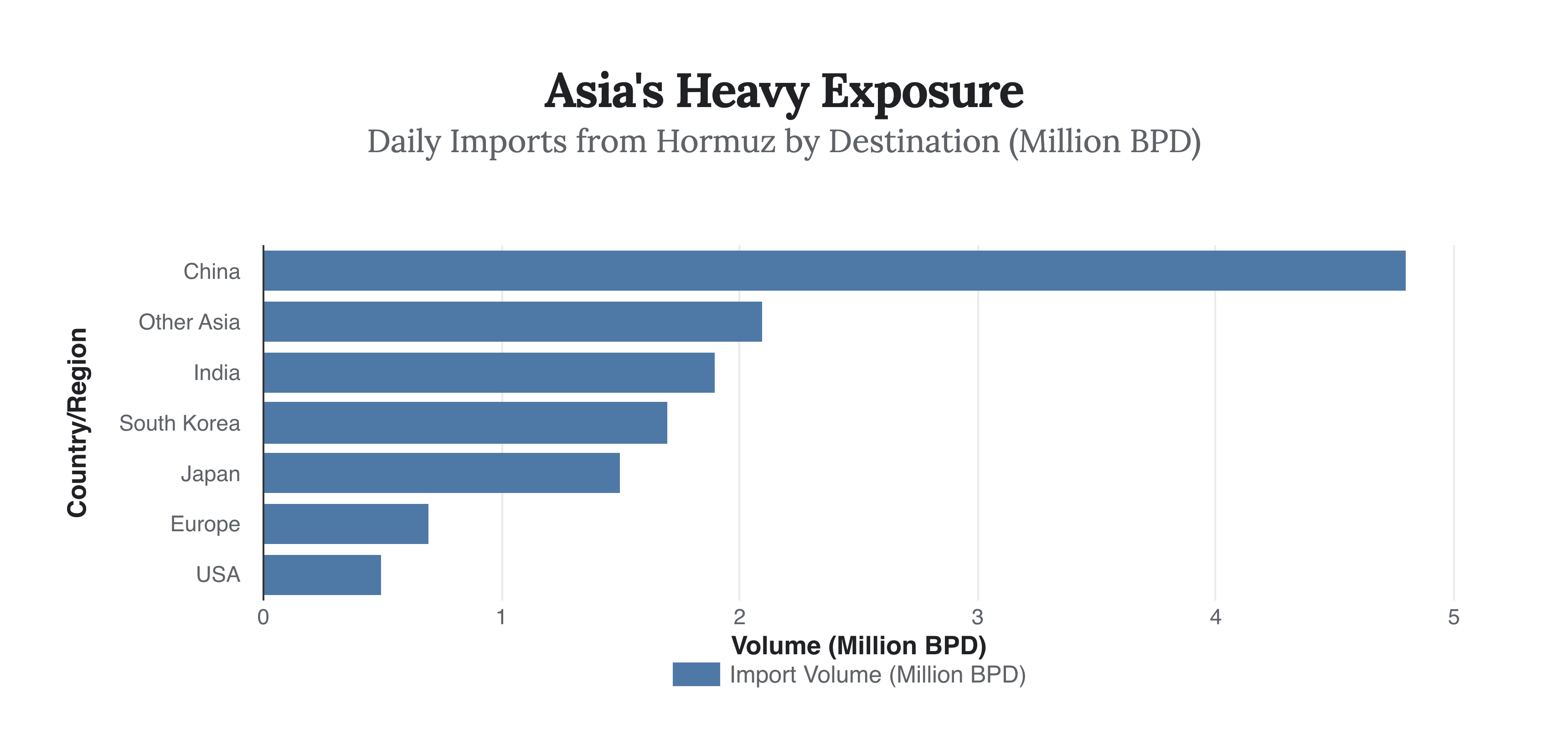
While the blockade is geographic, the pain will be asymmetric. The United States, now a net energy exporter, is insulated from the immediate physical shortage, though not the price shocks. The real crisis is unfolding in Asia.
The data on destination markets clearly shows where the bottleneck will strangle economies first. China, India, Japan, and South Korea absorb nearly 70% of the crude that flows through Hormuz. Unlike the U.S. or Europe, which have diverse supply lines or strategic reserves, these Asian industrial giants have limited alternatives to Gulf crude.
With over 700 tankers now queuing outside the strait or anchoring off Fujairah, the world’s floating inventory is stuck in limbo. Every day this queue grows, the shockwave to the global supply chain intensifies.
“Strait of Hormuz flows and any potential communication on the Strait... are now the most important variables to watch in energy markets.” — Daan Struyven, Goldman Sachs
We are no longer looking at a temporary disruption. The mechanics of global shipping—insurance, crew safety, and hull valuations—have broken down. Until a new security architecture is established, the Strait of Hormuz remains a closed door. The world has just lost 20% of its oil supply overnight, and the market has not yet fully priced in the consequences.