


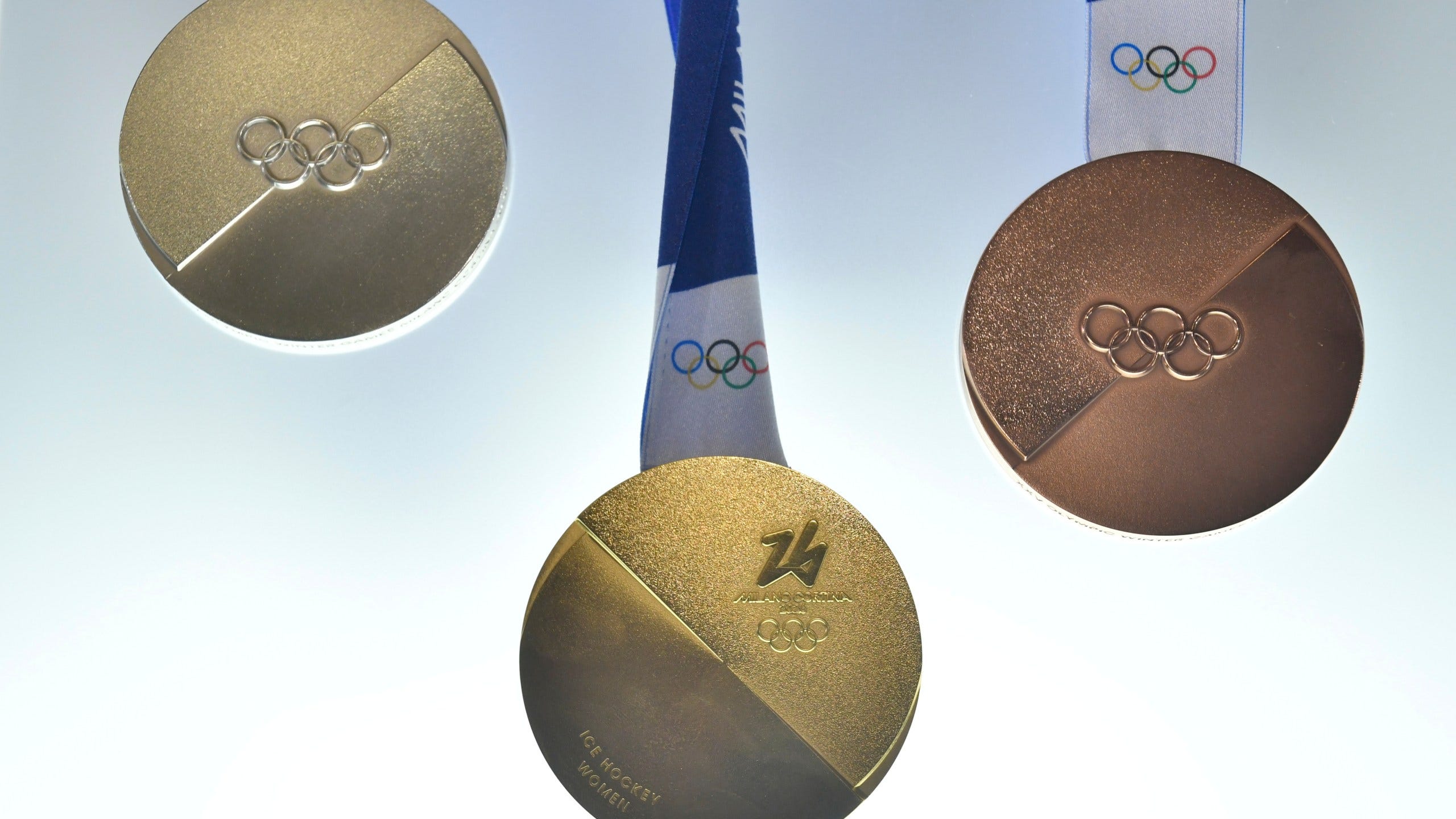
It is Friday, January 23, 2026. In exactly two weeks, the Olympic torch will enter the Stadio San Siro, igniting the XXV Olympic Winter Games. On the surface, the mood in Milan is electric; the banners are hung, and the €1.7 billion operating budget—funded largely by private sponsorship and the IOC—remains relatively balanced. But peel back the layer of blue-and-white branding, and a different set of numbers emerges, telling a story of frantic construction, missed deadlines, and a broken promise of sustainability.
The defining statistic of these Games is not the number of medals or athletes, but the explosion of the infrastructure budget. Originally sold to the International Olympic Committee (IOC) in 2019 as a “low cost” event that would leverage existing venues for a modest €1.3 billion investment, the total projected cost for infrastructure and associated works has now ballooned to an estimated €5.7 billion. This 338% increase reveals the silent crisis of Milano Cortina: while the sporting events themselves are privately funded, the taxpayer has been left to foot a massive, ever-growing bill for roads, railways, and venues that were supposed to be ready years ago.
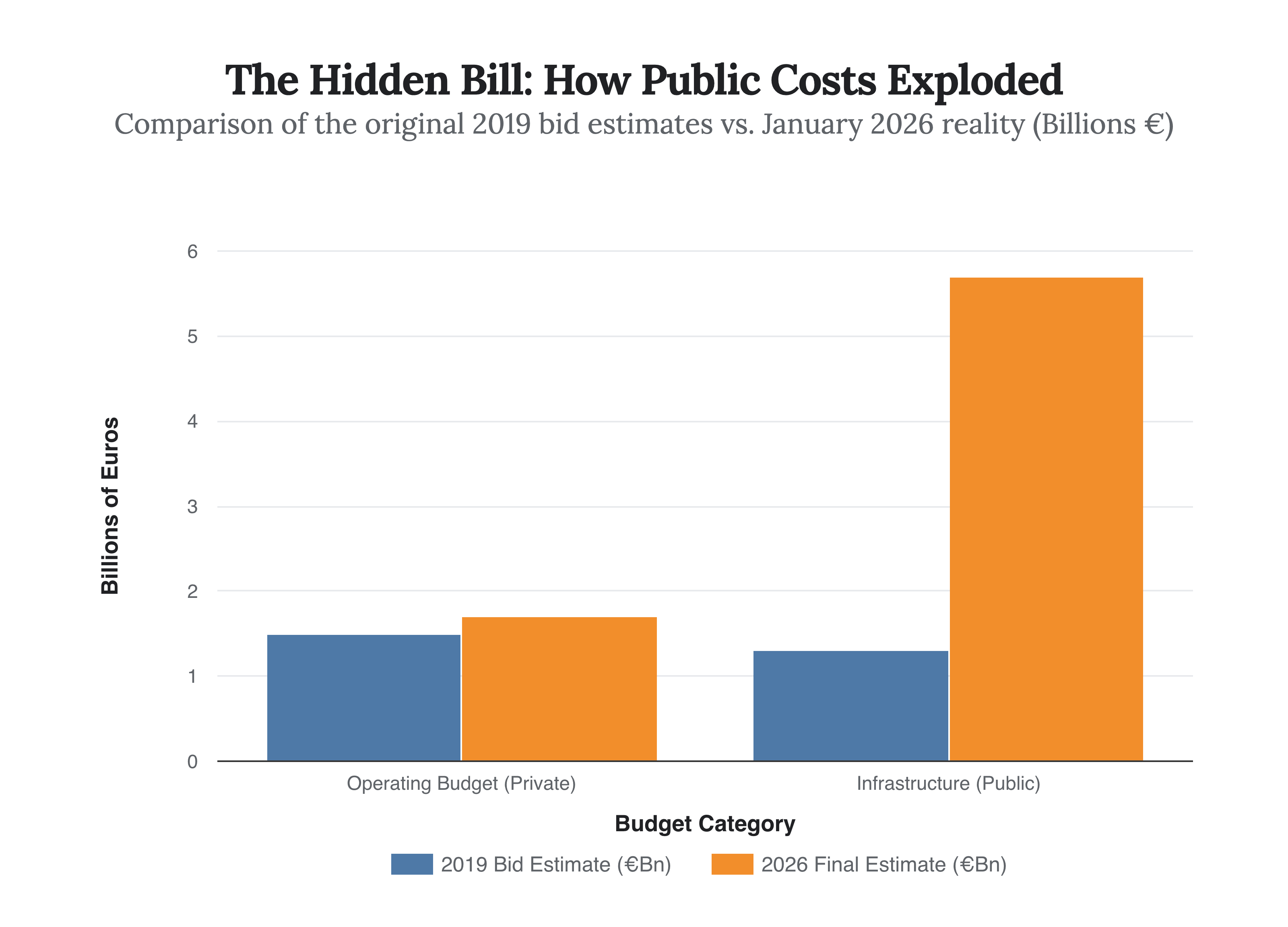
The discrepancy is startling. While the Organising Committee worked tirelessly to keep the operational side (logistics, food, ceremonies) within a manageable 13% variance, the state-funded infrastructure projects—managed by the government entity Simico—spiraled out of control. This massive divergence highlights a structural flaw in modern Olympic hosting: the “Games budget” is often a fiction that excludes the billions spent on concrete and steel under the guise of “regional development.”
The €118 Million Slide
Nowhere is this spending more visible, or more controversial, than in the resort town of Cortina d’Ampezzo. For months, the sliding centre (hosting bobsleigh, luge, and skeleton) has been the subject of an intense geopolitical tug-of-war. The IOC explicitly requested that Italy use an existing track in nearby St. Moritz, Switzerland, or Innsbruck, Austria, to avoid the environmental and financial cost of building a new one. St. Moritz estimated the hosting fee at roughly €15 million.
Italy refused. Driven by “national pride” and a refusal to host events on foreign soil, the government pushed ahead with a new track in Cortina. The initial budget was €50 million. By the time the contract was finally signed in early 2024, it had risen to €81.6 million. Today, as finishing touches are frantically applied for the first test runs, the total cost for the facility stands at approximately €118 million.
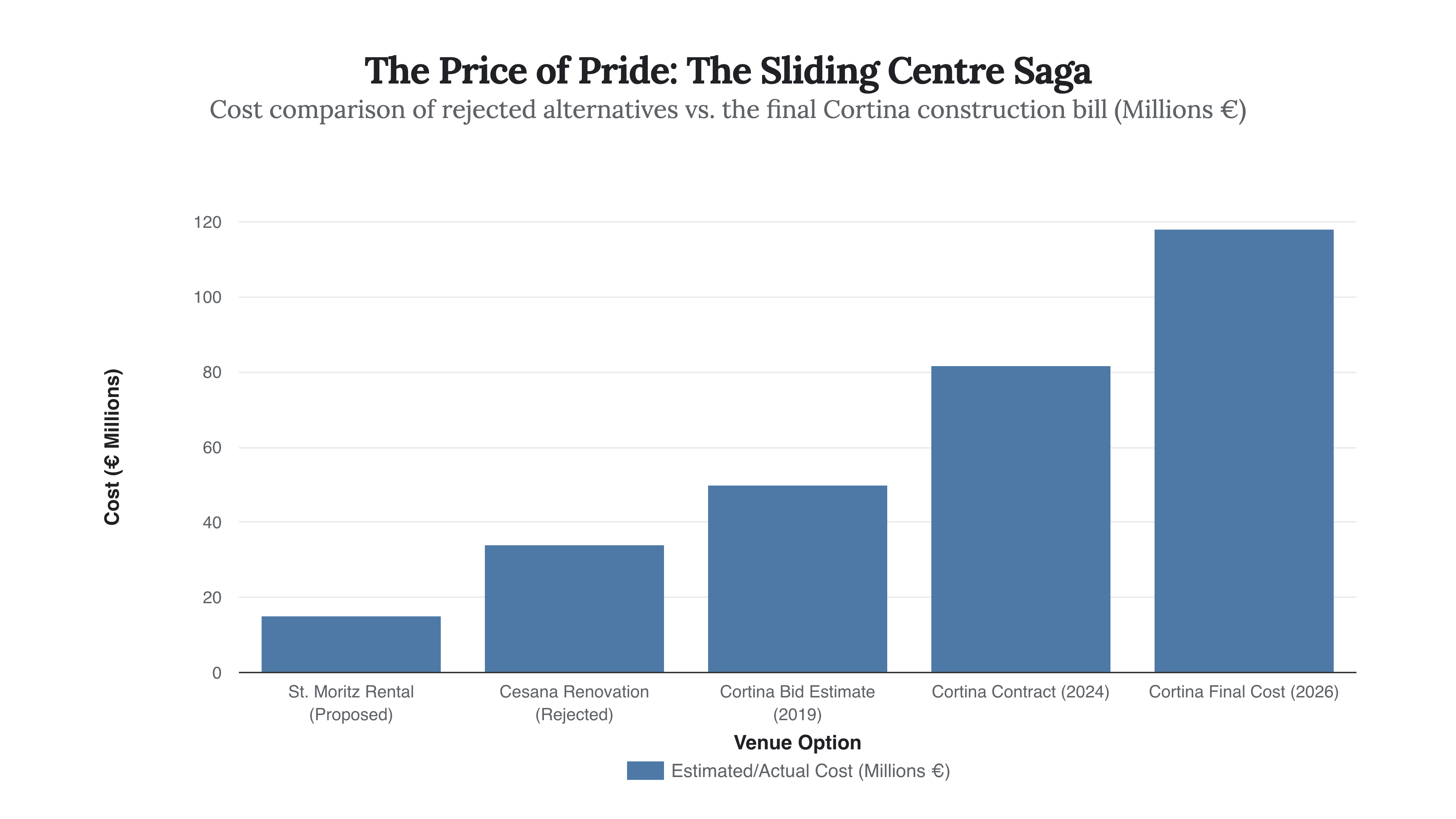
This single venue encapsulates the paradox of Milano Cortina. The decision to build new instead of renting existing infrastructure cost the Italian taxpayer nearly eight times the sustainable alternative. Furthermore, the frantic pace of construction—requiring shifts around the clock throughout the winter of 2025—added a premium to every bag of cement poured.
“The choice puts a full stop on it and attests to the extreme determination of this government to finish all the works for the Games in the best way and in Italy.” — Italian Government Statement, February 2024
That determination has come at a price. Beyond the financials, the environmental impact has been significant. New research indicates that the construction and operation of the Games, combined with high-carbon sponsorship deals, will contribute to approximately 930,000 tonnes of CO2 emissions. In a bitter irony for a Winter Olympics, this carbon footprint contributes directly to the warming trends that threaten the future of snow sports in the Dolomites.
The Race for Revenue
Despite the infrastructure headaches, the commercial machinery of the Games has performed admirably. As of this month, the Organising Committee has secured over €400 million in domestic sponsorship revenue, closing in on their ambitious €575 million target. This revenue is critical, as it ensures that the operational costs of the Games do not require a taxpayer bailout, even if the roads leading to the venues do.
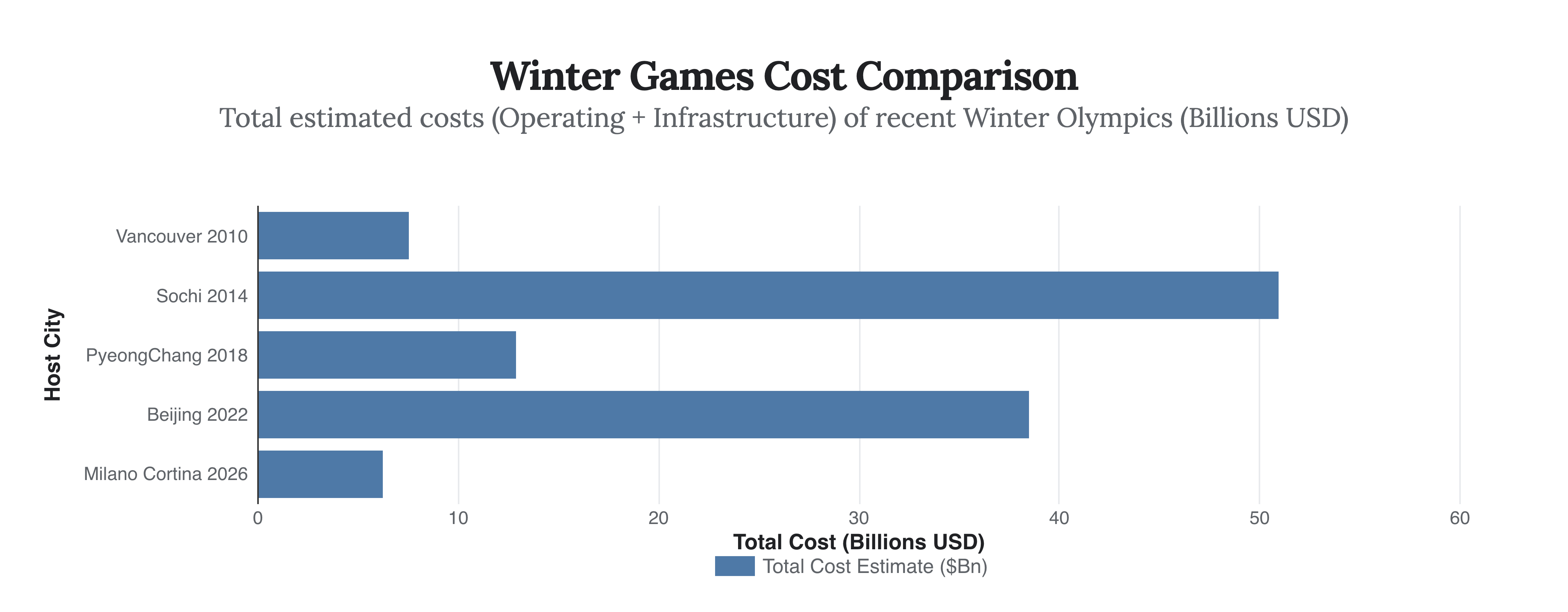
Compared to the astronomical $51 billion spent on Sochi 2014 or the estimated $38.5 billion for Beijing 2022, Milano Cortina’s €6.3 billion (approx. $6.7 billion) total price tag seems almost modest. However, it is the trend that worries economists. The promise of the “New Norm”—the IOC’s initiative to make Games cheaper and more sustainable—was supposed to reverse the curve. Instead, Milano Cortina proves that as long as “national pride” dictates infrastructure decisions, the cost curve will continue to point upward.
As the athletes arrive and the cameras turn on, the world will see a spectacular backdrop of the Alps and the style of Milan. The bobsleds will slide down the €118 million track, and the controversy will momentarily fade behind the roar of the crowd. But when the flame is extinguished, Italy will be left with a powerful lesson: there is no such thing as a “light footprint” when you insist on leaving your own concrete mark.