



For years, the “digital gold” narrative promised that when the global economy buckled, Bitcoin would stand shoulder-to-shoulder with bullion as the ultimate safe haven. In 2025, that promise faced its first true audit—and the results have left institutional investors scrambling. As we close the year, the divergence is not just a gap; it is a chasm. While physical gold has staged a historic rally, shattering ceiling after ceiling to trade near $4,500 per ounce, Bitcoin has languished, trading roughly 30% below its October peak.
The numbers tell a brutal story of decoupling. Gold has delivered a staggering year-to-date return of approximately 70%, driven by an insatiable appetite from central banks and a flight to safety amid fiscal tremors. In stark contrast, Bitcoin has effectively round-tripped, struggling to hold the $90,000 line after briefly touching $126,000 earlier in the year. This 75-percentage-point performance delta has forced major financial houses to issue rare corrections to their forecasts, signaling a fundamental shift in how the market values “safety” versus “risk.”
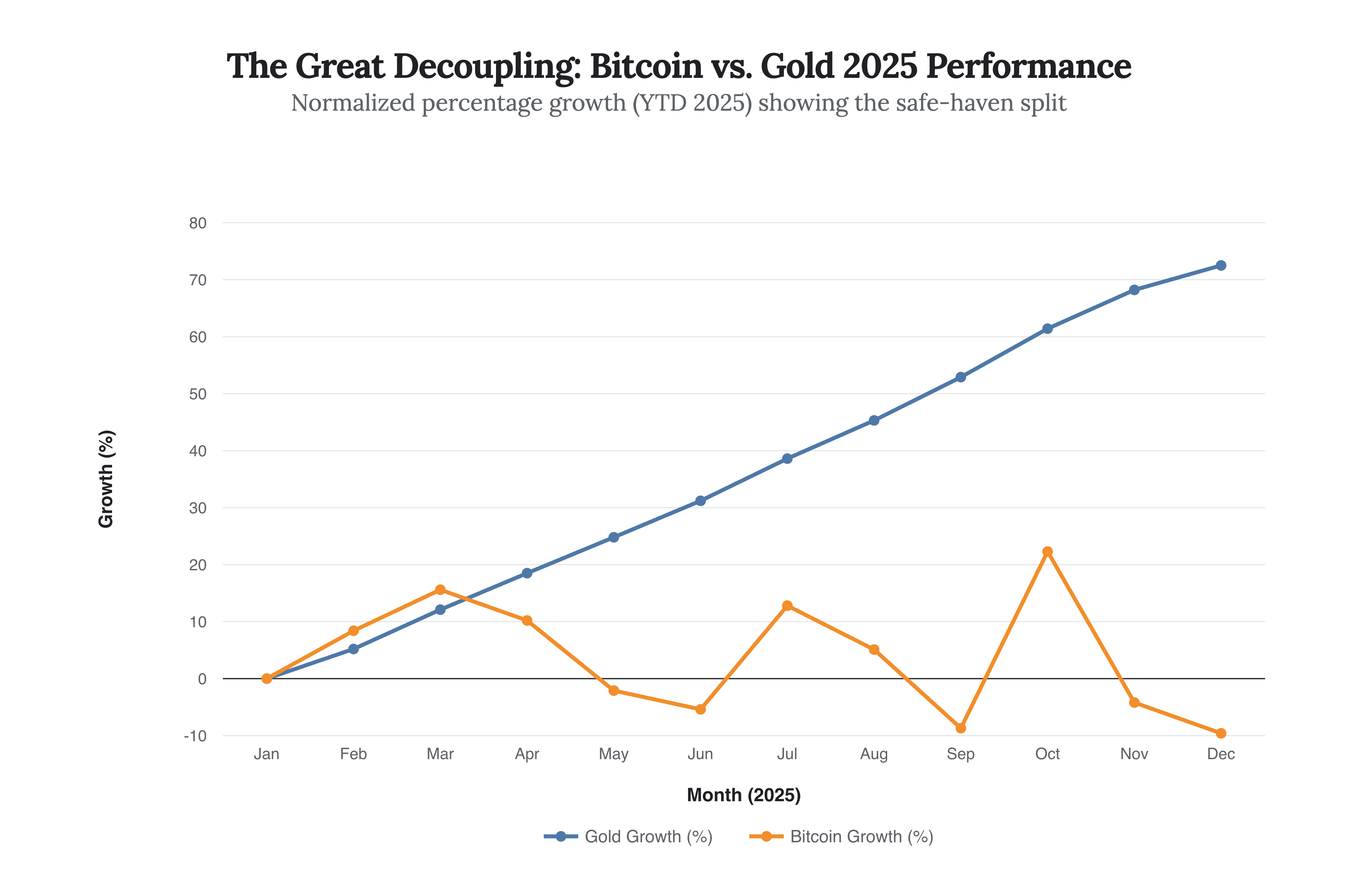
The chart above reveals precisely when the narrative fractured. While Bitcoin exhibited its trademark volatility—spiking in October only to surrender those gains—gold maintained a disciplined, upward march. This relentless ascent was powered not by retail speculation, but by sovereign accumulation. In the third quarter of 2025 alone, global central banks purchased a record-breaking 980 tonnes of gold. This mechanical, price-agnostic buying created a floor for the metal that cryptocurrencies simply lacked.
“Gold continues to outperform Bitcoin and the S&P 500... driven by macroeconomic factors like rising inflation and tariff uncertainties. If Fed independence is compromised, gold could reach $5,000.” — Goldman Sachs Commodity Research
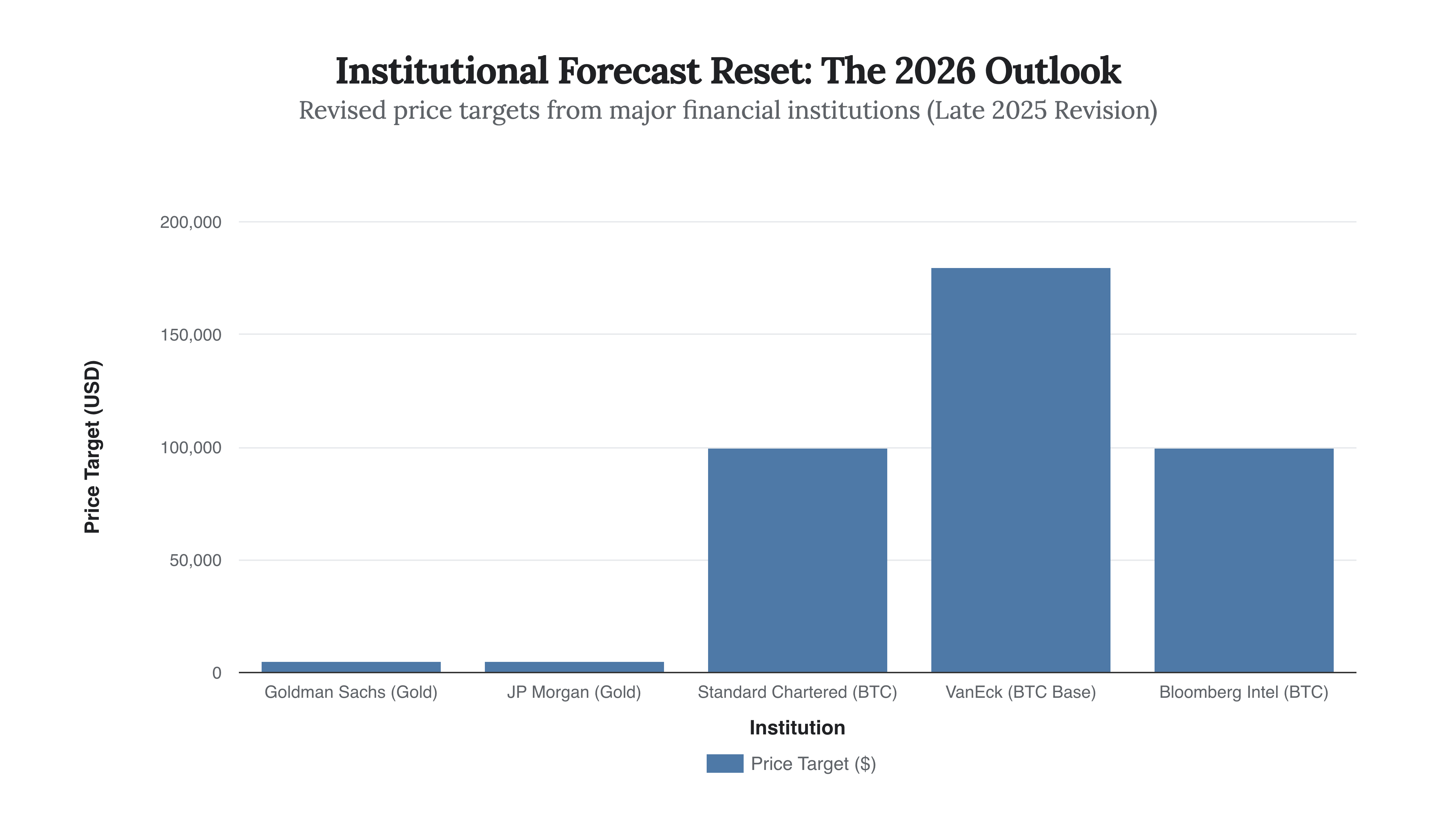
The institutional reaction to this divergence has been swift and merciless. Standard Chartered, which had previously championed a $200,000 target for Bitcoin in 2025, slashed its forecast by half to $100,000 as the year drew to a close. The bank cited a critical slowdown in ETF inflows and a lack of corporate adoption beyond established players. Meanwhile, traditional banks have raced to upgrade their gold targets. Goldman Sachs and JP Morgan have both adjusted their sights, with the latter projecting the metal could breach $5,055 by late 2026.
However, it is not all doom for the crypto sector. While Bitcoin failed the “safe haven” test of 2025, it is finding a new identity as a high-beta technology play. Flows into products like BlackRock’s IBIT ETF remained robust, netting over $25 billion despite the negative price action. This suggests a sophisticated investor base that is “buying the dip” rather than fleeing the asset class. The divergence suggests that while Gold is for protection, Bitcoin remains a vehicle for growth—albeit one that is currently out of favor in a risk-off macro environment.
“Bitcoin has increasingly mirrored gold’s trajectory over the past year... [but] when institutions and retail allocate for safety, they still default to the assets with centuries of track record.” — AInvest Market Analysis
Ultimately, 2025 has clarified the roles of these two assets. The “Bitcoin to Gold Ratio” has collapsed from its highs, indicating that for every ounce of gold, you can buy significantly less Bitcoin than you could a year ago. This ratio compression is a signal that the market is re-pricing the risk premium of digital assets.
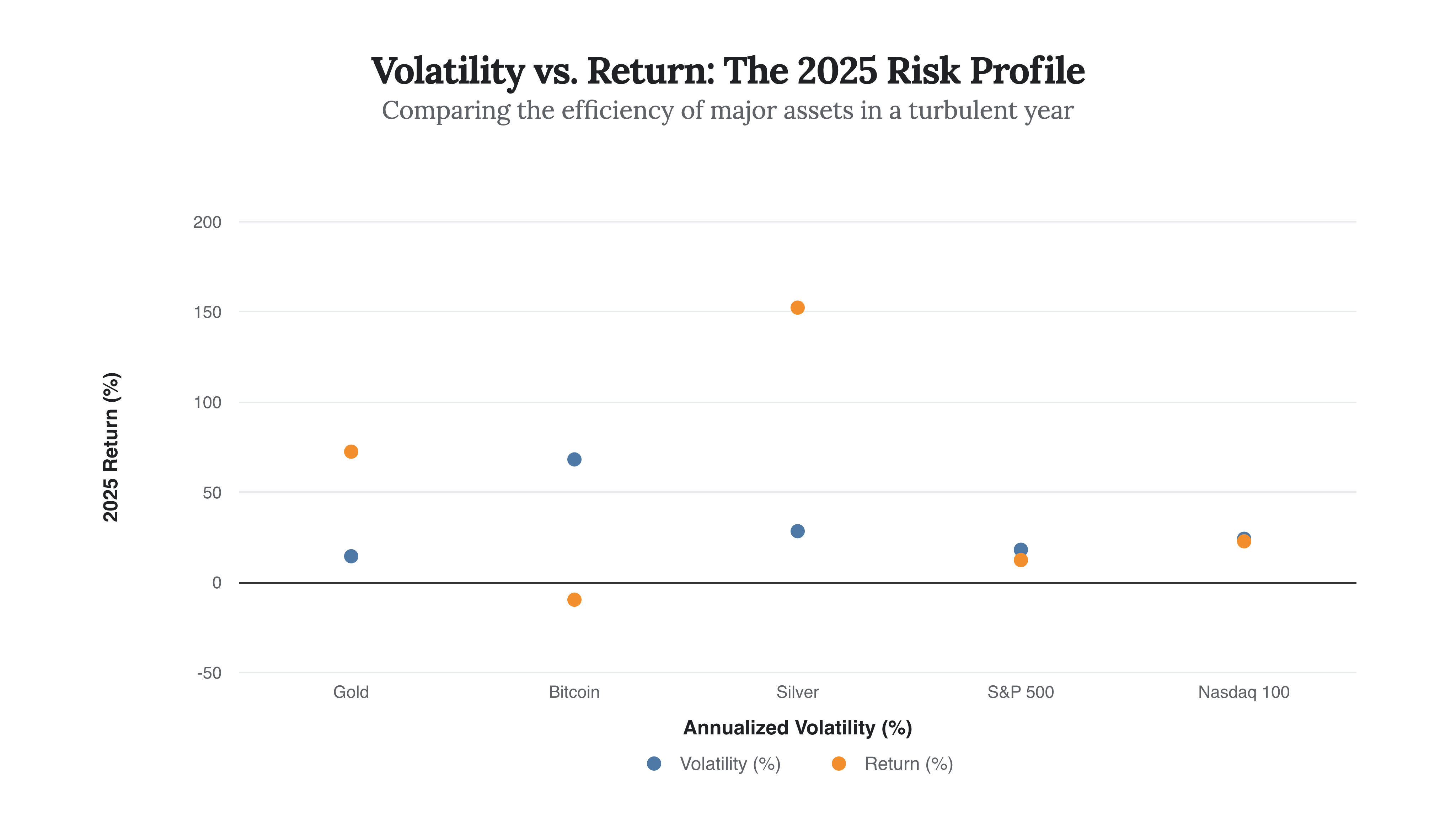
The verdict for 2025 is clear: In a world of fiscal instability, the market chose the physical over the digital. As we head into 2026, the question is no longer if Bitcoin will replace gold, but whether it can decouple from tech stocks long enough to prove it belongs in the same conversation.