


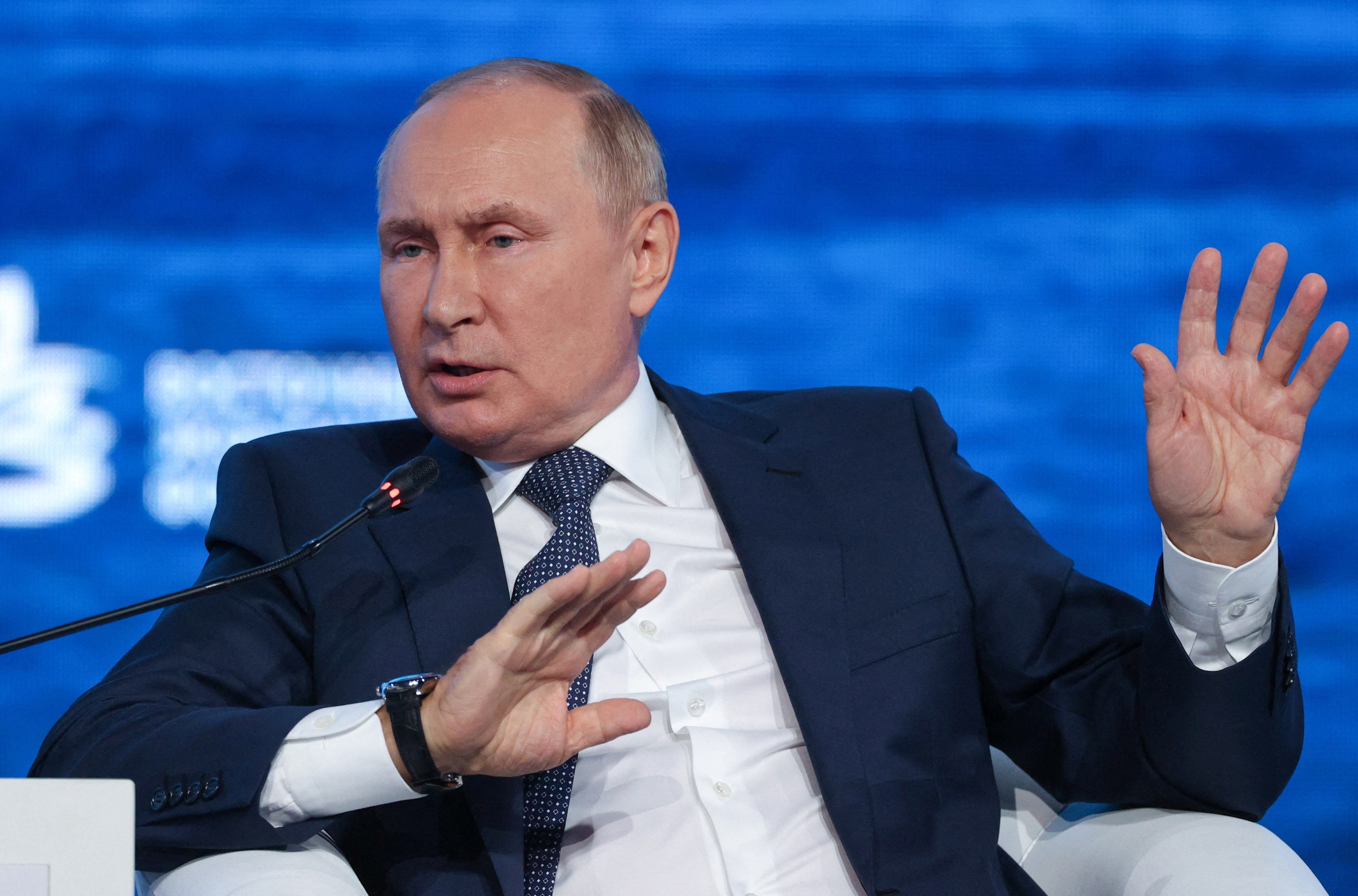
On Thursday night in New Delhi, Prime Minister Narendra Modi broke protocol to receive Russian President Vladimir Putin at the airport, greeting him with a bear hug that will be analyzed in Western capitals for months. By Friday afternoon, the two leaders had announced an ambitious target: growing bilateral trade to $100 billion by 2030.
But as the ink dries on the “Vision 2030” document, a closer look at the data reveals a startling fragility at the heart of this booming partnership. While the headline trade volume has exploded—growing nearly six-fold since the pre-pandemic era—the relationship has become overwhelmingly one-sided. Real-time data from the Ministry of Commerce and Industry shows that for every $1 India earns from selling to Russia, it spends nearly $13 buying from it.
This isn’t just a trade deficit; it is a structural imbalance that threatens to derail the very payment mechanisms designed to bypass Western sanctions. Here is the data behind the diplomatic spectacle.
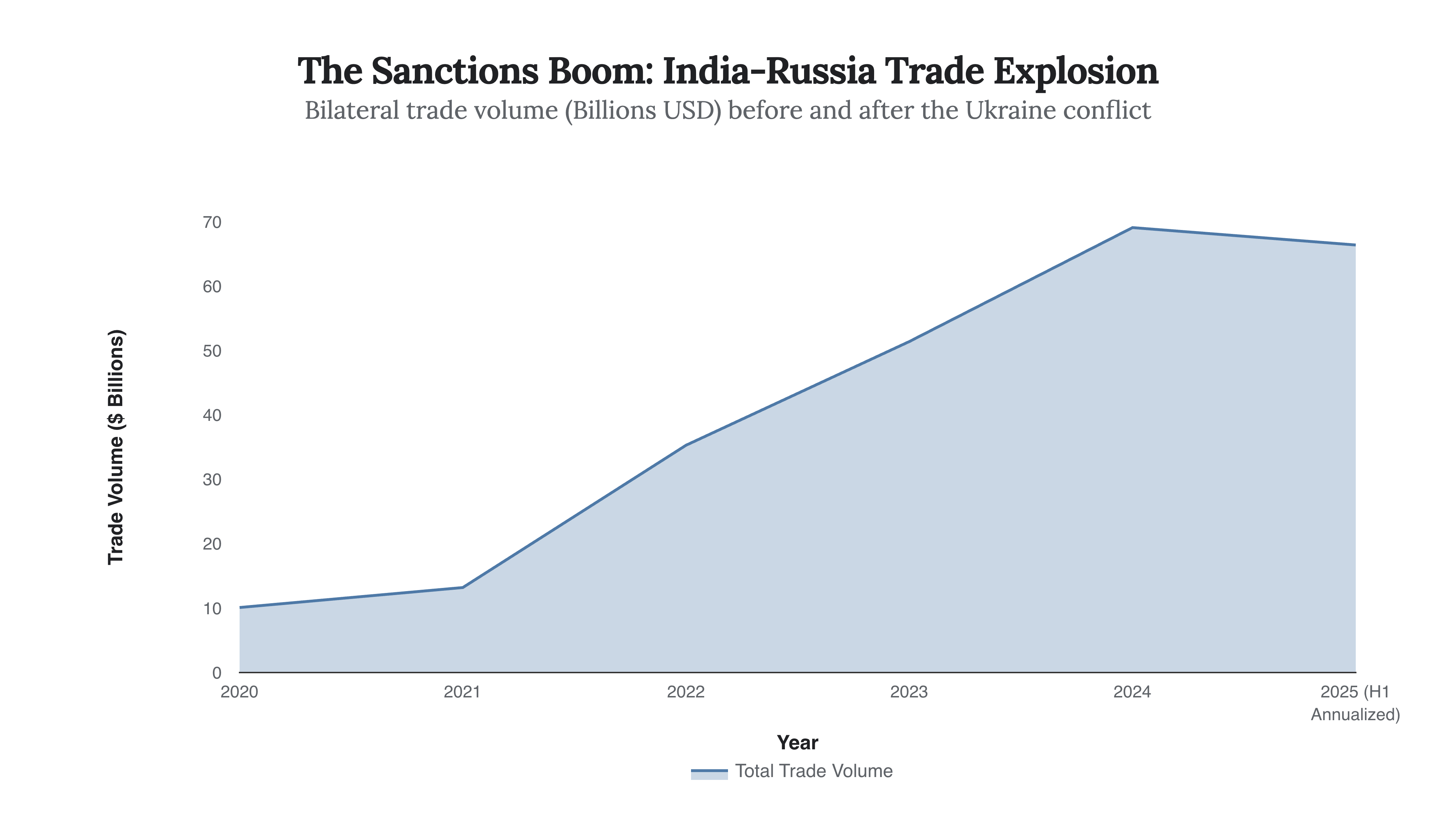
The chart above captures one of the most dramatic pivots in modern economic history. Before 2022, Russia was a marginal trading partner for India, languishing behind nations like Belgium and Nigeria. Today, it is a titan, driven almost exclusively by India’s voracious appetite for discounted energy.
Following Western sanctions on Moscow, New Delhi refused to isolate its long-time partner, instead opting to prioritize energy security. The result was a flood of Urals crude into Indian refineries. However, the data suggests this growth is hitting a plateau. Trade volume in the first half of 2025 has stabilized, signaling that the initial “discount rush” has reached its natural limit.
The New Oil Map
To understand why the trade balance is so skewed, one simply needs to look at where India gets its oil. In a span of three years, Russia has vaulted from a sub-2% supplier to controlling more than a third of India’s market share.
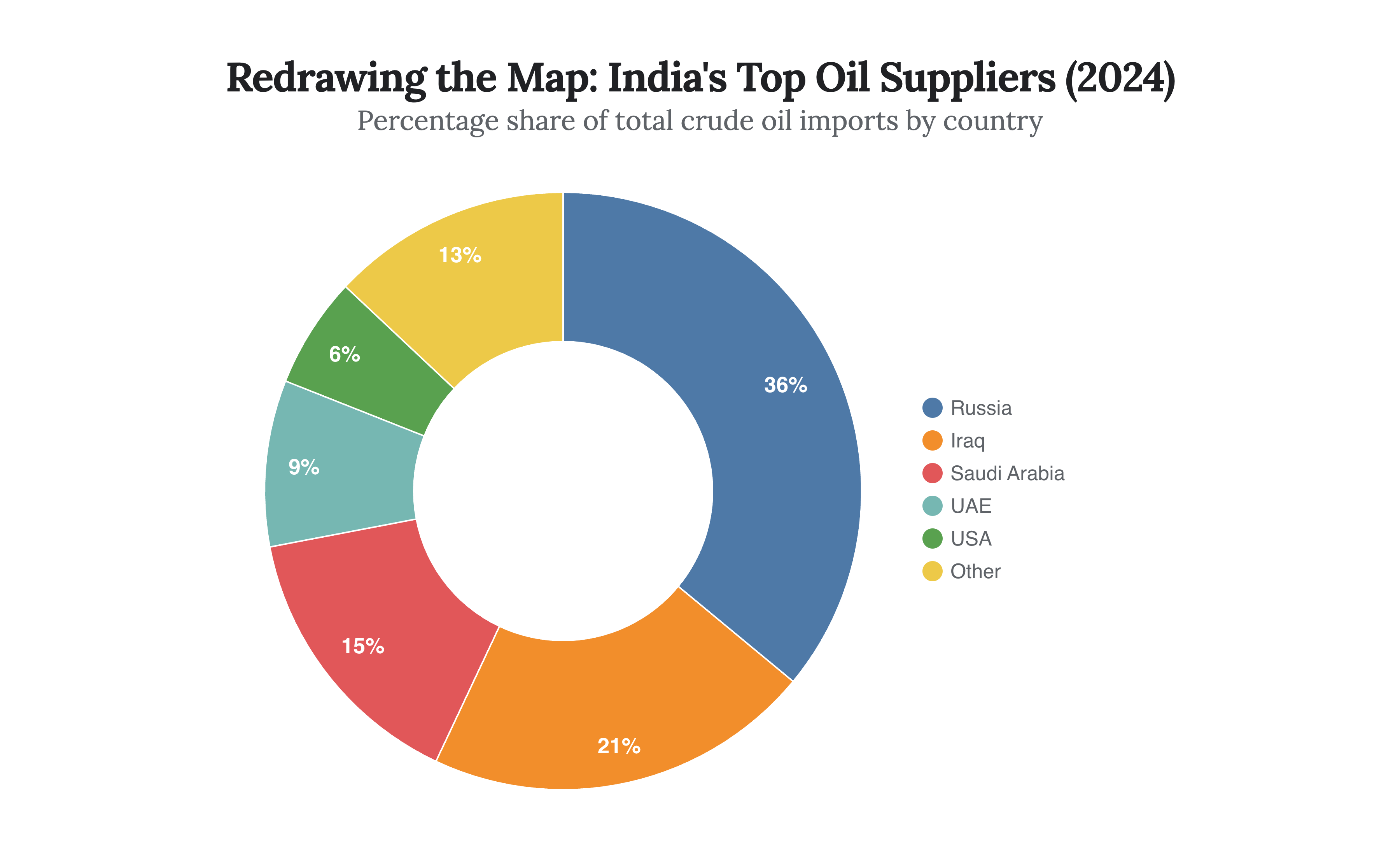
Putin’s assurance of “uninterrupted supplies” during this summit is critical because Indian refiners have become addicted to Russian grades. Despite a recent uptick in U.S. imports to hedge against volatility, Russia remains the undisputed king of India’s energy basket.
However, this reliance comes with a hidden cost: the “Rupee Trap.” Russian exporters have accumulated billions of Indian Rupees in Vostro accounts that they struggle to spend. India’s exports to Russia—pharmaceuticals, machinery, and textiles—are simply too small to offset the massive energy bill.
“The attempt is to build the economic partnership beyond oil and defence. Without that, the bilateral relationship is not responsive to today’s realities.”
The disparity is stark. While Russian oil flows freely into Gujarat’s ports, Indian goods are trickling into St. Petersburg. The chart below visualizes this massive disconnect, which has become the single biggest hurdle in the “Vision 2030” roadmap.
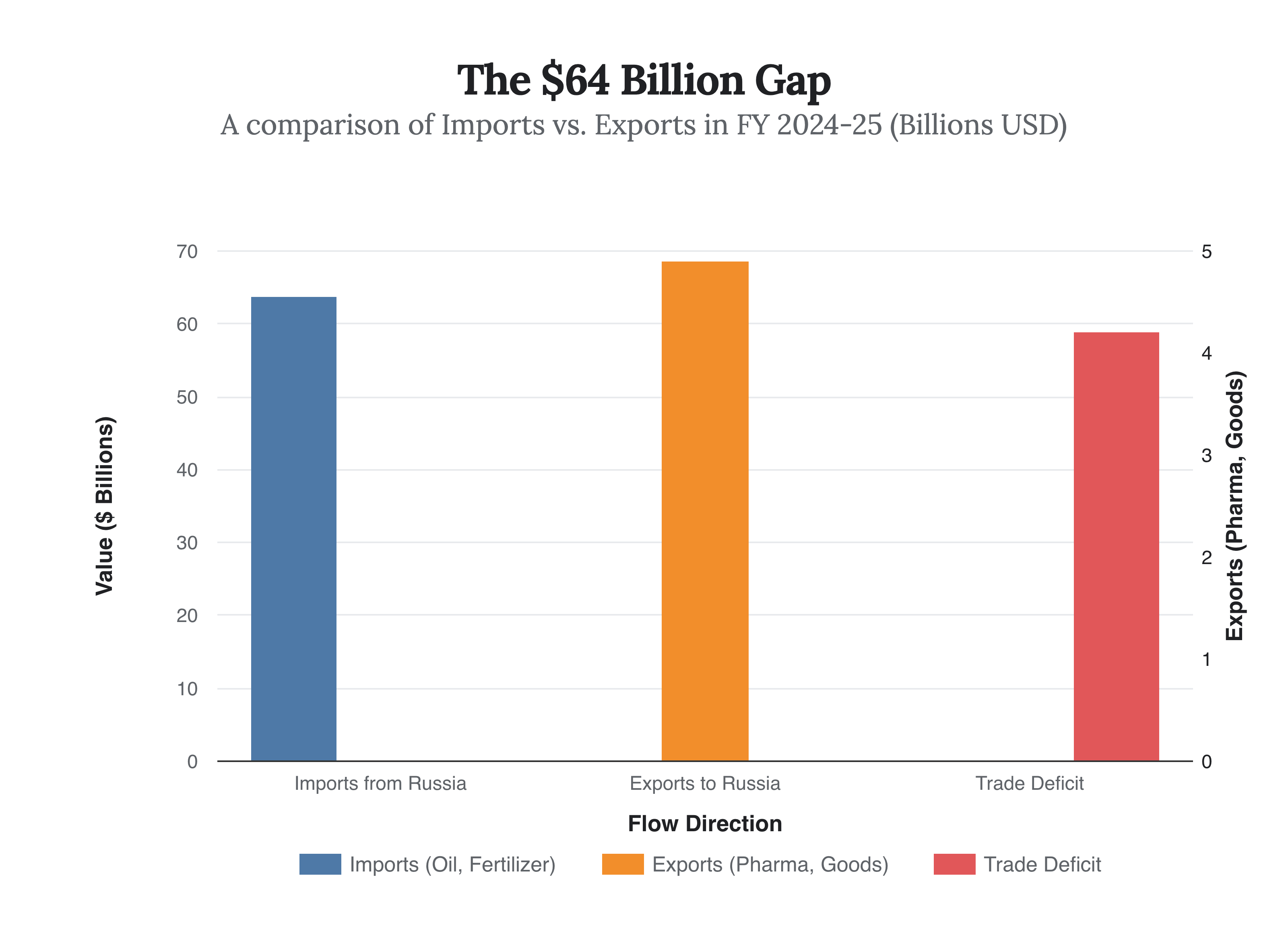
This $58.9 billion deficit is not just an accounting statistic; it is a diplomatic headache. Moscow has reportedly pressed New Delhi to pay in Yuan or Dirhams to bypass the accumulation of unusable Rupees. While the two leaders discussed “interoperable payment systems” and a potential Free Trade Agreement with the Eurasian Economic Union, these are long-term fixes for an immediate liquidity problem.
The Verdict
The 2025 summit confirms that the India-Russia relationship has successfully weathered the storm of Western pressure. The “bear hug” was genuine, and the energy flows are real. But the relationship has mutated from a strategic defense partnership into a transactional energy dependence.
Unless India can drastically scale up its manufacturing exports to Russia, the $100 billion target will largely be a measure of how much oil India buys, not how much true economic integration has occurred. The partnership is durable, but until the trade gap closes, it will remain fundamentally unbalanced.