



The numbers were the first warning sign. In early 2024, Draft2Digital, a major distributor for self-published authors, reported a statistical anomaly that should have been impossible in a mature market: incoming manuscript submission volumes had suddenly spiked by approximately 50%. It wasn’t a renaissance of human creativity. It was the first measurable wave of the “gray goo” scenario—a flood of AI-generated content washing over the digital publishing ecosystem.
For Amazon Kindle, the world’s dominant e-reading platform, “AI book analysis” has rapidly evolved from a niche technical challenge into an existential battle on two fronts. On one side, algorithms are desperately trying to analyze and filter a torrent of low-quality, machine-written spam that threatens to drown out legitimate authors. On the other, Amazon is aggressively rolling out its own AI analysis tools—features like “Ask This Book”—that mechanically dissect copyrighted works for readers, often without the author’s consent.
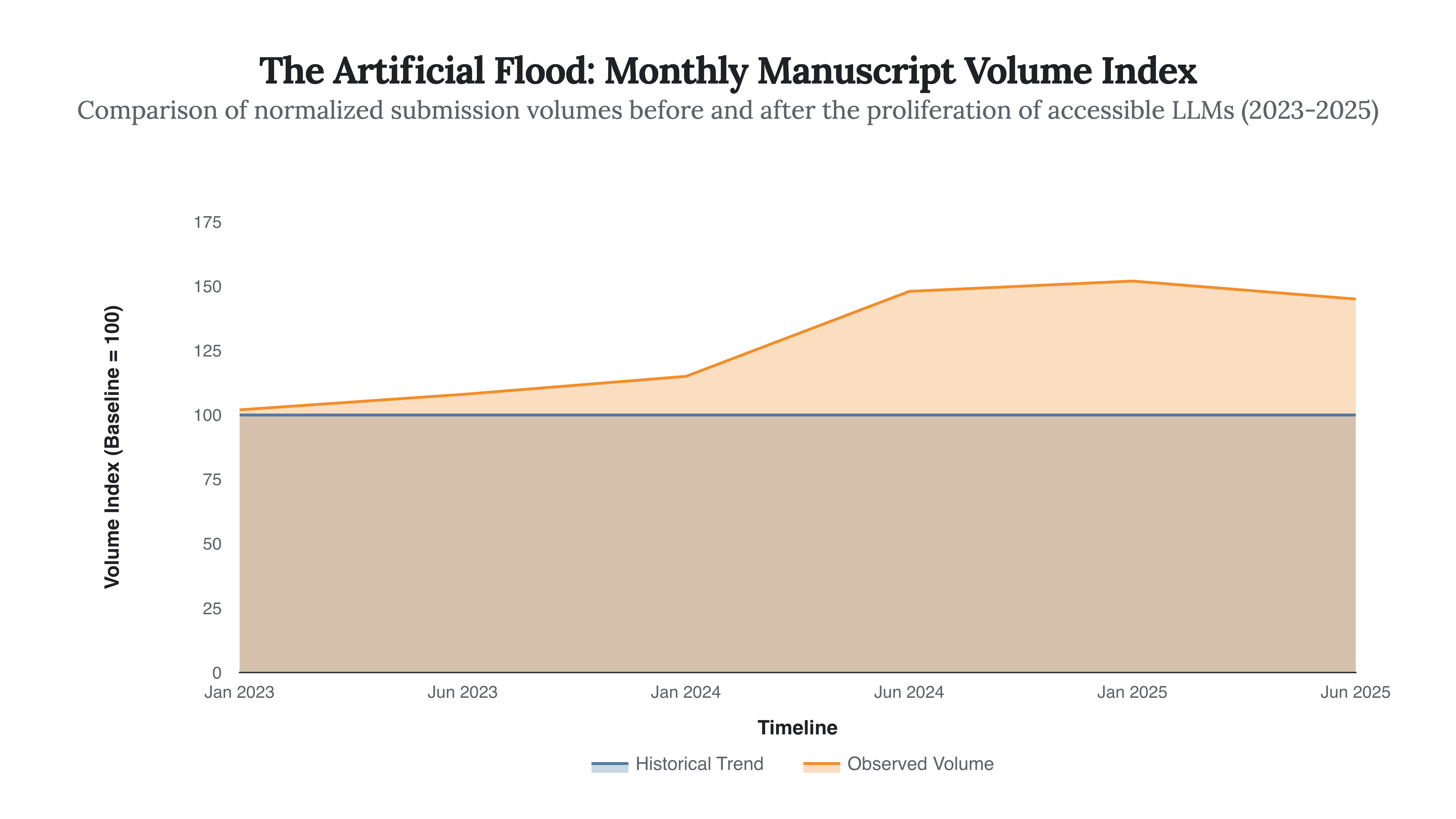
The chart above visualizes the scale of the disruption. While historical trends in self-publishing show steady, predictable growth, the introduction of widely accessible Large Language Models (LLMs) created a vertical deviation. This wasn’t just noise; it was a signal that the barrier to entry for “writing” a book had effectively collapsed. In response, Amazon was forced to implement emergency friction, such as restricting KDP (Kindle Direct Publishing) authors to uploading a maximum of three books per day—a limit that would be physically impossible for a human writer to hit consistently but acts as a mere speed bump for automated content farms.
The impact on the Kindle store has been visceral. “Summary” books and unauthorized biographies have exploded, often appearing within days of a bestseller’s release. Legitimate authors are finding themselves playing a game of whack-a-mole; one author reported finding and reporting 29 illegitimate “AI editions” of their work in a single week. The ecosystem is being flooded with content that mimics the structure of a book but lacks the soul, creating a discovery crisis for readers.
“The flood of AI-generated Kindle books became Kindle Unlimited’s essential problem... misleading consumers into thinking that they were buying books written by humans.”
However, the analysis of AI in the Kindle ecosystem isn’t just about detection; it’s about adoption. While the spam problem grabs headlines, a quieter, perhaps more profound shift is happening among legitimate authors. A May 2025 survey by BookBub revealed that the industry is not rejecting AI entirely but rather bifurcating into two distinct camps.
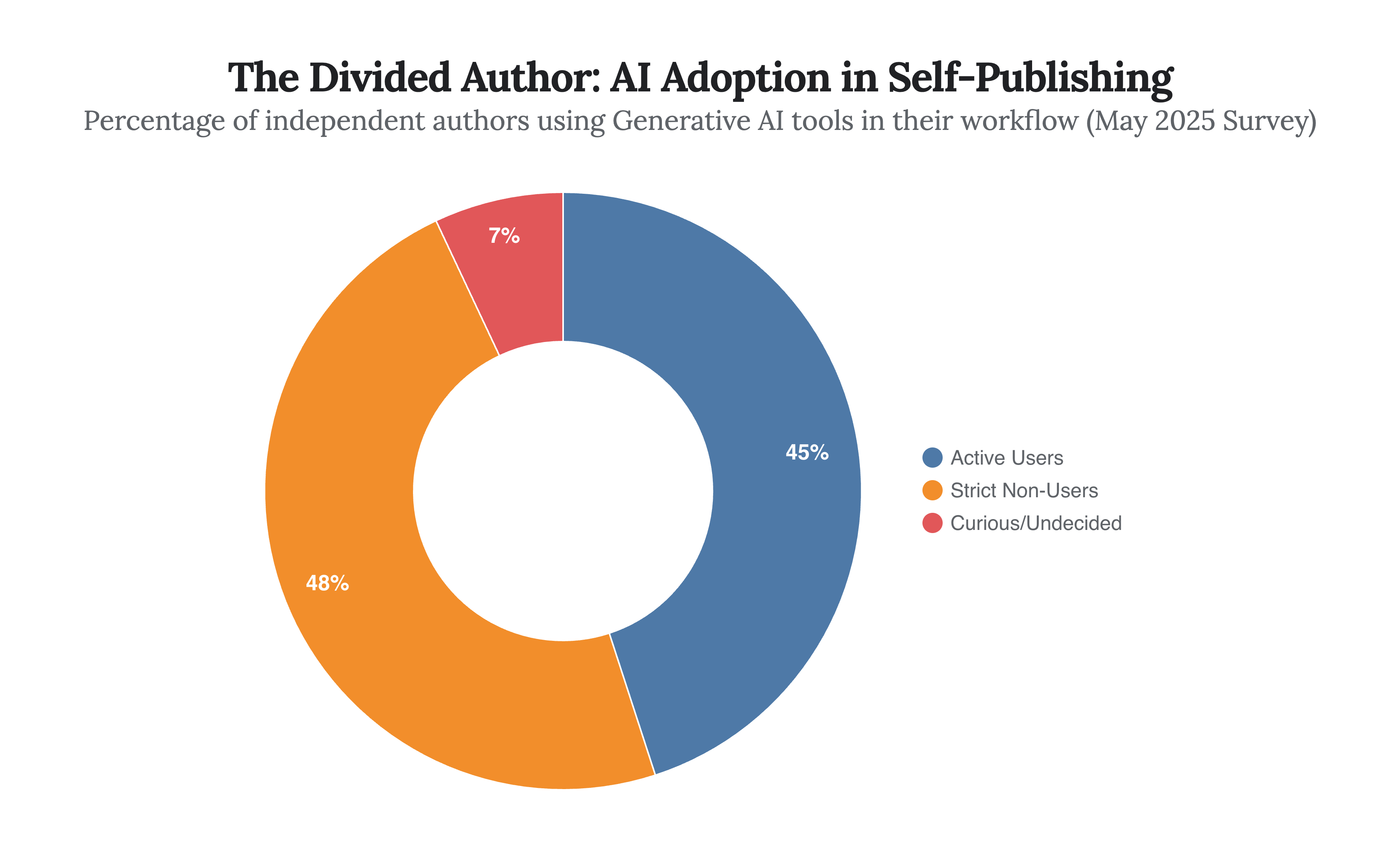
Nearly half of independent authors have integrated AI into their process, but arguably not for the “writing” itself. Digging deeper into the data reveals that 81% of these adopters use the technology for research and brainstorming, rather than prose generation. They are using AI to analyze their own plots, check for inconsistencies, or generate marketing copy. The tool is being used to optimize the business of writing, even as the art of writing remains human-centric for this group.
But Amazon is not waiting for authors to decide how AI should be used. The company has begun deploying “Ask This Book,” a feature that allows readers to treat a book like a database. Using a chatbot interface, readers can query the text for specific details, character motivations, or plot summaries. While convenient for users—contributing to a reported 30% surge in Kindle device sales in Q4 2024—it fundamentally changes the nature of the book.
The controversy lies in the lack of consent. Reports indicate that for the “Ask This Book” feature, there is no opt-out mechanism for authors. The AI analyzes the text regardless of the creator’s wishes, turning a carefully paced narrative into a searchable information repository.
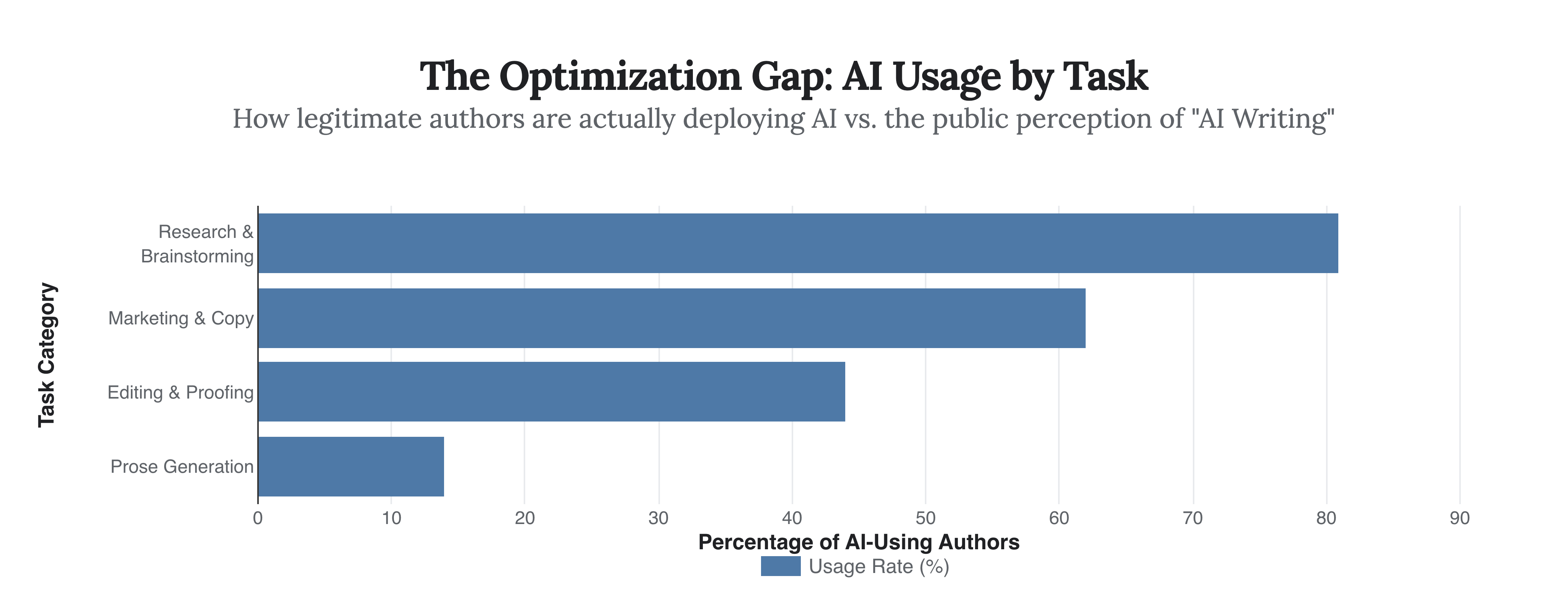
This discrepancy between creation and consumption defines the current moment. As the chart above highlights, while only a small minority of serious authors are using AI to generate prose (14%), Amazon’s platform features are treating every book as if it were a dataset to be mined. The “Recaps” feature, which provides AI-generated summaries of previous books in a series, further reinforces this trend. It prioritizes efficiency over the reading experience, catering to a new type of consumption that values information retrieval over narrative immersion.
“To ensure a consistent reading experience, the feature is always on, and there is no option for authors or publishers to opt titles out.”
We are witnessing the industrialization of reading. The “analysis” of books on Kindle has shifted from critical review to algorithmic processing. Whether it is the spam filters struggling to hold back the 50% surge in submissions or the “Ask This Book” bot dismantling a mystery novel for a curious reader, the result is the same: the book is no longer a static object. It has become a fluid data stream, analyzed by machines before it is ever read by humans.