


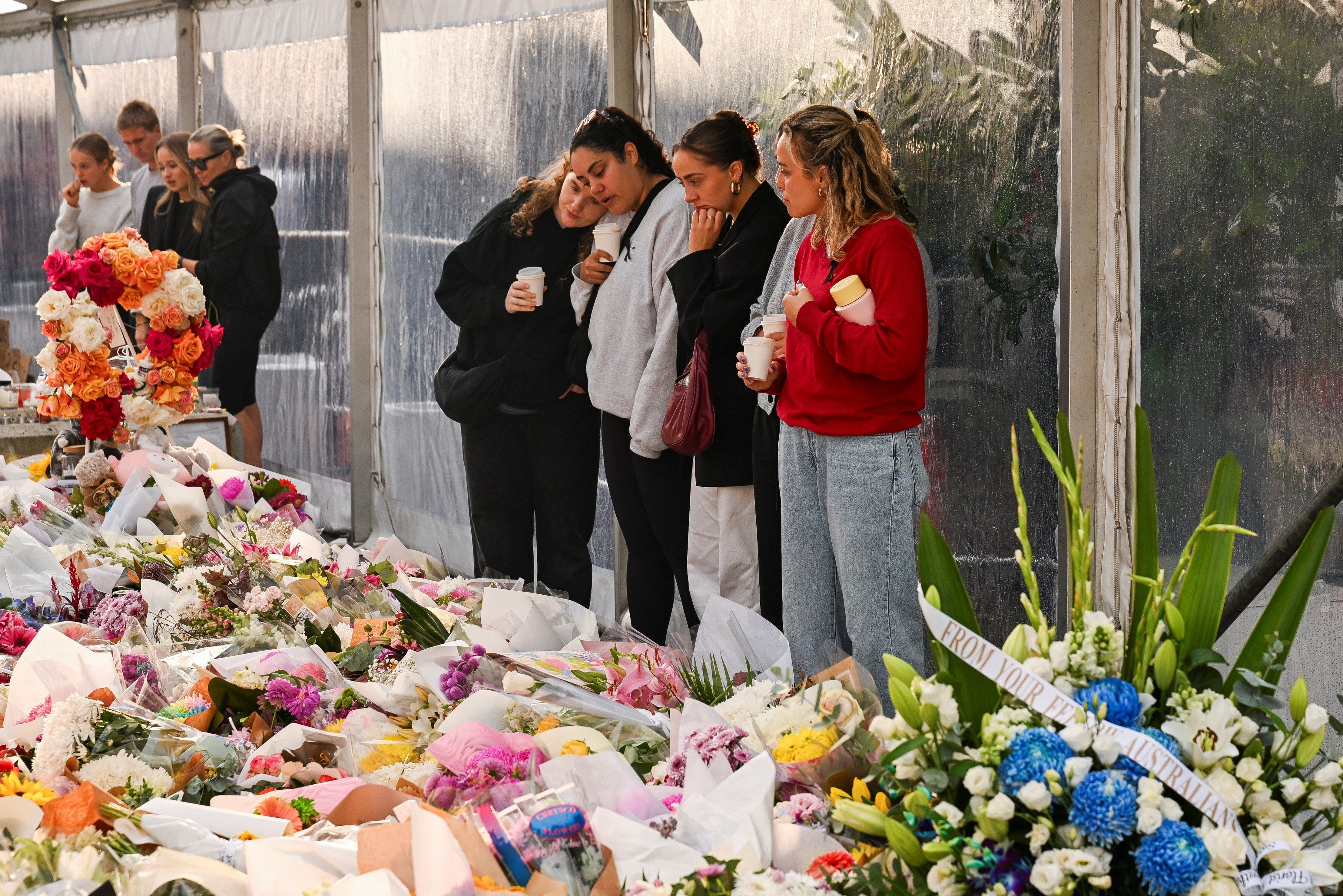
It has been nearly twenty months since the Westfield Bondi Junction attack shattered a Saturday afternoon in Sydney, and the physical traces of the tragedy have undergone a profound transformation. The endless sea of floral tributes that once overflowed from Oxford Street Mall has long since been collected, carefully composted, and turned into mulch. This rich soil is currently being prepared to ground the roots of a permanent memorial garden—a living testament to the six lives lost and the twelve injured on that harrowing day in April 2024.
But while the physical memorial remains in the design and feedback phase as of late 2025, a far larger, invisible structure is being built behind the scenes. The attack, perpetrated by a man with a history of schizophrenia who had slipped through the cracks of the healthcare system, triggered a state-wide reckoning. The result was a massive $111 million mental health funding package from the NSW Government, designed to patch the very gaps that the tragedy exposed.
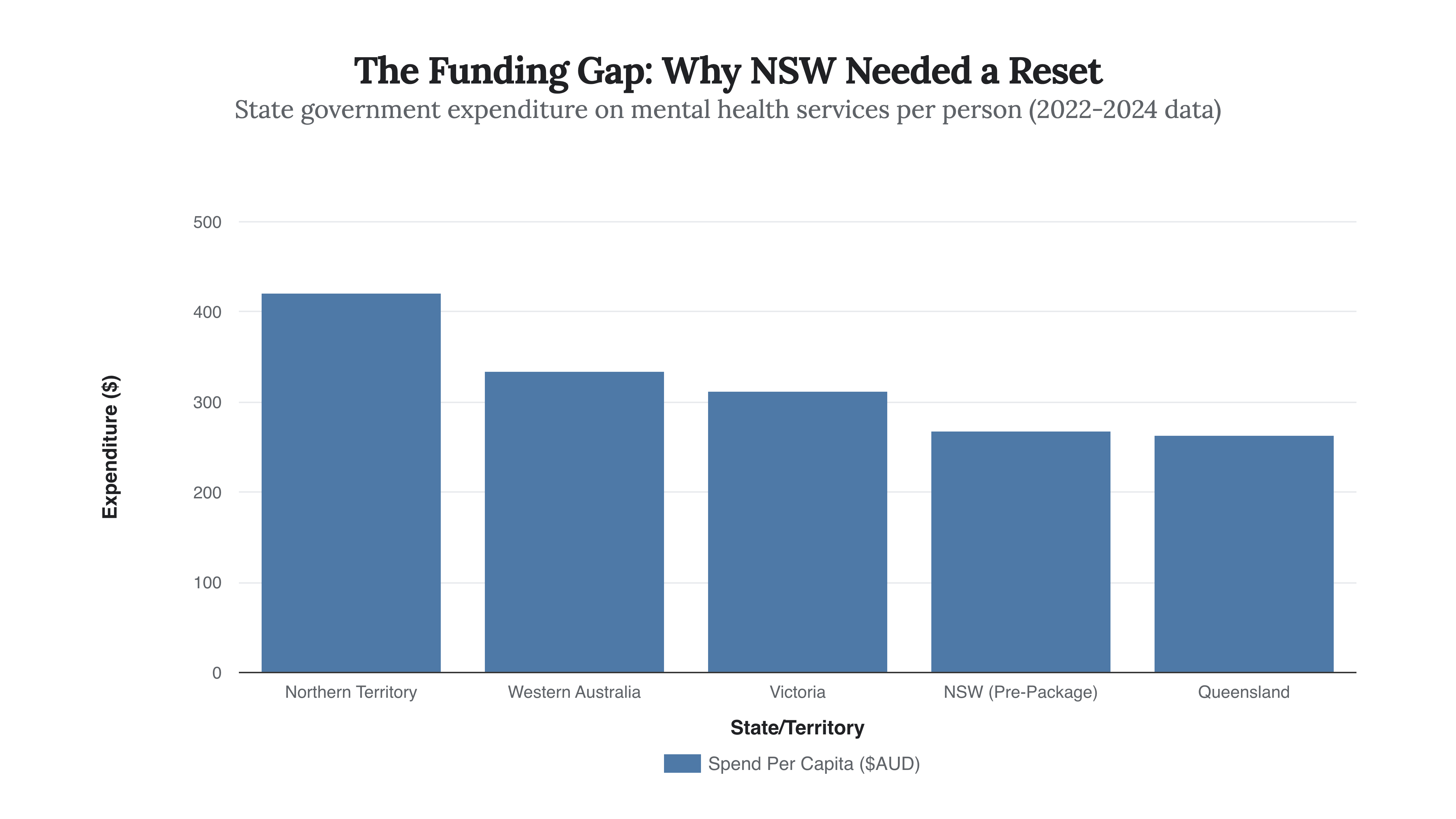
As the chart above illustrates, New South Wales had been trailing significantly behind other territories in per-capita mental health spending prior to the attack. The $111 million injection—allocated primarily for community mental health teams, outreach staff, and a “single front door” digital access point—was not just a reaction; it was a necessary correction to bring the state closer to the national standard.
The Community’s $2.5 Million Answer
While the government mobilized millions for systemic repair, the public responded with immediate, direct financial compassion. In the weeks following the attack, more than 30,000 individual donors contributed to verified GoFundMe campaigns, raising nearly $2.5 million. This outpouring of support was not evenly distributed but rather flowed toward specific narratives of heroism and heartbreak that captured the nation’s psyche.
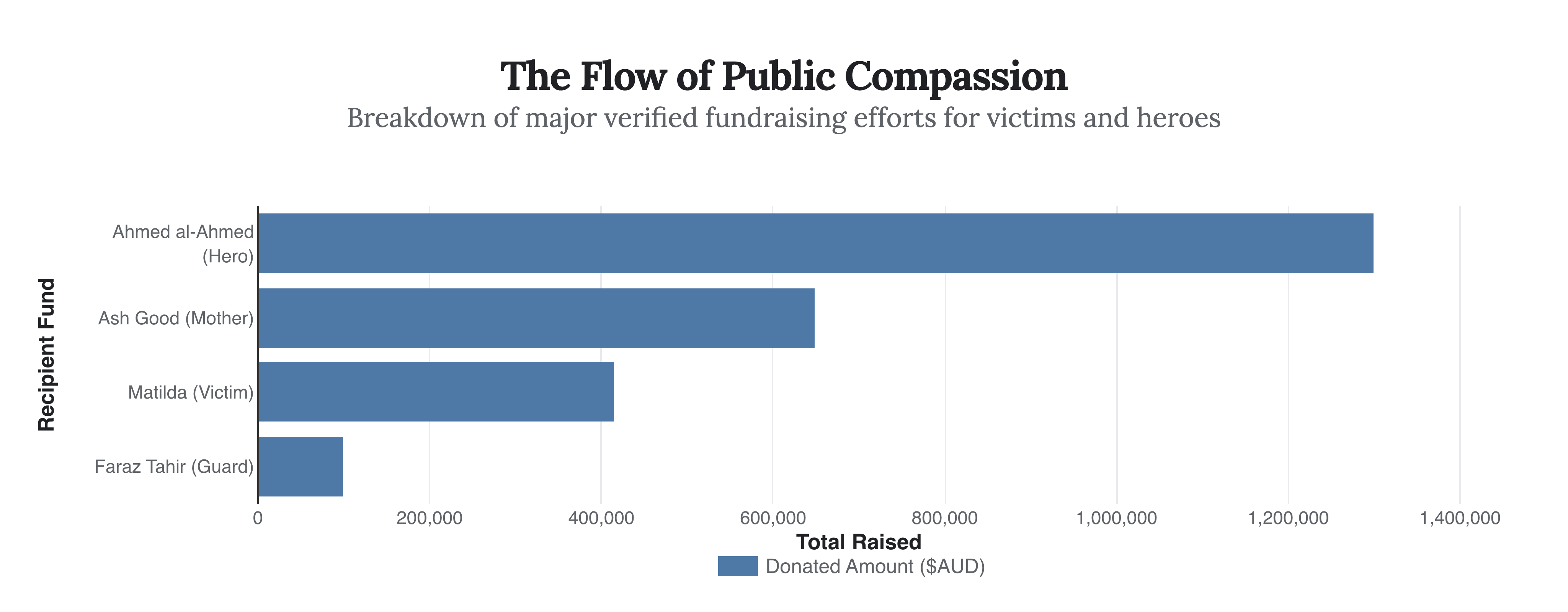
The data reveals a striking public focus on heroism. Ahmed al-Ahmed, the refugee and security guard who was injured while confronting the attacker, received over $1.3 million—more than half of the total major funds raised. This suggests that while the public mourns victims, they are galvanised by acts of bravery. Ash Good, the mother who died protecting her baby Harriet, also saw immense support, with her family’s fund surpassing $650,000, ensuring a future for her surviving daughter.
“We want this memorial to be a spatial experience and visual poem to bear witness to this sad and moving history.”
From Flowers to Foundation
The decision to mulch the thousands of floral tributes rather than simply discarding them speaks to a desire for cyclical healing. This mulch will eventually nourish the plants in the permanent memorial garden, likely to be situated near the Oxford Street Mall. The design process has been deliberately slow, with Waverley Council and Scentre Group opting for a “place of reflection” rather than a stark monument. This aligns with the broader timeline of the coroner’s inquest, which has faced delays, pushing findings into early 2026.
Comparing the immediate community response to the long-term government commitment reveals two different speeds of healing. The community’s financial support was instant and targeted, filling immediate gaps for families. The government’s $111 million, conversely, is a slow-moving vessel aimed at preventing future tragedies by hiring staff and opening clinics.
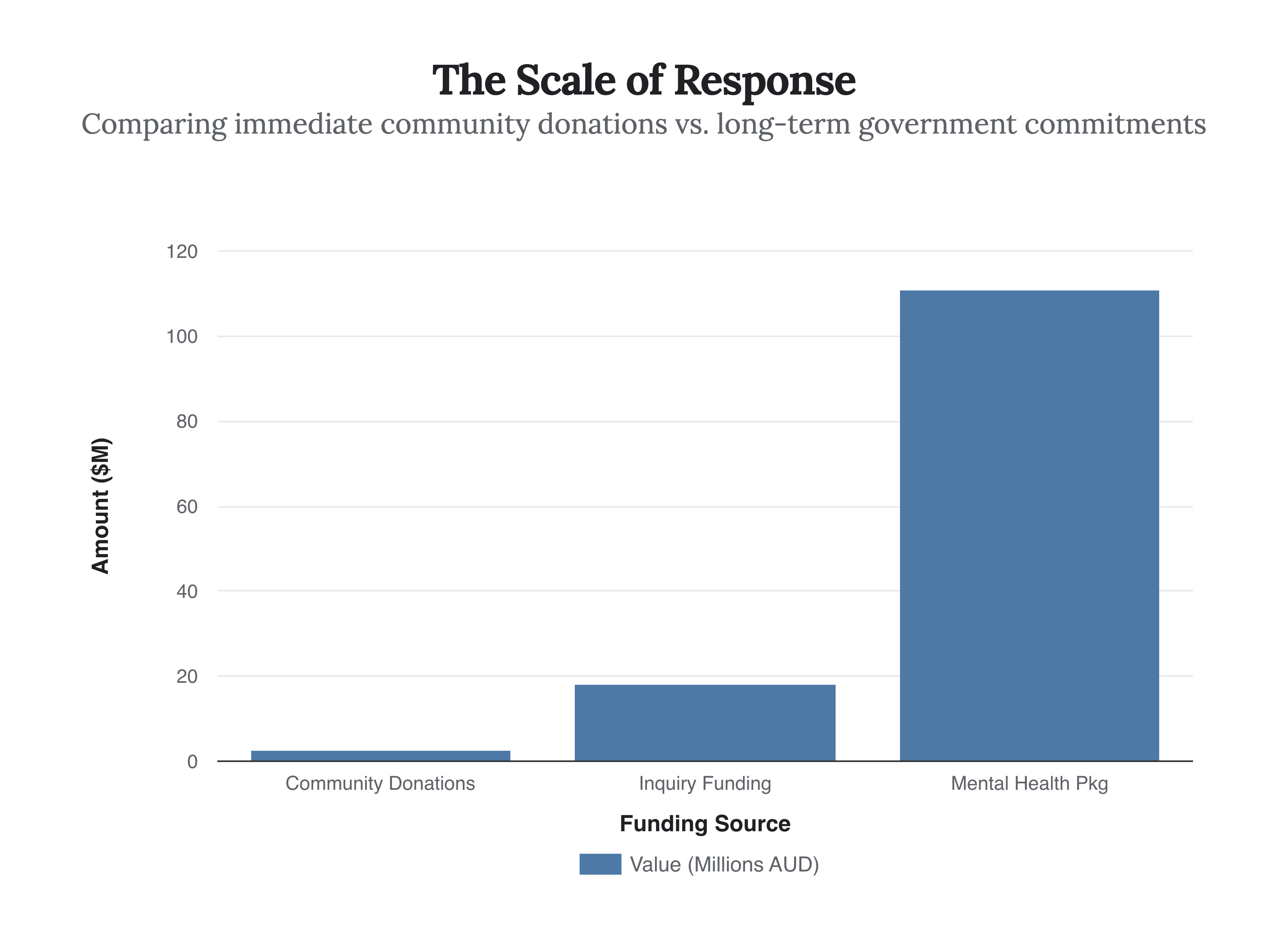
As Sydney moves toward the second anniversary of the attack in 2026, the memorial will likely be completed, offering a quiet green space in the bustle of Bondi Junction. But the true legacy of the tragedy will be measured not in bronze or stone, but in the efficacy of the $111 million investment—whether it successfully catches those who, like Joel Cauchi, might otherwise fall through the net.