


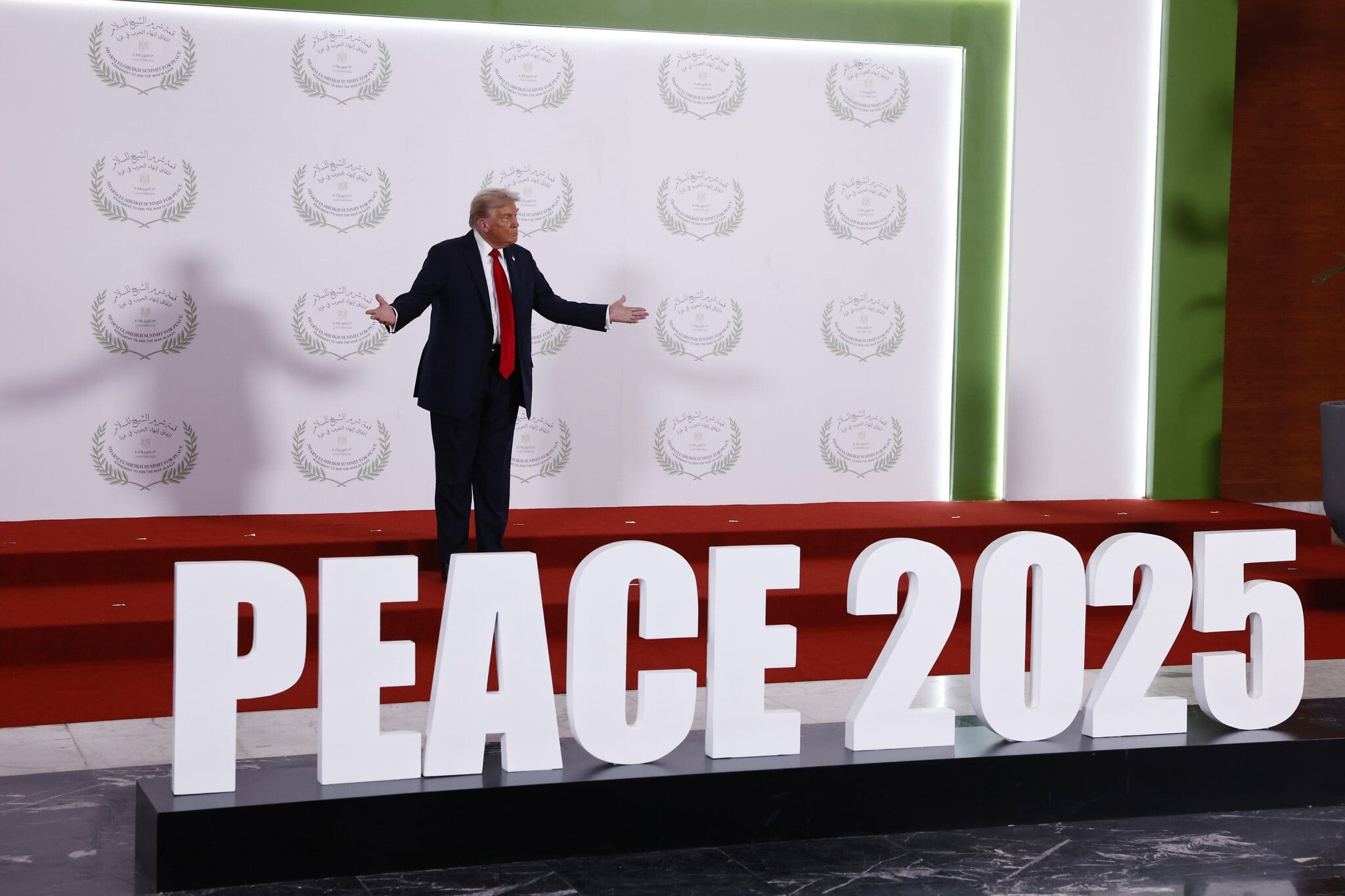
The ballroom at the World Economic Forum in Davos is accustomed to the clinking of champagne glasses, but this Thursday, it echoed with the sound of a geopolitical fault line snapping. President Donald Trump, flanked by a cohort of leaders from Central Asia and the Middle East, officially signed the charter for his “Board of Peace.” The ceremony was less a diplomatic summit and more a hostile takeover of the global security architecture. The headline number circulating the Swiss alps wasn’t a peace treaty coordinate or a refugee count—it was a price tag: $1 billion.
That is the alleged cost for a permanent seat on the Board, a figure that transforms international diplomacy from a consensus-driven process into a pay-to-play subscription service. While traditional allies like France and Germany have publicly rejected the initiative—triggering immediate threats of 200% tariffs on French wine from the U.S. President—a distinct bloc of nations has eagerly signed on. The data emerging from Davos reveals a stark reorganization of world power, shifting away from the Euro-Atlantic alliance toward a transactional axis centered on the Middle East and Central Asia.
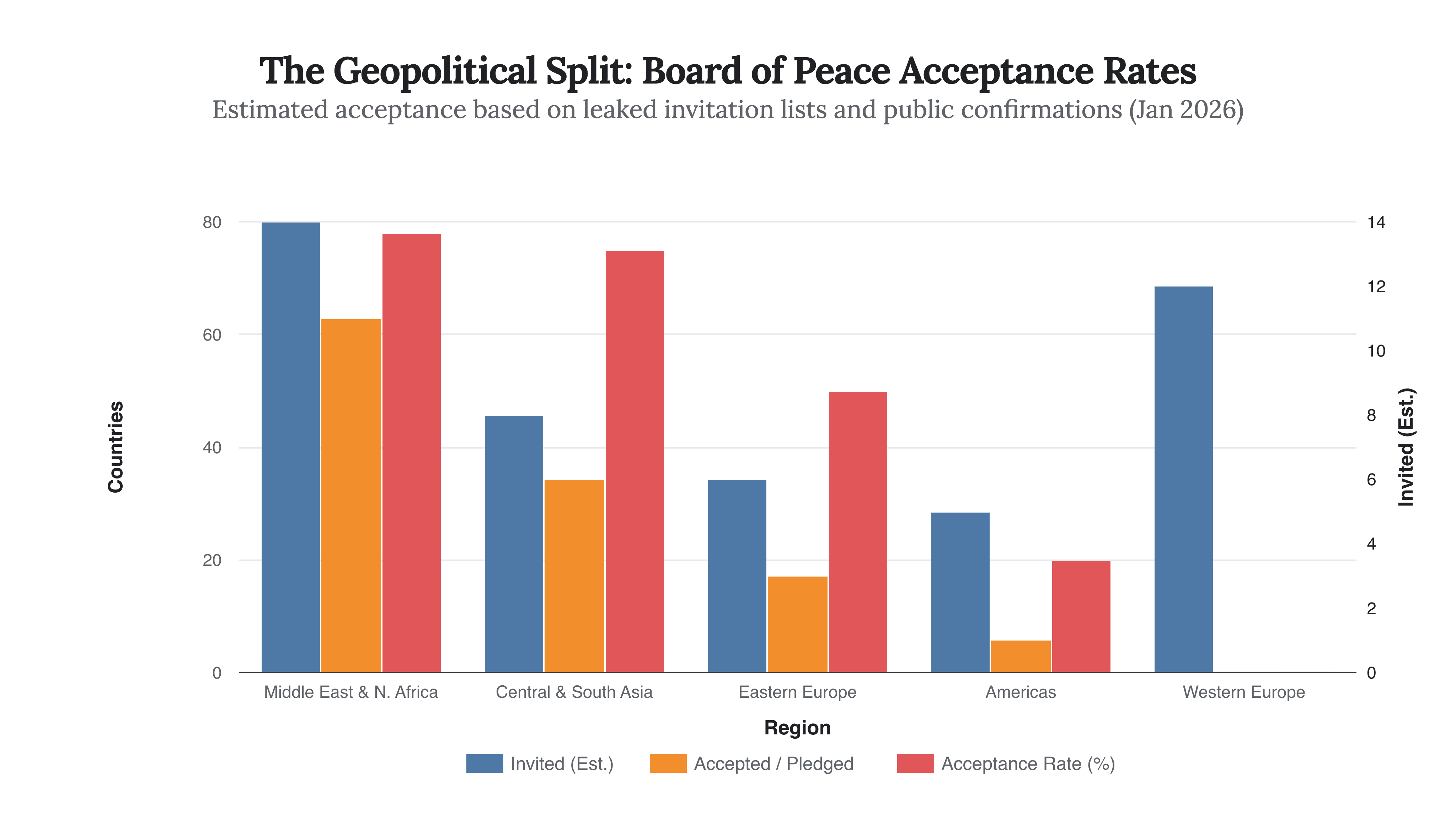
The chart above visualizes the diplomatic chasm. Western Europe has delivered a uniform rejection, with leaders from France, Sweden, and Germany citing fears that the Board aims to supplant the UN Security Council. French Foreign Minister Jean-Noel Barrot was blunt:
“Yes to implementing the peace plan... but no to creating an organization... which would replace the United Nations.”
In contrast, the acceptance rate in the Middle East and Central Asia is surging. Nations like Uzbekistan, Kazakhstan, Egypt, and Saudi Arabia have embraced the initiative. For these countries, the Board offers something the UN cannot: a direct, transactional line to American executive power, bypassing the gridlock of human rights councils and veto-wielding adversaries.
The structure of the Board confirms its function as an extension of Trumpian influence rather than a neutral arbiter. Trump is named Chairman for life, with the power to appoint and remove members. The Executive Board reads like a rolodex of loyalists and financiers, including Jared Kushner, Apollo Global Management CEO Marc Rowan, and former UK Prime Minister Tony Blair. The inclusion of financial titans alongside political operatives suggests that this “peace” board is as much about capital mobilization as it is about conflict resolution.
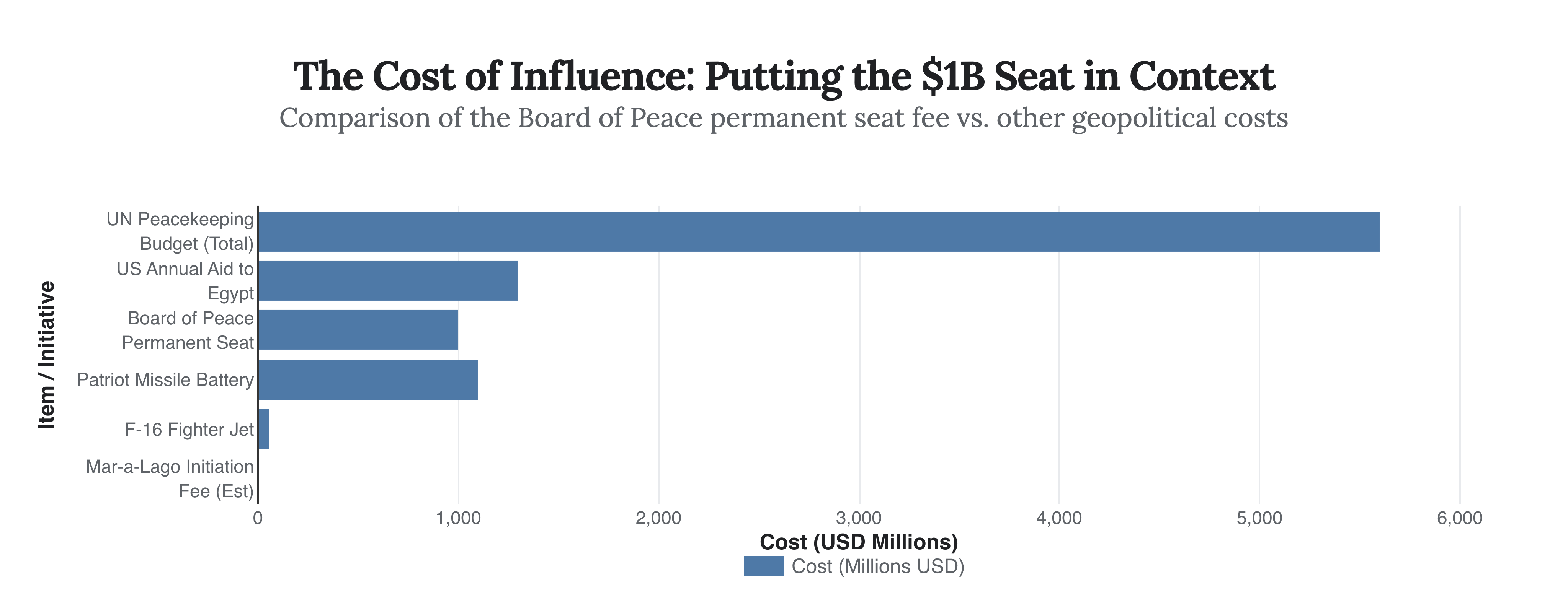
The $1 billion “permanent seat” fee is the most striking innovation. As shown in the comparison chart, the price of admission is roughly equivalent to the cost of a Patriot missile battery or nearly 80% of the United States’ entire annual aid package to Egypt. By monetizing the seat, the administration has created a high-barrier club that filters out nations unwilling—or unable—to pay for access. It also creates an independent funding stream that bypasses Congressional appropriations, giving the Board autonomy that traditional State Department initiatives lack.
This financial barrier has not deterred the “coalition of the willing.” With confirmed participation from economies like Saudi Arabia and the UAE, the Board is already capitalized better than many small nations. Trump himself dismissed the concerns of European holdouts with characteristic bluntness during a press gaggle in Davos:
“I have some controversial people. But these are people that get the job done. These are people that have tremendous influence.”
The Board of Peace represents the final death knell of the post-WWII multilateral consensus. It replaces the slow, deliberative legitimacy of the United Nations with a fast, expensive, and autocratic executive committee. For the 18 nations that have signed on, the $1 billion fee is not a donation; it is an investment in a new global order where proximity to the Chairman is the only diplomatic currency that matters.