


The market has officially entered a new psychological phase: The Era of Executive-Led Repricing.
On Tuesday, January 20, the Dow Jones Industrial Average shed 870 points—its sharpest single-day contraction since the “Tariff Shock” of April 2025. The catalyst? A geopolitical non-sequitur turned market reality: the threat of 10% tariffs on eight NATO allies following diplomatic friction over the proposed purchase of Greenland. While the headline invites ridicule, the capital reality is dead serious.
We are no longer trading on earnings multiples or Fed guidance. We are trading on the velocity of executive whim. The algorithmic reaction function has shifted from “Buy the Dip” to “Sell the Tweet.”
This is not volatility; this is the repricing of sovereign risk within US equity markets.
THE DATA REALITY: THE “PERMANENT RISK PREMIUM”
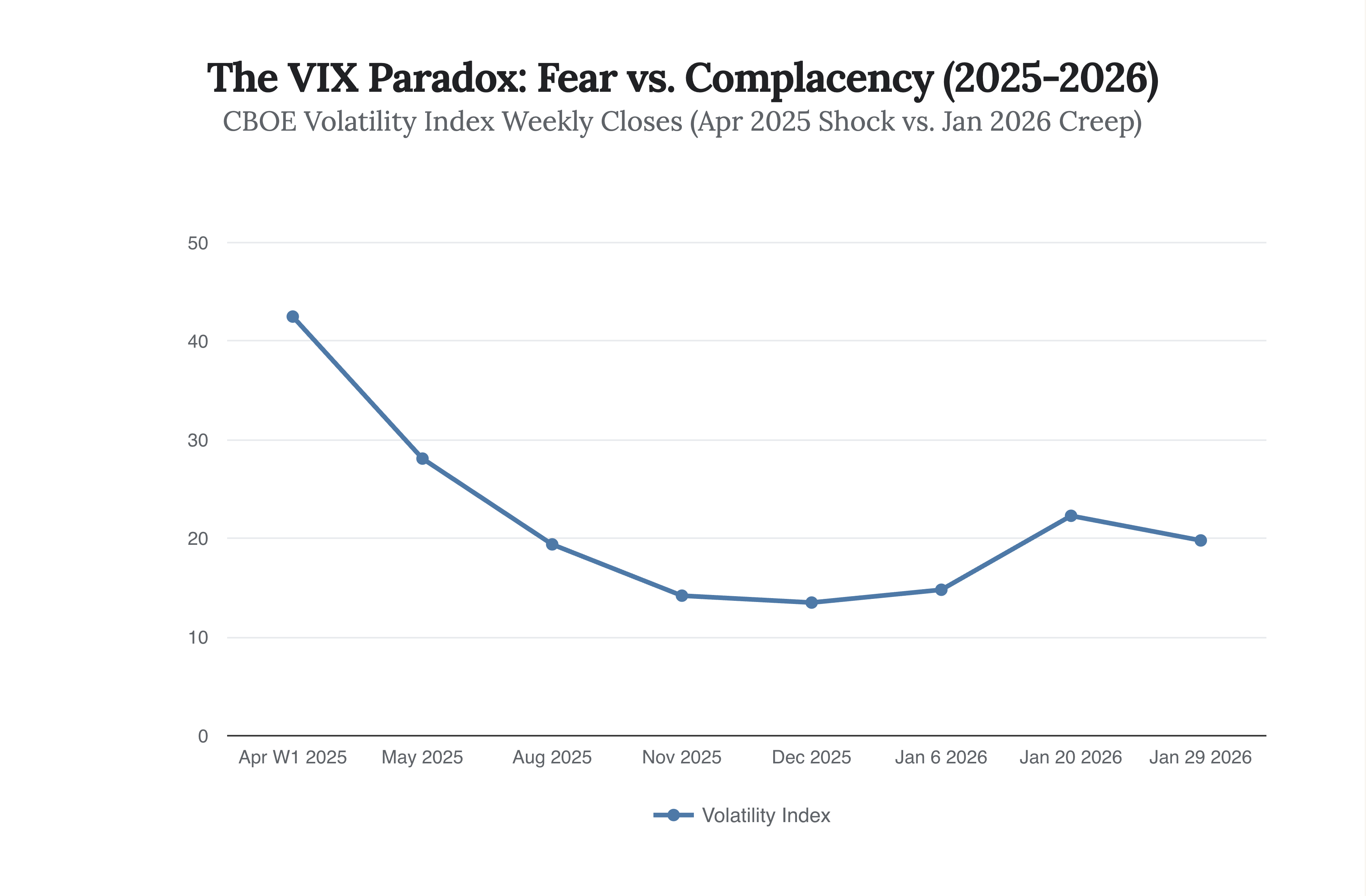
The narrative that the market has “normalized” since the initial 10% Universal Tariff implementation in April 2025 is statistically false. While the VIX (CBOE Volatility Index) retreated from its Q2 2025 highs of 40+, the structure of volatility has mutated.
Look at the options market. Skew is at a 24-month high. Institutional investors are paying record premiums for downside protection even as the S&P 500 hovers near all-time highs. This divergence signals a “Fragile Rally.” The market is pricing in a permanent risk premium—a tax on valuations accounting for the probability that global supply chains can be severed overnight by a Truth Social post.
The Dow’s recent performance confirms this sector-level bifurcation. While the index is down 1.8% on the Greenland news, the internal damage is asymmetric:
Trade-Exposed Tech (Hardware/Semi): Down 4.5% (Nvidia, Apple).
Domestic Insulated (Utilities/Telecom): Flat to +0.5%.
Defense Industrials: Up 2.1%.
The market is no longer pricing “Growth”; it is pricing “insulation from the White House.”
Unlock deeper strategic alpha with a 10% discount on the annual plan.
Support the data-driven foresight required to navigate an era of radical uncertainty and join a community of institutional-grade analysts committed to the truth.
SECOND-ORDER EFFECT: THE RESHORING TRAP
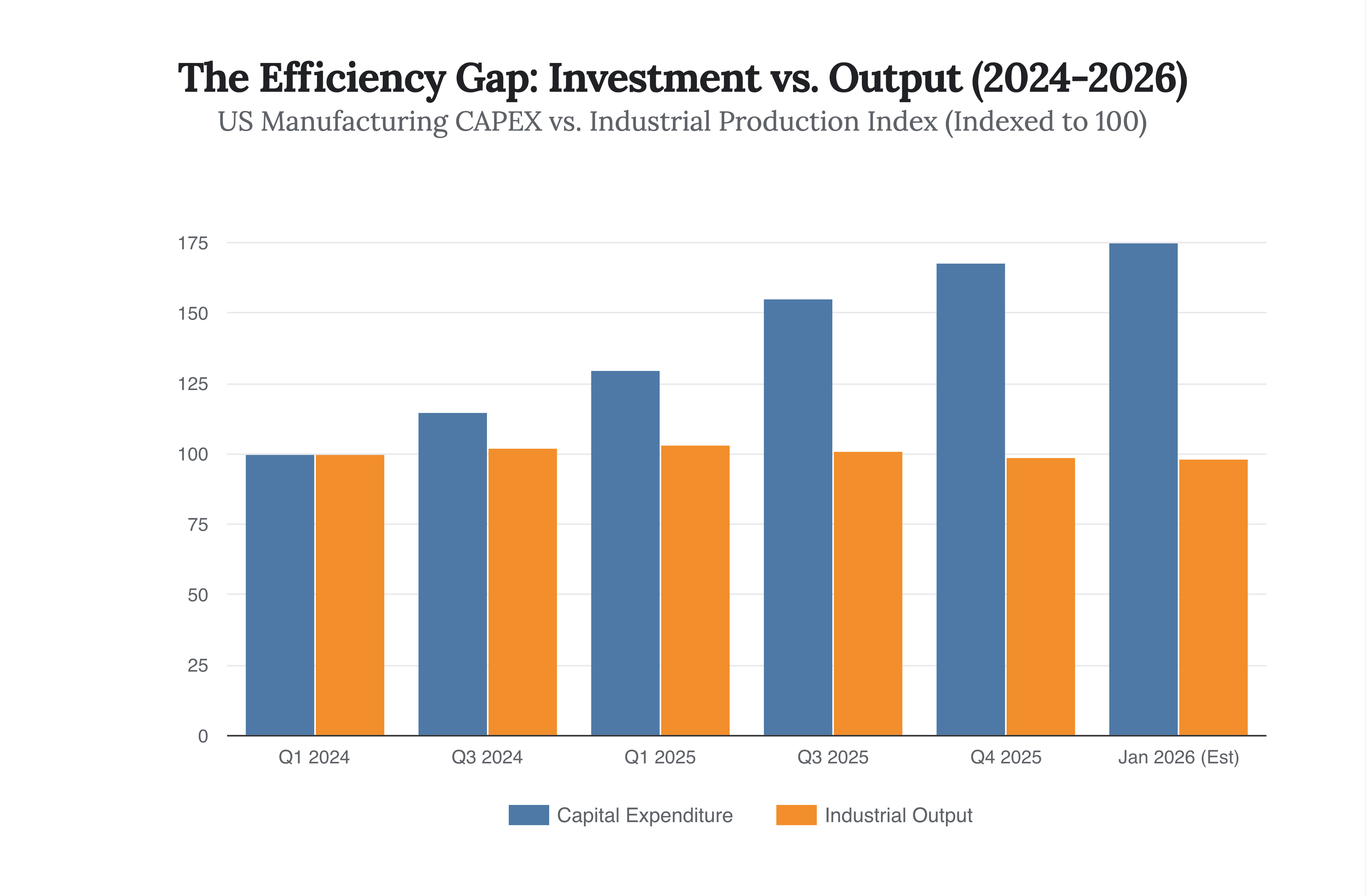
The bullish case for the Dow rests on the “Industrial Renaissance” narrative—the idea that tariffs will force capital expenditure (CAPEX) back onto US soil, boosting the industrial components of the index (Caterpillar, Honeywell, Boeing). The data from Q4 2025 contradicts this.
While announced projects have hit $1.85 trillion (driven by the CHIPS Act and tariff avoidance), actual completion rates are stalling. The bottleneck is not capital; it is labor.
Current January 2026 data shows 500,000 unfilled manufacturing roles requiring digital/robotics literacy. We are building factories we cannot staff. This creates a stagflationary impulse: Companies are spending billions to duplicate existing supply chains with lower efficiency, rather than innovating for new growth.
THE PROJECTION: CASH IS THE NEW HEDGE
What happens next? The “Greenland Dip” will likely be bought by retail algorithms, but institutional money is moving elsewhere. We are seeing a massive rotation into short-duration treasuries and gold (which hit a record $4,760/oz this week).
Corporations will react to this week’s volatility by halting CAPEX and hoarding cash. Why build a new plant if a tweet can render your raw material imports 25% more expensive overnight?
The ultimate casualty of the Dow Volatility Trade War is not the stock price, but the business investment required to sustain it.