


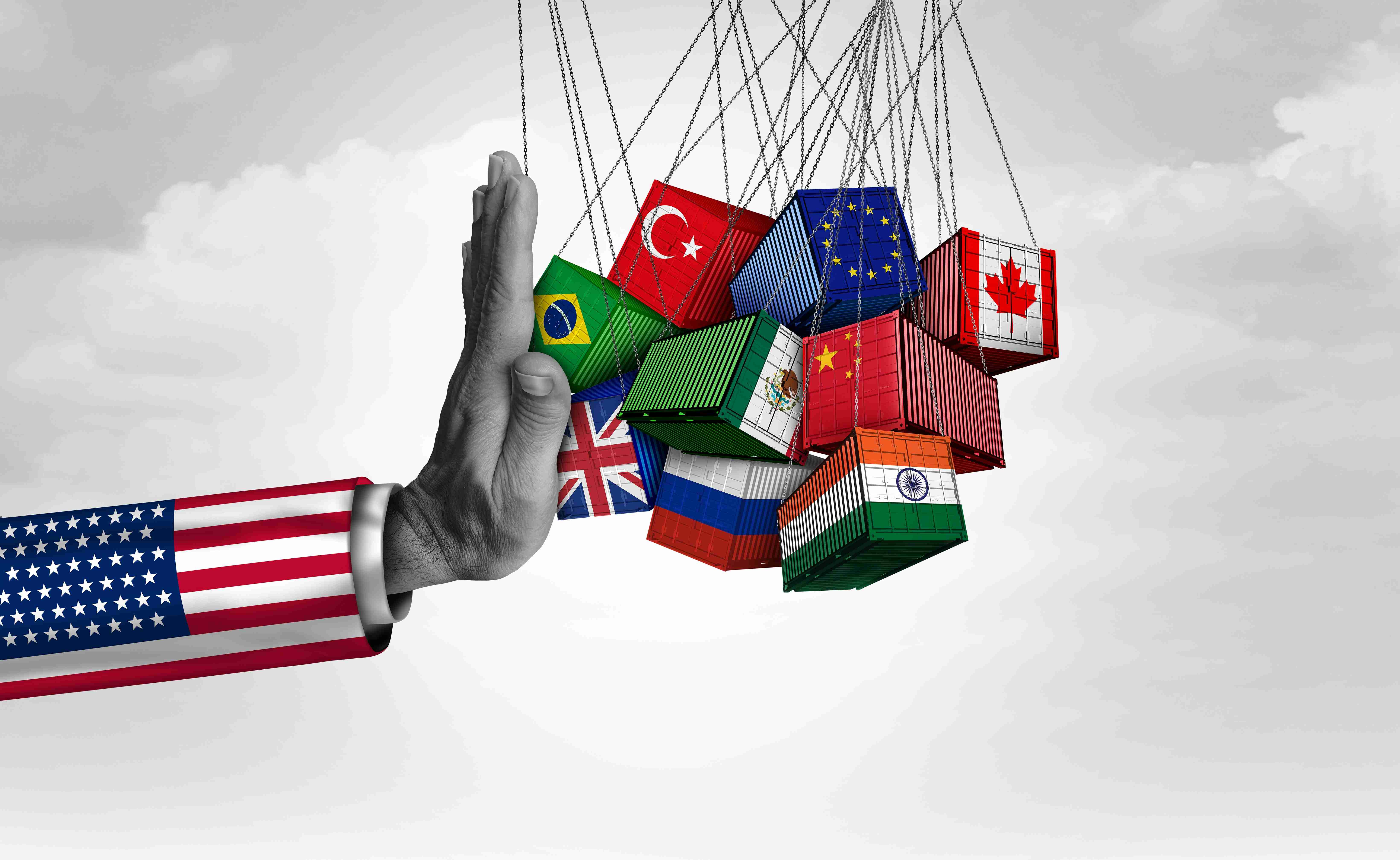
In a dramatic escalation of trade rhetoric, former President Donald Trump recently threatened to impose a staggering 100% tariff on all Canadian goods if the country deepens its trade relationship with China. While the extremity of this threat captured headlines, it’s the more foundational proposal of a 10% universal baseline tariff that represents a tangible and costly risk to the Canadian economy. Based on 2024’s trade figures, where U.S. goods imports from Canada totaled $411.9 billion, such a levy would impose a direct cost of over $41 billion on the cross-border flow of goods, disrupting one of the world’s most integrated economic partnerships.
The Canada-U.S. trading relationship is a cornerstone of North American prosperity, with about $3.6 billion in goods and services crossing the border daily. A blanket tariff would not be a surgical strike but a broadside against deeply intertwined supply chains. To understand the scale of this proposal, it’s crucial to break down which sectors would bear the brunt of this multi-billion dollar tax.
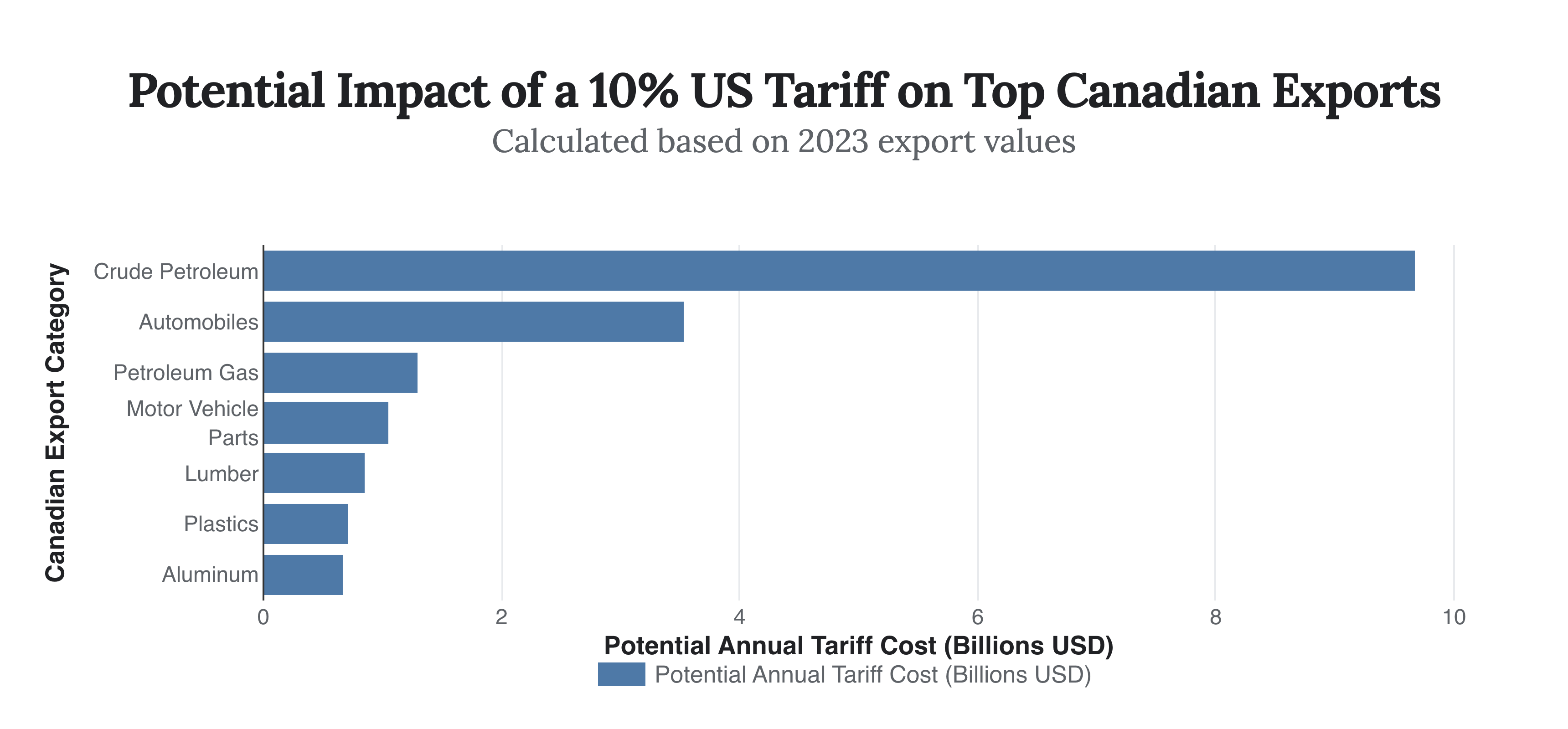
The chart above visualizes the potential annual cost a 10% tariff would impose on Canada’s leading exports to the United States, based on 2023 data. The energy sector, particularly crude petroleum, faces the most significant exposure, with a potential new cost of nearly $10 billion. The highly integrated auto industry, a backbone of manufacturing in provinces like Ontario, would also be severely hit, facing billions in new tariffs on both finished cars and essential parts.
“Twenty-five [percent tariff] isn’t even a discussion. There’s no point in being in business.”
- Flavio Volpe, President of the Automotive Parts Manufacturers’ Association
This is not uncharted territory. The economic playbook for these tariffs was written during Trump’s first term. In 2018, the U.S. government imposed a 25% tariff on Canadian steel and 10% on aluminum, citing national security concerns. The impact was swift and significant. Following the implementation, Canadian steel exports to the U.S. plummeted by nearly 40%. In response, Canada didn’t absorb the blow passively. It retaliated with dollar-for-dollar countermeasures on C$16.6 billion worth of American goods, targeting everything from steel and aluminum to consumer products like ketchup and lawnmowers.
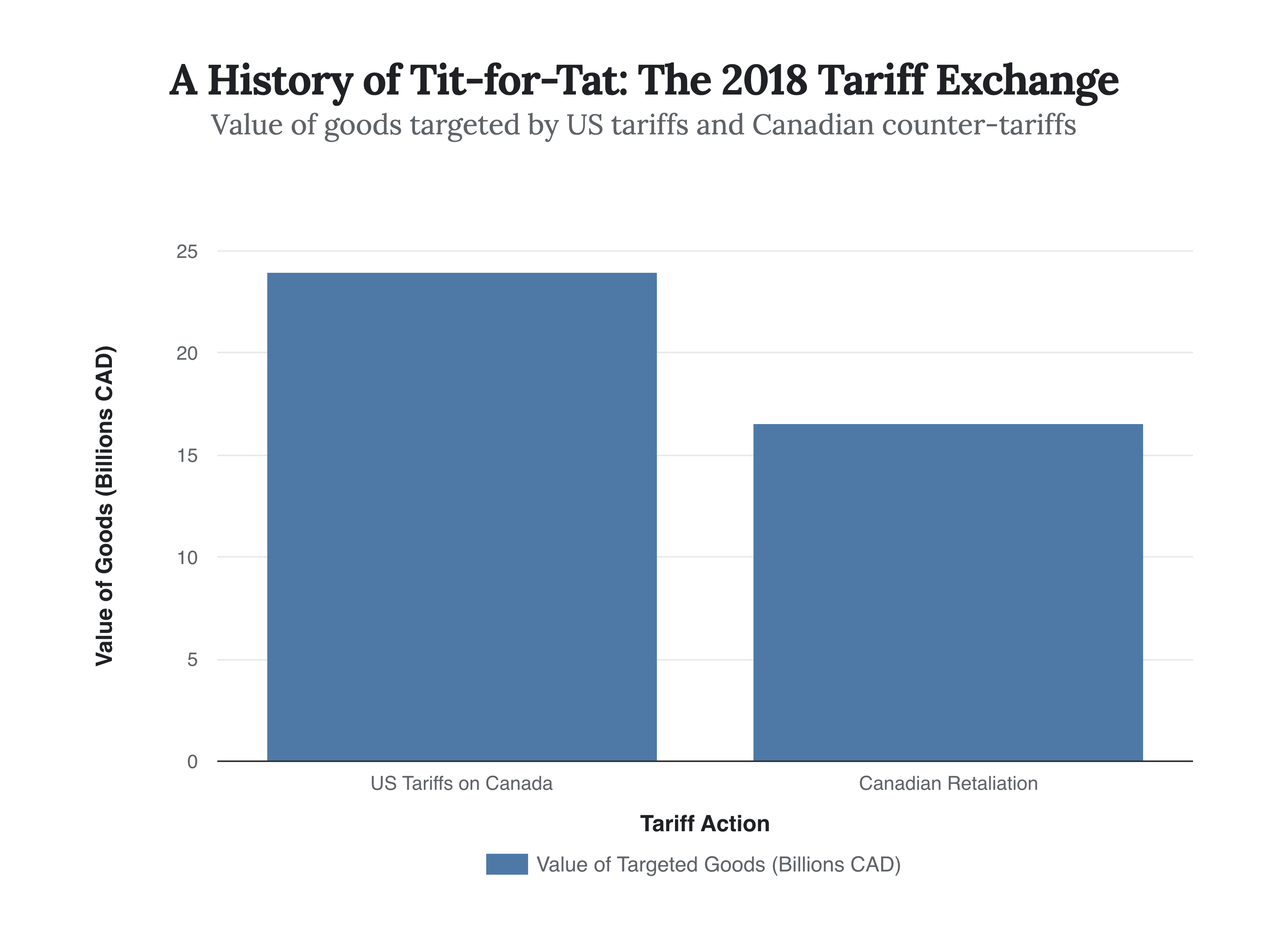
This previous trade dispute serves as a stark reminder that tariff actions often trigger a costly cycle of retaliation. The 2018 conflict ultimately led to increased costs for businesses and consumers in both countries and created profound uncertainty that chilled investment. While those specific tariffs were eventually lifted, the threat of their return, coupled with new, broader proposals, reopens a painful chapter in Canada-U.S. trade relations.
“If Governor Carney thinks he is going to make Canada a ‘Drop Off Port’ for China to send goods and products into the United States, he is sorely mistaken.”
- Donald Trump, in a social media post
The latest rhetoric targets Canada’s sovereign trade policy, attempting to leverage access to the U.S. market to influence Canadian foreign relations. Yet, the data from the past and the economic realities of the present paint a clear picture. The Canada-U.S. supply chain is not a one-way street; it’s a deeply integrated network where parts and raw materials can cross the border multiple times before becoming a final product. Tariffs imposed on Canadian goods are, in many cases, a tax on American businesses and consumers. As policymakers and business leaders on both sides of the border watch the political landscape, they are haunted by the memory of recent disruptions and the massive potential cost of a trade relationship taken for granted.