


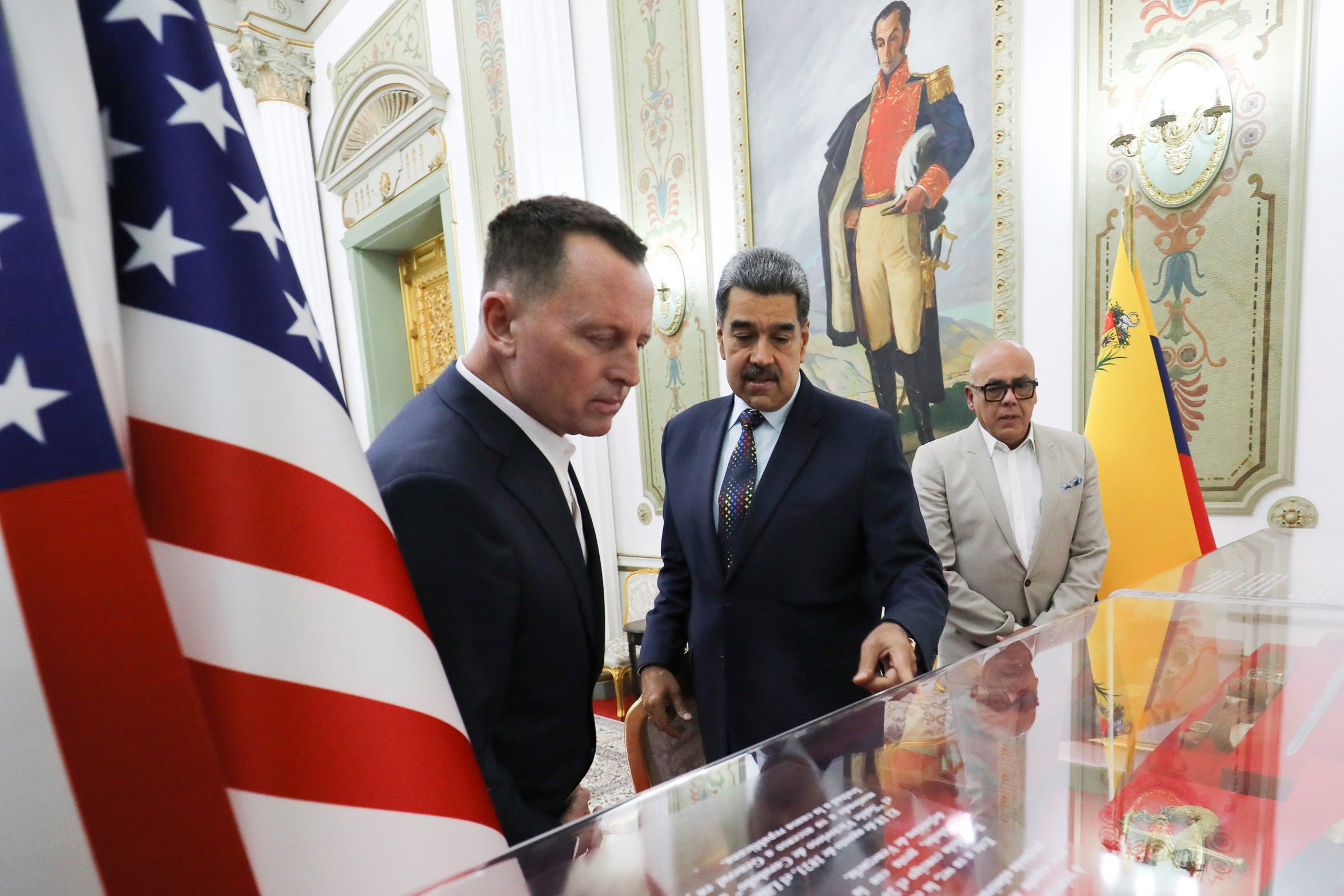
The press conference at Mar-a-Lago this morning was less a briefing and more a corporate acquisition announcement. Standing before a backdrop of American flags and naval officers, President Donald Trump delivered the news that has sent shockwaves through the global south: Nicolás Maduro is in U.S. custody, and the United States military is now, in the President’s words, “running” Venezuela.
But the true headline wasn’t the special forces operation or the toppling of a decade-long socialist regime. It was the financial justification. Trump explicitly claimed the occupation “won’t cost us a penny” because American oil majors will immediately tap Venezuela’s reserves to reimburse the U.S. Treasury. It is a geopolitical flip-and-fix strategy on a sovereign scale. The data, however, suggests the President is purchasing a distressed asset with liabilities that far outstrip its immediate liquidity.
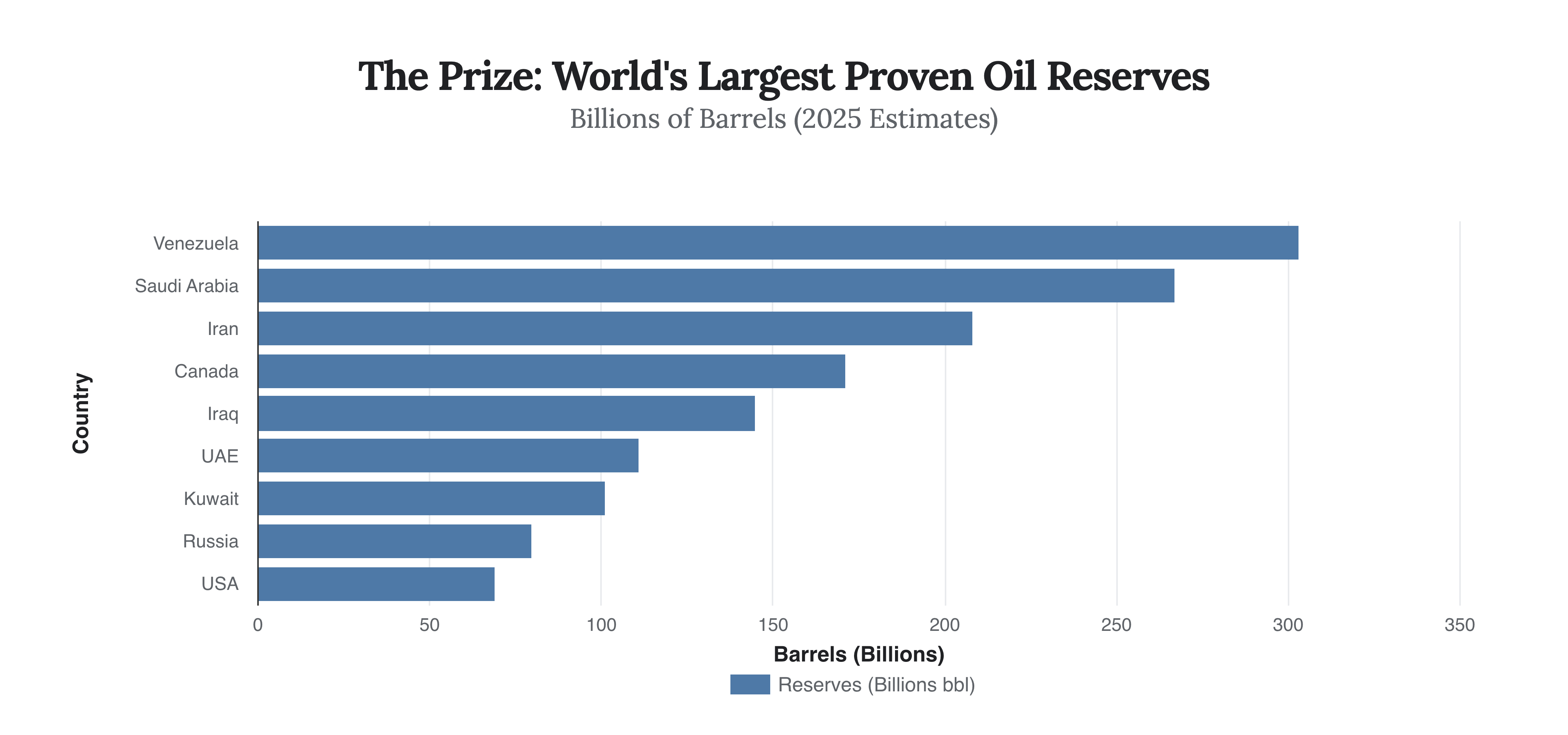
The U.S. just seized an asset 4.3 times larger than its own domestic reserves, effectively cornering the Western Hemisphere’s energy market.
The logic of the “Trump Doctrine” here is purely transactional. By seizing control of 303 billion barrels of proven reserves—the largest stockpile on the planet, eclipsing even Saudi Arabia—the administration argues the intervention pays for itself. Yet, this assumes the oil is accessible. It is not. Venezuelan crude is notoriously heavy, sour, and difficult to extract, requiring diluents and specialized infrastructure that has been rotting for a decade.
“We’re going to have our very large United States oil companies... go in, spend billions of dollars, fix the badly broken infrastructure... and start making money for the country.” — President Donald Trump, Jan 3, 2026
The President’s timeline for “making money” clashes violently with the operational reality. Since the imposition of sanctions in 2019 and the subsequent mismanagement under Maduro, Venezuela’s production capacity has collapsed. Trump is not inheriting a turnkey oil well; he is inheriting a rusted industrial ruin. Production has cratered from nearly 3 million barrels per day (bpd) in the early 2000s to struggling below 1 million bpd in 2025, despite minor recoveries due to waivers.
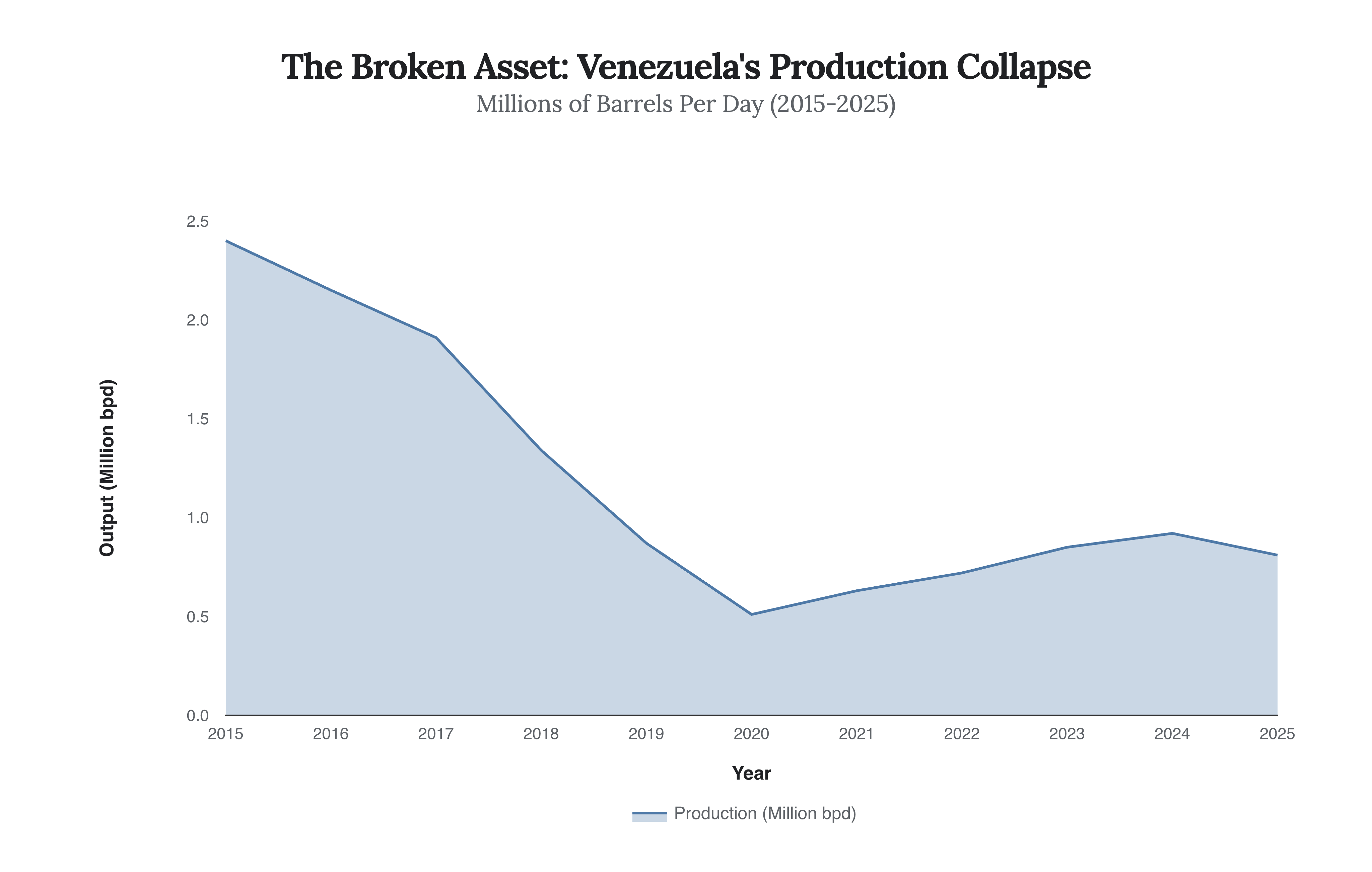
The asset Trump claims will fund the occupation is currently operating at 33% of its 2015 capacity.
To restore production to levels that would generate the revenue Trump promises—billions to reimburse the U.S. military and “fix” the country—would require an estimated $100 billion in upfront capital expenditure and 5 to 7 years of work. The “immediate” payback is a math error. The 25% tariffs Trump threatened in March 2025 on countries buying Venezuelan oil have already strangled cash flow, leaving the sector cleaner but poorer.
Beyond the oil, the secondary justification for this morning’s operation was migration. Trump referenced the “monsters” emptied from Venezuelan prisons, a rhetorical staple of his 2024 campaign. While the “prison emptying” claim remains statistically contentious, the displacement crisis is undeniable. However, the data shows that the “invasion” at the U.S. border had already plummeted before the first boot hit the ground in Caracas, largely due to policy shifts in late 2024 and 2025.
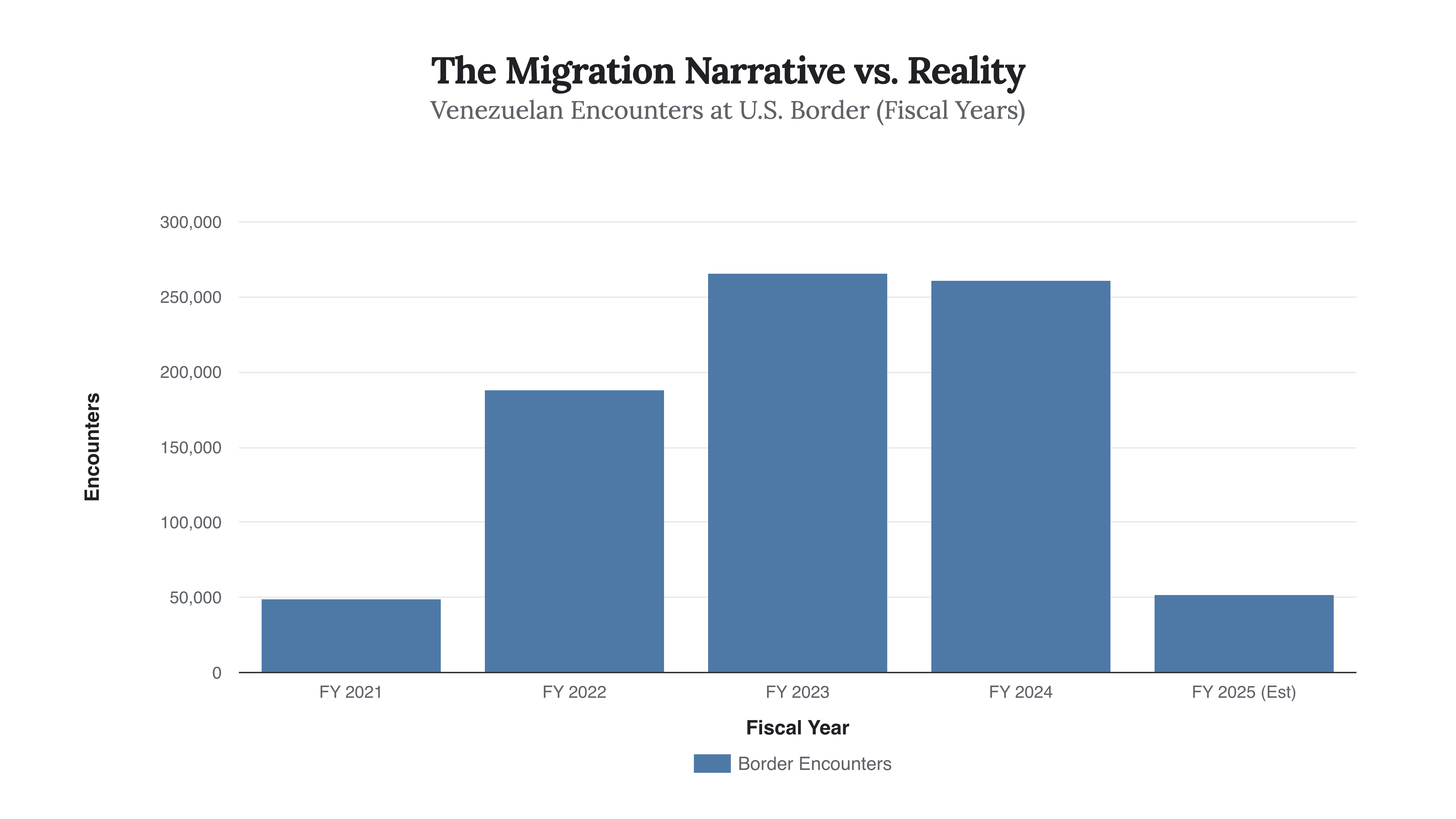
The military intervention solves a ‘border crisis’ that the data suggests had already collapsed by 80% in the last fiscal year.
The disconnect between the justification and the reality is stark. The border encounters had dropped nearly 99% in monthly comparisons by late 2024 compared to the 2023 peaks. The “emergency” was retrospective, but the intervention is prospective.
“We can’t take a chance that someone else takes over Venezuela who doesn’t have the interests of Venezuelans in mind.” — President Donald Trump, Jan 3, 2026
The United States is now the operator of a failed petro-state. If the oil revenue does not materialize fast enough to offset the costs of occupation and reconstruction, the U.S. taxpayer will be left holding the bag for the most expensive acquisition in hemispheric history.