


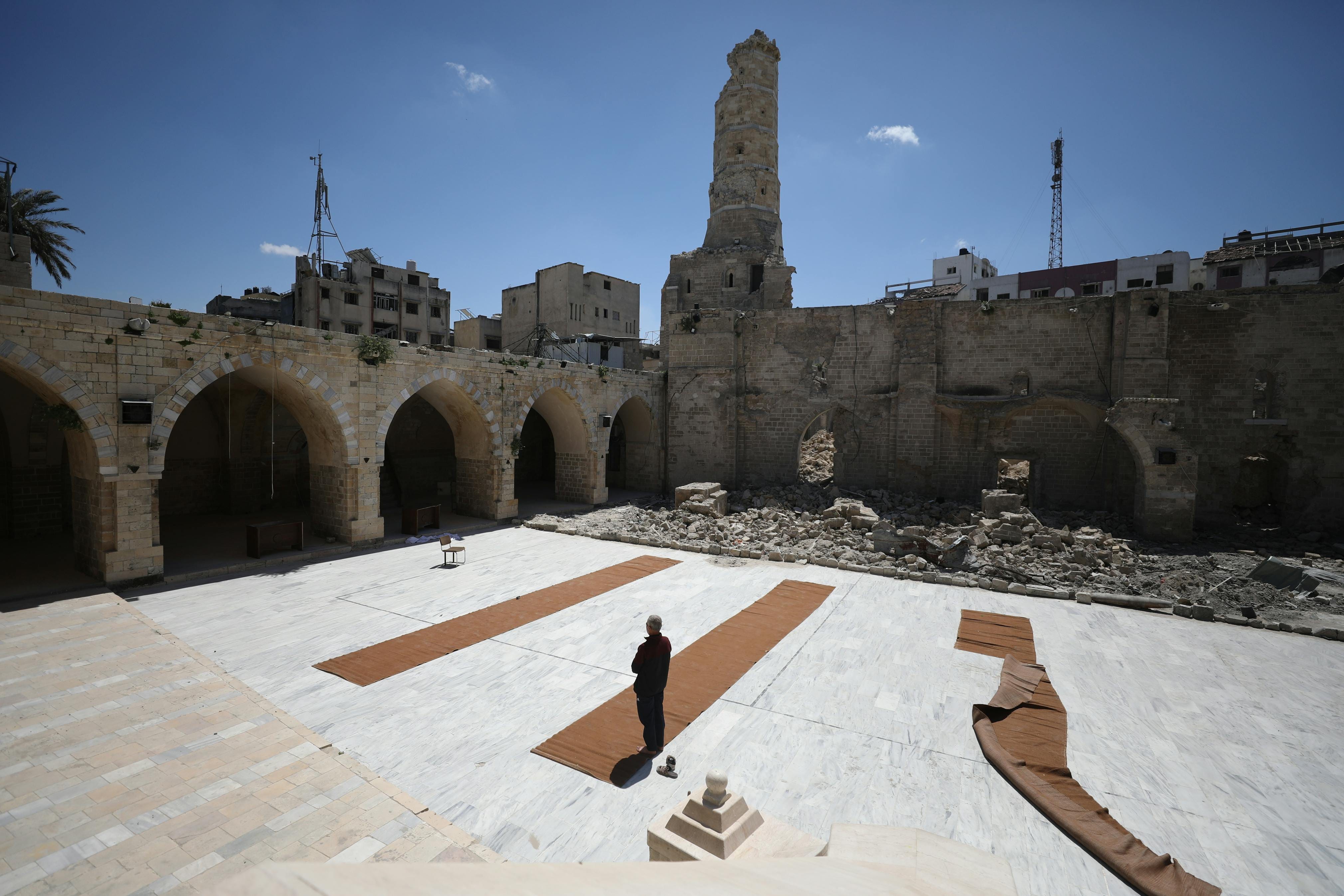
On January 17, 2026, the White House unveiled the roster for the “Board of Peace,” a body chaired by President Donald Trump aimed at overseeing the reconstruction of Gaza. The announcement, made amidst the glitz of a looming World Economic Forum in Davos, reads less like a diplomatic breakthrough and more like a prospectus for a distressed asset fund. With a reported $1 billion price tag for a permanent seat and a membership list heavily weighted toward private equity titans and loyalist insiders, the initiative marks a profound shift in the geometry of global intervention. We are no longer witnessing nation-building; we are witnessing the financialization of the aftermath.
The structure of this new order is tripartite, a hierarchy that reveals exactly where power resides. At the apex sits the Board of Peace itself, chaired by Trump, where membership is reportedly contingent on a ten-figure buy-in. Below this is an Executive Board staffed by a mélange of global financiers, Trump family members like Jared Kushner, and veteran diplomats like Tony Blair. At the very bottom—tasked with the actual, grinding work of sewage repair and rubble clearing—is the National Committee for the Administration of Gaza (NCAG), a group of Palestinian technocrats with no political mandate. The message is clear: Palestinians may manage the sewers, but the Board manages the sovereignty.
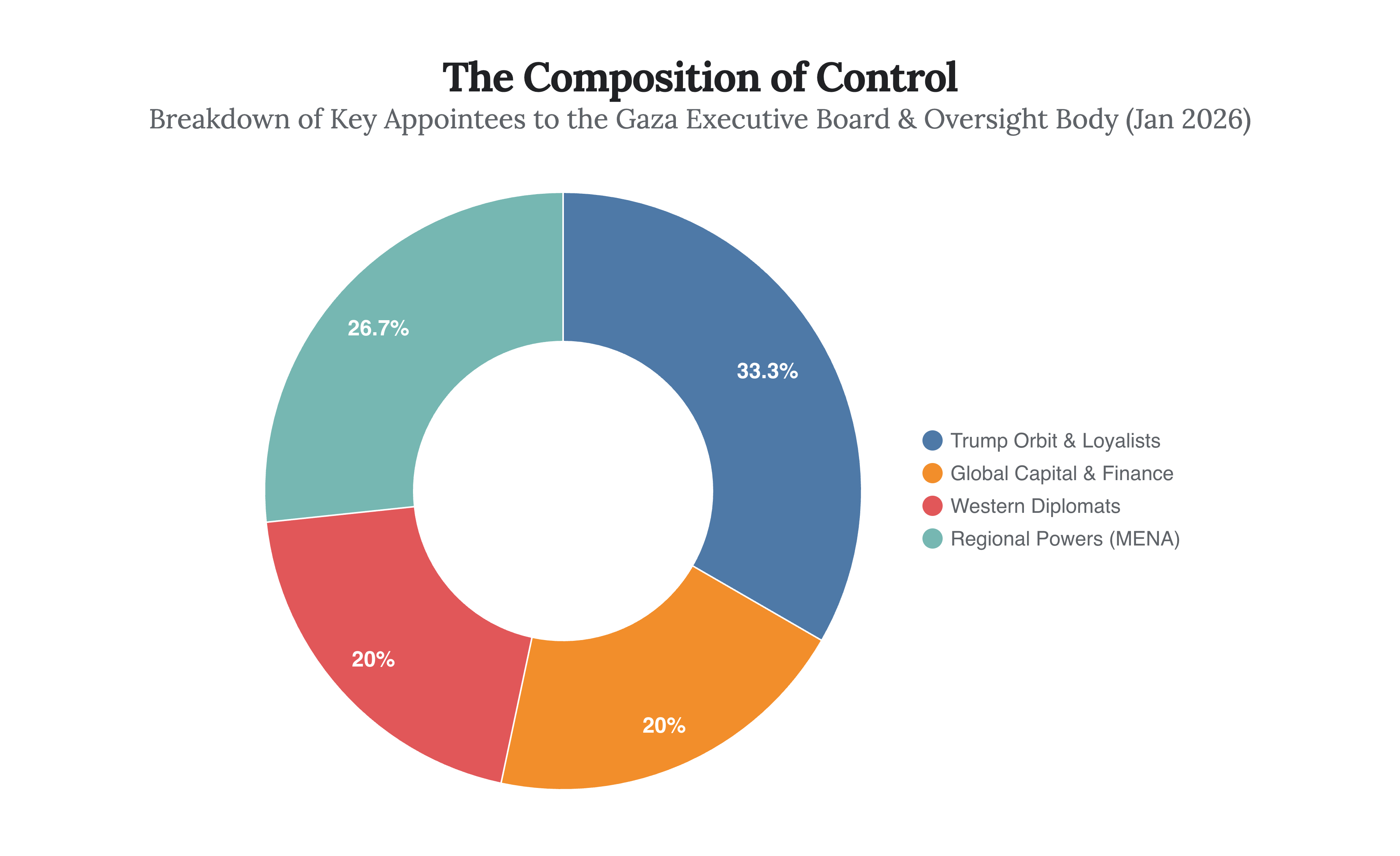
The chart above illustrates the demographic reality of this new governance. The “Trump Orbit”—including figures like Steve Witkoff, Jared Kushner, and Marco Rubio—holds the plurality of influence, closely followed by representatives of global capital such as Apollo Global Management CEO Marc Rowan. The actual diplomats and regional neighbors are present, but they are outnumbered by a coalition of American political loyalists and high finance. This composition suggests that the Board’s primary objective may not be political reconciliation, but rather the creation of a secure investment zone, enforced by a stabilization force and managed by a remote boardroom.
“The proposal... is an unserious, politically ignorant, economic-centric pipe dream, a la Trump’s vision of a ‘Gaza Riviera.’”
The financial barriers to entry further underscore this commercial logic. Reports that a permanent seat on the Board costs $1 billion have transformed diplomatic participation into a luxury subscription service. This pay-to-play model effectively privatizes the peace process, allowing wealthy nations or perhaps even corporate-aligned interests to buy influence over the future of the strip. To put this $1 billion fee into perspective, it is necessary to compare it against the actual economic realities of the devastated enclave.
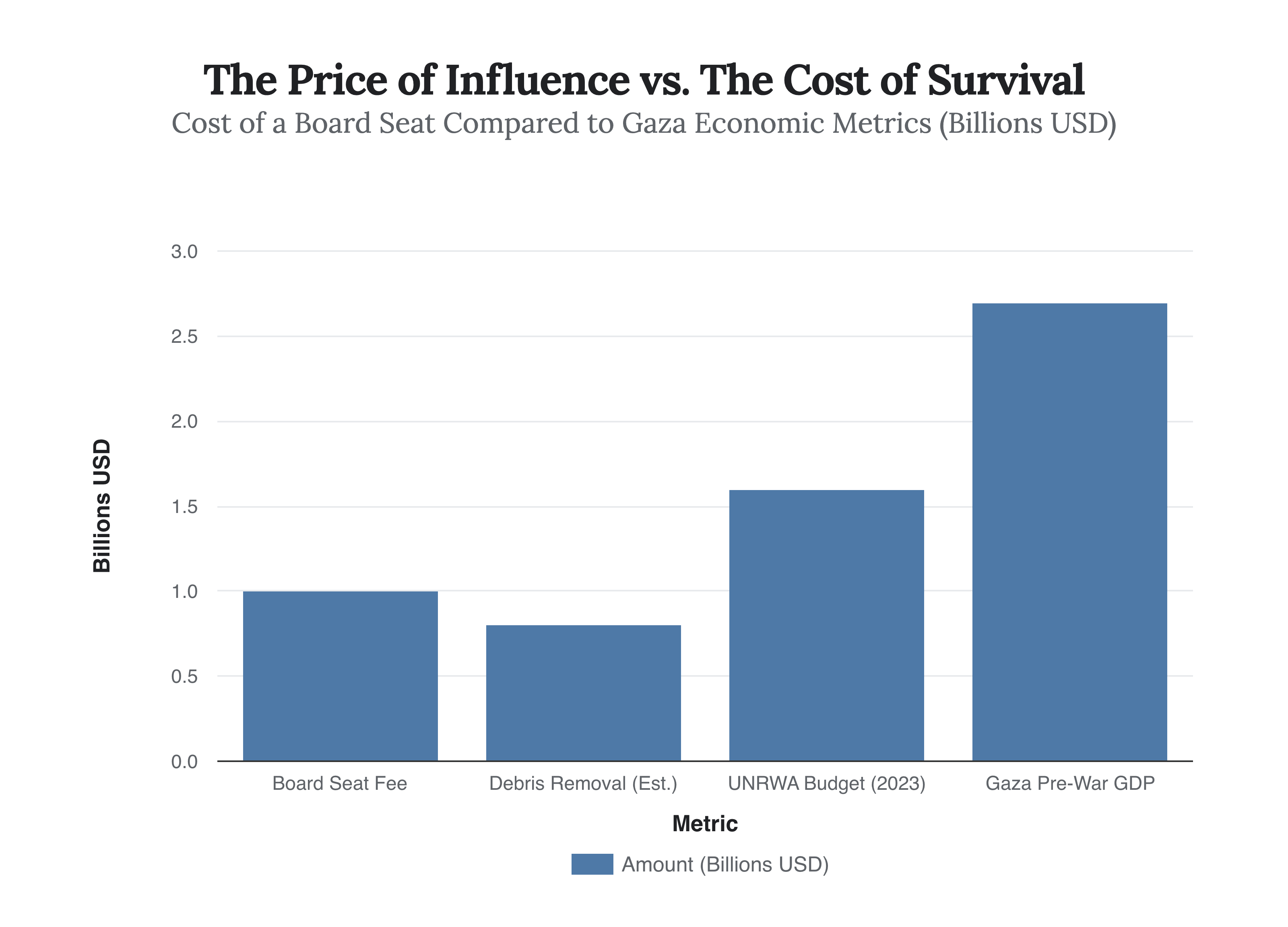
As the data shows, the price of a single seat at the table ($1 billion) exceeds the estimated cost of clearing the 50 million tonnes of debris choking the strip (~$0.8 billion). It is nearly 40% of Gaza’s entire pre-war GDP. When the entrance fee for the “peacemakers” rivals the total economic output of the region they intend to save, the initiative ceases to be a humanitarian rescue and becomes a hostile takeover. The disparity suggests a future where reconstruction funds may be prioritized for high-yield infrastructure projects—the “waterfront property” Jared Kushner once alluded to—rather than the essential housing and social services needed by the displaced population.
Meanwhile, the “peace” itself remains terrifyingly fragile. Since the ceasefire nominally began in October 2025, over 450 Palestinians have been killed in what are euphemistically termed “security incidents” or “violations.” The disconnect between the boardroom in Davos, where seats are traded like futures contracts, and the streets of Khan Yunis, where the ceasefire is punctuated by gunfire, creates a surreal dual reality. The Board of Peace is designing a future for a territory that is still, largely, a crime scene.
“Countries that inspired Hamas cannot be the ones that replace it... Those who support it and continue to host it even now will not be granted a foothold in Gaza.”
This exclusionist rhetoric from Israeli officials, directed at Board invitees like Turkey and Qatar, highlights the fatal flaw in Trump’s architectural vision. You cannot build a stable governance structure on a foundation of exclusion and rent-seeking. By relegating Palestinians to a “technocratic” role while selling sovereignty to the highest bidder, the Board of Peace risks creating a permanent state of dependency—a panopticon where the guards are investors and the inmates are “administered” rather than governed. True peace requires political agency, not just a board of directors.