


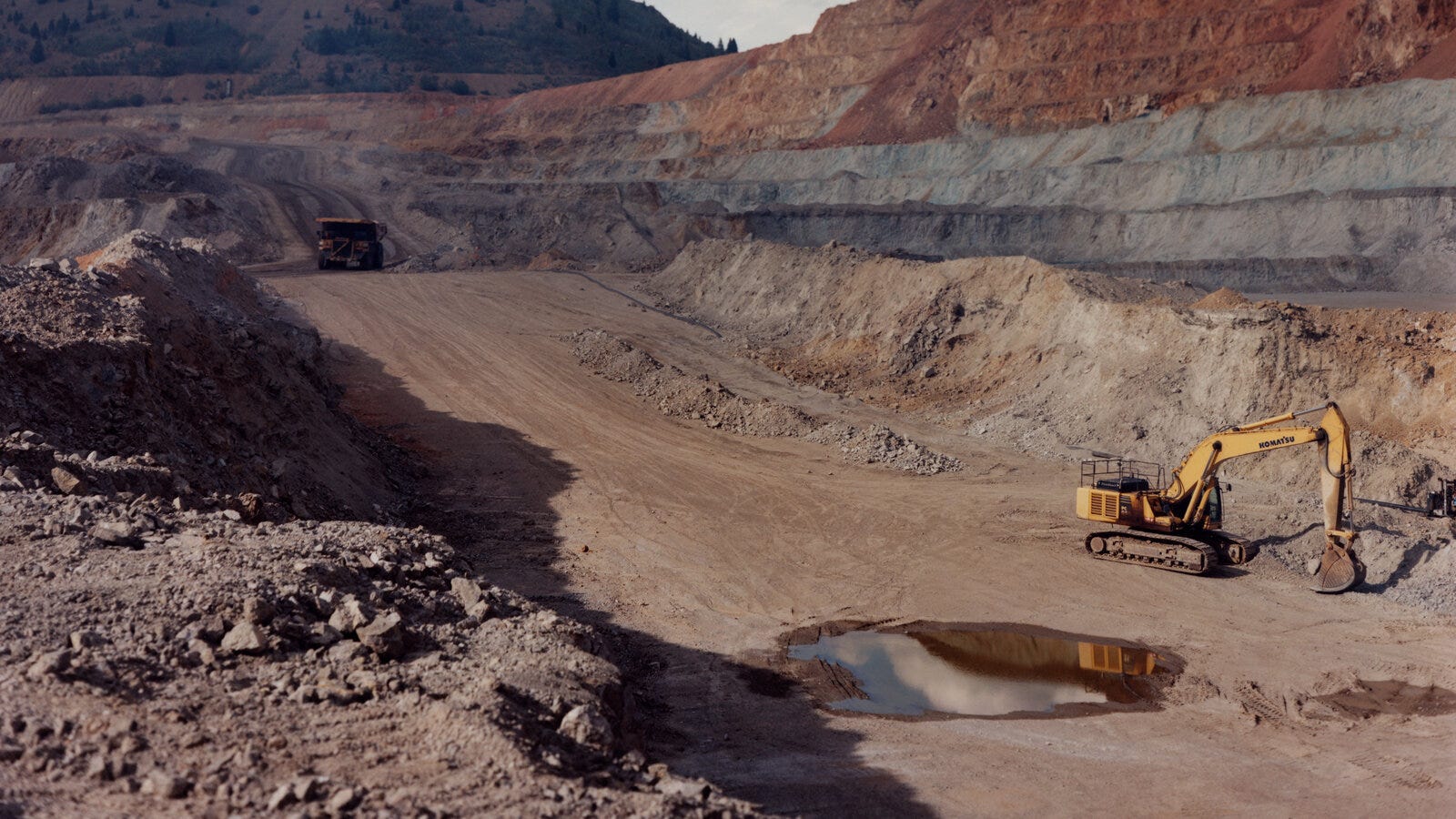
Looking back from the vantage point of 2031, the inflection point of the modern geopolitical era is unmistakably anchored in the spring of 2026. By that critical juncture, the narrative of the war in Eastern Europe had fundamentally shifted. The geopolitical calculus was no longer dictated solely by historical sovereignty, ethnic demography, or the expansion of security umbrellas. It had mutated into a raw, uncompromising battle for the subsoil. The conflict had become the first true “Mineral War” of the 21st century.
Beneath the battered black earth of Ukraine lies a geological goldmine: an estimated $12 trillion to $26 trillion in critical raw materials (CRMs). We now know that the conflict’s final contours were not drawn by political treaties or diplomatic summits, but by the spatial distribution of lithium, titanium, uranium, and rare earth elements. To understand the global balance of power in 2031, one must rigorously examine the geological map of 2026—a map where a violent military frontline bisected the European continent’s only independent supply of the critical technological feedstocks required for the energy transition.
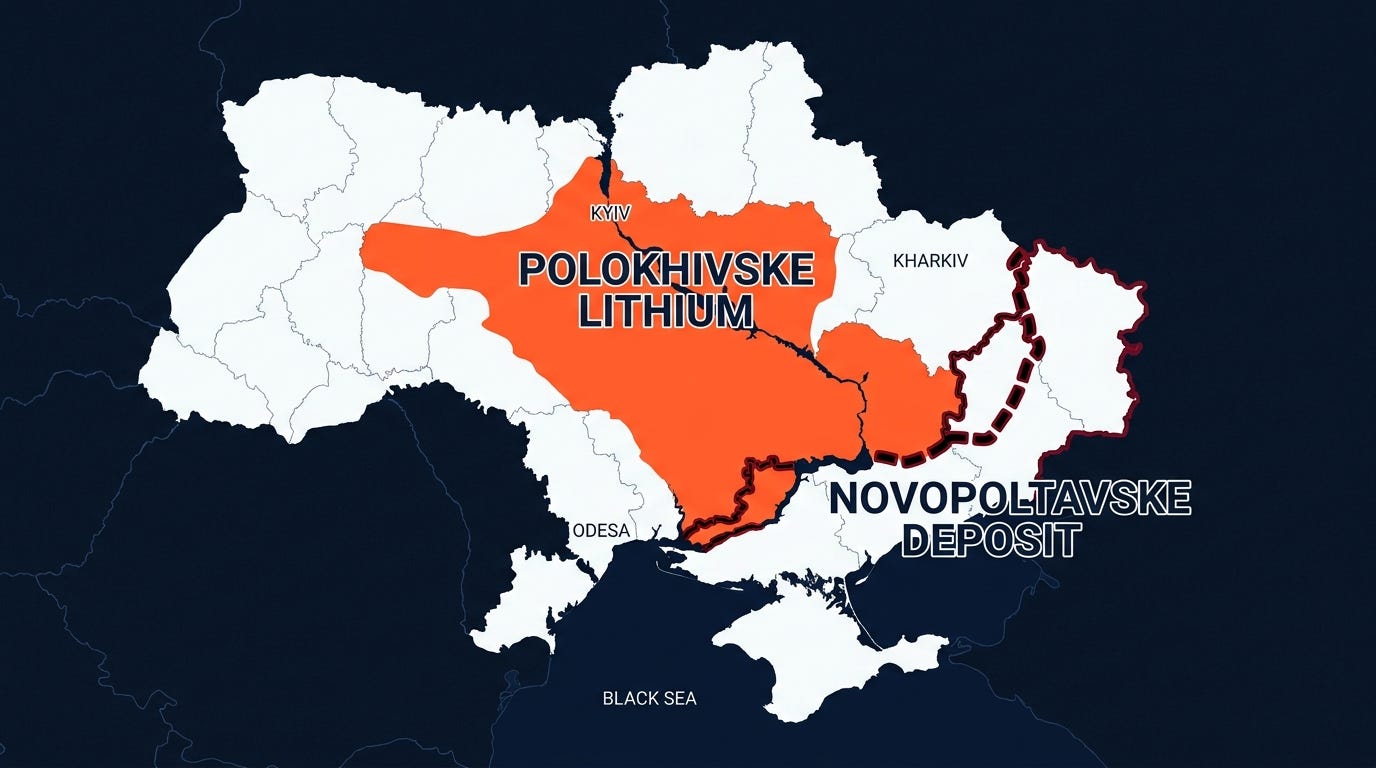
The geographical anchor of this reality is the Ukrainian Shield. This massive, billion-year-old geological formation stretches diagonally across the country, running from the Belarusian border in the northwest down to the shores of the Sea of Azov in the southeast. Covering roughly 40% of Ukraine’s territory, this crystalline shield hosts 25 of the 34 raw materials identified by the European Union as strictly critical for its economic survival, green energy transition, and military-industrial complex.
In Q1 2026, the spatial reality of the battlefield was stark. Russian occupation forces had solidified control over roughly 20% of Ukraine’s sovereign territory. Yet, when cartographers overlay the geological survey data onto the military maps of that year, a glaring strategic asymmetry emerges. That 20% of occupied landmass encompassed nearly 50% of Ukraine’s rare earth element deposits, including the massive Novopoltavske deposit in the Zaporizhzhia region, and the highly lucrative Shevchenkivske lithium fields in Donetsk. Furthermore, Russia’s territorial hold effectively severed Kyiv from 40% of its total metallurgical resources and the entirety of its offshore hydrocarbon potential in the Azov-Black Sea basin.
The geography of the frontline was not accidental; it was a deliberate, calculated resource enclosure. The Russian military apparatus anchored its defensive lines precisely over the mineral chokepoints required to starve Europe’s gigafactories of independent supply and force continued reliance on Sino-Russian supply chains.
While Moscow engaged in hard territorial acquisition, Washington and Brussels engaged in a complex, high-stakes geopolitical tug-of-war over the remaining deposits in central and western Ukraine. The transatlantic alliance, while publicly united, fractured quietly over access to the subsoil. In early 2025, the U.S. administration explicitly tied continued military and economic support to resource extraction rights, floating a sweeping framework where the United States would secure $500 billion worth of rare earths and critical minerals as strategic compensation. This aggressive maneuvering signaled a structural shift: Ukraine was no longer viewed merely as a security buffer, but as an indispensable node in the U.S.-China technology war.
Simultaneously, the European Union recognized that its strategic autonomy hinged on integrating Ukrainian geography into the European industrial core. Through Chapter 20 enlargement negotiations and the Critical Raw Materials Act (CRMA) of 2030, the EU moved rapidly to lock down supply. By June 2025, the European Commission had officially designated the Balakhivka Graphite deposit in the Kirovohrad region as a strategic project. Utilizing digital mapping from the EBRD, which had digitized over 6,000 legacy Soviet geological reports by 2024, Western mining conglomerates spent the entirety of 2026 frantically leasing land in the “safe” zones of Dnipropetrovsk and Kirovohrad, regions rich in nickel, cobalt, and lithium.

Geography, however, is a harsh and unforgiving dictator of logistics. Prior to the war, Ukraine efficiently exported its heavy bulk ores via the deep-water ports of the Black Sea. By 2026, the intense militarization of the Black Sea basin,
