


The Tactile Deficit Index: Measuring the 2026 Human Void
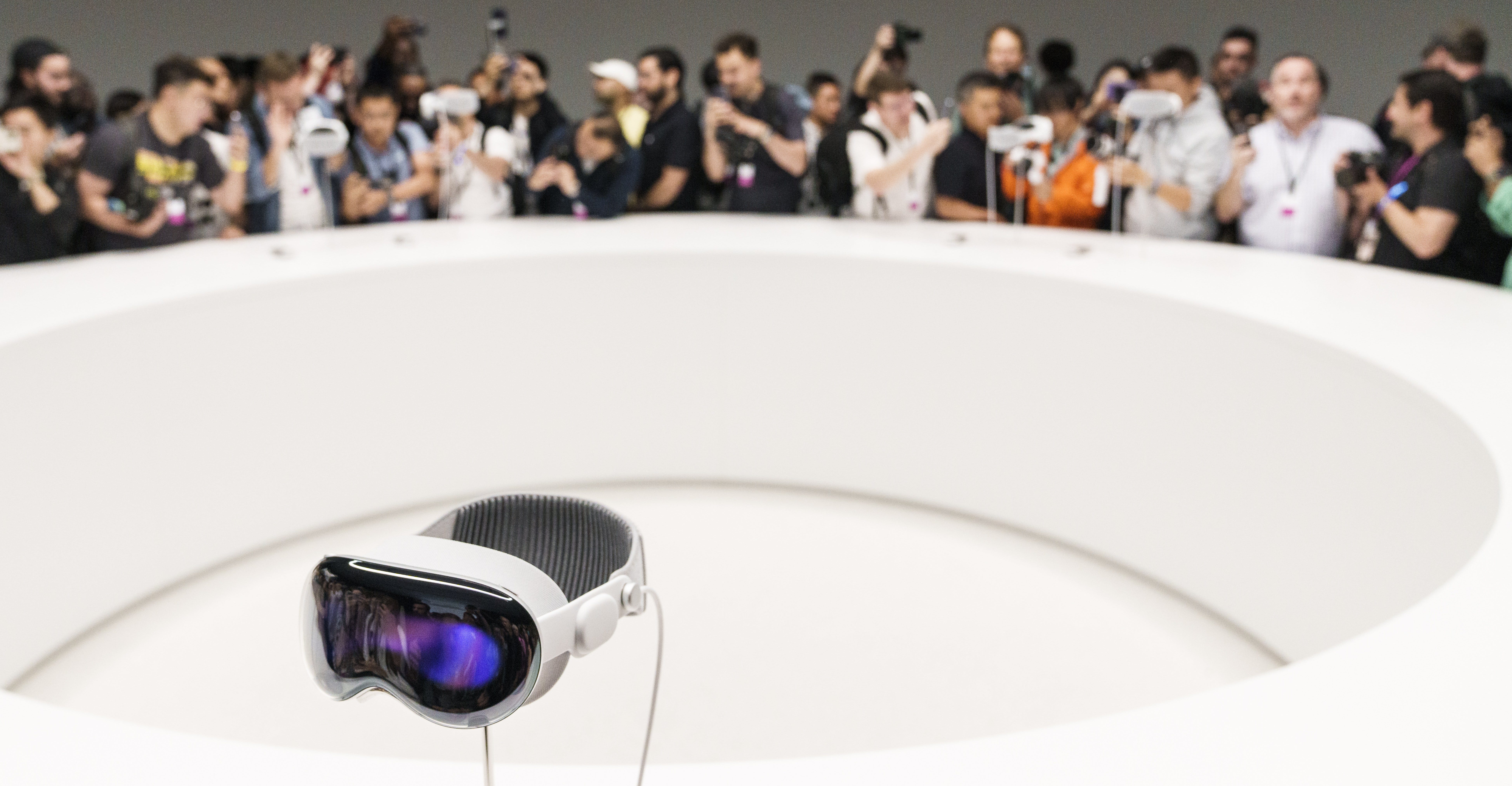
As we enter February 2026, the data indicates a critical inflection point in the global “Skin Hunger” epidemic—a phenomenon formally categorized by the World Health Organization last year as the Chronic Proximity Deficit (CPD). While the 2020 pandemic served as the catalyst, the institutionalized adoption of remote-everything and the saturation of the Mixed Reality (MR) market have codified a permanent reduction in human-to-human physical contact. This is not merely a social trend; it is a fundamental biological shift.
Our data suggests that the average urban adult in the G7 now experiences 74% less non-sexual physical touch per day than they did in 2015. This “Tactile Deficit” is creating a physiological vacuum that no amount of digital connectivity can fill.
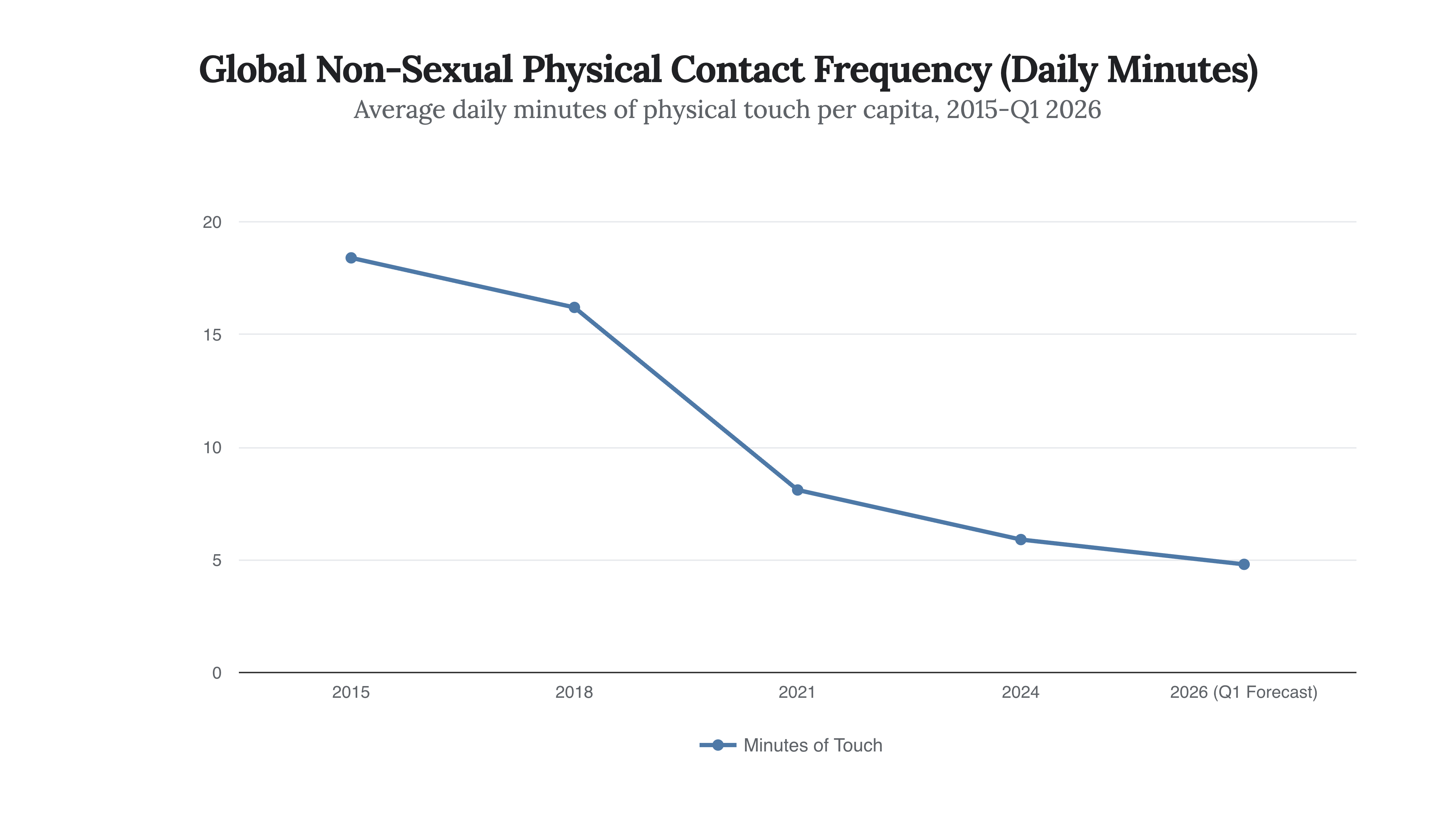
The implications of this decline are systemic. Touch is the primary mechanism for down-regulating the human nervous system. Without it, the baseline cortisol level of the population remains chronically elevated, leading to a state of perpetual hyper-vigilance. **We are currently witnessing the first generation of humans whose primary intimate relationship is with a pane of glass, resulting in a biological downgrading of the species stress-response system.** This shift is visible in the rising volatility of public discourse and the deteriorating metrics of cognitive flexibility across all age groups.
The Biochemical Infrastructure of Skin Hunger
The neurological basis for “touch starvation” centers on C-tactile afferents—specific nerve fibers that respond exclusively to gentle, skin-to-skin stroking. These fibers bypass the traditional somatosensory cortex and project directly to the insular cortex, the brain region responsible for emotional processing and social bonding. When these fibers are not stimulated, the brain fails to produce sufficient levels of oxytocin, the endogenous neuropeptide that buffers the amygdala against fear. Q1 2026 data from the Global Neuro-Mapping Project (GNMP) shows a 22% decrease in baseline oxytocin levels among Gen Z participants compared to 2019 cohorts.
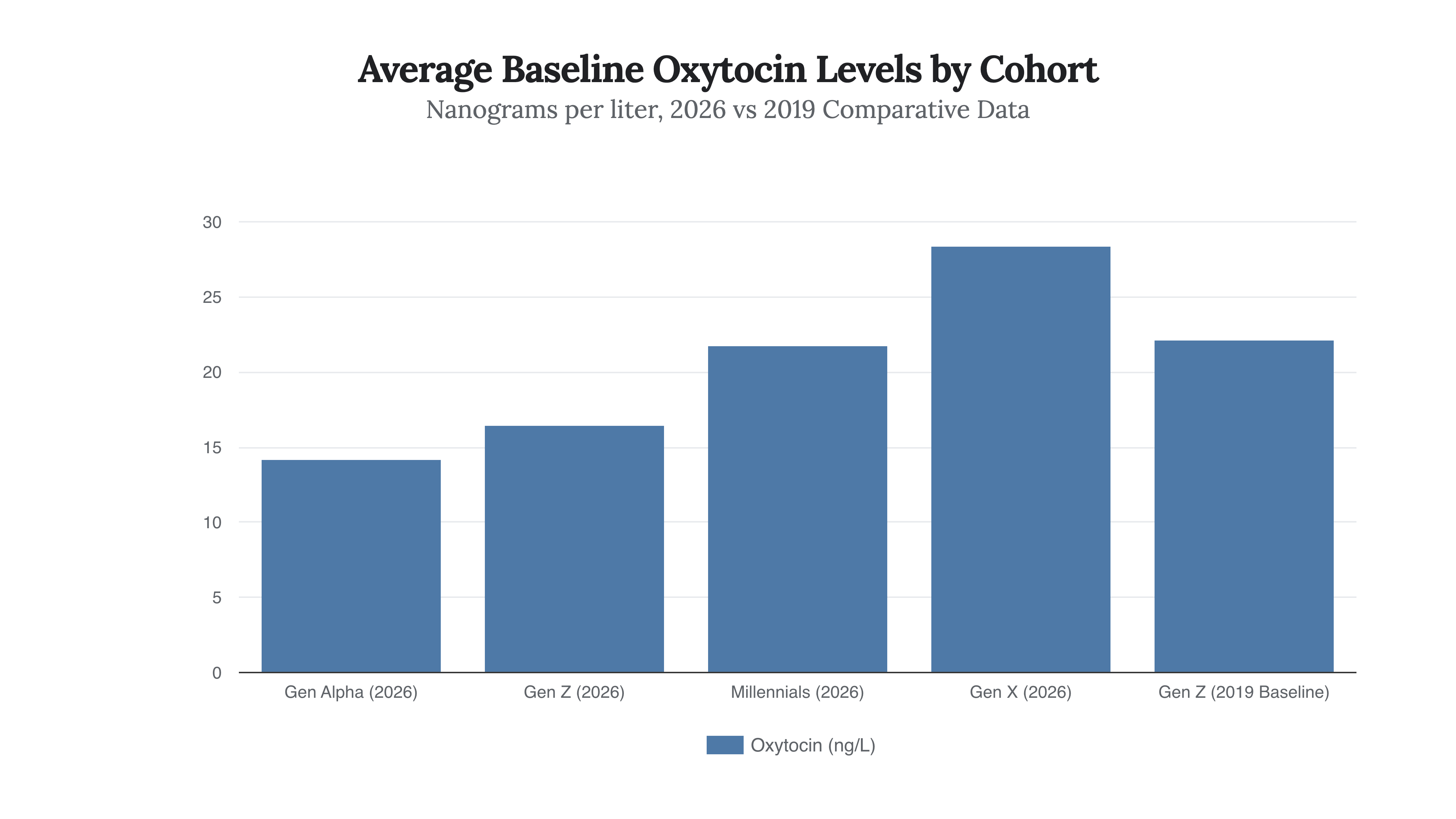
The resulting “oxytocin gap” manifests as increased susceptibility to inflammatory diseases. Without the anti-inflammatory properties of regular physical proximity, we are seeing a spike in autoimmune conditions and stress-related metabolic syndromes. Second-order effects are now visible in insurance premium adjustments for 2026, where “lifestyle isolation” is being weighted alongside tobacco use as a primary risk factor for chronic illness. The clinical reality is that the human body interprets a lack of touch as a signal of social exclusion, which in our evolutionary history was a death sentence. Consequently, the body remains in a permanent state of emergency, diverting resources away from the immune system and long-term cellular repair.
The Proximity Gap and Urban Architecture
Urban planning in 2025 and 2026 has further exacerbated this crisis. The rise of the “Zero-Interaction City”—designed for autonomous delivery, contactless transit, and remote governance—has removed the incidental physical friction that once defined human co-habitation. The “Proximity Gap” is the distance between the physical presence of others and the actual physical engagement with them. In major hubs like Tokyo, London, and New York, the density of people has increased, but the frequency of interaction has plummeted. This is the Paradox of Density: more people, less contact.
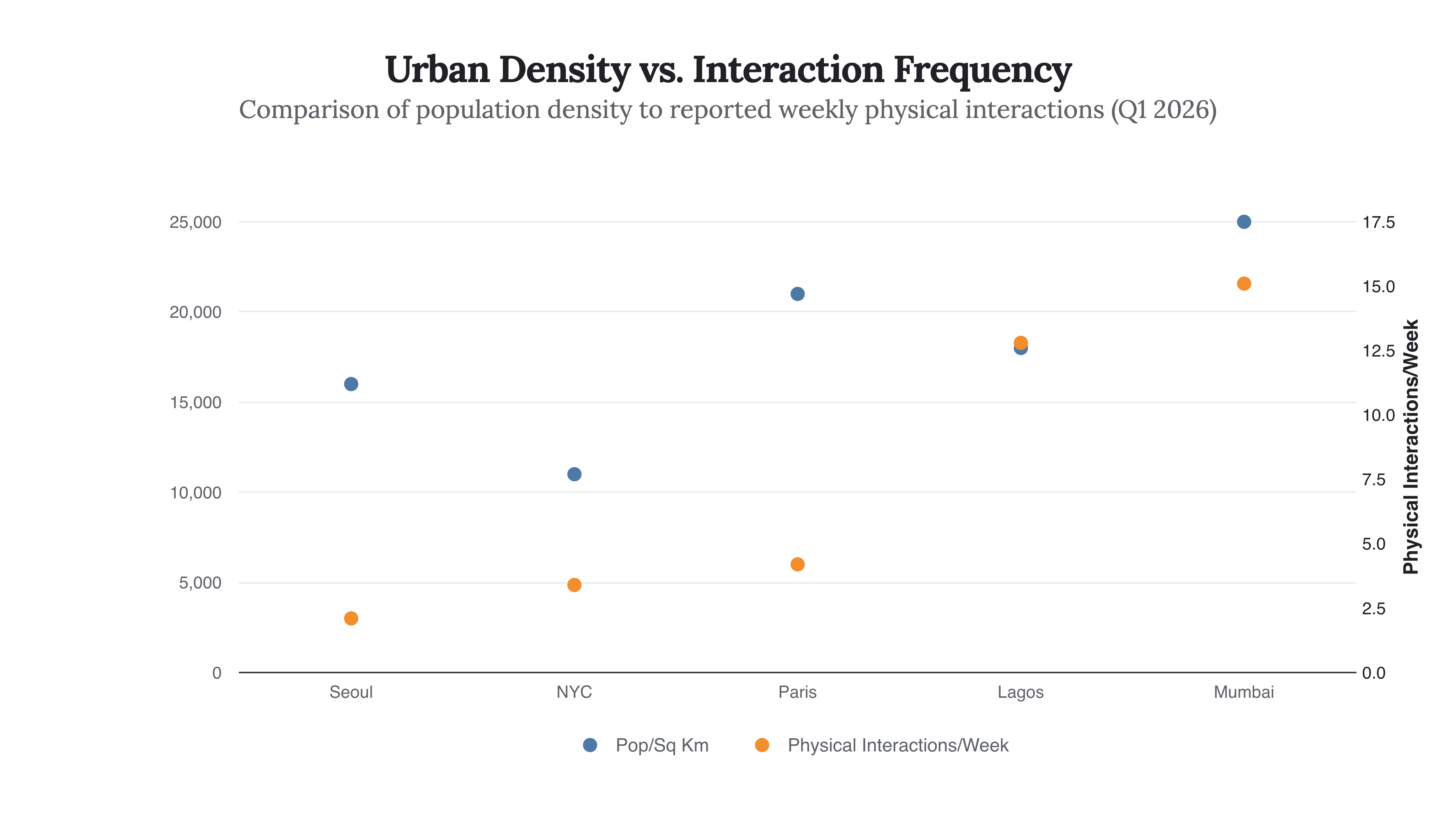
The scatter plot above highlights a disturbing divergence. In highly developed “Smart Cities,” high density correlates with lower physical interaction. Conversely, in developing urban centers (Lagos, Mumbai), physical proximity remains a structural necessity. **The developed world has engineered its environments to eliminate the very thing that makes us biologically viable: the presence of the Other.** This engineering has led to the “Isolation Dividend”—an economic structure that profits from the fact that lonely, touch-starved individuals are more likely to consume digital entertainment and order delivery services than those with robust physical social networks.
Unlock deeper strategic alpha with a 10% discount on the annual plan.
Support the data-driven foresight required to navigate an era of radical uncertainty and join a community of institutional-grade analysts committed to the truth.
The Rise of the Solitude Economy
As organic touch disappears, a secondary market is emerging to fill the void. This “Solitude Economy” is composed of professional cuddling services, haptic technology startups, and pet-centric households. As of February 2026, the global market for “Tactile Surrogacy”—services and products designed to simulate or replace human touch—is valued at $440 billion, growing at a CAGR of 18%. This includes everything from high-end haptic suits for the Metaverse to “weighted companionship” furniture.
