

The View from 2030
History, when viewed through the lens of sovereign debt, rarely offers clean breaks. It offers fractures. Looking back from 2030, the events of late 2025 and early 2026—specifically the standoff between the White House and the Federal Reserve—represent the definitive fracture of the post-Volcker monetary consensus. It was the moment the “Institutional Veil” was pierced, revealing that the independence of the world’s most important central bank was not a law of physics, but a fragile norm held together by market vigilance.
To understand the liquidity crisis of 2027 and the subsequent Dollar De-Rating, we must dissect the Fed Siege of Winter 2026. This was not merely a personality clash between a returning President and a recalcitrant Chair; it was a structural stress test of the US Treasury market. The data from that period—specifically the divergence between Executive intent and Bond Market reality—provides the only roadmap for navigating the sovereign volatility we face today.
We are analyzing this scenario not to relitigate the politics of the Trump Restoration, but to extract the Second-Order Effects of institutional capture on cost-of-capital.
The Attack Vector: January 2026
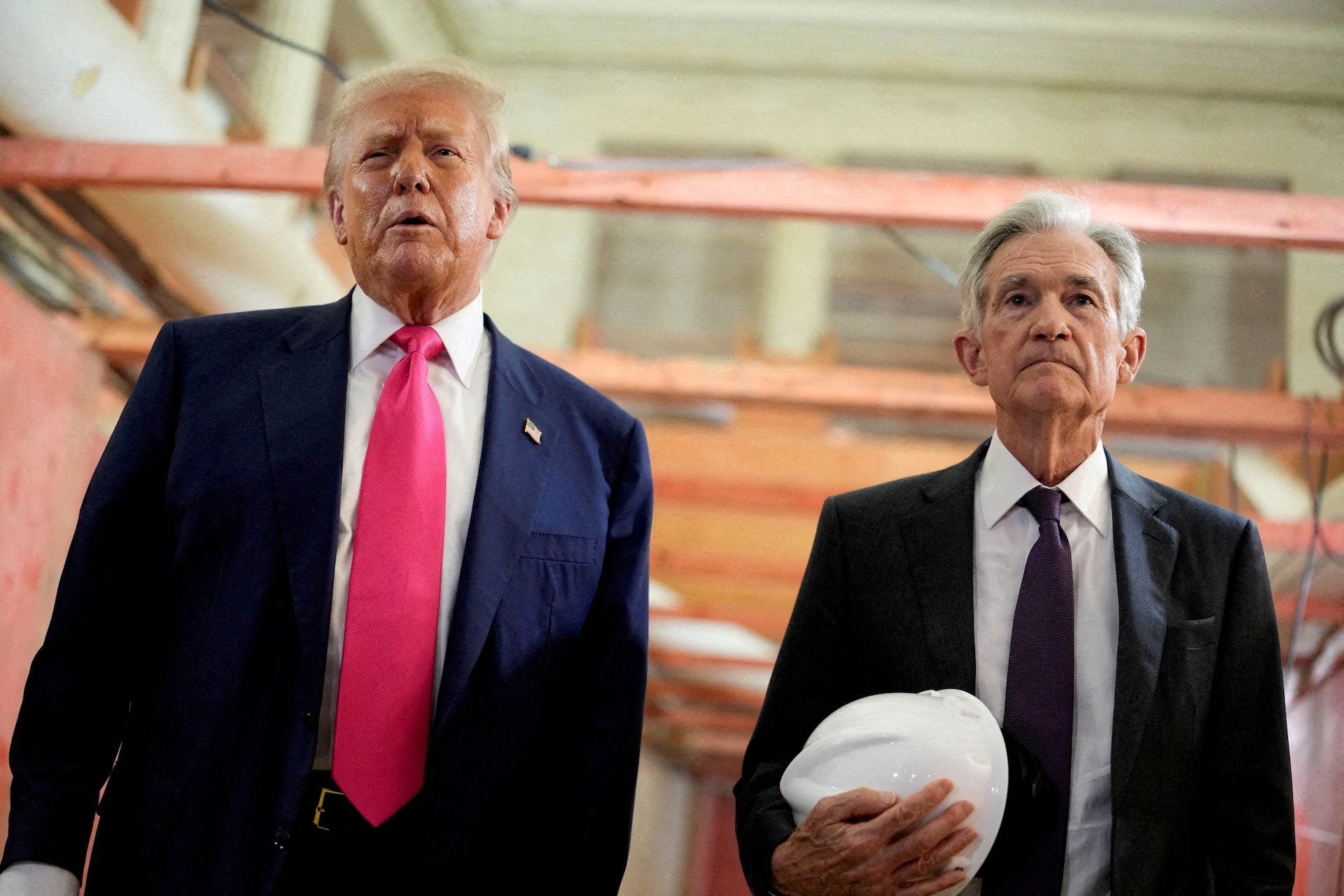
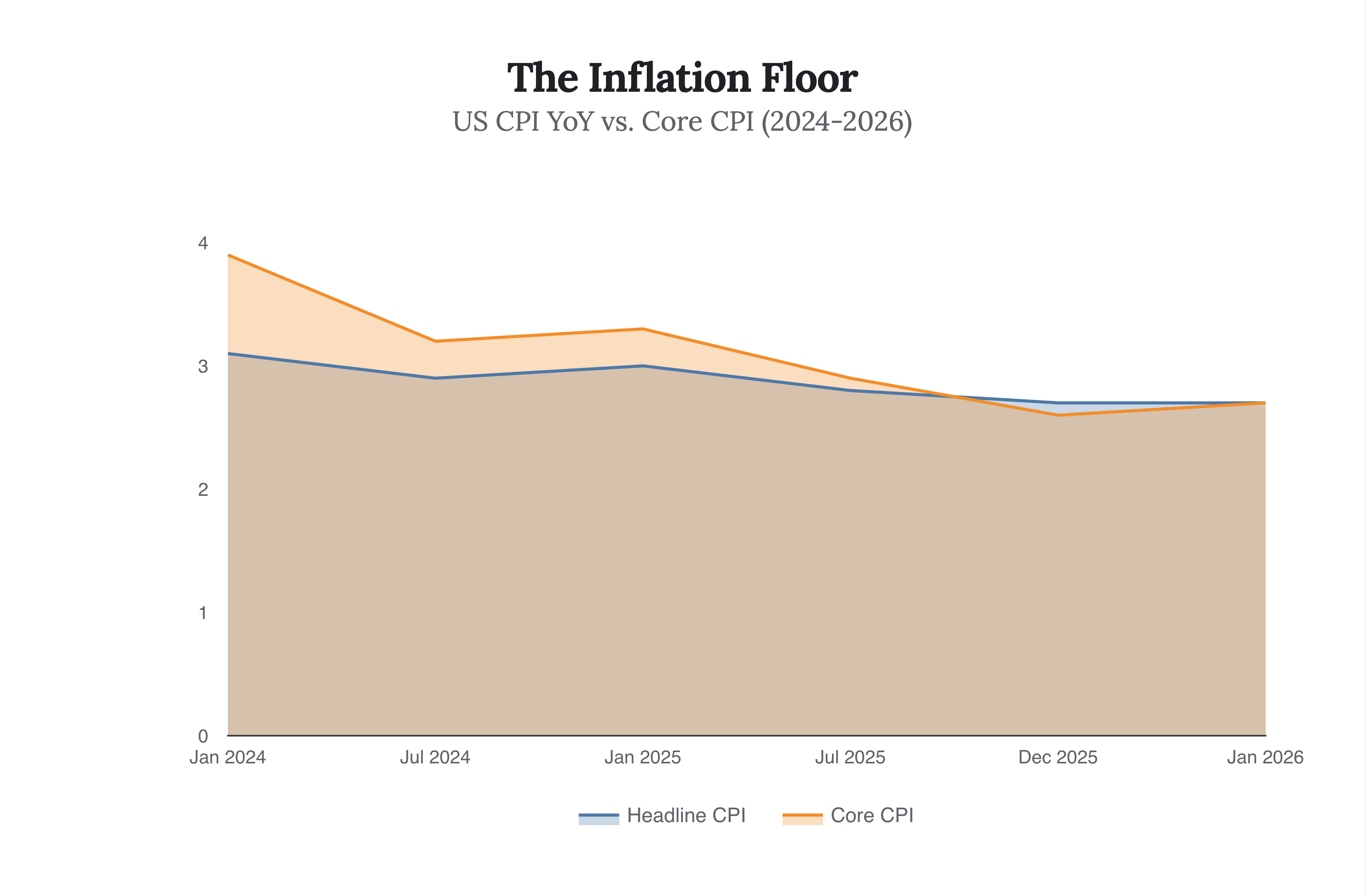
By January 2026, the strategy of the Executive Branch had shifted from public pressure to legal attrition. The data available at the time—specifically the January 28, 2026 metrics—painted a picture of an economy caught in a “Stagflationary Trap.” Inflation was sticky at 2.7% (Dec 2025), significantly above the 2.0% target, while the unemployment rate had ticked up to 4.4%. Under normal orthodoxy, this would call for caution. Under the populist mandate, it called for aggressive easing.
The turning point was the weaponization of the Department of Justice. The issuance of grand jury subpoenas regarding the Federal Reserve’s renovation costs was, on the surface, a bureaucratic squabble. In reality, it was a pretext for removal for cause. The market understood this immediately. The “Bessent Buffer”—the hope that Treasury Secretary Scott Bessent would moderate the President’s impulses—collapsed when Bessent publicly criticized the Fed for “losing $100 billion a year” and lacking accountability.
The market does not care about executive orders; it cares about yield.
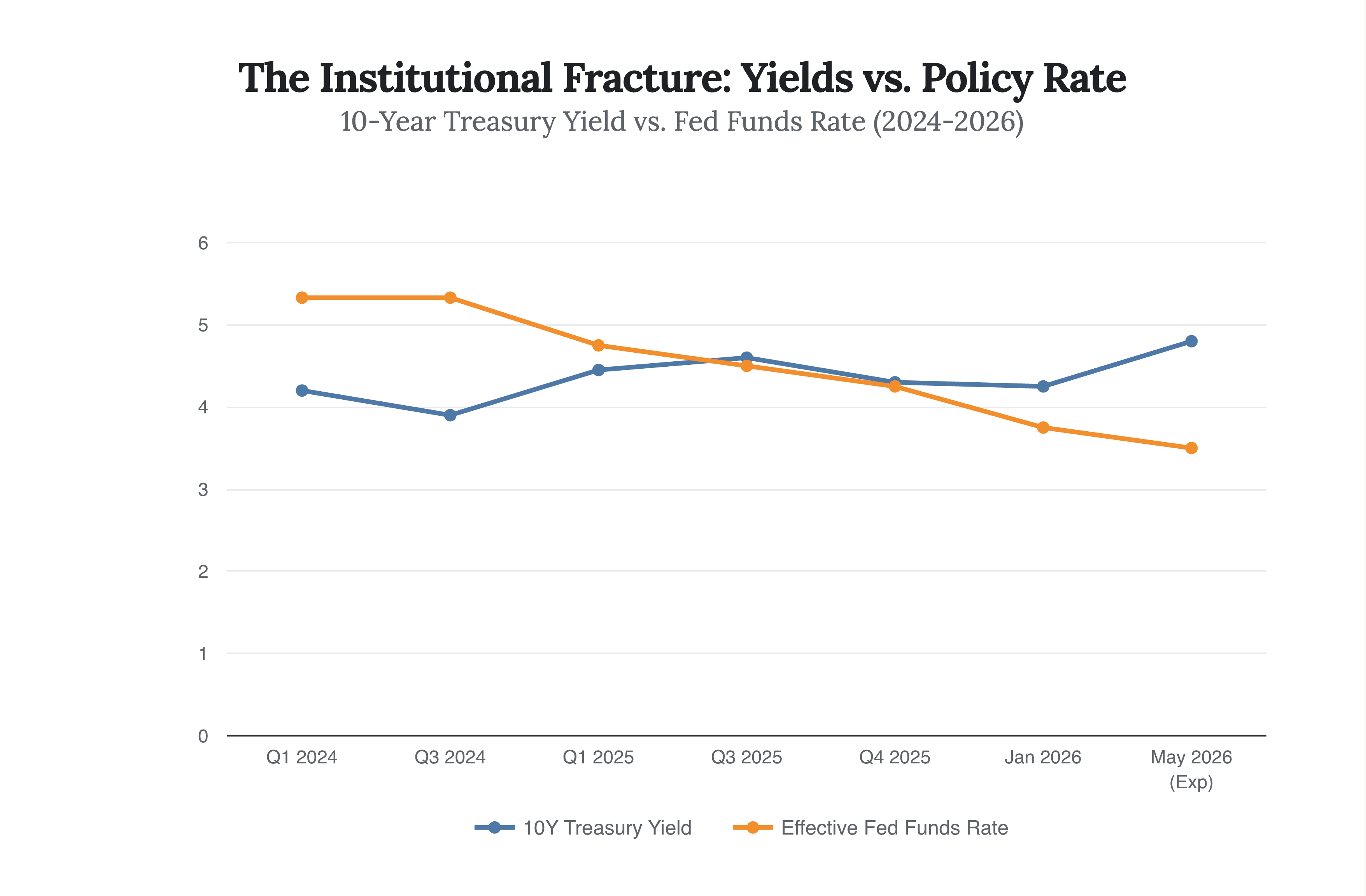
When the DOJ investigation was announced, the 10-year Treasury yield did not compress as the White House hoped; it hardened. The bond market began pricing in a “Governance Risk Premium.” Traders realized that if the Fed Chair could be removed for renovation overruns, the barrier to monetizing the debt had effectively vanished. The result was a steepening of the yield curve not driven by growth, but by fear.
The Failure of the “Shadow Chair”
Throughout 2025, the administration deployed the “Shadow Fed Chair” strategy—utilizing figures like Kevin Hassett and Kevin Warsh to provide alternative forward guidance. The theory was that the market would look past Powell to the incoming regime. The data proves this strategy failed. The 10-year yield remained stubbornly above 4.2% throughout late 2025, defying the “Shadow” guidance of imminent cuts.
Why? Because the bond market is a legalist mechanism. It recognizes statutory authority, not political proximity. As long as Powell held the gavel of the FOMC, the Shadow Chair was noise. The persistence of the 10-year yield at 4.25% in January 2026—despite the Fed Funds rate being cut to 3.75%—was the market’s vote of no confidence in the future inflation regime. The spread between the policy rate and the long bond was widening, signaling that the market expected the “Trump Rate Cut” to be inflationary.
The Bond Vigilantes: The Awakening of Q2 2025
The seeds of the 2026 standoff were sown in the “Summer of Stagflation” in 2025. Following the passage of the “One Big Beautiful Bill”—which added an estimated $3.4 trillion to the 10-year deficit outlook—the Bond Vigilantes returned from their post-2008 slumber. In May and June 2025, yields spiked toward 4.6%, forcing a confrontation between fiscal expansion and monetary reality.
This is where the narrative divergence occurred. The administration viewed high yields as a result of the Fed’s refusal to cut rates. The market viewed high yields as a result of unfunded fiscal expansion. This fundamental misunderstanding drove the conflict. The White House believed they could “order” lower rates; the market demanded a risk premium for the lack of fiscal discipline.
Unlock deeper strategic alpha with a 10% discount on the annual plan.
Support the data-driven foresight required to navigate an era of radical uncertainty and join a community of institutional-grade analysts committed to the truth.
