


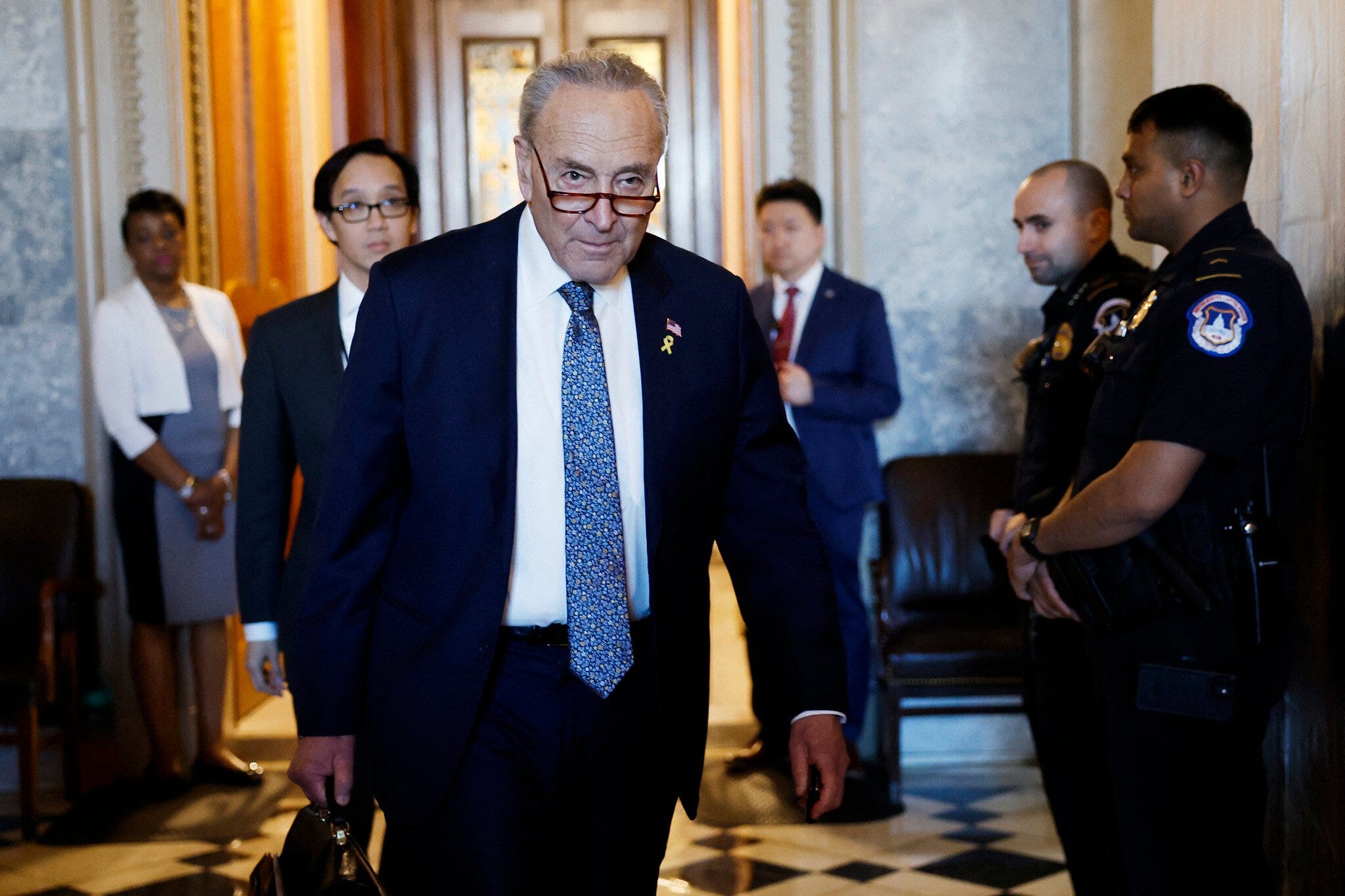
In a series of dramatic votes yesterday, the United States Senate issued a rare and bipartisan rebuke of President Trump’s aggressive use of tariffs, approving a resolution to terminate the national emergency declaration underpinning his global trade levies. The final vote of 51-47 saw four Republican senators join with Democrats in a symbolic but significant challenge to the president’s authority on trade, a policy area that has become a flashpoint of his administration.
While the resolution is not expected to become law, as the House of Representatives is unlikely to take it up, the Senate’s move marks a crucial moment in the ongoing debate over the separation of powers and the economic consequences of the administration’s trade war. The vote was the culmination of a week of similar rebukes, with the Senate also passing resolutions to nullify tariffs specifically targeting Canada and Brazil. This pattern of dissent from within the president’s own party underscores a growing discomfort with the economic fallout and constitutional questions raised by the unilateral imposition of tariffs.
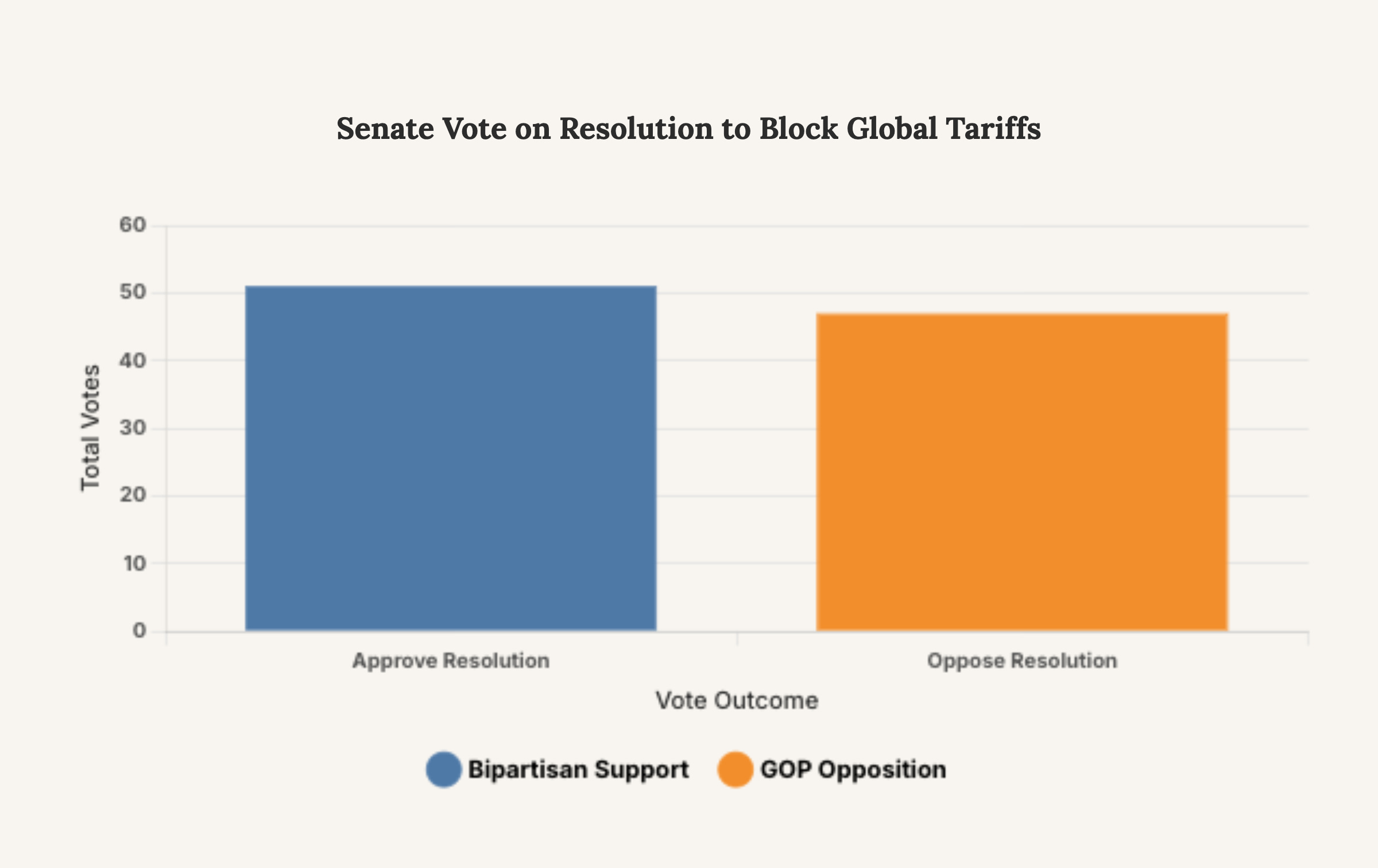
This chart illustrates the narrow margin of the Senate’s vote to disapprove of the President’s global tariffs, highlighting the bipartisan nature of the dissent.
The primary justification for the tariffs has been the declaration of a national emergency, a move that allows the executive branch to bypass Congress. Critics argue this stretches the definition of “emergency” and usurps Congress’s constitutional power to regulate commerce. The four Republican senators who consistently crossed the aisle—Susan Collins of Maine, Lisa Murkowski of Alaska, Mitch McConnell of Kentucky, and Rand Paul of Kentucky—have voiced concerns about executive overreach and the negative impacts on their constituents.
“Taxation without representation is tyranny... One person is not allowed to raise tax. The Constitution forbids it.” - Senator Rand Paul (R-KY)
The economic impact of the tariffs has been a central theme in the debate. While intended to protect American industries like steel and aluminum, studies have shown that the increased cost of materials has had a ripple effect across the economy. A Federal Reserve study, for instance, associated the tariffs with 75,000 fewer jobs in the domestic manufacturing sector due to higher input costs. Industries from automotives to construction and even canned food producers have warned of rising prices and supply chain disruptions.
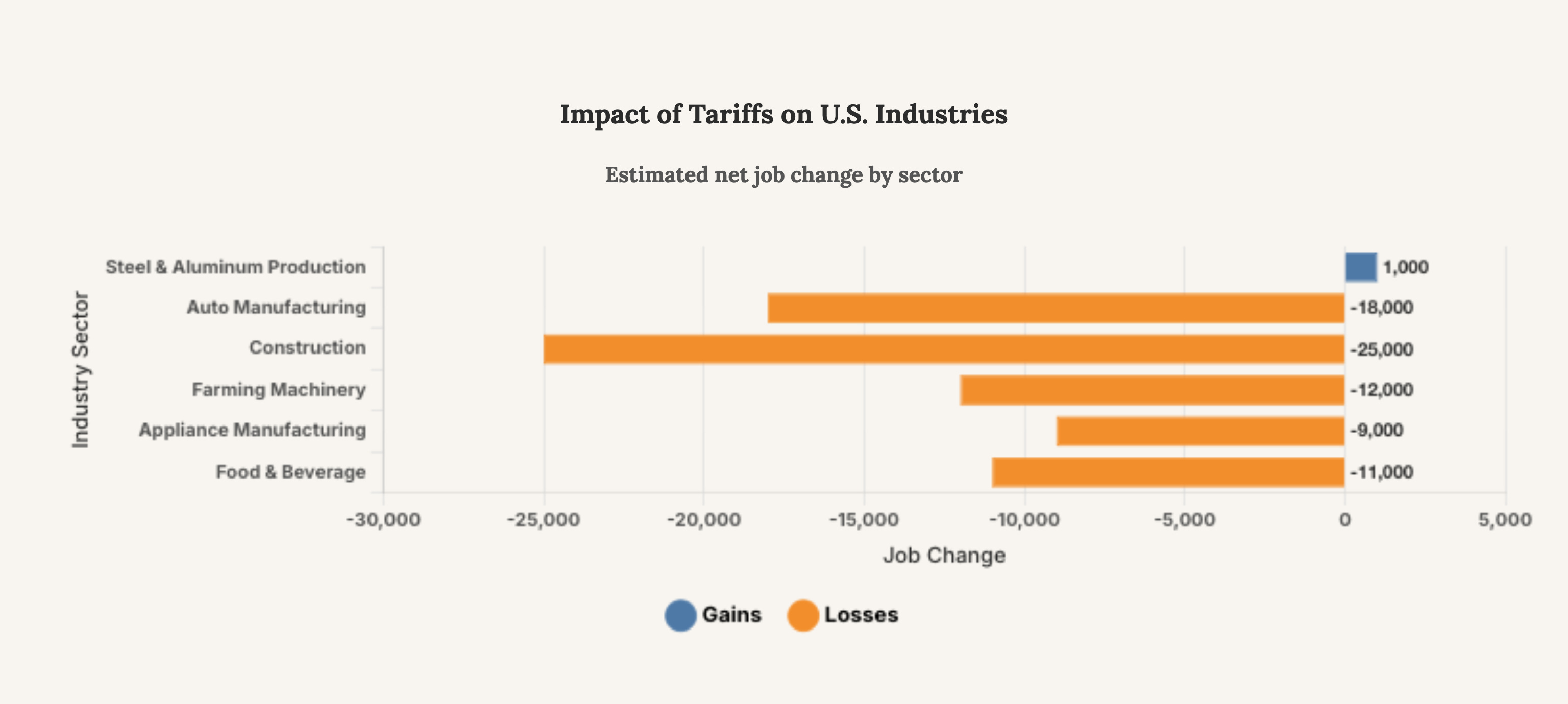
This chart breaks down the estimated job gains in the protected metal industries versus the much larger job losses in sectors that rely on those metals as inputs.
Supporters of the administration’s policy argue that the tariffs are a necessary tool to negotiate better trade deals and protect national security. They contend that for decades, other countries have engaged in unfair trade practices, and the tariffs level the playing field. Just this week, the President announced progress in trade talks with China, which supporters point to as evidence that the aggressive tactics are bearing fruit.
“When it comes to international trade, and tariffs in particular, the United States Congress has clear authority.” - Senator Ron Wyden (D-OR)
Despite these arguments, the bipartisan votes in the Senate signal a deep-seated unease with the long-term consequences of an open-ended trade war. The resolutions, while symbolic, have forced senators to go on the record, revealing the fault lines within the Republican party on issues of free trade and executive power.
The events of this week may not alter the immediate course of trade policy, but they have undeniably shifted the political landscape. The Senate has reasserted its voice in a domain increasingly dominated by the executive branch, sending a clear message that patience with the tariff strategy is wearing thin. The true test will be whether this symbolic resistance translates into concrete legislative action to reclaim congressional authority over trade. This series of votes serves as a powerful reminder that even in a highly polarized environment, constitutional principles can still forge unlikely alliances and challenge the concentration of power.