


The Federal Reserve is navigating its most complex policy terrain in a generation. After executing the most rapid monetary tightening cycle in forty years to combat post-pandemic inflation, the Federal Open Market Committee (FOMC) has pivoted. Two successive 25-basis-point rate cuts in the autumn of 2025 have lowered the federal funds rate to a target range of 3.75% to 4.00%, signaling a decisive shift in strategy.
This is not, however, a prelude to a traditional, predictable easing cycle. Instead, it marks the beginning of a high-wire act: an attempt to sustain a cooling labor market without reigniting persistent inflation, all while contending with significant geopolitical crosswinds and the end of its balance sheet reduction program. For investors, policymakers, and corporate leaders, understanding the nuances of this pivot—the data driving it, the historical parallels, and the deep divisions within the committee—is paramount for navigating the economic landscape of 2026. This briefing deconstructs the critical components of the Fed’s new stance, providing a strategic forecast for the path ahead.
The Anatomy of a Dovish Tilt: Deciphering the Data Behind the Cuts
The Fed’s recent policy recalibration was not a response to a single data point, but rather a calculated reaction to a confluence of factors suggesting the balance of risks had shifted. The primary impetus, as cited in the FOMC’s October statement, was the emergence of “increasing downside risks to employment.” After a period of historic tightness, multiple indicators now point to a labor market that is losing momentum, a key consideration for a central bank with a dual mandate of price stability and maximum employment.
From Overheated to Cooling: The Labor Market’s Decisive Shift
While the unemployment rate remains low by historical standards, the trajectory of job gains has slowed considerably throughout 2025. This slowdown, coupled with other indicators, prompted the back-to-back rate reductions in September and October. The Fed’s own projections from September 2025 anticipate the unemployment rate rising to 4.5% from its current level, reflecting a clear expectation of further softening. This proactive move to cut rates is a form of insurance, aimed at preventing a modest cooling from turning into a deep freeze.
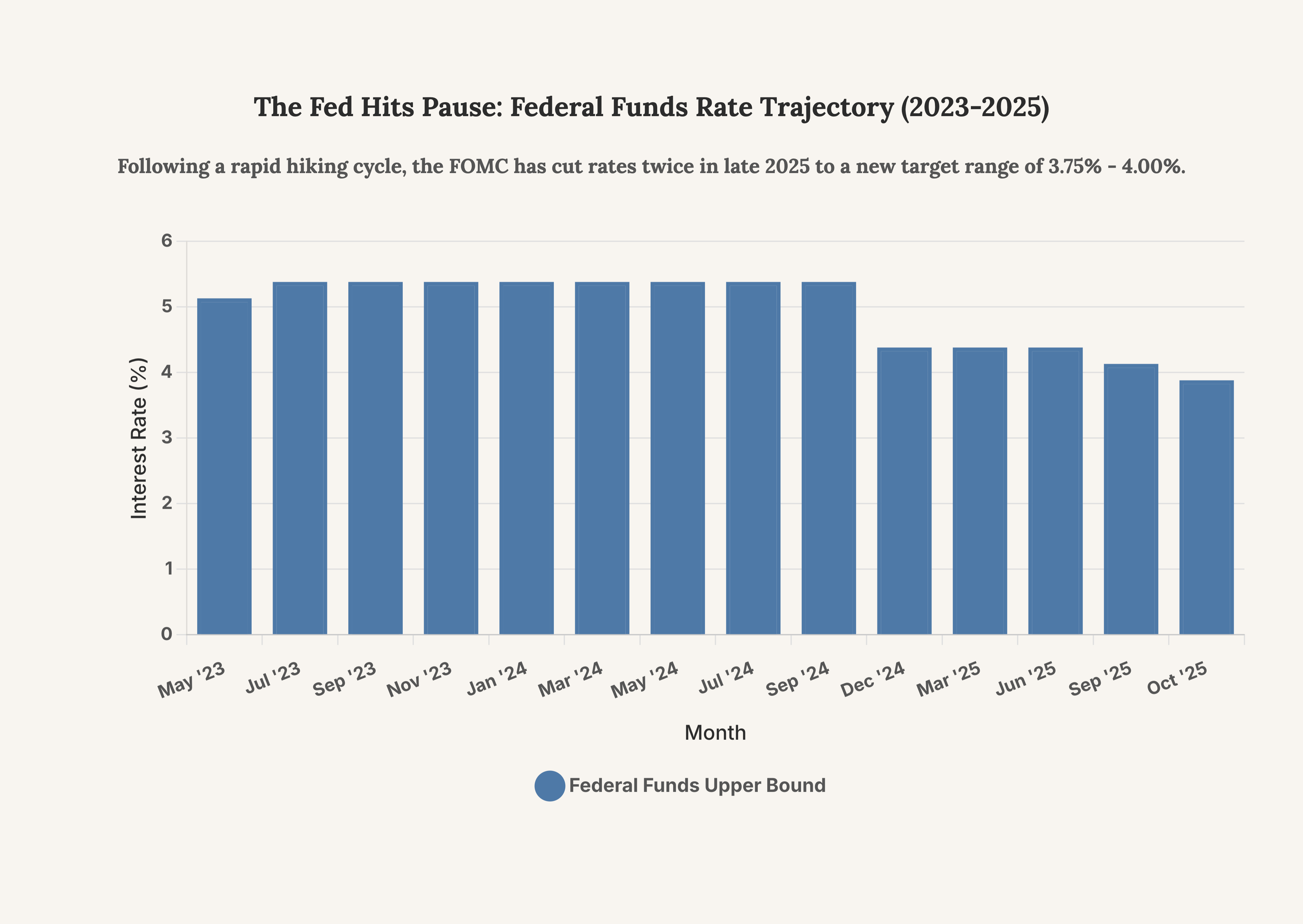
This chart illustrates the peak of the tightening cycle and the subsequent pivot in late 2025 as the Federal Reserve responded to a changing economic outlook, particularly concerning the labor market.
The Inflation Paradox: Still Hot, But a Battle Half Won
The decision to ease policy is complicated by the inflation picture. While down significantly from its 2022 peaks, inflation remains stubbornly above the Fed’s 2% target. The Fed’s preferred gauge, Personal Consumption Expenditures (PCE) inflation, is projected to end 2025 at 3.0% before falling to 2.6% in 2026. This creates a communications challenge and a policy dilemma. By cutting rates while inflation is still elevated, the Fed is signaling a greater tolerance for a slower return to target in order to protect employment gains. This delicate balance is a source of significant internal debate.
“There were strongly differing views on how to proceed in December. We haven’t made a decision about December. I’m saying something in addition here — that it’s not to be seen as a foregone conclusion. In fact, far from it.”
- Federal Reserve Chair Jerome Powell, October 2025 Press Conference
The vote at the October meeting was not unanimous, with some members preferring a more aggressive 50-basis-point cut and others wanting to hold rates steady. This internal division underscores the uncertainty of the path forward and suggests that future policy decisions will be highly contentious and data-dependent.
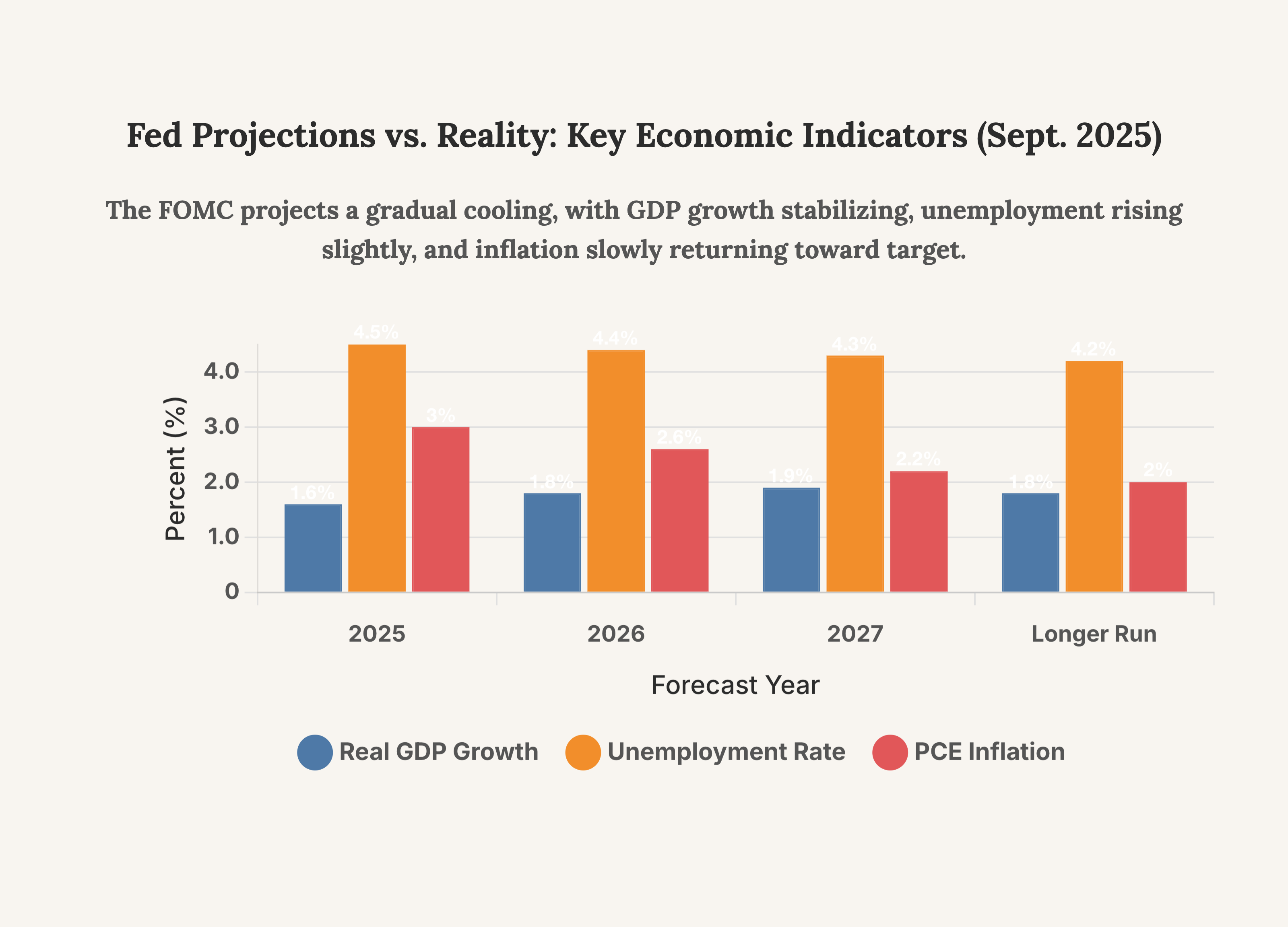
These median projections from the FOMC reveal the tightrope the Fed is walking: managing a soft landing where inflation moderates without causing a significant spike in unemployment.
The End of an Era: Unwinding Quantitative Tightening
Compounding the complexity of the rate pivot is another monumental shift in policy: the conclusion of Quantitative Tightening (QT). The Fed announced it will end the reduction of its massive securities portfolio on December 1, 2025. This decision was driven by emerging strains in short-term funding markets, where the process of QT was removing liquidity and putting upward pressure on overnight rates.
Why QT’s Conclusion Matters
Quantitative Tightening, the reverse of the quantitative easing (QE) that defined the post-2008 era, involves the Fed letting bonds mature without reinvesting the proceeds, effectively shrinking its balance sheet and removing money from the financial system. While a technical process, it has real-world effects, tightening financial conditions alongside rate hikes. Ending the program is a form of dovish policy shift, designed to ensure market plumbing functions smoothly and to prevent an unintended credit crunch caused by scarce reserves in the banking system. This move acknowledges that the financial system has reached a point where it can no longer comfortably absorb the dual pressures of high policy rates and a shrinking Fed balance sheet.
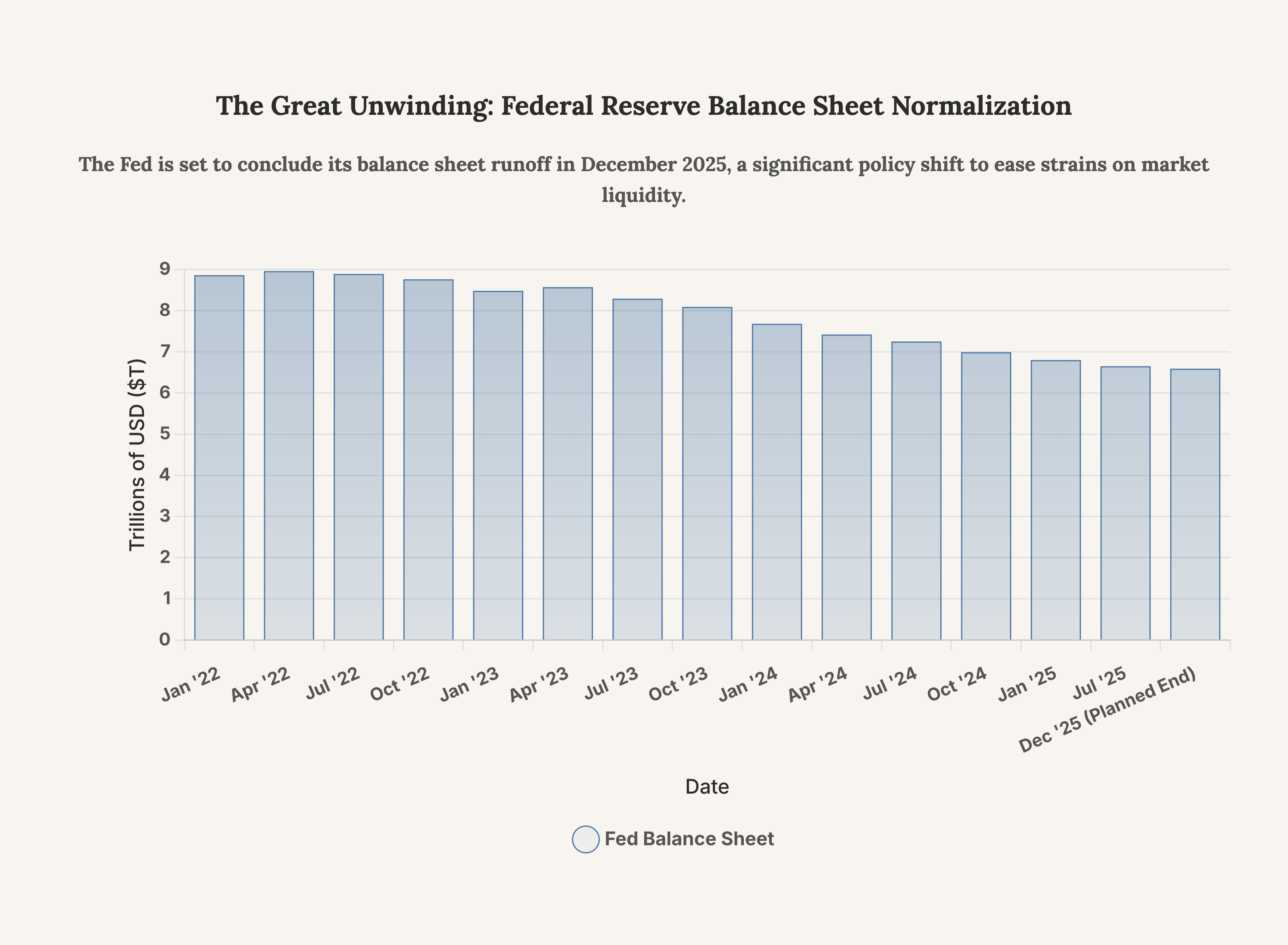
This chart visualizes the reduction in the Fed’s assets from its peak, marking a historic effort to normalize policy after years of unprecedented stimulus. The planned end of this runoff represents a key pillar of the 2025 policy pivot.
Strategic Foresight: Navigating the New Monetary Landscape
The Fed’s current posture is one of extreme caution and data-dependency. Chair Powell’s rhetoric suggests a committee that is willing to pause and assess the lagged effects of its historic tightening campaign before committing to a clear path. This introduces a new strategic calculus for markets, which had grown accustomed to the Fed’s forward guidance. The key question now is whether the current policy rate is sufficiently restrictive to guide inflation back to 2% without triggering a recession.
The R-Star Conundrum
Central to this debate is the concept of the “neutral” interest rate, or r-star—the theoretical rate that is neither stimulative nor restrictive to the economy. Current estimates of the nominal neutral rate hover between 3.0% and 3.7%. With the federal funds rate now at 3.75-4.00%, policy is only “moderately restrictive.” This slim margin for error means the Fed may need to hold rates higher for longer than markets currently anticipate, even without further hikes, to ensure inflation is fully extinguished.
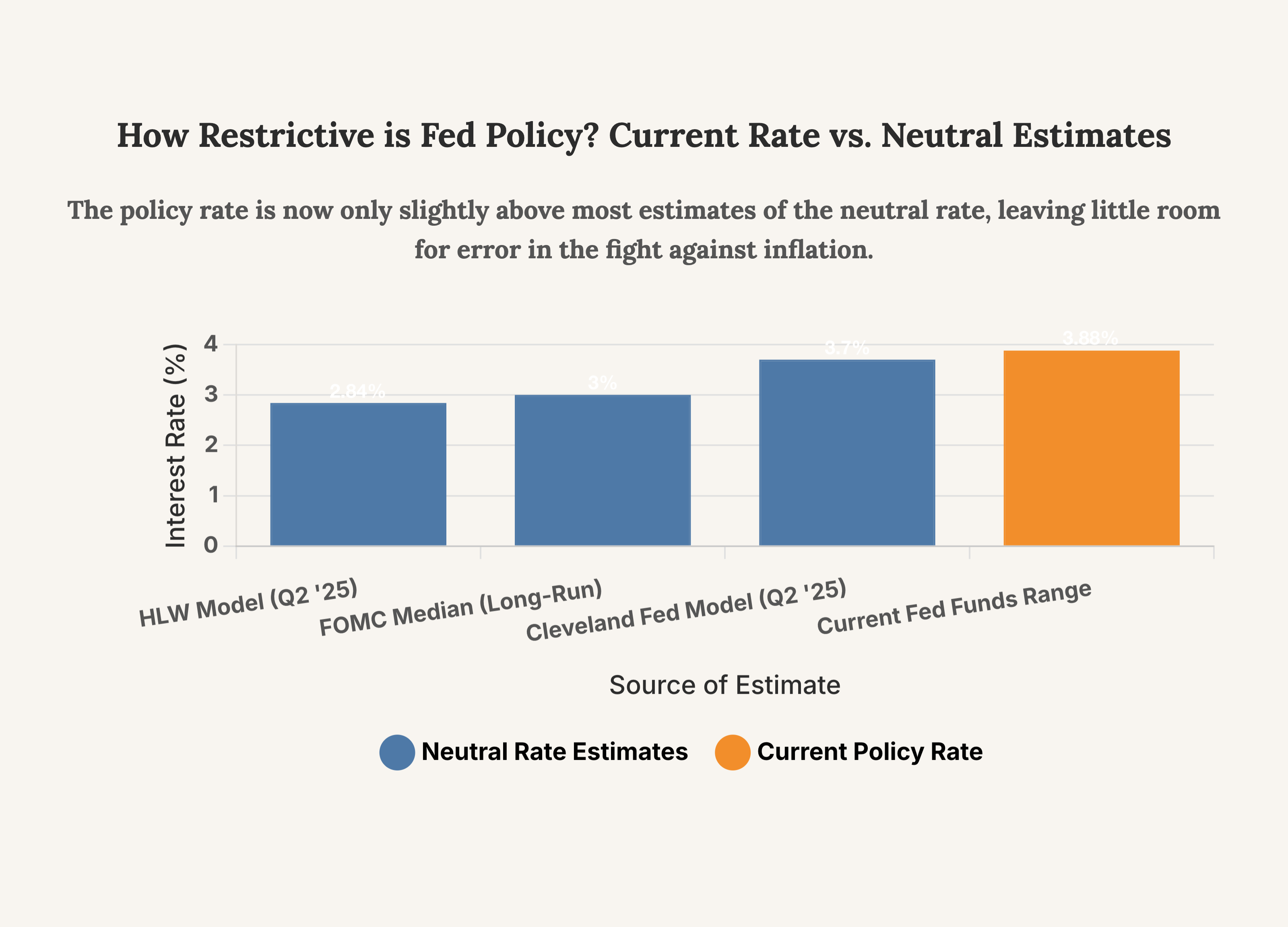
This comparison highlights the core policy challenge. If the true neutral rate is higher than estimated, the current policy may not be restrictive enough, forcing the Fed to maintain its stance for an extended period.
Historical Precedent and Future Scenarios
The 2022-2023 tightening cycle was the fastest since the 1980s, an aggressive response to an inflation shock unseen in decades. Historical cycles show that the Fed often has to induce a slowdown to tame prices. The challenge of this cycle is achieving that without a significant rise in unemployment—the coveted “soft landing.”
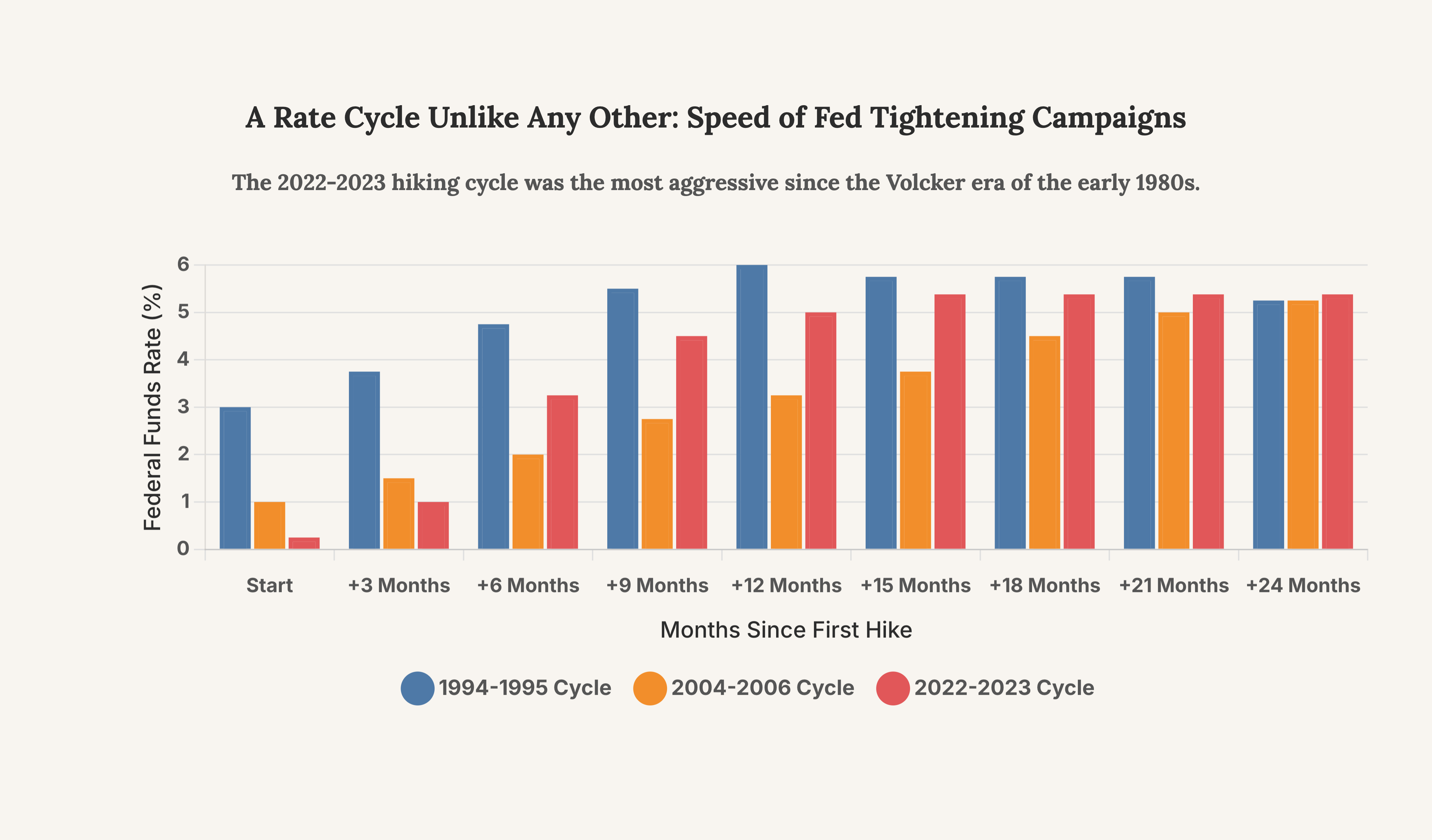
This chart provides critical context, showing the sheer velocity of the recent tightening. The speed of the ascent explains the Fed’s current cautious approach, as the full economic impact of these hikes may not yet be fully realized.
Looking ahead, several scenarios emerge:
The Soft Landing (Base Case): Economic growth continues to moderate, the labor market cools without collapsing, and inflation gradually returns to target by 2026. In this scenario, the Fed holds rates steady for several quarters before beginning a slow, measured cutting cycle in the latter half of 2026.
Reacceleration Risk: Resilient consumer spending and geopolitical shocks (e.g., rising energy prices from Middle East tensions) cause inflation to plateau or reaccelerate. This would force the Fed to abandon its dovish tilt, hold rates higher for longer, and possibly even contemplate further hikes, significantly raising recession risks.
Labor Market Buckles: The lagged effects of the tightening cycle hit the economy harder than expected, causing unemployment to rise sharply. This would force the Fed into a more aggressive cutting cycle, even if inflation remains above target.
The path forward is narrow and fraught with uncertainty. The end of QT removes a headwind, but the primary policy tool—the federal funds rate—is now in a delicate holding pattern. The Fed’s actions in the coming months will be dictated by a trade-off between its inflation and employment mandates, a balancing act made more difficult by a divided committee and an unpredictable global environment.
For strategists and investors, the key takeaway is that the era of clear forward guidance is over; we have entered a period of heightened data-dependency where policy is being set meeting by meeting.