



On July 19, 2024, the world did not end with a nuclear bang, nor a whimper, but with a Blue Screen of Death. A single configuration update from CrowdStrike—a company whose software protects the digital arteries of the Fortune 500—cascaded into a global cardiac arrest. Airlines grounded flights, hospitals canceled surgeries, and banks went dark. It was the most expensive IT outage in history, estimated to have cost the Fortune 500 alone over $5.4 billion.
This event was not a “glitch.” It was a structural inevitability. For the last decade, the cybersecurity industry has been marching blindly into a trap of its own design: The Consolidation Trap. Driven by exhausted CISOs drowning in “agent fatigue” and investors hungry for efficiency, the market has aggressively consolidated hundreds of specialized “best-of-breed” vendors into a handful of titanic platforms. We have traded the chaotic complexity of fragmentation for the catastrophic fragility of monoculture.
This briefing analyzes why the rush to merge security vendors creates a single point of failure that no amount of budget can mitigate, and why the “Platformization” thesis may be the greatest systemic risk to the digital economy in 2026.
The Great Contraction: Anatomy of a Monoculture
The logic of consolidation is seductive. The average enterprise CISO manages between 45 and 80 discrete security tools. This “tool sprawl” creates operational friction, data silos, and alert fatigue. The industry’s answer has been “Platformization”—the idea that a single vendor (like Palo Alto Networks, Microsoft, or CrowdStrike) should provide the endpoint, cloud, identity, and network security in a “single pane of glass.”
However, the data reveals a dangerous concentration of power. In 2024, the top 10 M&A transactions accounted for a staggering 91% of the total deal value in the sector. The giants are not just growing; they are swallowing the ecosystem.
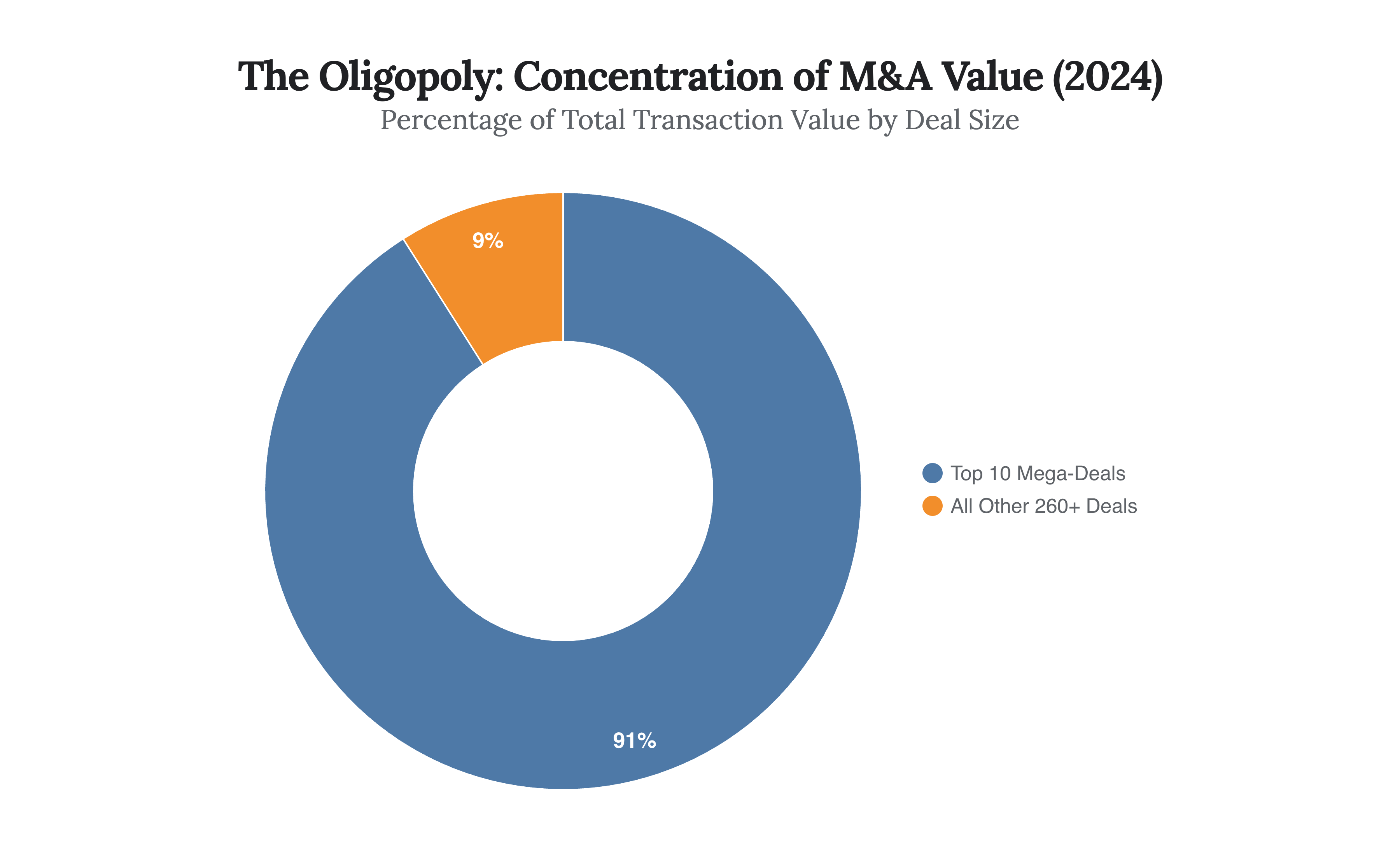
This chart is not merely a financial metric; it is a map of risk concentration. When 91% of the capital flows into solidifying the dominance of a few incumbents, the diversity of the defense ecosystem collapses. We are effectively bio-engineering a digital monoculture. In agriculture, a monoculture promises high yields and efficiency, but it is susceptible to a single pathogen wiping out the entire harvest. In cybersecurity, that pathogen is a bad kernel update or a compromised master key.
