


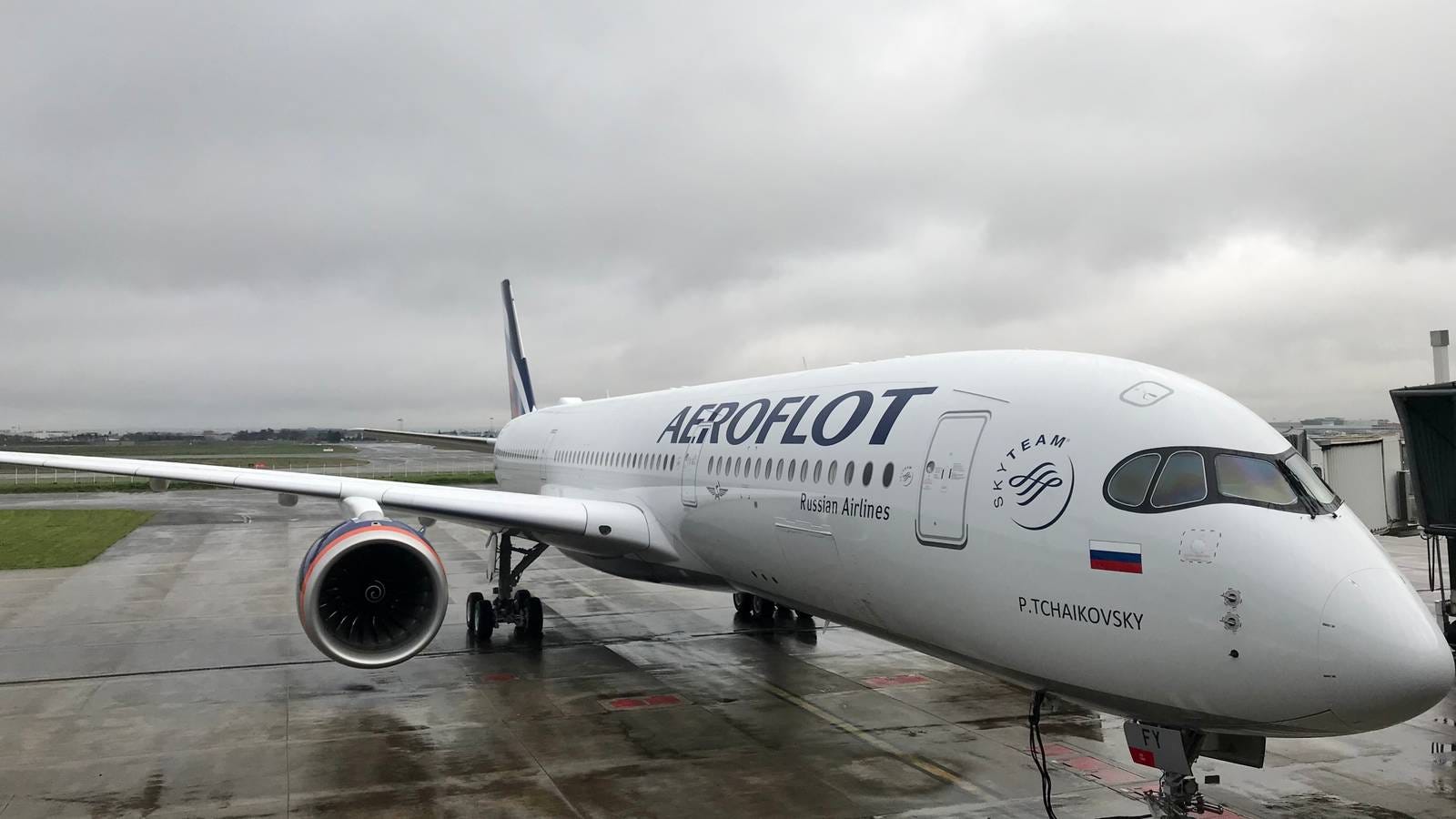
Deep in the Sverdlovsk Oblast, at exactly 58.04° N, 60.59° E, lies the industrial settlement of Verkhnyaya Salda. For decades, this remote location in the Ural Mountains served as the geographic center of gravity for global aviation. It is the home of VSMPO-AVISMA, a sprawling metallurgical complex that historically supplied up to one-third of the aerospace-grade titanium for Boeing and over half for Airbus. But as we navigate the first quarter of 2026, the spatial dynamics of the aerospace supply chain have violently ruptured. The physical flow of titanium—from raw ilmenite ore to purified sponge, and finally to massive aerospace forgings—is being redrawn in real-time as Moscow increasingly threatens to weaponize its export corridors against Western aerospace manufacturers.
To understand the present threat, one must map the fundamental chokepoints of the titanium lifecycle. Titanium is not inherently rare. Ores are widely mined along the coastlines of South Africa, Mozambique, and Australia. The geographical bottleneck occurs in the transformation of these ores into titanium sponge—a highly energy-intensive metallurgical process—and the subsequent melting and forging into specialized alloys required for aircraft landing gear, engine pylons, and wing structures. A geographic visualization of global sponge production in early 2026 reveals a stark reality: the West does not control the foundational layer of its own aerospace industry.
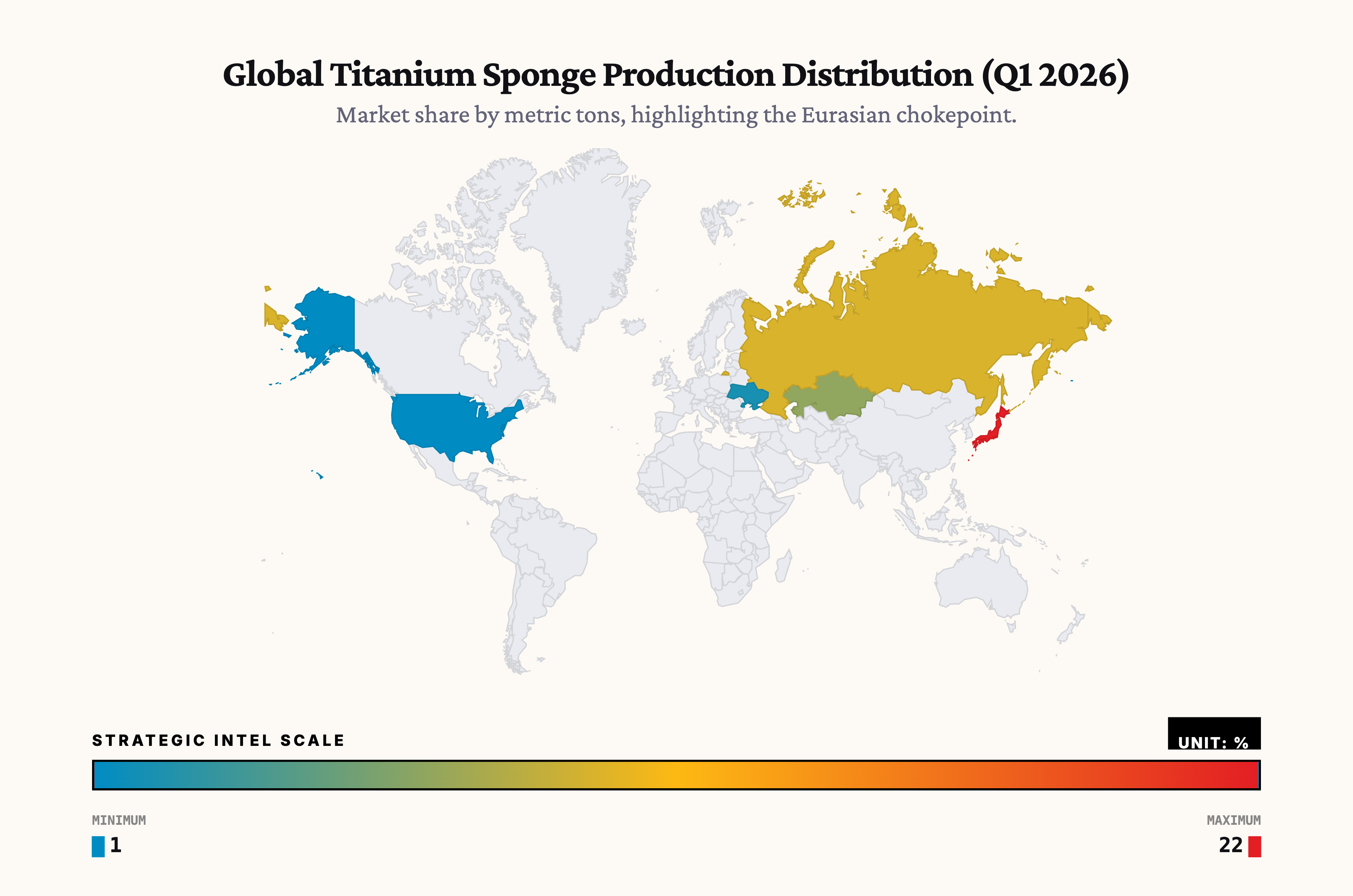
The cartography of titanium sponge is heavily skewed toward Eurasia. China dominates raw volume, producing nearly 60% of the global supply, but its output is largely consumed domestically by its industrial and chemical sectors, with a growing fraction directed toward its burgeoning indigenous aerospace program, COMAC. Japan sits as the critical democratic anchor in this supply chain, responsible for 22% of global production. The United States, despite housing the world’s largest aerospace manufacturer, produces less than 1% of the world’s titanium sponge, having shuttered its last major domestic sponge facility in Nevada in 2020 due to cost pressures. This spatial misalignment forces Western aerospace into a profound dependency on a trans-Pacific and Central Asian logistical bridge, leaving it dangerously exposed to Russian market interventions.

The true threat, however, lies not just in the sponge, but in the massive forging presses located in Russia. For years, European aerospace hubs—most notably Toulouse in France, Hamburg in Germany, and Broughton in the United Kingdom—relied on a streamlined, overland and short-sea logistical corridor flowing directly from St. Petersburg into the heart of Western Europe.
