


To understand the global distribution of power in Q2 2026, one must stop looking at terrestrial landmasses and begin reading the oceans. The rigid, terrestrial architecture of steel pipelines that defined energy geopolitics in the late 20th century has been definitively superseded by a highly fluid, maritime network of Liquefied Natural Gas (LNG) carriers. We have witnessed a total inversion of the geographic energy matrix. The center of gravity for natural gas has shifted violently away from the vast, landlocked basins of the Eurasian heartland and relocated to the coastal fringes of the Gulf of Mexico, the Arabian Peninsula, and the frozen archipelagos of the Russian Arctic. This is not merely a transition of fuel types; it is a profound spatial reorganization of the global economy, mapping an intricate web of ‘virtual pipelines’ across the world’s oceans.
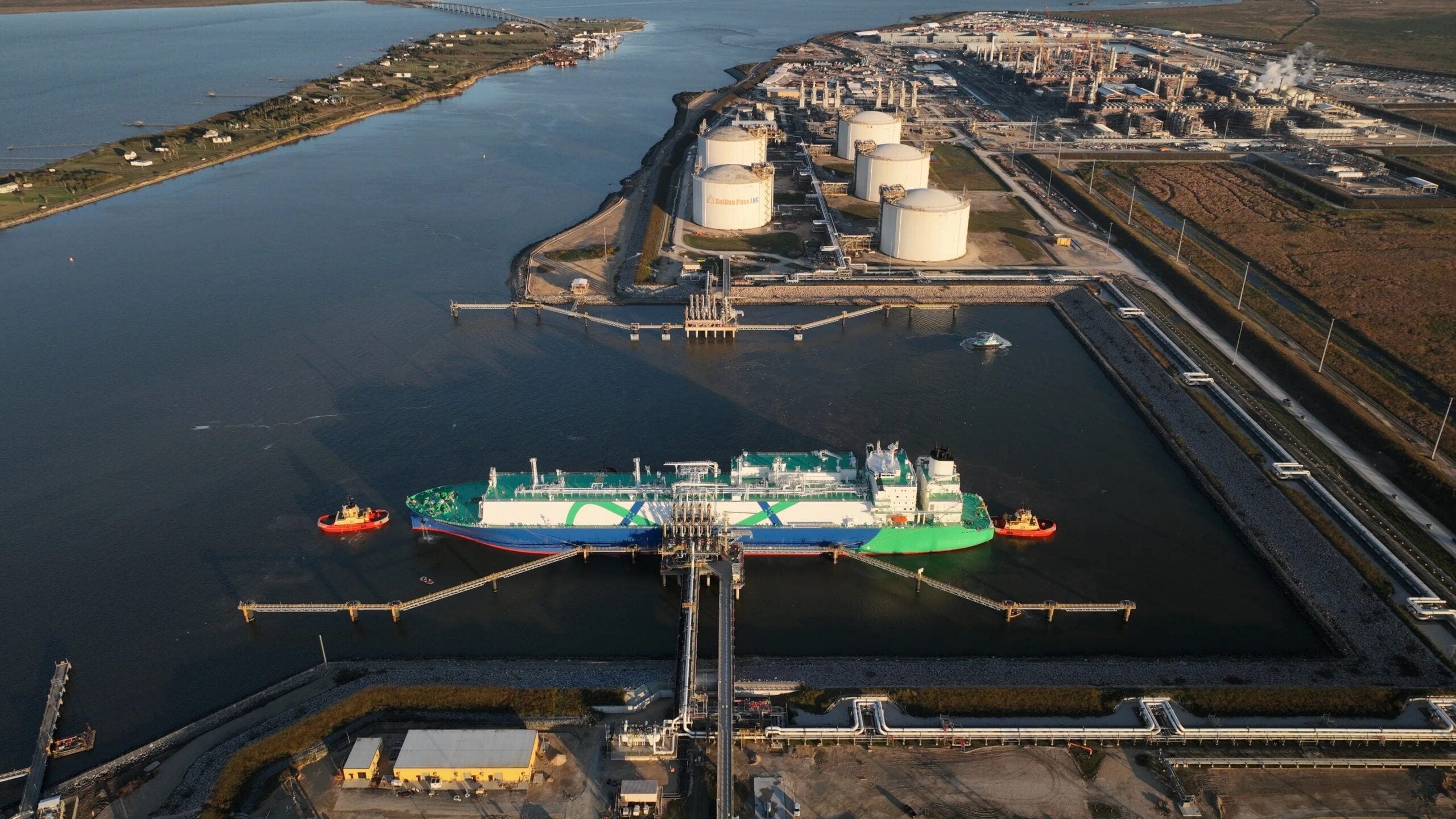
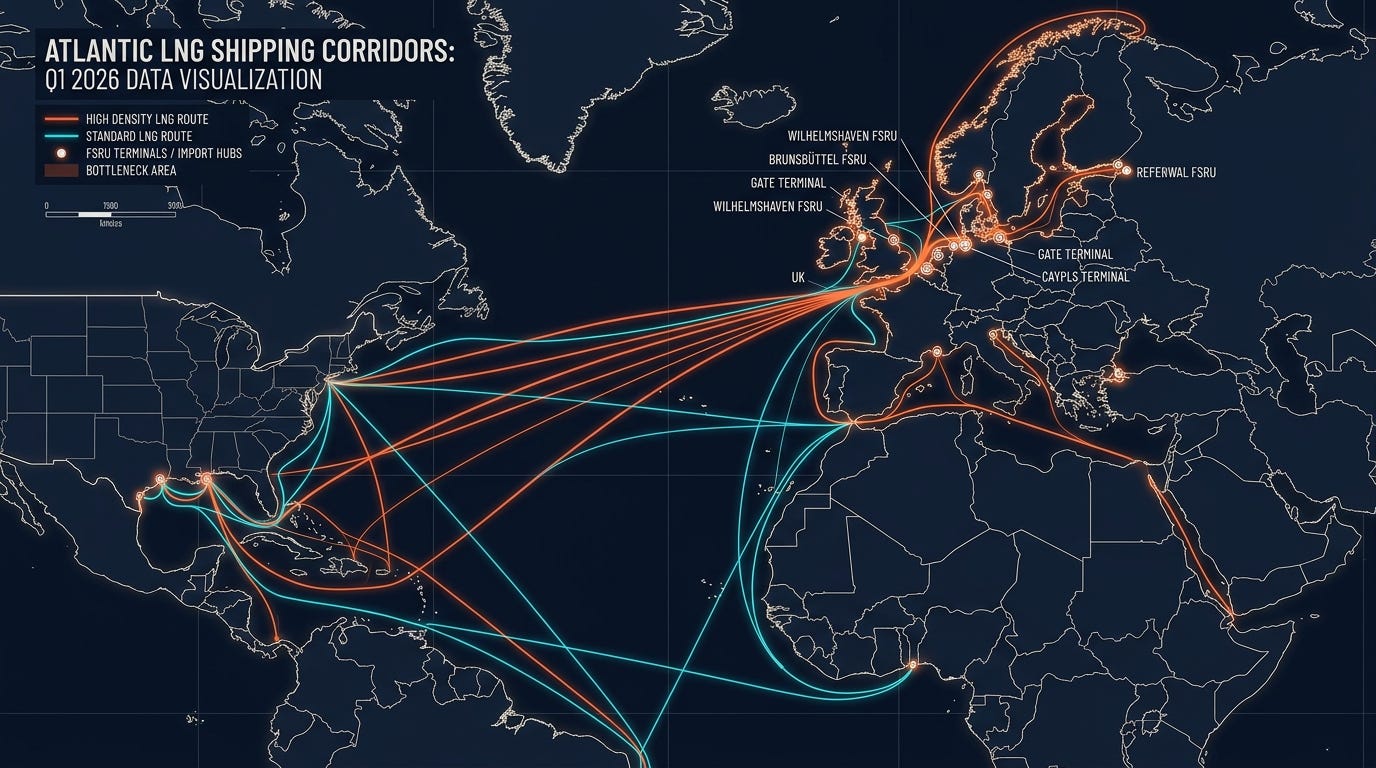
Nowhere is this geographic pivot more pronounced than in the North Atlantic. The spatial relationship between the North American continent and Western Europe has been fundamentally re-engineered. The shallow, hurricane-prone topography of the United States Gulf Coast has been transformed into the beating heart of global energy export. Massive liquefaction trains dotting the low-lying coastlines of Louisiana and Texas—from Sabine Pass to Corpus Christi—now act as the primary geographic funnel for North American shale gas. From these coastal departure points, the physical geography of the Atlantic Ocean dictates a relatively uninhibited, direct maritime highway to the European continent. The distance of approximately 4,500 nautical miles across the Gulf Stream represents the highest-density energy umbilical cord on the planet today.
Upon reaching the Eastern Atlantic seaboard, the geography of European energy reception reveals a continent rapidly terraformed for survival. Through early 2026, the coastlines of the North Sea, the Baltic Sea, and the Mediterranean have been augmented with an archipelago of Floating Storage and Regasification Units (FSRUs). Coastal deep-water ports that previously played secondary roles—such as Wilhelmshaven in Germany, Eemshaven in the Netherlands, and Krk in Croatia—now form a maritime defensive shield. Europe has shifted its supply lines from the terrestrial plains of the East to its rugged Western maritime peripheries, structurally altering the continent’s internal energy transit corridors to flow from the coastline inland, reversing a half-century of spatial momentum.
Yet, the flexibility of maritime energy networks introduces profound spatial vulnerabilities. To truly grasp the fragility of the 2026 LNG ecosystem, one must examine the globe’s maritime chokepoints. Historically, the primary artery for bridging the Atlantic and Pacific basins was the Isthmus of Panama. However, the structural realities of geography are uncompromising. The 48-mile Panama Canal is not a sea-level passage but a freshwater lock system dependent on the topography of the Chagres River watershed and Gatun Lake. Persistent, structural water deficits, exacerbated by shifting equatorial precipitation patterns recorded through Q1 2026, have severely limited the draft and transit frequency of massive LNG carriers. The geographical shortcut between the Americas has been physically choked by hydrology.
Simultaneously, 7,000 nautical miles to the east, the geography of the Red Sea presents an entirely different barrier. The Bab el-Mandeb strait—translating to the ‘Gate of Tears’—is a perilously narrow 20-mile maritime bottleneck flanking the steep, jagged, and geopolitically unstable coastlines of the Arabian Peninsula and the Horn of Africa. The persistent militarization of this coastal topography has rendered the Suez Canal functionally obsolete for risk-averse LNG carriers. These twin geographic blockades at the world’s two most critical artificial and natural canals have forced a radical redrawing of global shipping corridors.
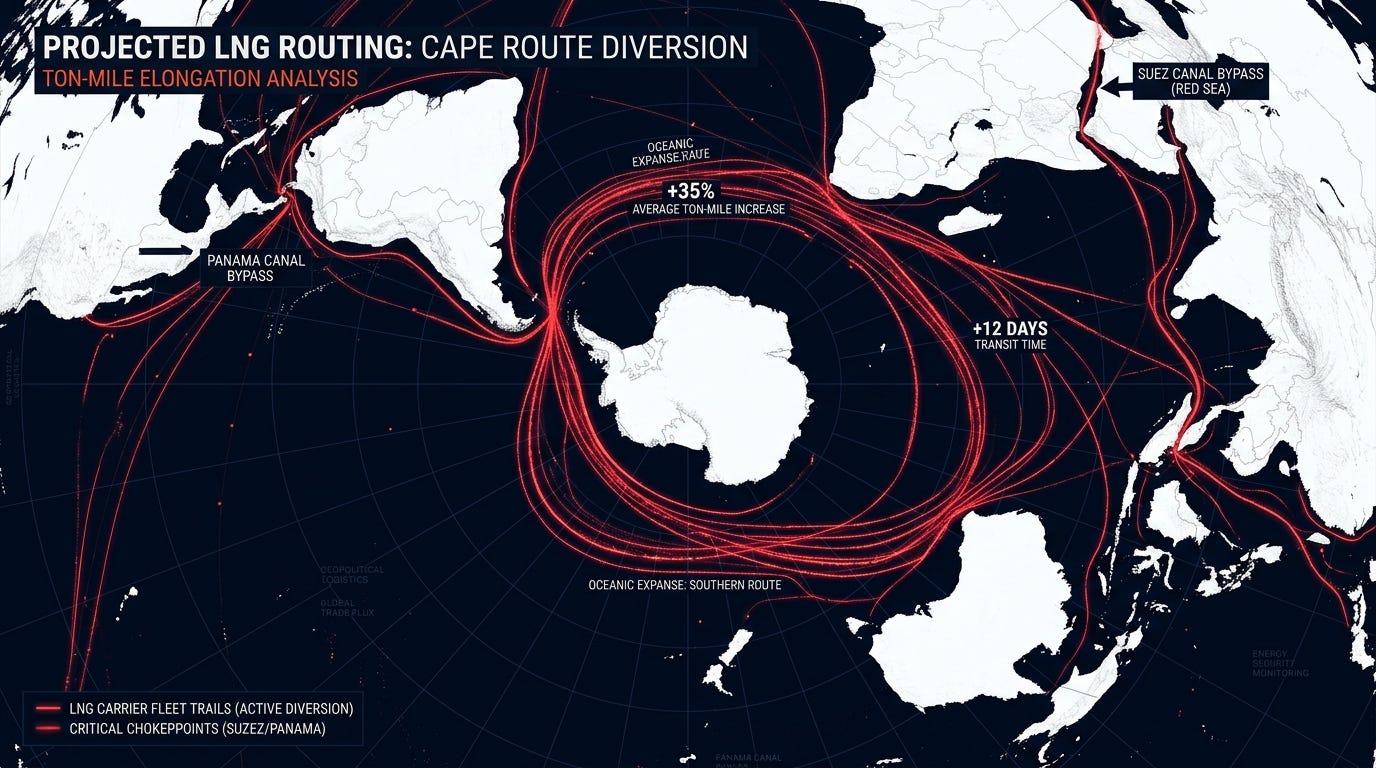
This dual-chokepoint strangulation has radically altered the geometry of energy logistics. The spatial reality of a spherical Earth dictates that bypassing the equatorial canals requires navigating into the deep Southern Hemisphere to round the Cape of Good Hope. A standard voyage from the US Gulf Coast to the high-demand centers of Tokyo Bay via Panama covers approximately 9,200 nautical miles. Routing around the African continent, navigating the turbulent and treacherous oceanography of the Agulhas Current, extends this voyage to nearly 14,500 nautical miles. This massive spatial elongation acts as a geographic black hole, absorbing vast quantities of global shipping capacity into sheer transit time. The mathematical reality of these multiplied ‘ton-miles’ has tightened the global fleet, permanently inflating the baseline cost of spatial distance.

Shifting focus to the Middle East, the geography of the Arabian Peninsula illustrates a masterclass in exploiting spatial positioning. Qatar, occupying a peninsula that juts strategically into the Persian Gulf, is located perfectly at the fulcrum of the Eastern and Western hemispheres. With the North Field expansion bringing unprecedented liquefaction volumes online throughout early 2026, Doha has predominantly oriented its export geography eastward. Unencumbered by the Panama or Suez bottlenecks, Qatari vessels utilize the vast, open expanse of the Arabian Sea. Their primary geographic hurdle is the Strait of Malacca, a heavily congested, 1.5-mile-wide passage at the Phillips Channel, serving as the gateway to the South China Sea. Through this corridor flows the lifeblood of the Asian economic engine, binding the geology of the Persian Gulf to the hyper-dense coastal megacities of China, South Korea, and the Indian subcontinent.
