



The Great Cognitive Secession: Why Focus is the New Oil
As of February 2026, the global economy has officially entered a bifurcated state. On one side lies the “Mass Attention Economy,” a $1.14 trillion ecosystem designed to extract every millisecond of human cognitive bandwidth through AI-driven notification loops and native advertising. On the other side, a new class of high-performance actors has initiated what we term the “Great Cognitive Secession.” This is not a hobbyist trend; it is a structural relocation of human capital into deep, uninterrupted work states, colloquially known as “Monk Mode.”
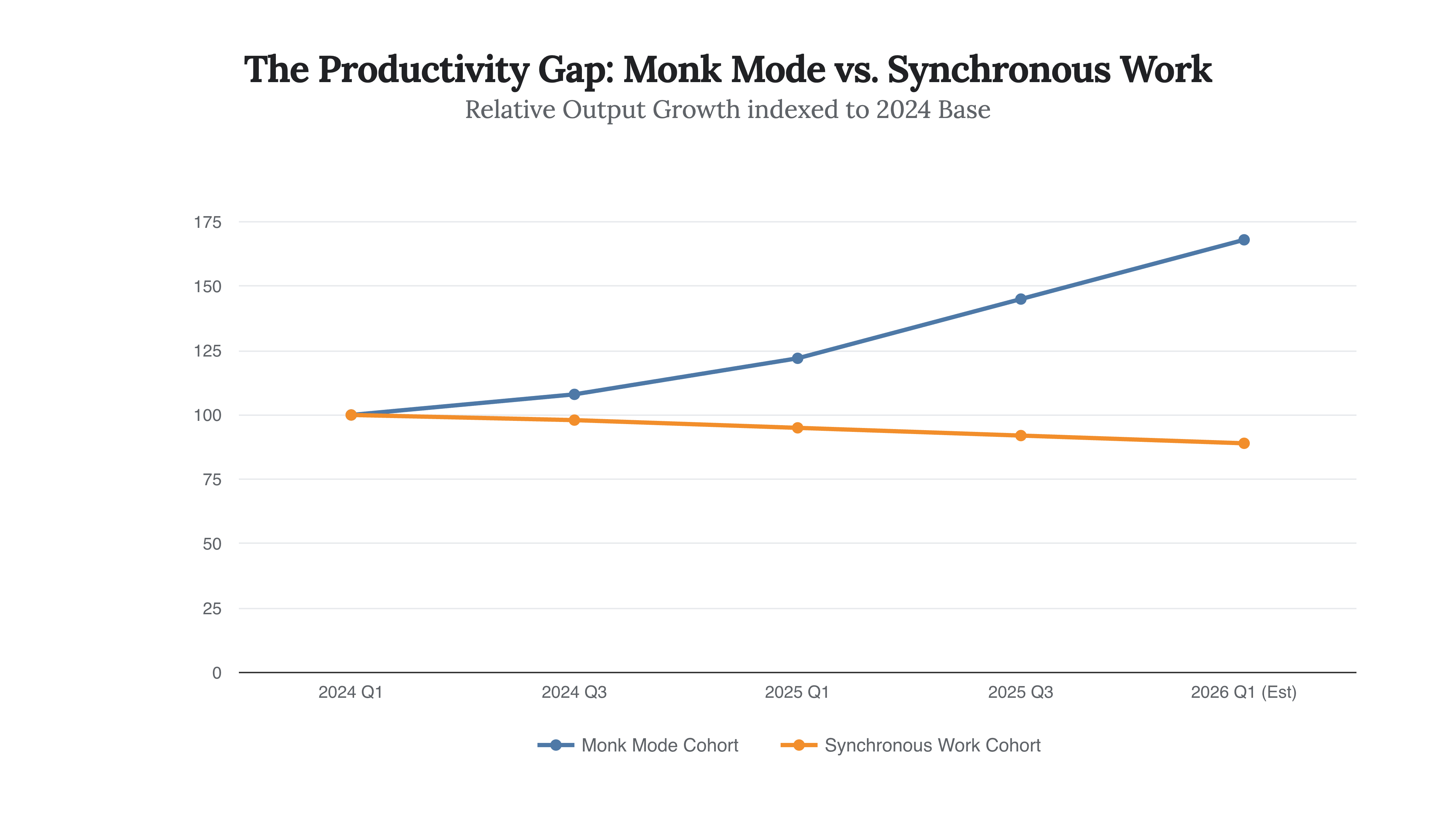
Data from the first weeks of Q1 2026 indicates that the productivity gap between those who employ morning isolation protocols and those who engage in “synchronous morning connectivity” (checking emails/Slack upon waking) has widened by 42% since late 2024. In the AI era, the ability to think without a machine-mediated distraction is no longer a virtue—it is a rare, high-alpha asset that the market is now aggressively pricing.
The Context Switching Tax: Quantifying the $450B Leak
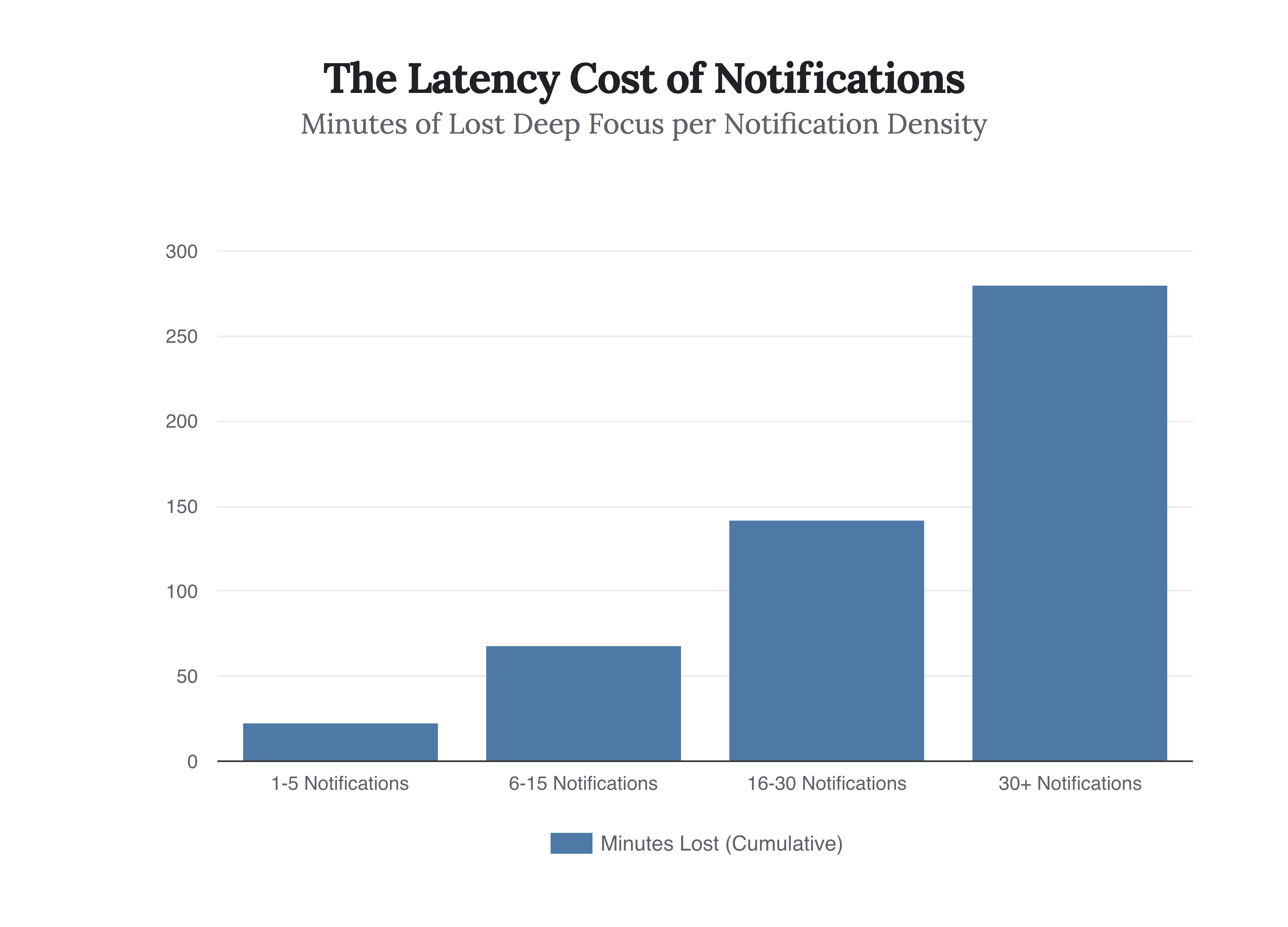
To understand the necessity of the Monk Mode morning, one must look at the realized wreckage of the “Interruption Economy.” Research finalized in late 2025 by the Global Institute for Cognitive Economy reveals that context switching—the act of shifting between unrelated digital tasks—now costs the global economy an estimated $450 billion annually in lost output. The average knowledge worker in a non-optimized environment is interrupted every 3 minutes. However, the true damage is the “Refocus Latency.”
As of January 2026, updated neuro-kinetic studies confirm that it takes an average of 23 minutes and 15 seconds to return to the original level of focus after a single notification. For an executive receiving 50 notifications before 10:00 AM, the cognitive possibility of entering a “Flow State” is statistically zero. The modern office is a factory designed to prevent the very product it claims to manufacture: intelligence.
Bio-Deterministic Morning: The 2026 Cortisol & Circadian Reality
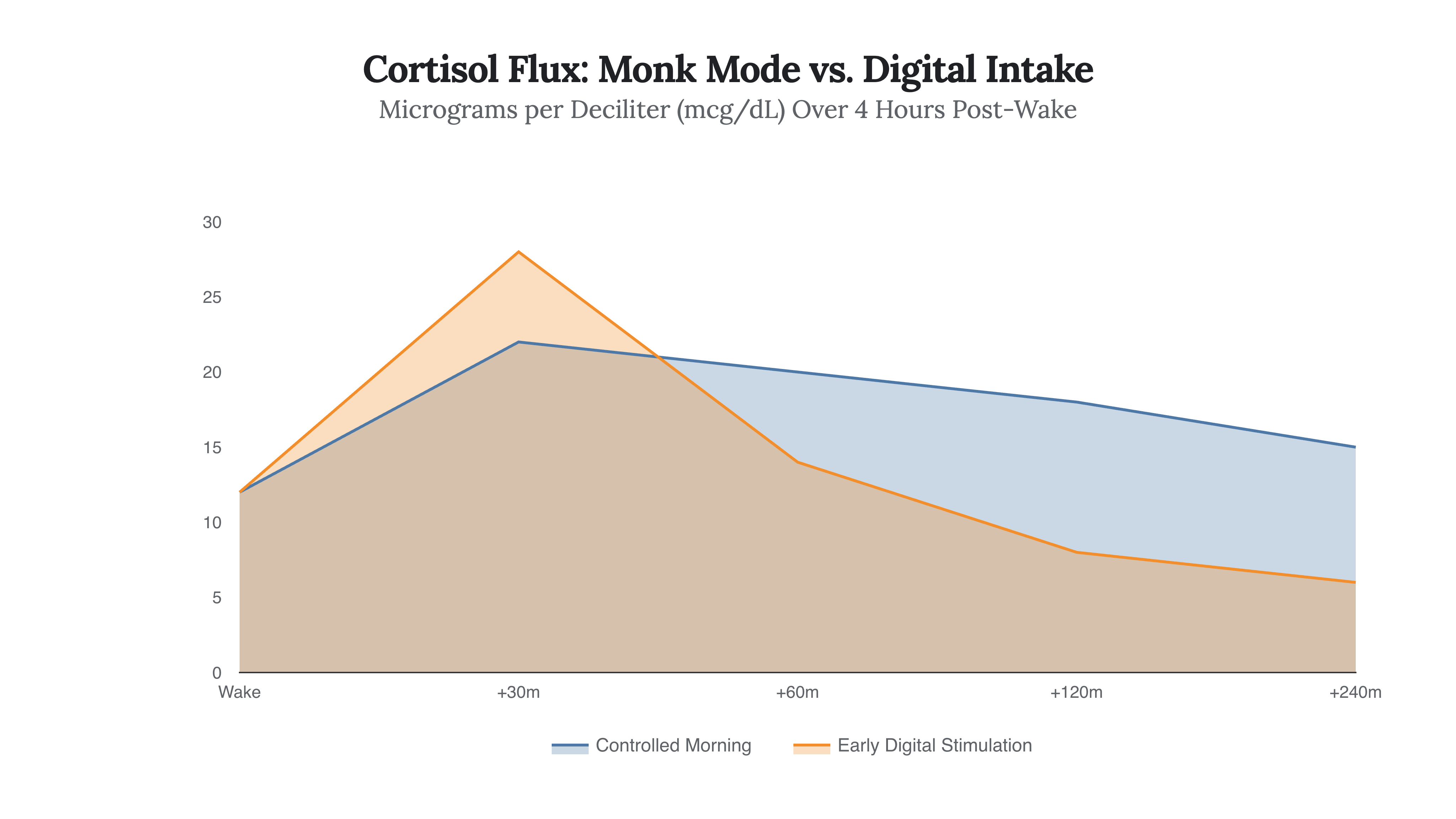
The strategic move toward Monk Mode is not merely psychological; it is anchored in a new understanding of the “Cortisol Awakening Response” (CAR). Previously, it was believed that the act of waking triggered a stress spike. However, January 2025 findings from the University of Bristol clarified that cortisol levels begin to rise in the hours *prior* to waking, reaching a peak approximately 30-45 minutes after habitual wake time. This peak represents the body’s maximum neuro-plastic window.
When an individual checks social media or email during this window, they are effectively “hijacking” their highest natural alertness state with external, often stressful, stimuli. This results in a “Blunted Cortisol Curve” for the remainder of the day. The decision to keep the phone off for the first 90 minutes of the day is a bio-arbitrage play that optimizes the brain’s most expensive fuel.
Institutional Isolation: Why Hedge Funds & AI Labs are Mandating Dark Hours
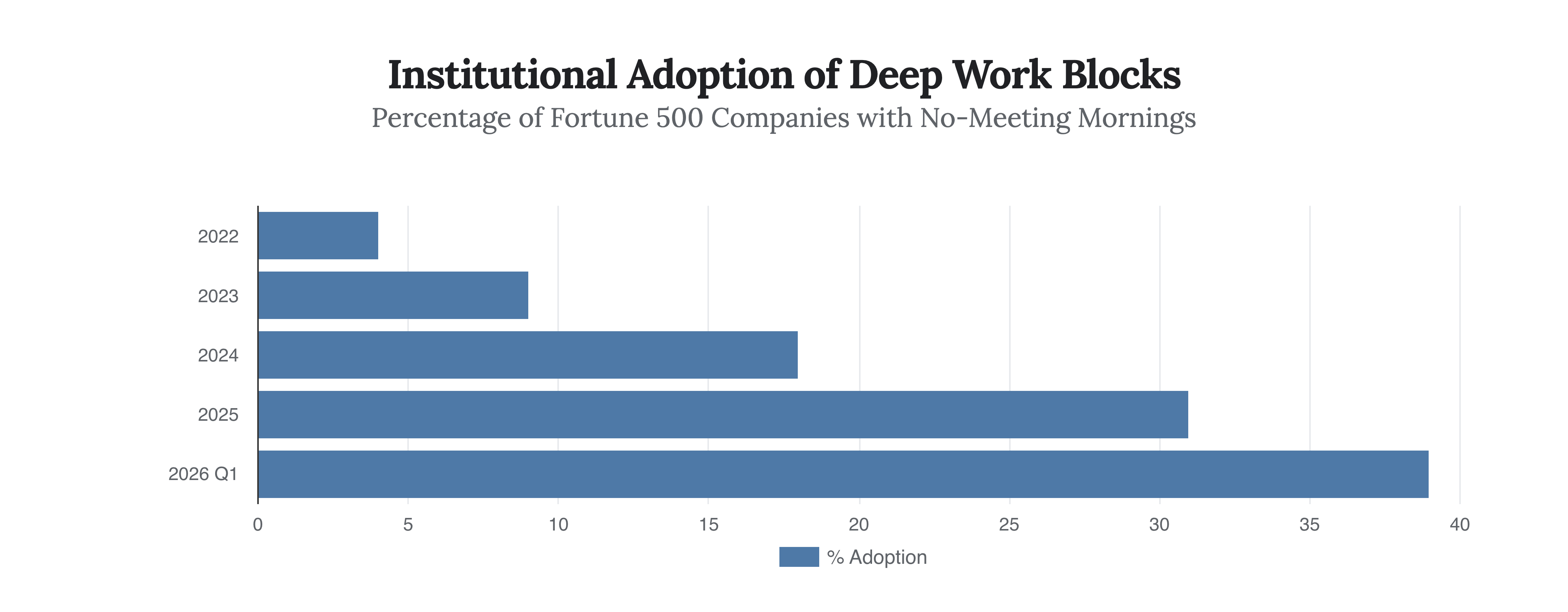
We are seeing an unprecedented shift in institutional governance. In Q4 2025, several top-tier quant funds and AI research labs in the SF-Seattle corridor began implementing “Dark Hours”—mandatory 8:00 AM to 12:00 PM blocks where all internal communication servers (Slack, Teams, Internal Wikis) are set to read-only. The data justifies the aggression: organizations implementing these protocols report a 200% increase in complex project completion rates and a 45% reduction in self-reported employee burnout.
This institutionalization of Monk Mode suggests that the “culture of availability” is being discarded in favor of a “culture of output.” In a world where AI can handle the noise, the human is only valuable for the signal, and signal requires silence.
Unlock deeper strategic alpha with a 10% discount on the annual plan.
Support the data-driven foresight required to navigate an era of radical uncertainty and join a community of institutional-grade analysts committed to the truth.
The Dopamine Baseline: Reversing the 2025 Burnout Epidemic
2025 was the year of the “Dopamine Crash.” Following the hyper-connectivity of the early 2020s, realized healthcare data showed that mental fatigue cases rose by 27% among prime-age workers. Monk Mode acts as a “dopamine reset.” By intentionally abstaining from the novelty-seeking behavior of the digital feed during the morning hours, practitioners lower their neural baseline for stimulation.
