


The Dawn of the Picket Line
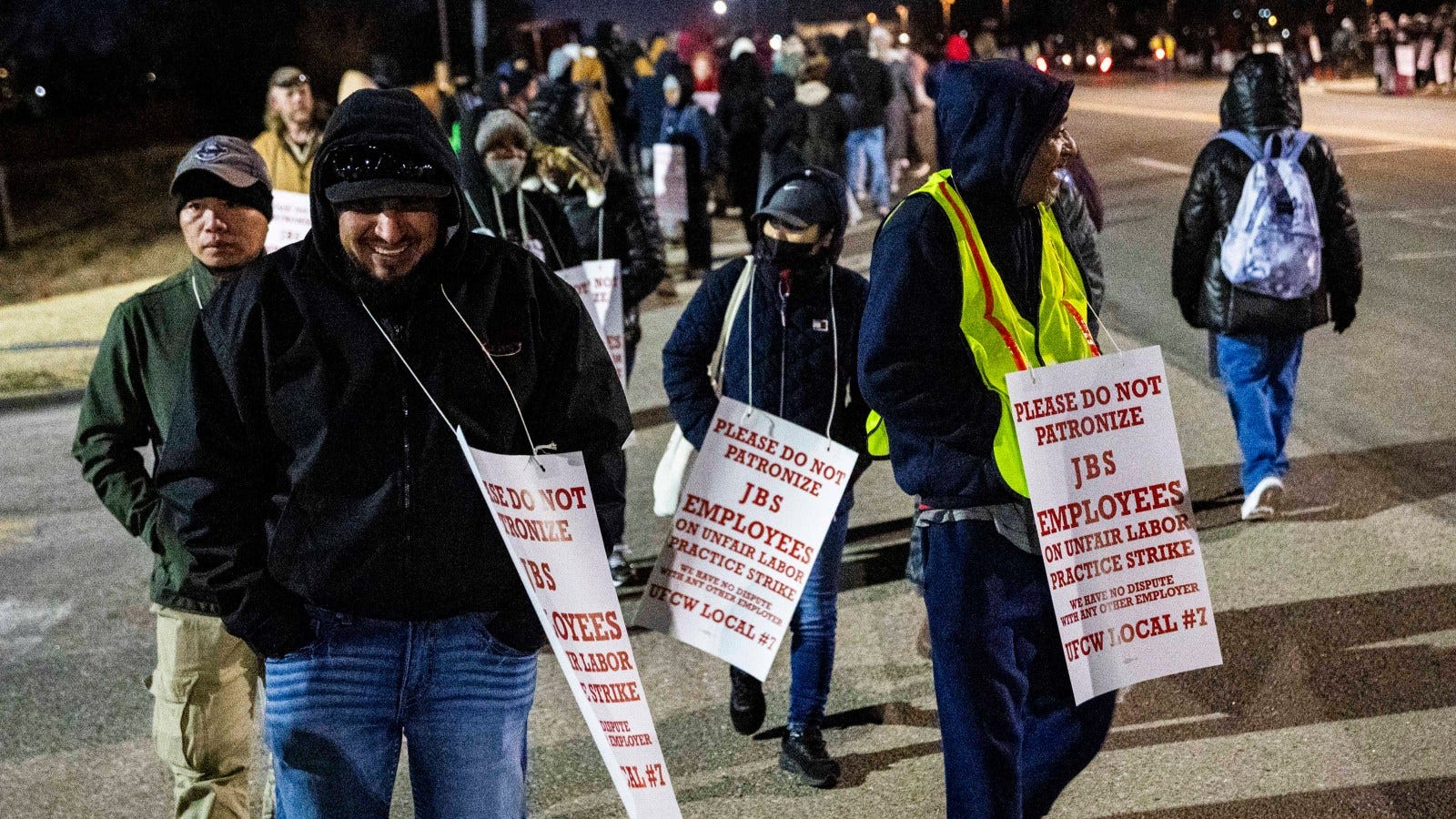
As the sun rose over the Colorado plains this morning, Monday, March 16, 2026, the physical machinery of the American food system ground to a spectacular and calculated halt. At 5:30 a.m. Mountain Time, 3,800 workers at the JBS Swift beef plant in Greeley walked off the kill floor, wrapped themselves against the morning cold, and formed a picket line outside one of the most critical infrastructural choke points in the Western Hemisphere. The signs, written in both English and Spanish, signaled the commencement of the first major walkout at a United States beef slaughterhouse in more than four decades. Smoke still drifted from the rendering stacks, but the sprawling, multi-acre facility—capable of processing up to 6,000 head of cattle every single day—was paralyzed.
To the untrained observer, this is a localized labor dispute—a predictable clash over wages, healthcare, and safety protocols in a grueling industry. But to the intelligence architect, this morning’s event in Weld County is an entirely different phenomenon. It is a massive, real-time stress test of an over-optimized, structurally compromised supply chain. We are witnessing the collision of inescapable biological limits, an empowered labor force leveraging extreme information asymmetry, and a consumer base exhausted by record-shattering inflation.
The Greeley strike is not occurring in a vacuum. It erupts precisely at the moment when the United States cattle inventory has plunged to a 75-year low, and merely weeks after Tyson Foods permanently shuttered a massive 5,000-head-per-day facility in Nebraska. The processing capacity of the national beef market is already stretched to the absolute breaking point. Retail prices for ground beef have surged an astonishing 72% since 2020, while the meatpackers themselves bleed hundreds of millions of dollars in negative operating margins due to the soaring cost of live cattle. The walkout in Greeley is not merely a localized labor dispute; it is the physical manifestation of a supply chain that has optimized away its own survival, leaving the American food system entirely defenseless against a coordinated disruption.
As we untangle the microeconomics of the disassembly line and the macroeconomics of the global protein trade, it becomes abundantly clear that the workers of United Food and Commercial Workers (UFCW) Local 7 have deployed a flawlessly timed, perfectly credible threat. They understand the structural fragility of their employer better than Wall Street does. Welcome to the new era of radical supply chain vulnerability.
The Echoes of Hormel: Historical Precedent and Modern Divergence
To understand the sheer gravity of this morning’s walkout, one must look backward to the last time the American meatpacking industry faced a labor revolt of this magnitude. In 1985, workers at the Hormel plant in Austin, Minnesota (the famous P-9 union), launched a bitter, year-long strike that ultimately collapsed. That strike featured National Guard interventions, violent clashes, and the eventual deployment of thousands of replacement workers. The packers broke the union because the macroeconomic and demographic environment of the mid-1980s heavily favored corporate leverage. In 1985, there was an abundance of surplus rural labor, an excess supply of livestock, and an industry actively transitioning toward rural, de-skilled mega-plants.
The strategic landscape of Q1 2026 is the exact inverse. Today, the rural labor pool has essentially evaporated. Unemployment remains incredibly tight in the regions where these mega-plants operate, and the specialized, brutal nature of meatpacking makes it impossible to source 3,800 replacement workers overnight. JBS USA issued a statement over the weekend asserting they would operate two shifts at the plant today using alternative labor. In the realm of game theory, this is a desperate bluff. The union knows—and the market knows—that safely and legally operating a facility that disassembles 6,000 massive animals daily requires a highly synchronized, skilled labor force that cannot be scapped together from local temp agencies.
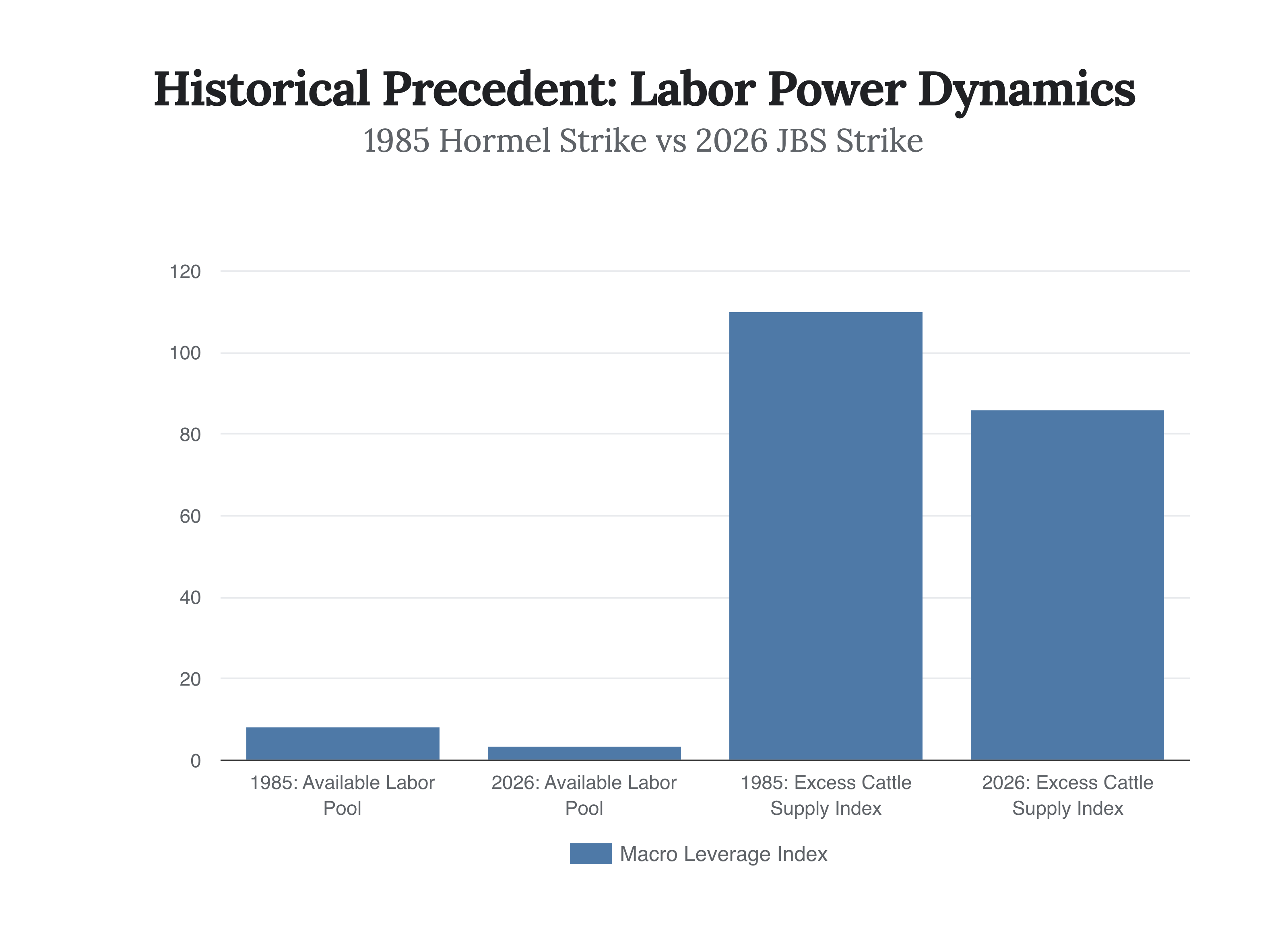
Furthermore, the physical product itself dictates the timeline. In 1985, processing lines could be slowed down or temporarily halted without triggering an immediate national food shortage. In 2026, the margins of error have been erased. While the state historically possessed the leverage to break a strike by flooding the line with surplus labor, the demographic realities of 2026 mean the migrant and local workers now possess a monopoly on the precise human capital required to keep the system alive. The union, under the leadership of Kim Cordova, is exploiting this inversion of power with surgical precision. They are not asking for concessions; they are dictating terms from a position of absolute structural supremacy.
The Biological Wall: Why You Cannot Print Cows
The foundation of this crisis is written in the dirt of the American West. The ultimate constraint on the meatpacking industry is not steel, nor capital, nor even labor—it is biology. According to the United States Department of Agriculture’s (USDA) Cattle Inventory Report released just weeks ago on January 30, 2026, the total U.S. cattle and calf inventory has dropped to 86.2 million head. This is a 0.35% decline from 2025, representing the absolute lowest national herd size since 1951. We have hit a 75-year floor.
This is the catastrophic legacy of the multi-year droughts that scorched the Great Plains from 2021 through 2024. Without adequate forage or affordable feed, ranchers were forced to liquidate their breeding stock. The beef cow herd—the reproductive engine of the entire industry—now sits at a staggering low of 27.6 million head. The 2025 calf crop plummeted to 32.9 million, the smallest since 1941.
Unlock deeper strategic alpha with a 10% discount on the annual plan.
Support the data-driven foresight required to navigate an era of radical uncertainty and join a community of institutional-grade analysts committed to the truth.
