



The recent wave of job cuts at Amazon, touching everything from its cashierless ‘Just Walk Out’ technology to its core AWS and Alexa divisions, is being widely misread as another Big Tech belt-tightening. This is a profound analytical error. What we are witnessing is not a retreat, but a strategic reallocation of unprecedented scale and speed. Amazon is deliberately shedding weight in the areas of AI that have proven to be operationally complex and financially underwhelming to free up massive capital and engineering resources for an all-out assault on the generative AI frontier.
This is CEO Andy Jassy’s doctrine in action: achieve ruthless operational efficiency in mature sectors to fund overwhelming force in the next decisive battleground. The core thesis is clear: Amazon is trading the costly and intricate AI of the physical world for the scalable, high-margin AI of the digital realm, and the consequences for its workforce, its competitors, and the broader tech landscape will be immense.
The Strategic Cull: Pruning Mature Branches to Fuel New Growth
The pattern of layoffs announced by Amazon is far from random. It reveals a clear strategic logic that prioritizes future potential over past investment. The cuts are concentrated in divisions where AI innovation has either hit a point of diminishing returns or failed to deliver on its initial promise, providing a clear window into the company’s evolving priorities.
Decommissioning the ‘Just Walk Out’ Dream
The elimination of hundreds of jobs from the ‘Just Walk Out’ physical stores team is the most symbolic move in this strategic pivot. This cashierless checkout system, once hailed as the future of retail, represented a massive investment in computer vision and sensor fusion. However, the operational overhead, the complexity of implementation, and the ultimate financial return failed to meet Amazon’s stringent benchmarks. The decision to scale back demonstrates a willingness to cut losses on ambitious but underperforming projects to reallocate those resources. It’s a clear signal that AI for AI’s sake is over; every initiative must now pave a direct path to profitability and market dominance.
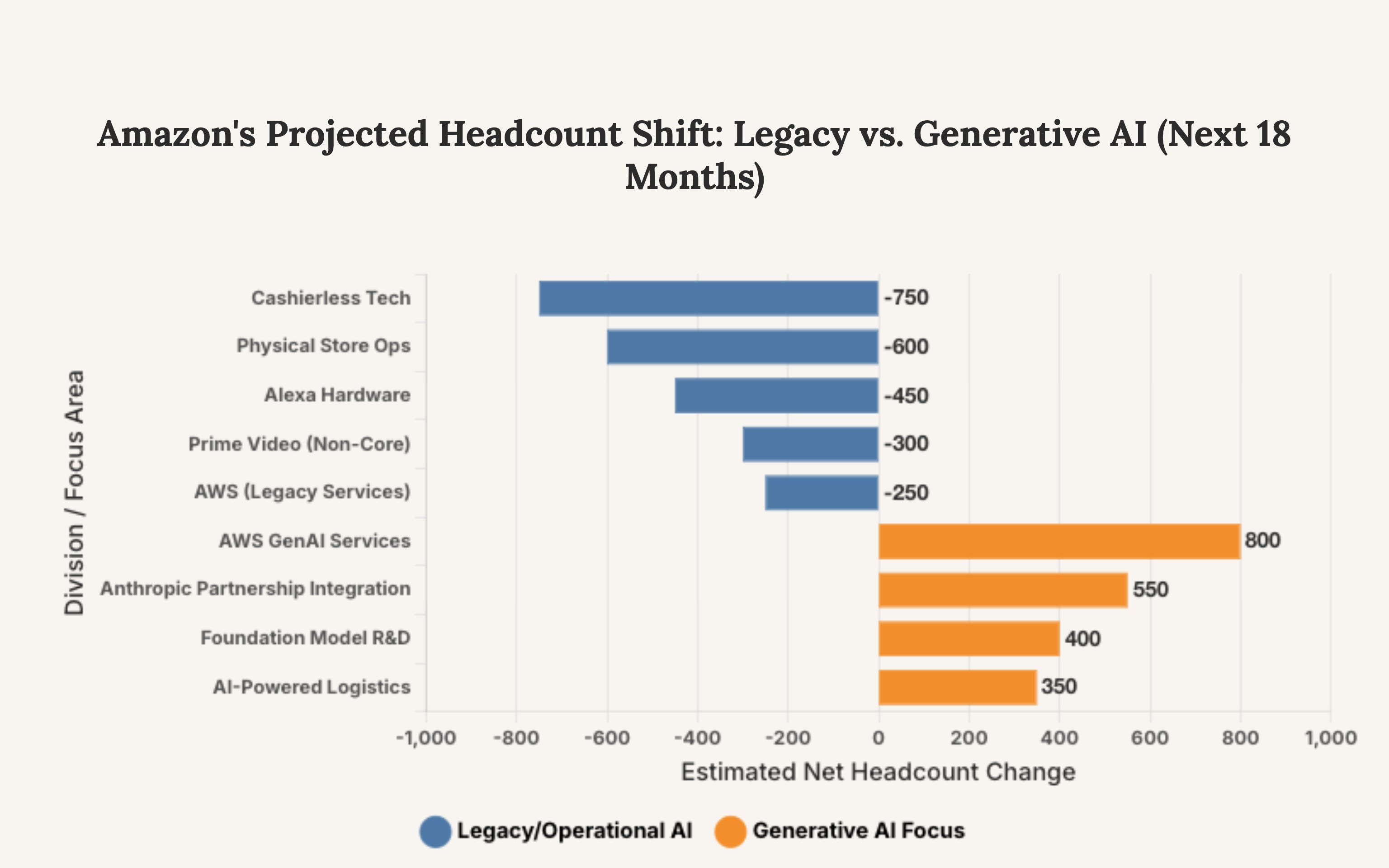
Caption: This chart projects the estimated realignment of Amazon’s technical workforce. The data illustrates a significant reduction in roles tied to operational AI like physical retail systems, with a corresponding surge in hiring for roles directly involved in developing and deploying generative AI.
Recalibrating AWS and Voice AI
Simultaneously, job cuts have been confirmed within Amazon Web Services (AWS) and the division responsible for the Alexa voice assistant. While seemingly disparate, these moves are connected. The AWS cuts are reportedly focused on teams tied to physical store technology and other legacy areas, while the company aggressively hires for its generative AI services. For Alexa, the initial vision of a ubiquitous voice-powered interface has given way to the more pressing need for a commercially viable, intelligent agent powered by large language models. The layoffs here suggest a streamlining of the legacy voice-command structure to rebuild around a more sophisticated, generative AI core.
“We’re rolling up our sleeves to be even more efficient so that we can invest in the new services and features our customers want and that will have a meaningful impact on our business and customer experience for many years to come,” a company spokesperson stated, framing the cuts as a move toward innovation.
Jassy’s Doctrine: Capital Discipline as a Competitive Weapon
Understanding these job cuts requires understanding Andy Jassy’s leadership philosophy. Since taking the helm, he has consistently emphasized operational efficiency and rigorous financial discipline. This isn’t just about pleasing Wall Street; it’s about building a war chest to fund the next wave of technological dominance. The current environment of high interest rates and investor demand for profitability has provided the perfect cover to execute this long-planned strategic pivot.
From ‘Get Big Fast’ to ‘Get Smart Fast’
The era of growth at all costs is over at Amazon. Jassy’s doctrine demands a clear return on investment, and the recent cuts are the logical outcome. The billions invested in projects like ‘Just Walk Out’ are now seen as capital that could be more productively deployed in the generative AI race, where the potential for scalable, high-margin services through AWS is nearly limitless. This financial discipline allows Amazon to make massive, concentrated bets, most notably its up to $4 billion investment in the AI startup Anthropic. This move secures access to cutting-edge foundation models, turning a potential competitor into a strategic partner and deeply integrating its technology within the AWS ecosystem.
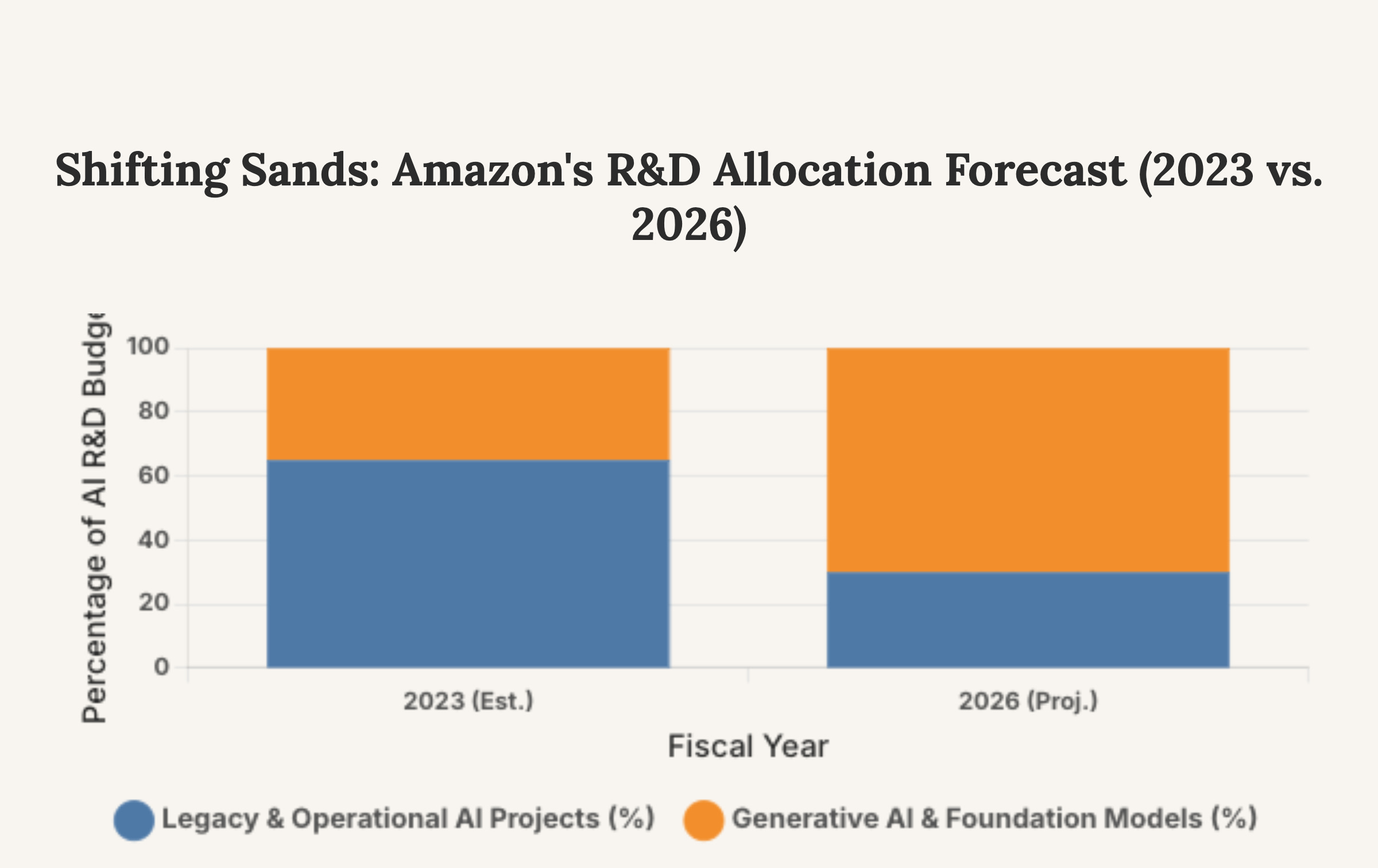
Caption: This chart illustrates the projected seismic shift in Amazon’s AI research and development budget. It forecasts a dramatic reallocation of capital away from mature or underperforming projects towards the high-growth sector of generative AI and foundational models.
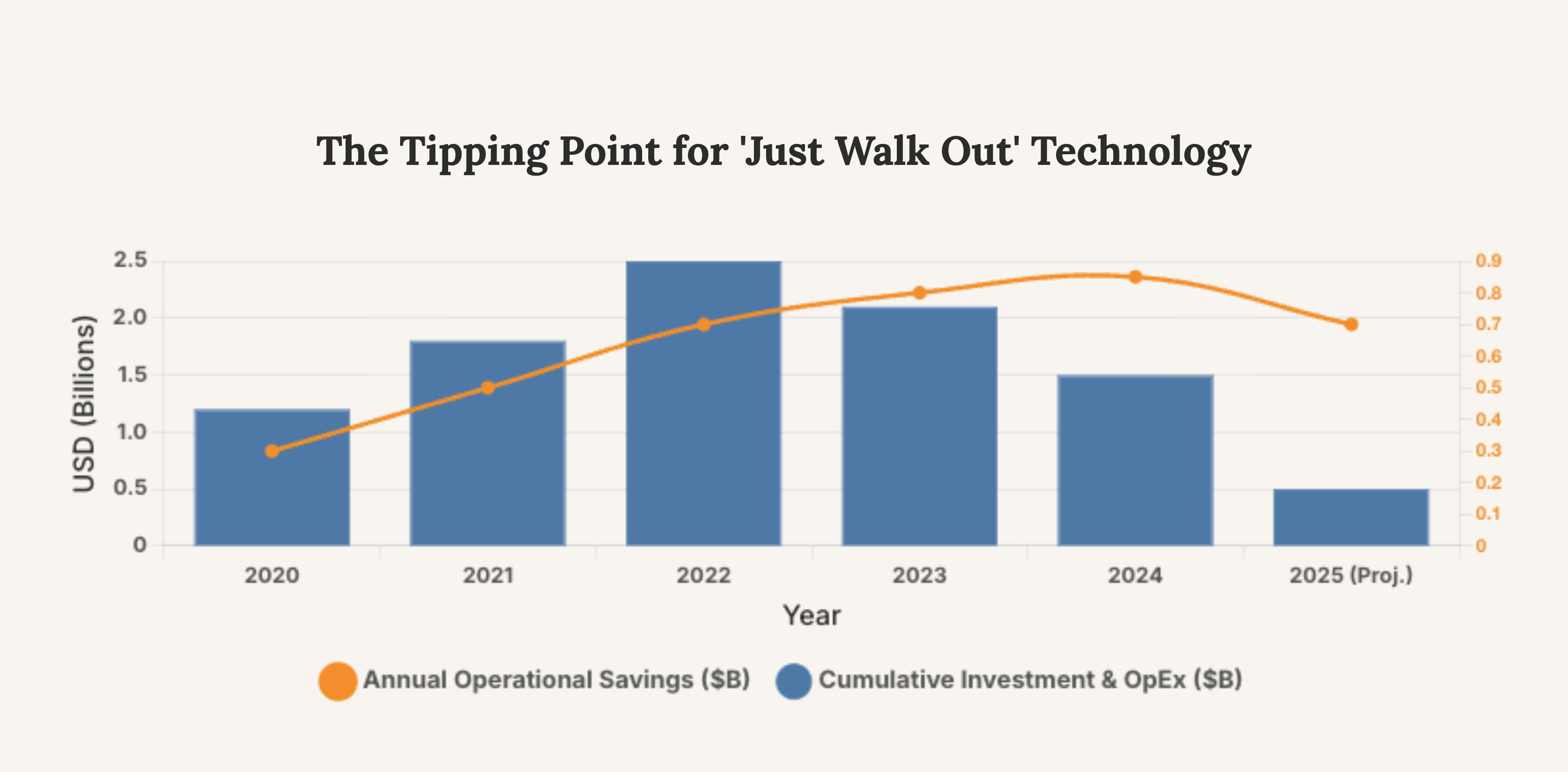
Caption: This combo chart models the financial dynamics of the ‘Just Walk Out’ initiative. The analysis shows that despite rising operational savings, the cumulative investment and operating expenditures required to scale the technology created an unsustainable financial burden, prompting the strategic disinvestment.
The New AI Workforce: From Atoms to Bits
The strategic reallocation is creating a profound shift in the composition of Amazon’s technical workforce. The company is moving away from roles that manage the complex intersection of software and the physical world—the ‘atoms’—and aggressively hiring talent focused purely on the world of data, algorithms, and models—the ‘bits’.
Winners and Losers in the AI Talent War
The losers in this transition are engineers and program managers whose expertise lies in operational AI systems like computer vision for retail, robotics for specific physical tasks, and hardware-centric voice assistants. The winners are machine learning scientists, large-language model engineers, and AI infrastructure specialists who can build, train, and deploy generative AI at scale within the AWS cloud. This is a flight to talent that can generate scalable, recurring revenue with high margins, rather than talent that solves operationally intensive, lower-margin physical world problems.
In a memo to employees, AWS CEO Matt Garman noted the need to “focus our resources on the key areas where we are placing our bets,” underscoring the targeted nature of the changes.
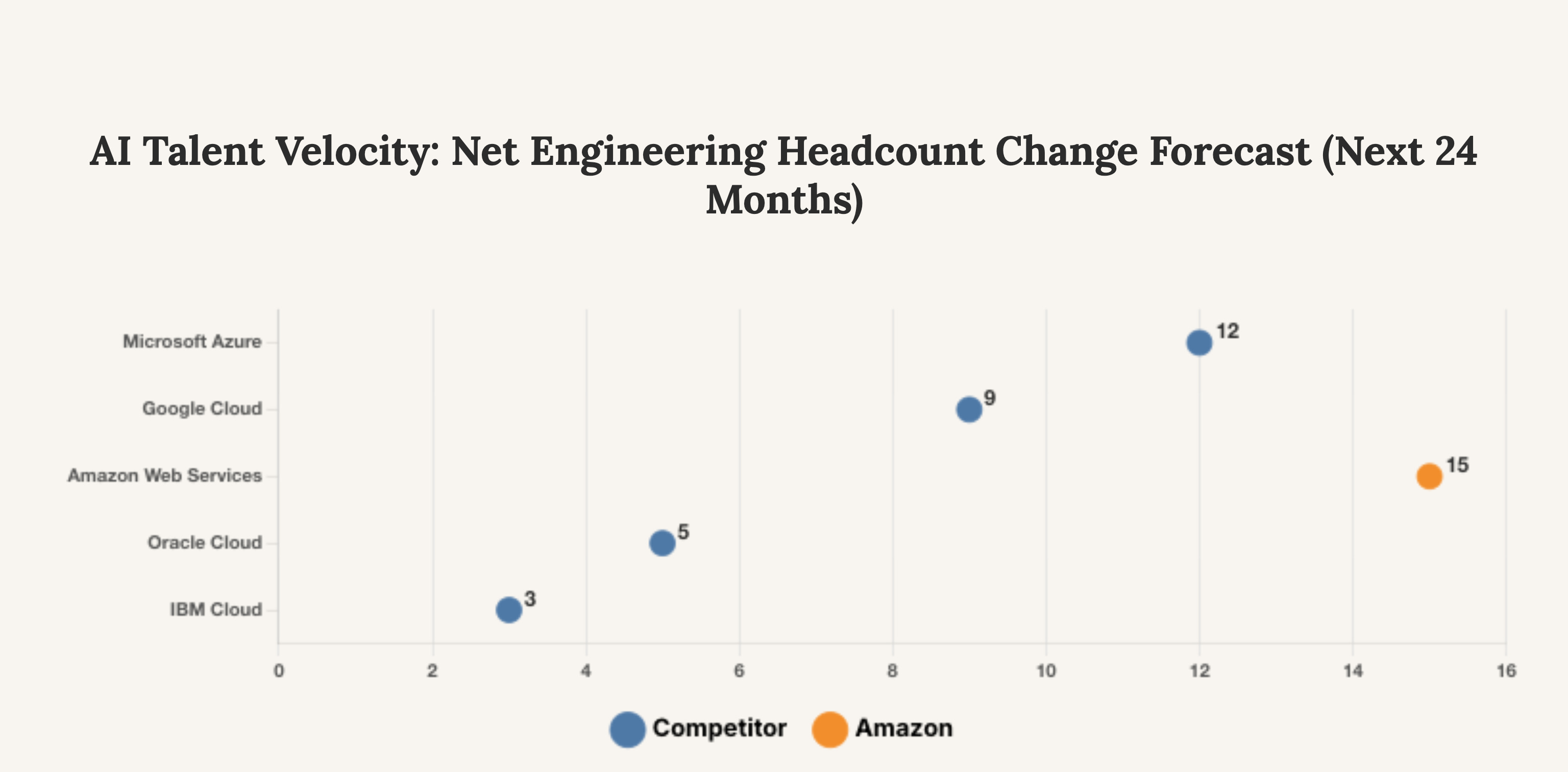
Caption: This dot plot provides a comparative forecast of the net change in AI-specialist engineering talent among major cloud providers. Amazon’s aggressive hiring in generative AI, funded by its strategic cuts elsewhere, is projected to give it a leading talent velocity over the next two years.
Future Trajectories & Strategic Signposts
This reallocation is not the end of Amazon’s workforce adjustments; it is the beginning of a new operational posture. The company is now leaner, more focused, and financially poised to compete aggressively in the generative AI arms race against formidable rivals like Microsoft and Google.
Signposts to Monitor
Industry leaders and investors must watch several key indicators over the next 18 months. First, monitor the pace of new generative AI service launches within AWS, as this will be the primary measure of the reallocation’s success. Second, track any further cuts in other non-core or legacy divisions, such as certain parts of its devices or physical retail footprint. Third, analyze the talent flow—specifically, whether Amazon can attract the world’s top AI researchers away from competitors now that it has demonstrated its immense financial commitment to the field. The success of the Anthropic integration and the launch of new proprietary models will be critical signposts of its long-term trajectory.
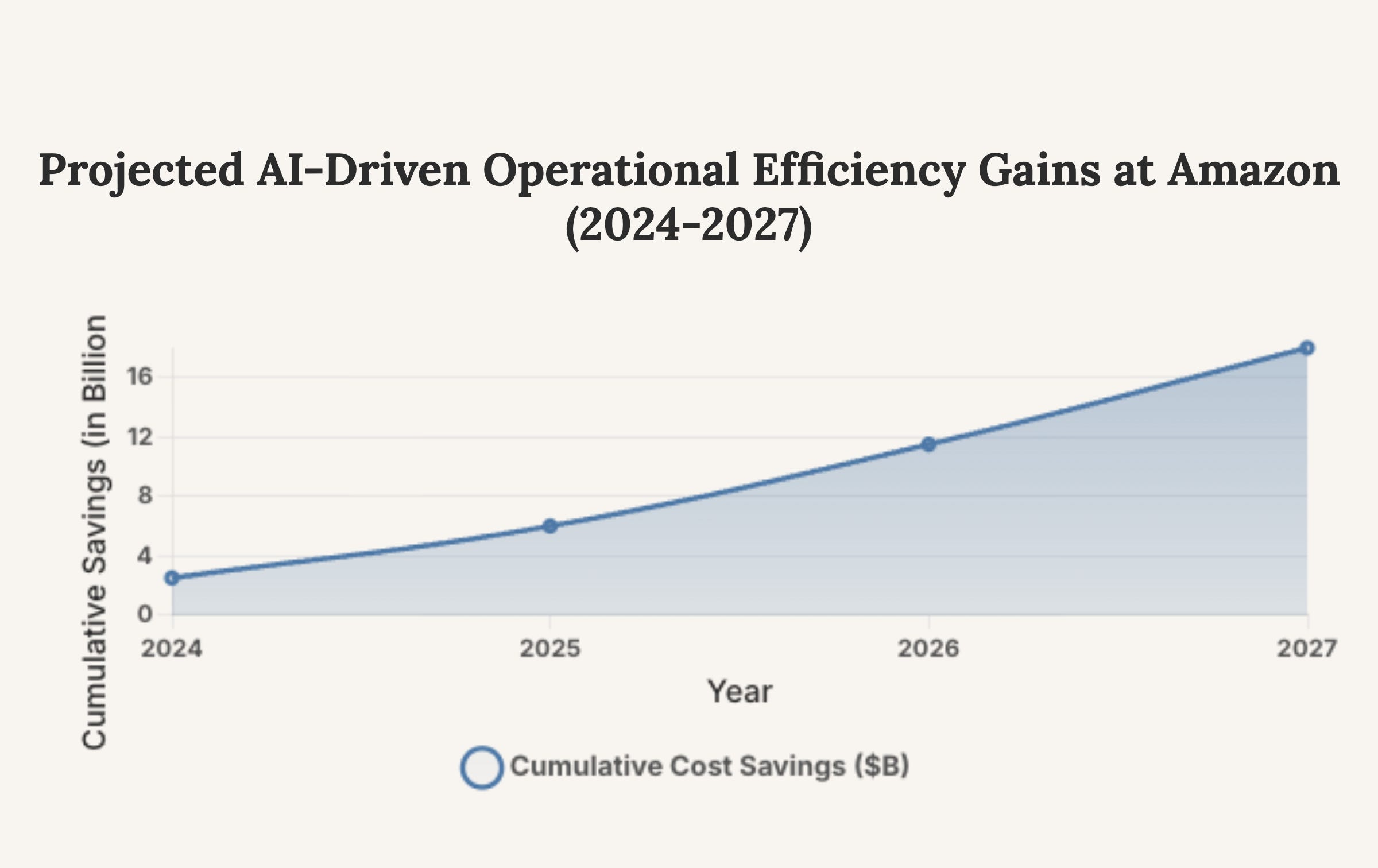
Caption: This area chart projects the significant, compounding operational cost savings Amazon is likely to achieve by deploying generative AI across its logistics, customer service, and corporate functions. These savings will provide a continuous funding stream for further AI R&D.
Ultimately, the job cuts at Amazon are a feature, not a bug, of its long-term AI strategy. They are the painful but necessary price of admission to the next great technological race. By sacrificing sacred cows and reallocating resources with surgical precision, Amazon is positioning itself not just to compete, but to dominate the infrastructure layer of the artificial intelligence economy. The message to the market is unequivocal: the era of experimentation is over, and the war for AI supremacy has begun in earnest.
Amazon is not just cutting jobs; it is forging a leaner, more formidable version of itself built to win the generative AI revolution.