


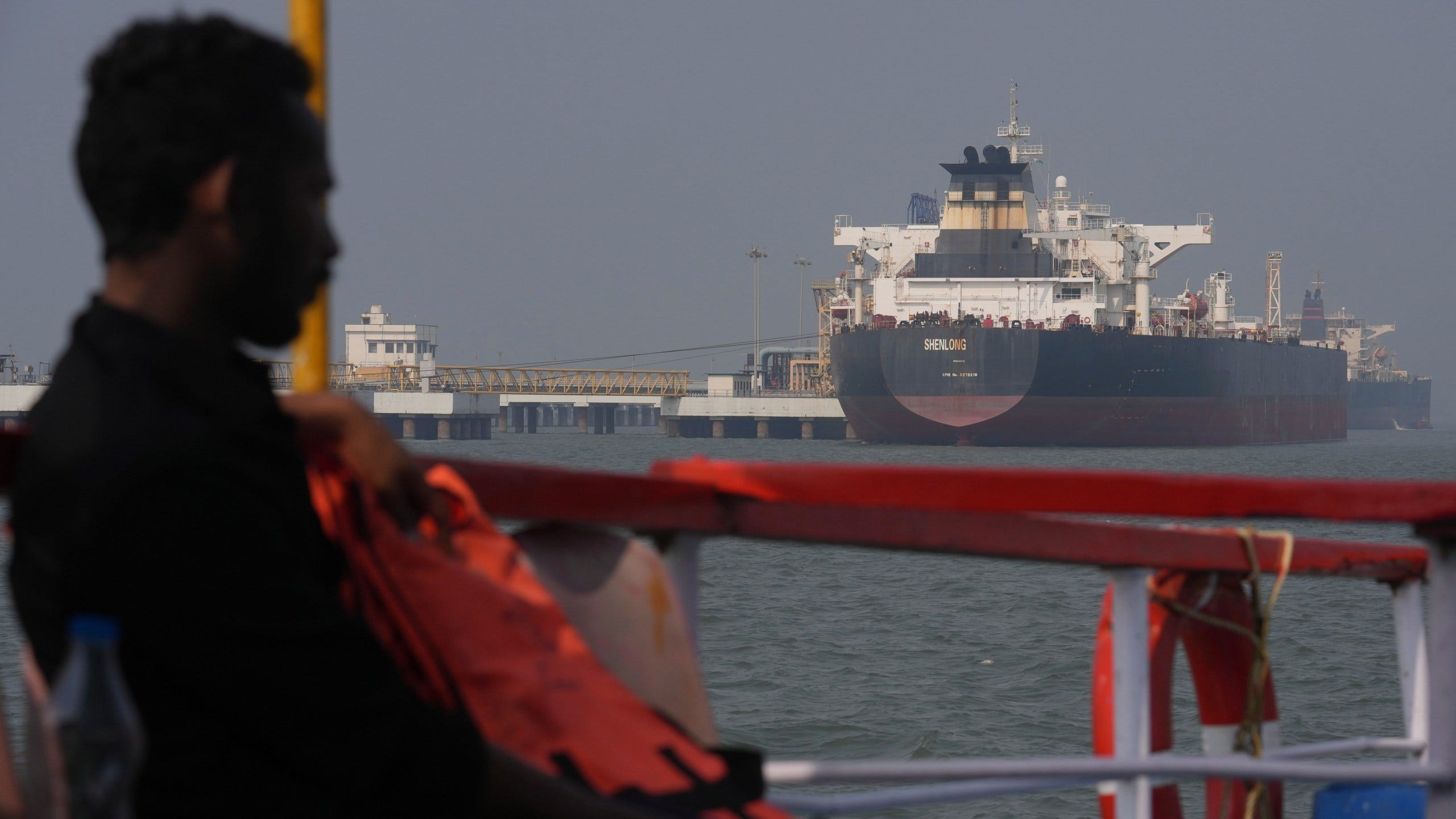
The kinetic phase of Operation Epic Fury is already transitioning into something far more complex. As of March 25, 2026, the joint U.S.-Israeli military campaign that decapitated Iran’s supreme leadership has shifted from a war of precision munitions to a grueling test of economic endurance. The prevailing media narrative remains fixated on the raw destruction: U.S. Central Command has systematically leveled over 9,000 targets across the Islamic Republic, ranging from drone manufacturing facilities to naval assets. In retaliation, Tehran has unleashed unprecedented ballistic missile barrages against Dimona and U.S. Gulf allies, successfully choking the Strait of Hormuz. But the true center of gravity has moved from the contested airspace over the Middle East to the quiet, congested waters off the coast of China.
The Economics of Asymmetric Attrition
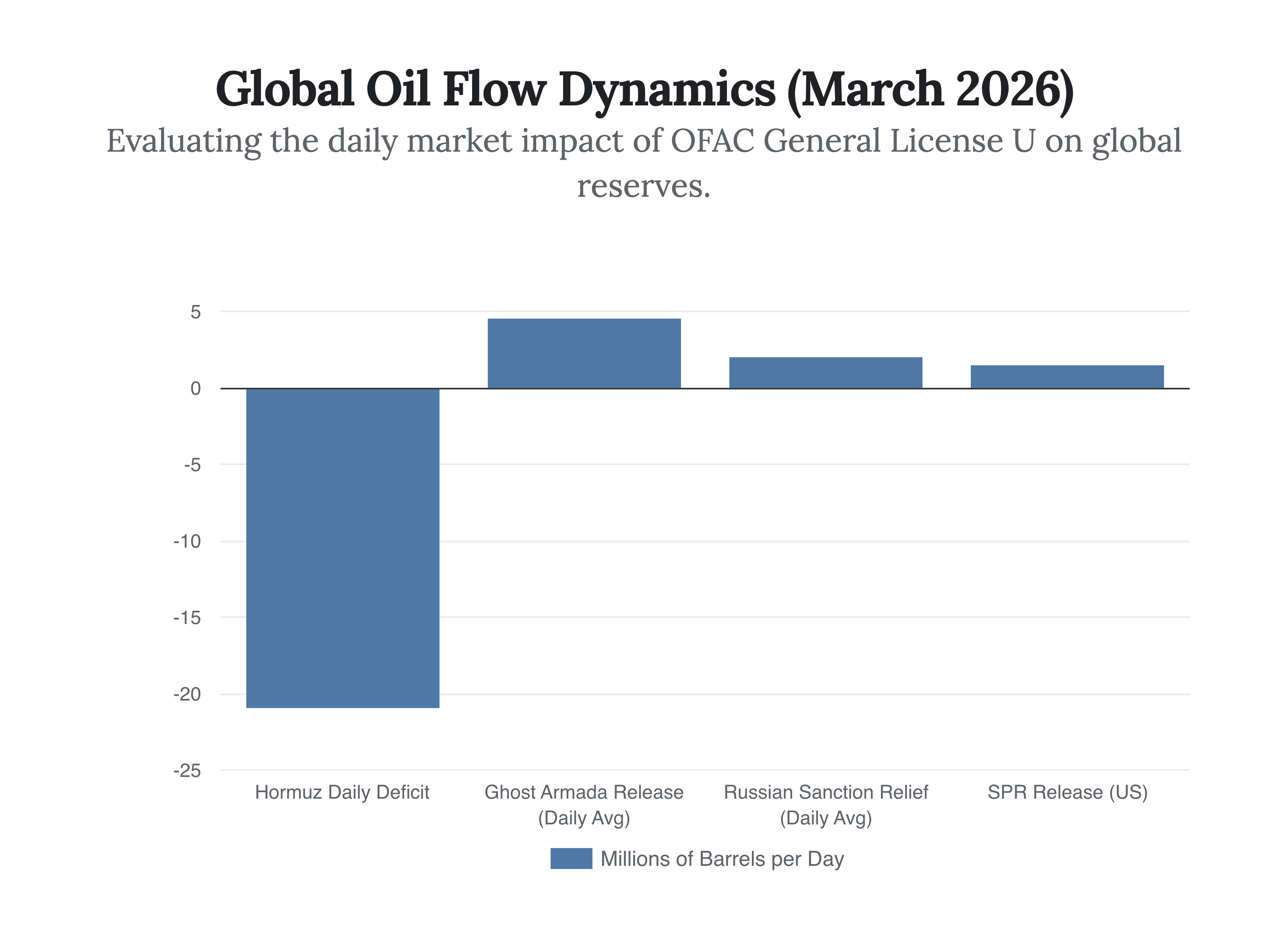
For years, the foundational pillar of U.S. strategy was straightforward: drive Iranian oil exports to absolute zero. Today, Washington is deliberately doing the exact opposite. By issuing General License U on March 20, the U.S. Treasury has temporarily lifted sanctions on approximately 140 million barrels of Iranian crude currently sitting in a “ghost armada” of tankers near Asian ports. This represents a radical, counter-intuitive tactical pivot by the current administration.
The game theory underlying this maneuver is brilliant, yet highly perilous. By blockading the Strait of Hormuz, Iran sent Brent crude spiking to $118 a barrel. Exorbitant oil prices are the exact lifeline the Islamic Revolutionary Guard Corps (IRGC) requires to fund its decentralized retaliation and maintain brutal domestic control following the mass protests of early 2026. By weaponizing Iran’s own stranded oil reserves and flooding the Asian market, the U.S. is engineering an artificial supply glut designed to crash the price of crude and financially suffocate Tehran mid-war.
This is economic warfare at its most complex. Treasury Secretary Scott Bessent openly admitted the goal is to use “Iranian oil barrels against Iran itself.” Washington is essentially executing a high-stakes arbitrage of geopolitical survival: prioritizing global macroeconomic stability over the total embargo of a regime it is simultaneously bombing. If the U.S. can release enough supply to offset the 21 million barrels per day typically transiting the Strait of Hormuz, they strip Tehran of its most potent non-kinetic weapon.
Unlock deeper strategic alpha with a 10% discount on the annual plan.
Support the data-driven foresight required to navigate an era of radical uncertainty and join a community of institutional-grade analysts committed to the truth.
The Kinetic Anchor: Kharg Island and Rapid Insertion
However, economic coercion is only effective if backed by the undeniable threat of territorial seizure. Financial strangulation takes months; global energy markets panic in days. This brings us to the sudden and massive escalation of U.S. ground forces.
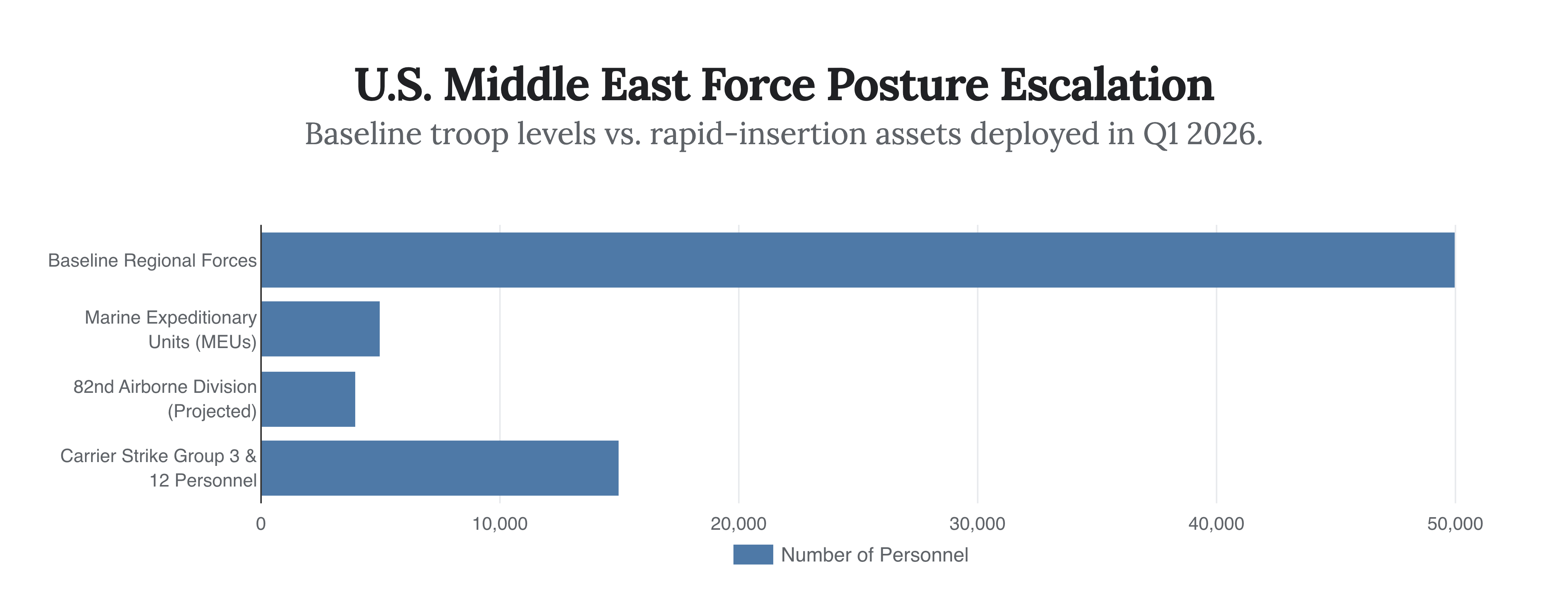
The Pentagon is currently mobilizing up to 4,000 soldiers from the U.S. Army’s elite 82nd Airborne Division, deploying the first battalion of the 1st Brigade Combat Team to the region. They join an incoming force of approximately 5,000 Marines from the 31st and 11th Marine Expeditionary Units (MEUs), aboard vessels like the USS Tripoli and USS Boxer. While the U.S. already maintains a baseline of 50,000 personnel in the Middle East, these new units are fundamentally different. They are not stabilization or occupation forces; they are rapid-insertion denial assets trained to parachute into hostile territory and execute amphibious assaults.
The strategic target of this buildup is hiding in plain sight: Kharg Island. Located just 15 miles off the Iranian coast, Kharg is the central hub for 90% of Iran’s oil exports. The deployment of the 82nd Airborne transforms the theoretical threat of an amphibious assault on Kharg Island into an immediate, credible tactical reality. If the Iranian regime refuses to yield the Strait of Hormuz, the United States now possesses the forward-deployed capability to physically seize the crown jewel of Iran’s energy infrastructure. It forces Tehran into an impossible dilemma: hold the strait and lose the island, or reopen the waters to save the infrastructure.
Executing an operation on Kharg Island would be anything but a clean surgical strike. The island, though small, is home to a civilian population of several thousand and sits a mere 15 miles off the Iranian mainland. Any occupying U.S. force would find themselves under near-constant bombardment from short-range rockets, suicide drones, and coastal artillery. Yet, the fact that military planners are actively preparing for this scenario underscores the sheer desperation of the global energy crisis. It is a signal to both Tehran and global markets: Washington will not allow a localized conflict to trigger a global economic depression.
The Nuclear Black Hole
The strategic context of this conflict cannot be divorced from its origins. Just months ago, in January 2026, the Iranian regime executed a brutal crackdown on nationwide protests, resulting in an estimated 30,000 civilian casualties. This catastrophic loss of life effectively vaporized any domestic political capital the regime possessed, forcing them to rely entirely on fear and the external projection of force. When the United States and Israel launched their decapitation strikes in late February, they were not just targeting military assets; they were exploiting a society already pushed to the brink of collapse.
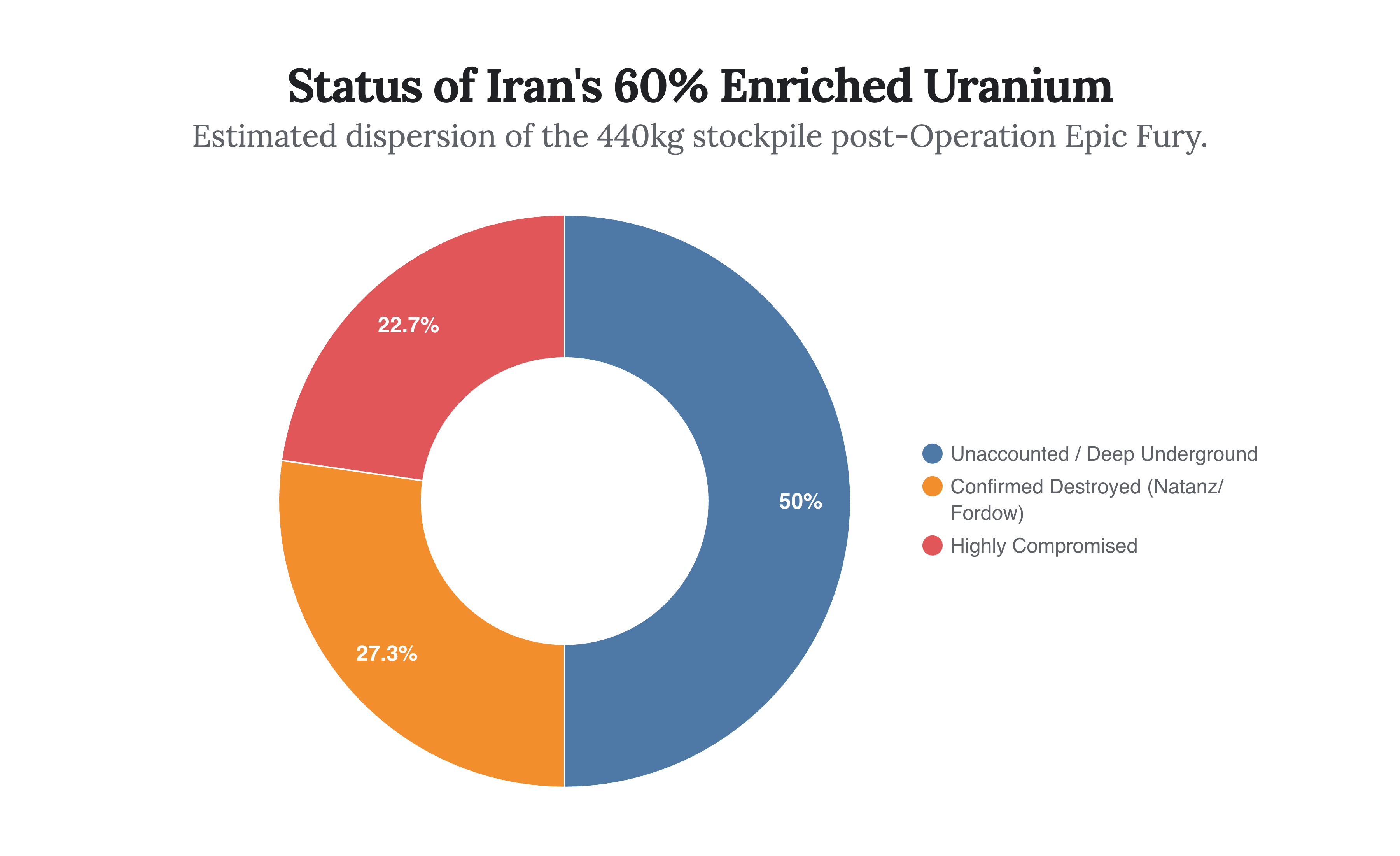
But beneath the overt energy war and the maneuvering of aircraft carriers lies the ultimate strategic vulnerability: Iran’s nuclear latency. The June 2025 Operation Midnight Hammer strikes and the recent February 2026 Epic Fury campaign heavily damaged the known facilities at Natanz and Fordow. Yet, independent arms control assessments indicate that Iran still possesses up to 400 kilograms of 60% enriched uranium, the exact location of which remains a critical intelligence blindspot.
The danger has morphed from a centralized, observable nuclear weapons program into a decentralized, highly survivable network. Striking the political leadership and flattening above-ground infrastructure has inherently driven the remainder of the scientific program deep underground. This creates a terrifying information asymmetry for Western intelligence agencies.
By shattering the regime’s conventional deterrence, the U.S. and Israel have inadvertently incentivized the surviving Iranian command structure to view weaponized nuclear breakout not as a diplomatic bargaining chip, but as the sole remaining guarantor of their survival. With 82% of their missile launchers reported “killed” by the Department of Defense, and their defense industrial base systematically dismantled, the latent nuclear program is the only existential leverage Tehran has left.
The Ultimate Test of Coercive Diplomacy
“We negotiate with bombs,” Defense Secretary Pete Hegseth noted regarding the ongoing air campaign. This chillingly concise statement perfectly summarizes the dual-track strategy playing out in real-time. Washington is applying maximal kinetic pressure while quietly offering an economic off-ramp, signaling a willingness to pause strikes on civilian power grids if the Strait of Hormuz is reopened.
We are witnessing a paradigm shift in modern conflict. The current war in the Middle East is no longer defined merely by who controls the airspace, but by who can endure the longest in a state of synchronized economic and kinetic chaos. The United States is betting that a fractured Iranian command, facing imminent economic strangulation from the weaponization of their own oil reserves, will fold before the global energy market collapses. But in games of existential survival, rational actors often take irrational risks. And with 400 kilograms of enriched uranium unaccounted for, the margin for error is non-existent.
Interesting assessment.