

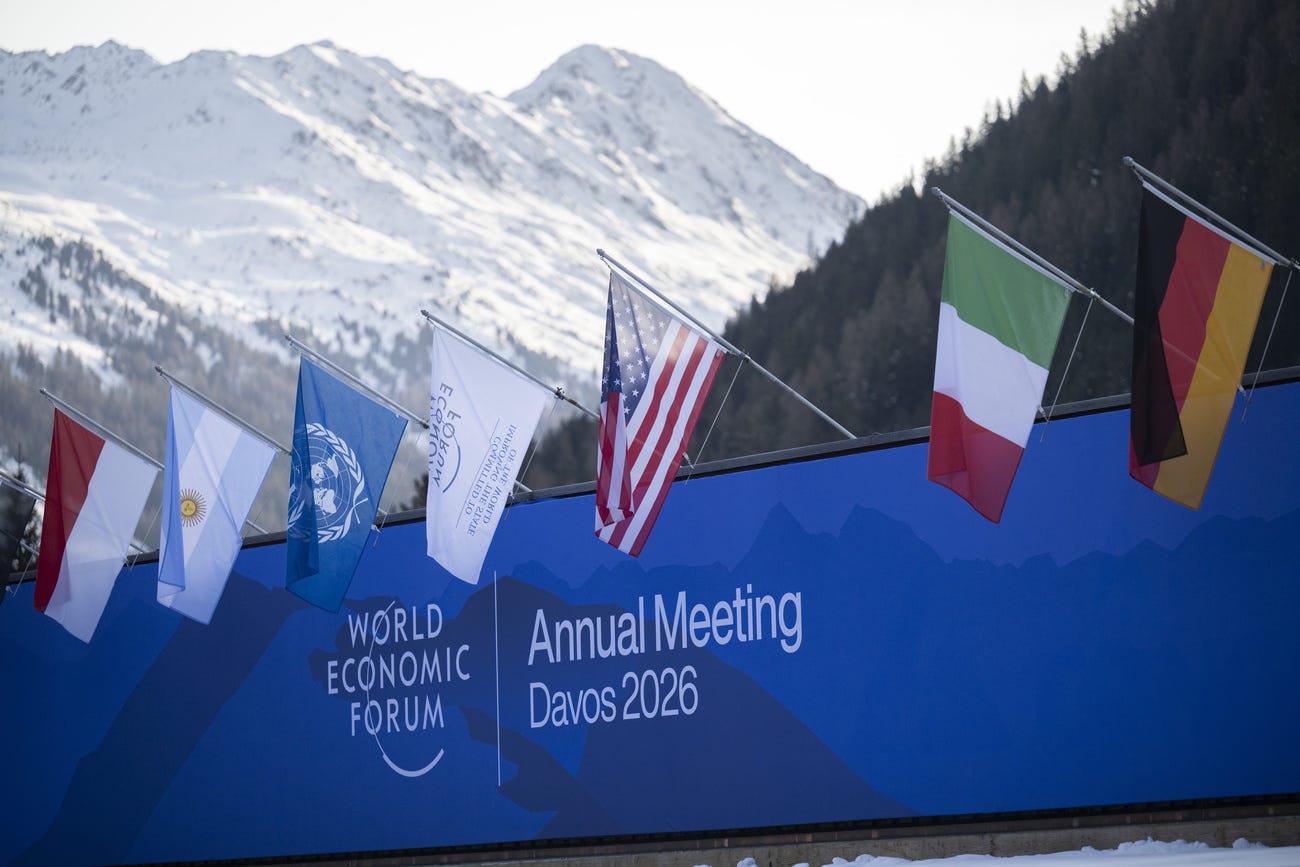
It is January 20, 2026. The snow is falling on the Promenade in Davos-Klosters, but the mood inside the Congress Centre is far colder than the Alpine air. The World Economic Forum has gathered once again, this time under the hopeful banner of “A Spirit of Dialogue.” Yet, the data circulating among the 3,000 delegates—including a record 400 government officials—tells a story not of dialogue, but of deafening fragmentation. We are no longer discussing how to prevent the polycrisis; we are discussing how to survive it.
For years, the “Davos Man” was criticized for excessive optimism. Today, that optimism has been clinically excised. The most significant finding from this week’s Global Risks Report 2026 is not a specific threat, but a collapse in sentiment. The era of stability is not just paused; it is statistically dead. A stunning 99% of global experts and leaders now expect the next two years to be either “unsettled,” “turbulent,” or “stormy.” The number of leaders expecting “calm”? One percent. We have entered what the Forum now calls the “Age of Competition,” a polite euphemism for a global free-for-all.
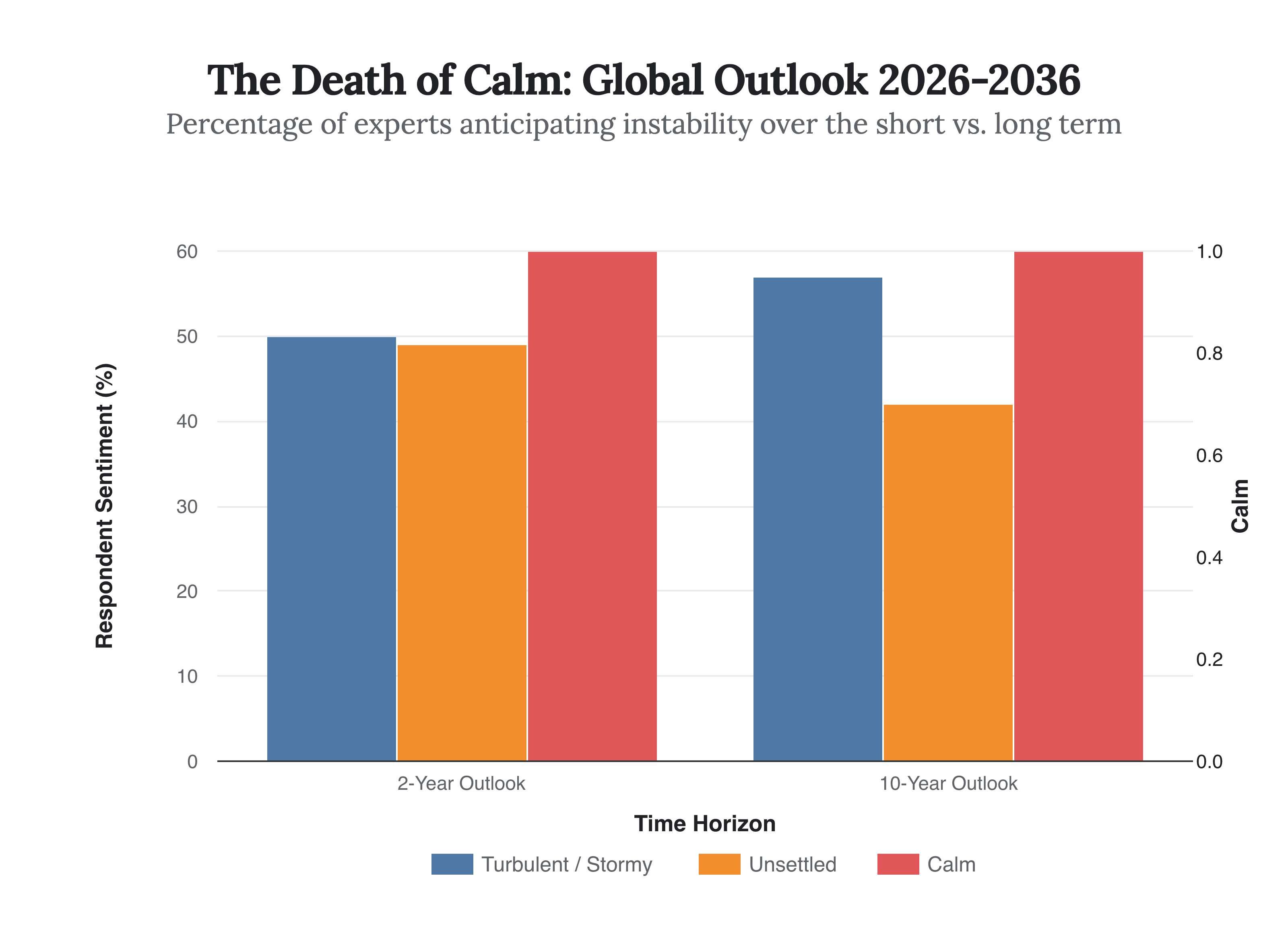
This chart reveals the structural pessimism that has taken hold. In previous years, the long-term view offered a glimmer of hope—a belief that after the immediate storm, the waters would settle. That faith has evaporated. The 10-year outlook is now more turbulent (57%) than the immediate future. This is the psychological architecture of a trap: leaders believe the current chaos is not a transition, but the new baseline.
“Instability is no longer a temporary disruption—it is the new operational baseline.” — Global Risks Report 2026 Findings
What is driving this collapse in confidence? For the first time in years, the environment has been dethroned from the top spot of immediate concerns. While extreme weather remains a long-term existential threat, the immediate horizon is dominated by human conflict. “Geoeconomic Confrontation” has risen to become the number one risk for 2026, selected by 18% of respondents as the trigger most likely to spark a global crisis. It is followed closely by the corrosive twins of misinformation and societal polarization.
The shift is profound. We have moved from fighting carbon to fighting each other. The weaponization of economic policy—tariffs, sanctions, and supply chain blockades—has pushed “Interstate Armed Conflict” down the list, not because it is less likely, but because economic warfare has become the primary battlefield.
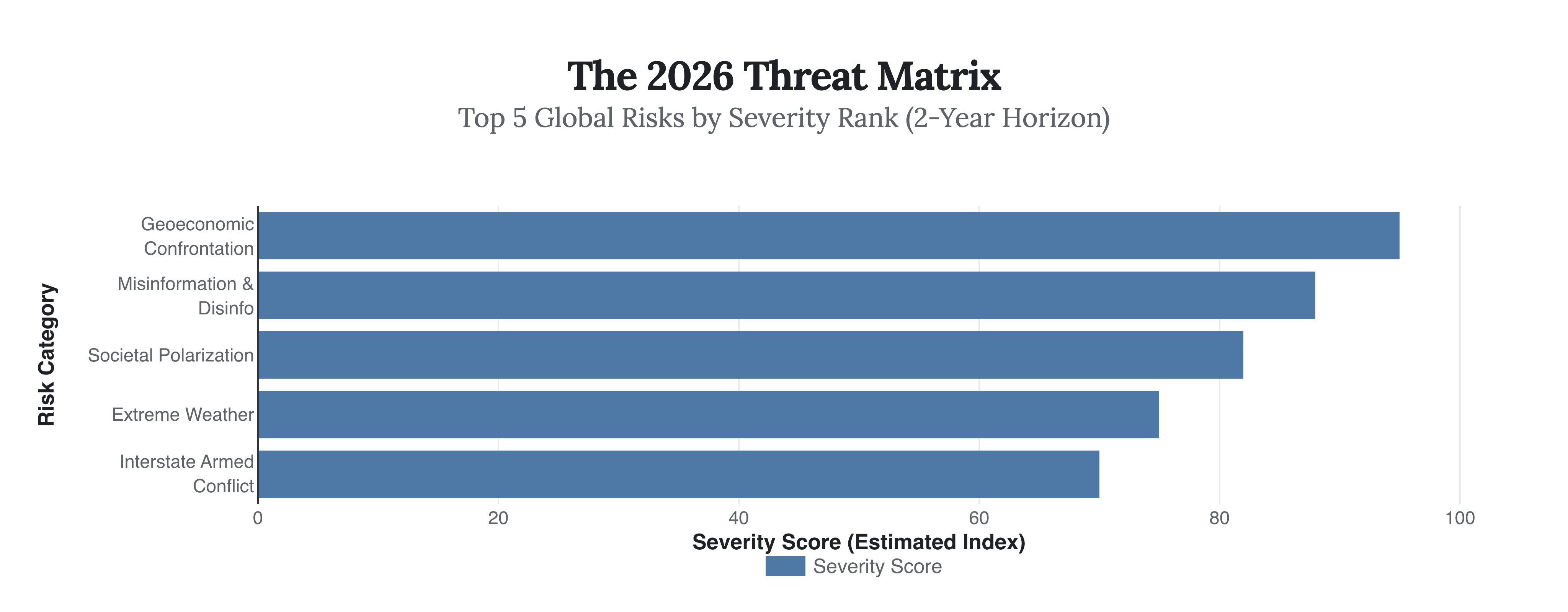
The rise of “Misinformation and Disinformation” to the second spot is not coincidental; it is the lubricant for the geopolitical friction we are seeing. With over 50 countries holding elections in the recent “super-cycle,” the erosion of truth has paralyzed the ability of democracies to build consensus. As the report notes, we are seeing the “erosion of truth” move from a theoretical debate to a systemic financial risk.
Amidst this gloom, the technological narrative at Davos has pivoted aggressively. The buzzword of 2023-2024, “Generative AI,” has been replaced by “Agentic AI.” We are no longer talking about chatbots that write poetry; we are talking about autonomous agents that execute transactions, negotiate contracts, and reshape labor markets. The sentiment on the promenade is that while AI offers the only viable path to the productivity growth needed to service global debt, it also represents the “largest upward move” in long-term risk rankings.
“The future is not a single, fixed path but a range of decisions we make today... yet 68% of respondents believe the global order will become more fragmented.”
The disconnect between the theme—”A Spirit of Dialogue”—and the reality of the data is stark. The 2026 forum isn’t a meeting of minds; it is a damage control briefing. The “Global Commons”—that shared space of internet, climate, and trade—is being fenced off into competing blocs. The “Polycrisis” has evolved into a permanent state of friction where resilience, not efficiency, is the only metric that matters.
As the delegates leave the Swiss Alps later this week, they carry with them a heavy realization. The “Calm” was an anomaly of the post-Cold War era. The storm is not coming; the storm is the house we now live in.