

The Hardware Reality: You Are Running Software on a Compromised Network
The modern executive operates under a fundamental misconception: that anxiety is a flaw in thinking—a software bug that can be debugged with better logic, cognitive reframing, or “mindset work.” This is a strategic error. Anxiety is not a cognitive event; it is a hardware override.
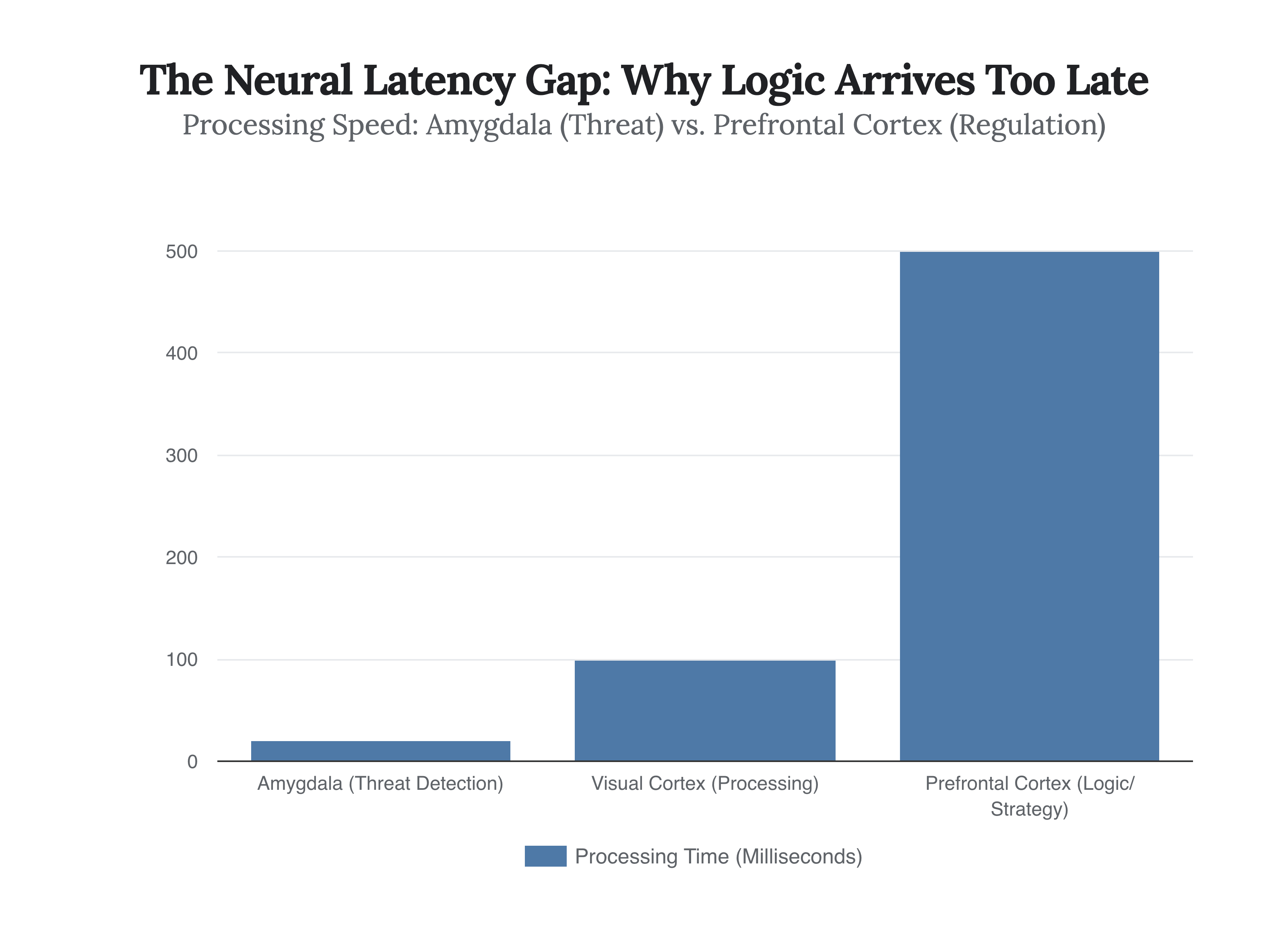
Intelligence analysis of the human nervous system reveals a critical latency gap. The amygdala—the brain’s threat detection center—processes sensory input in approximately 12–20 milliseconds. The prefrontal cortex—the seat of logic, strategy, and emotional regulation—requires at least 500 milliseconds to fully engage. By the time you “think” to calm down, your autonomic nervous system has already been executing a survival protocol for half a second.
In the high-volatility landscape of Q1 2026, where global polycrisis has become the baseline operational environment, this latency gap is where fortunes are lost. You cannot negotiate with a nervous system that has already decided it is under siege.
The Economic Toll: The 2026 Burnout Index
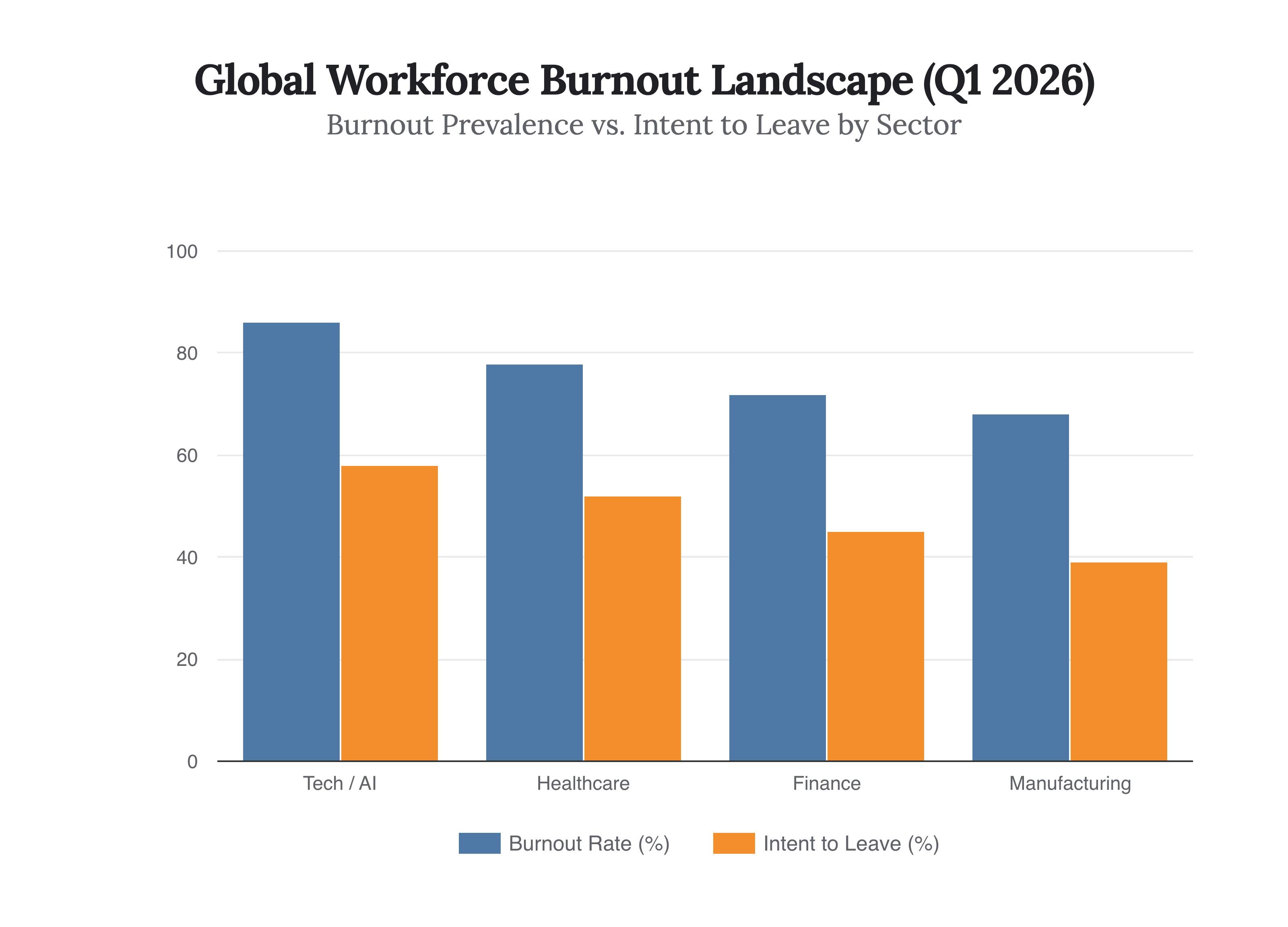
This biological inefficiency is now manifesting as a macroeconomic crisis. Real-time data from January 2026 indicates that the global workforce has hit a “cortical failure point.” According to the latest figures, 83% of global workers report moderate to severe burnout—a figure that has plateaued at a historic high despite a 40% increase in corporate wellness spending since 2023.
The implications for leadership are severe. The “Anxiety Tax” is no longer an abstract concept; it is a measurable drag on GDP. The World Health Organization estimates the global cost of anxiety and depression-related productivity loss has solidified at $1 trillion annually. We are witnessing a mass degradation of decision-making capability at the exact moment when strategic complexity is peaking.
When the amygdala hijacks the system, blood flow is shunted away from the prefrontal cortex toward the limb muscles. In this state, your IQ effectively drops. You lose access to nuance, long-term planning, and empathy. You become a binary processor in a quantum world.
Unlock deeper strategic alpha with a 10% discount on the annual plan.
Support the data-driven foresight required to navigate an era of radical uncertainty and join a community of institutional-grade analysts committed to the truth.
The Metric of Resilience: Heart Rate Variability (HRV)
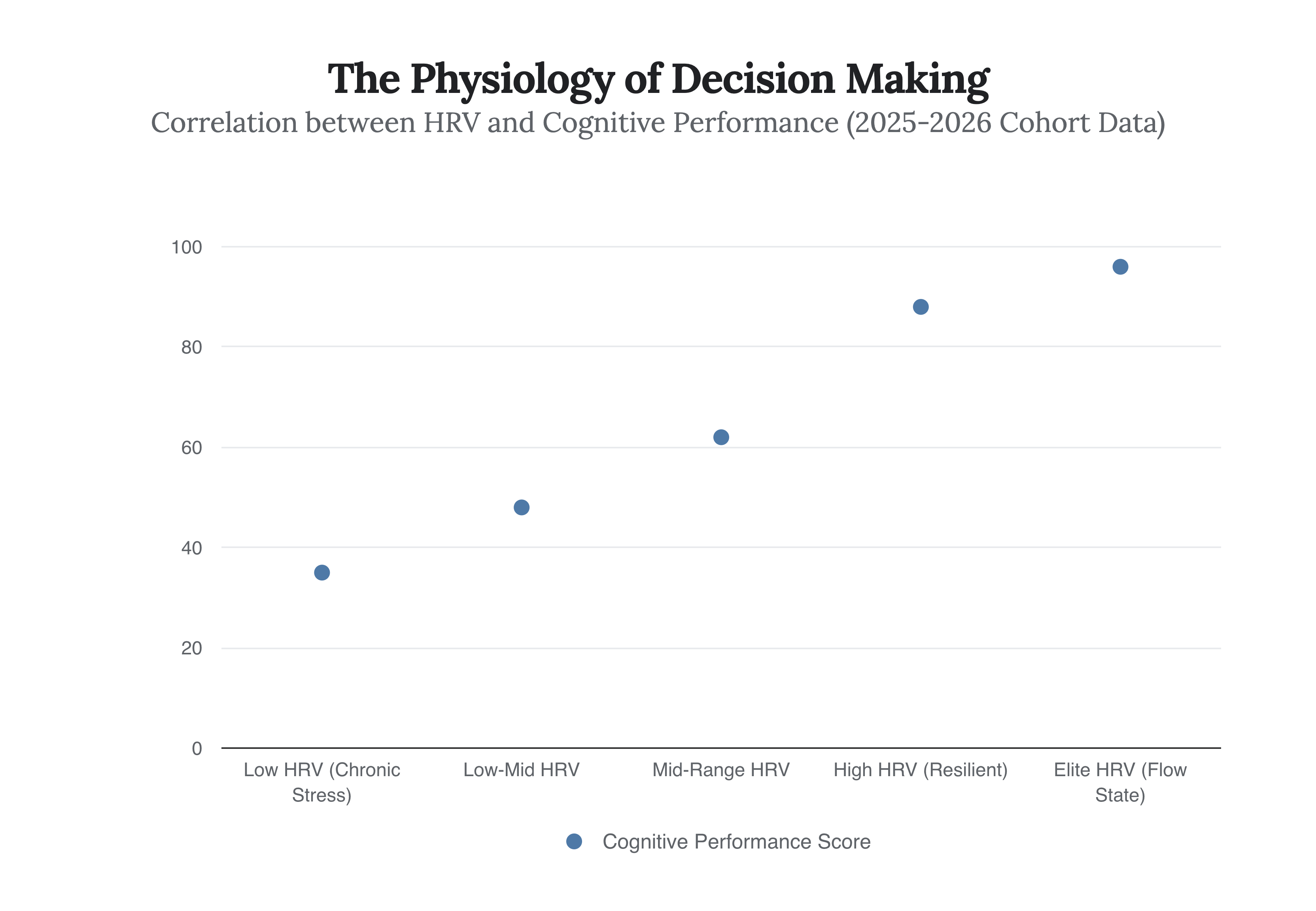
If you cannot “think” your way out, you must “sense” your way out. The primary metric for this capacity is Heart Rate Variability (HRV). High HRV indicates a responsive, adaptable nervous system capable of shifting gears instantly. Low HRV indicates a system locked in sympathetic overdrive (fight or flight).
Current bio-data suggests a direct correlation between HRV and executive performance. Leaders with consistently high HRV scores demonstrate superior pattern recognition and slower reaction times to false alarms. Those with low HRV are statistically more likely to make impulsive, loss-averse decisions.
The most effective intervention for anxiety in 2026 is not cognitive behavioral therapy (CBT)—which has shown diminishing returns in high-arousal cohorts—but somatic regulation. You must change the state of the body to grant the mind permission to think.
Operational Protocols: Bottom-Up Regulation
To bypass the cortical firewall failure, you must adopt a “Mech-Set” (mechanical setting) rather than a Mindset. The goal is to manually override the autonomic nervous system using physiological inputs that the amygdala cannot ignore.
1. The Physiological Sigh: Two sharp inhales through the nose followed by an extended exhale through the mouth. This mechanically offloads carbon dioxide and engages the baroreceptors in the heart, forcing a parasympathetic shift within 20 seconds.
2. Optical Flow Expansion: Anxiety creates “foveal vision” (tunnel vision). By consciously expanding your gaze to include peripheral movement (panoramic vision), you signal to the brainstem that the environment is safe. This is a hardware hack that requires zero “positive thinking.”
3. The Cold Shock Response: Brief exposure to cold water (1–3 minutes) spikes dopamine by 250% and forces a hard reset of the nervous system. It is a controlled systemic shock that builds tolerance to high-friction environments.
The Strategic Imperative
We are entering an era where “nervous system regulation” is a competitive advantage. The leaders who survive the volatility of the late 2020s will not be the smartest; they will be the most physiologically adaptable. Anxiety is data—it is a signal that your hardware is running too hot to process the software of your strategy. Cool the hardware first.