


The Macro-Architecture of Democratic Decay
As we survey the geopolitical and electoral landscape in the final days of March 2026, a chilling realization is settling over the world’s capitals: the political center is mathematically and structurally collapsing. For the last decade, the defenders of liberal democracy have treated the rise of populism as a temporary fever—a momentary glitch in the “end of history” narrative that could be cured with a combination of managerial competence, macroeconomic tweaking, and moral scolding. This assumption has proven to be not just flawed, but catastrophic. The current crisis is not a glitch; it is the fundamental operating system of the 2020s rejecting its legacy software.
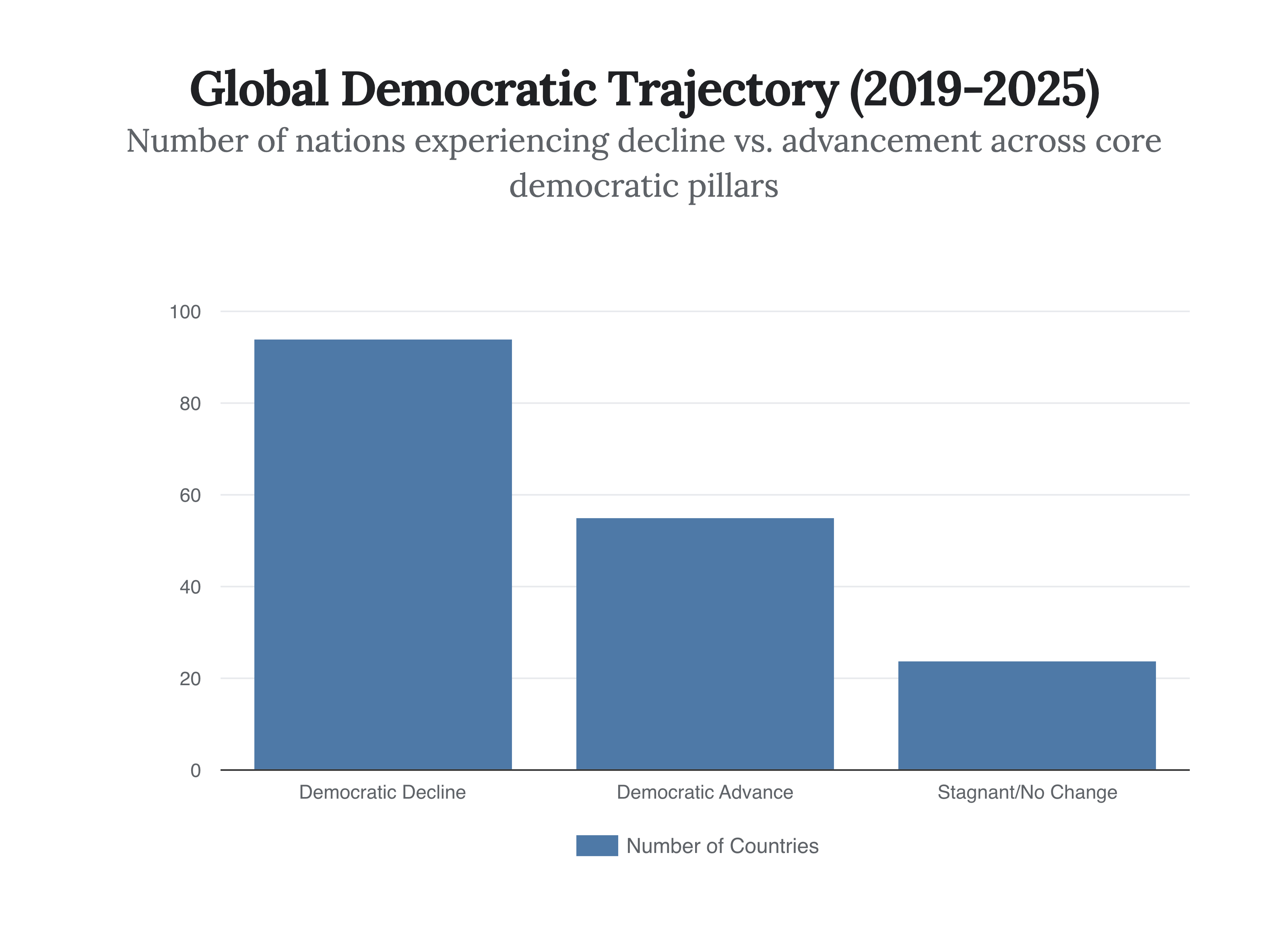
We must ground our analysis in the absolute latest empirical realities. The International Institute for Democracy and Electoral Assistance (IDEA) recently finalized its Global State of Democracy 2025 report, and the data provides a grim autopsy of the liberal consensus. Out of 173 nations assessed, a staggering 94 countries—representing 54 percent of all sovereign states—suffered a measurable decline in at least one core metric of democratic performance compared to five years prior. In stark contrast, only 55 countries managed to advance. We are currently enduring the ninth consecutive year of net global democratic decline.
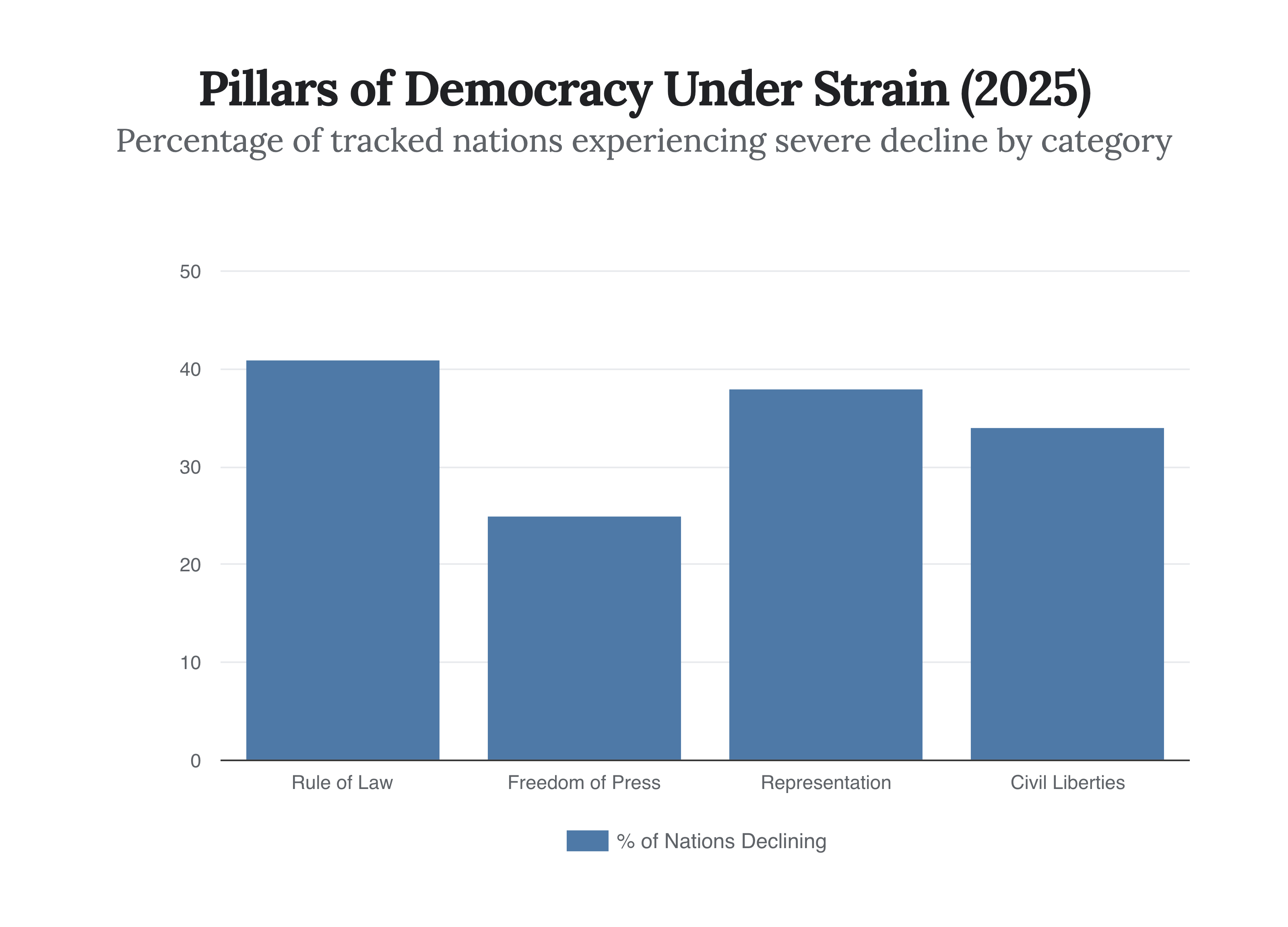
What is most alarming about this contraction is its precise nature. Democracies do not die in darkness; they are dismantled in broad daylight by voters who have rationally concluded that the system no longer pays out. The IDEA data reveals that “Representation”—the basic aggregate metric of fair elections and parliamentary effectiveness—has plunged to its lowest global level since 2001. During the massive 2024 “super-cycle” of global elections, seven times more countries declined in representation than advanced. We are seeing a hollowing out of institutions from within. In nations from Europe to the Americas, electoral integrity is being eroded not by military juntas, but by elected officials manipulating the rules of the game to engineer permanent asymmetric advantages.
The strategic intuition of Game Theory explains exactly why this is happening. Traditional centrist politics operates on a cooperative, positive-sum framework. It assumes that through compromise, free trade, and incremental reform, all factions can slowly improve their absolute standing, even if relative inequality exists. However, when economic shocks, inflation, and cultural velocity overwhelm the median voter, the psychological perception of the game changes. The electorate no longer views politics as a positive-sum expansion of the pie; they view it as a zero-sum, or even negative-sum, battle for survival. In a zero-sum environment, voters will overwhelmingly reject a centrist who promises “stability” and instead embrace a populist who promises to destroy the rival faction before the rival faction destroys them. The center fails because it brings a spreadsheet to a knife fight.
The Wealth Illusion and the Middle-Class Betrayal
To understand the political radicalization of the 2020s, we must look past the headline macroeconomic indicators and examine the microeconomic reality of the working and middle classes. By Q1 2026, central banks and incumbent governments across the developed world are taking victory laps. Global core CPI is stabilizing around 2.8 percent globally. Furthermore, the December 2025 ECA International Salary Trends Survey confirmed that real global wage growth has finally returned to positive territory. In 2025, global salaries increased 1.7 percent above inflation, and forecasts for 2026 predict a 1.8 percent real wage increase. To the managerial elite, the crisis is over. The soft landing was achieved.
But the electorate is absolutely furious. Why? Because the macro-economy lies to the micro-voter. When central banks declare victory over inflation, they are celebrating the stabilization of prices at a level that has already permanently impoverished the working class.
Consider the concept of “time-weighted inflation anger.” A worker does not care that the rate of change of prices has slowed from 8 percent to 2.4 percent in 2026. They care that the absolute price of groceries, housing, and energy is 25 to 30 percent higher than their internal psychological baseline of 2019, while their wages have not commensurately caught up. This dynamic has created a brutal divergence between the United States and Europe, which perfectly maps onto their differing flavors of political instability.
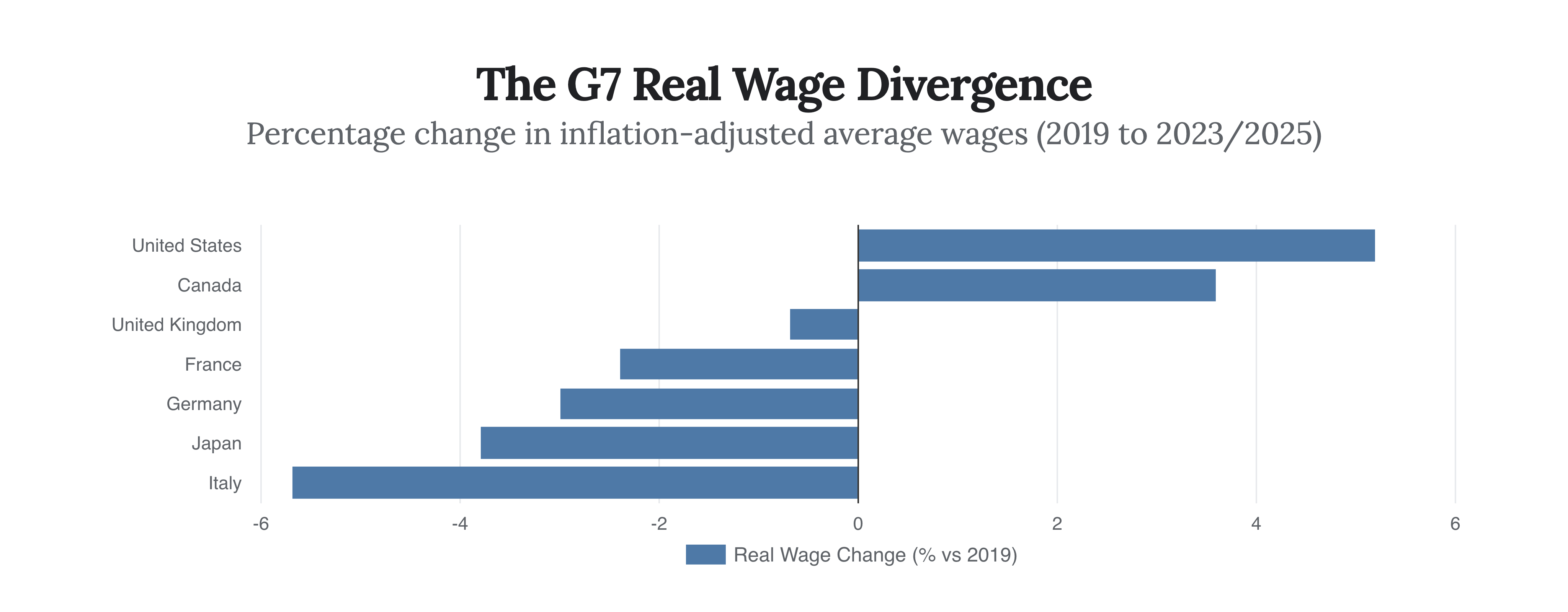
Data from the OECD reveals a staggering reality: the United States and Canada are the only G7 countries where workers have actually experienced real, inflation-adjusted wage growth since 2019. In the US, real wages are up 5.2 percent compared to pre-pandemic levels. Yet, American voters remain highly agitated because the absolute cost of capital (mortgage rates) and housing scarcity have made middle-class milestones unattainable. In Europe, the situation is not just psychological; it is a math problem. Italian workers have seen their real wages contract by 5.7 percent. German workers are 3.0 percent poorer in real terms. The European middle class is experiencing an absolute standard-of-living contraction not seen since the 1970s.
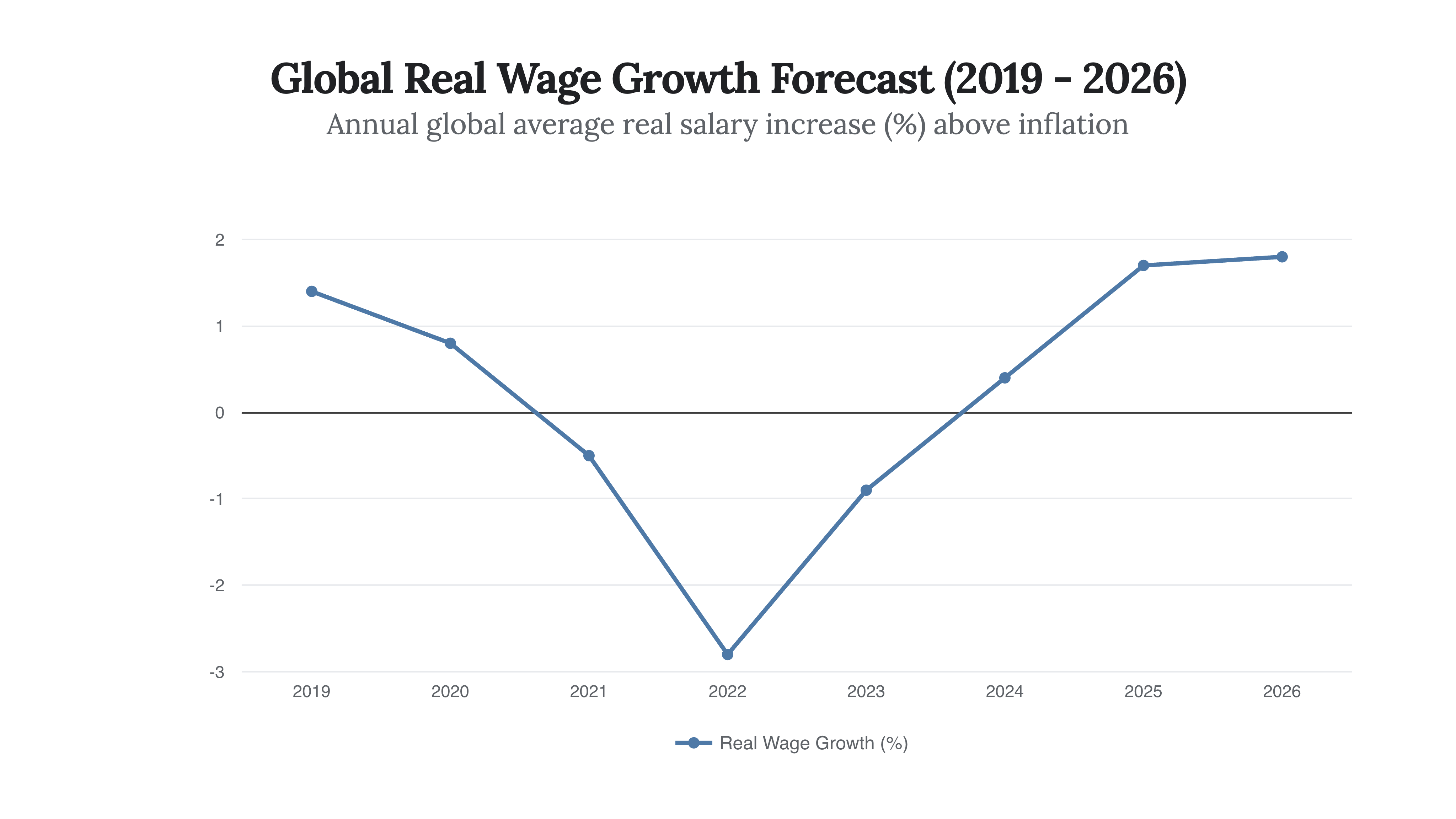
This economic data is the Rosetta Stone for understanding the collapse of the European center. Centrist parties, such as the SPD in Germany or Renaissance in France, are attempting to sell a message of steady governance to populations that are structurally poorer than they were half a decade ago. When a centrist leader points to a chart showing that “inflation is down to 2.3 percent,” the voter hears, “I am satisfied with your poverty.”
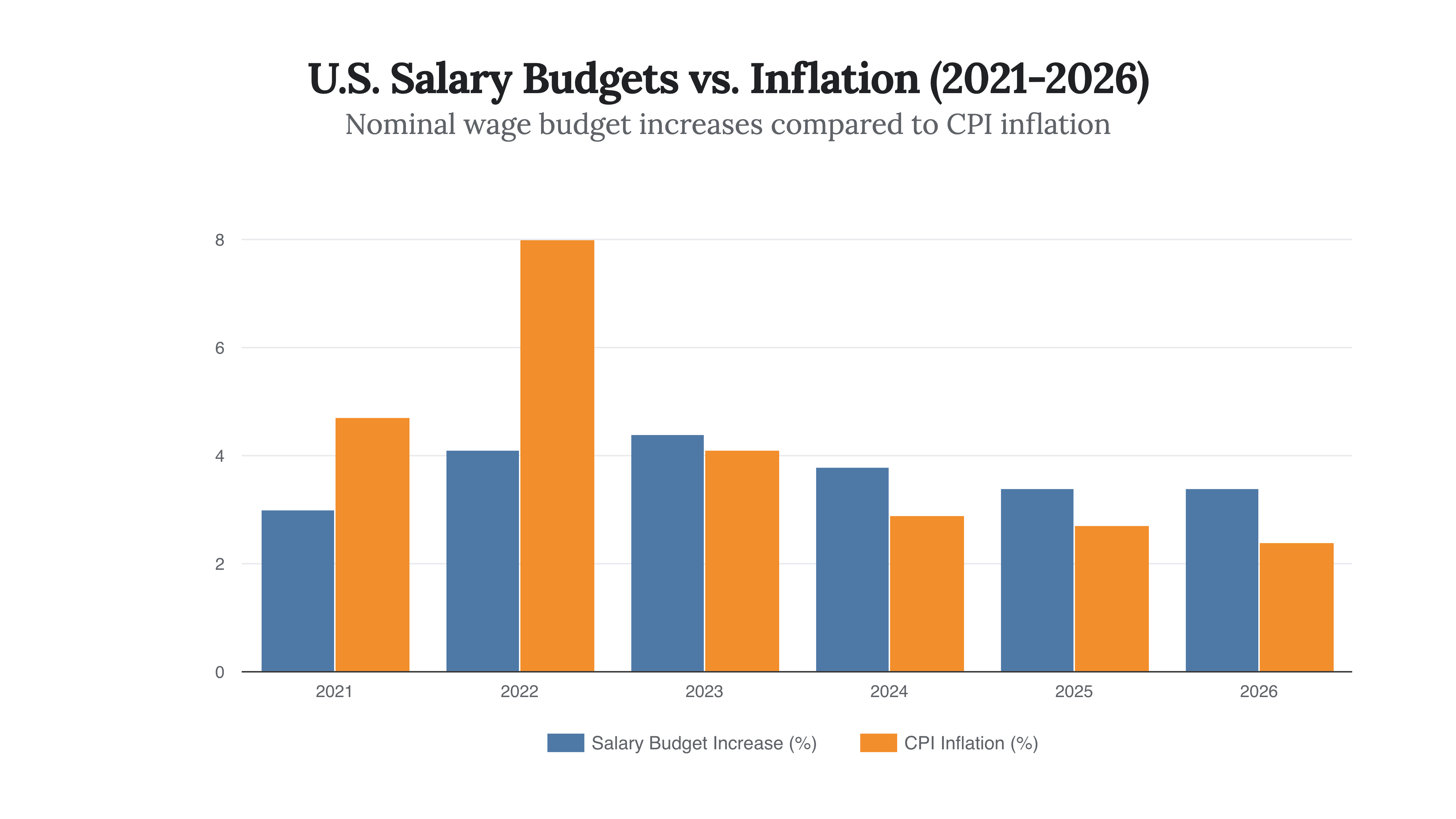
Furthermore, WTW’s Global Salary Budget Planning Report for 2026 highlights that corporate salary budgets in the US are stabilizing at 3.4 percent. Voluntary turnover has plummeted to 10.1 percent as “job hugging” becomes the norm. Workers are terrified of the labor market, paralyzed by high interest rates, and trapped in their current roles. This economic immobility breeds a deep, localized resentment. The modern citizen feels like a hostage to structural forces they cannot control—and centrism, by definition, is the political philosophy of defending those structural forces.
Unlock deeper strategic alpha with a 10% discount on the annual plan.
Support the data-driven foresight required to navigate an era of radical uncertainty and join a community of institutional-grade analysts committed to the truth.
