



The Automata of Aspiration
As of February 2026, the global social landscape has reached a terminal velocity in what Girardian scholars once termed “Mimetic Desire.” In the traditional model, humans wanted what their neighbors wanted because the neighbor served as a mediator of value. Today, that mediator has been replaced by a black-box recommendation engine. Data from Q1 2026 indicates that for the first time in digital history, 59% of marketing operations are fully integrated with AI-driven influencer workflows, meaning the objects of our envy are no longer even human. The algorithm does not predict what you want; it predicts who you want to be, then ensures you can never become them.
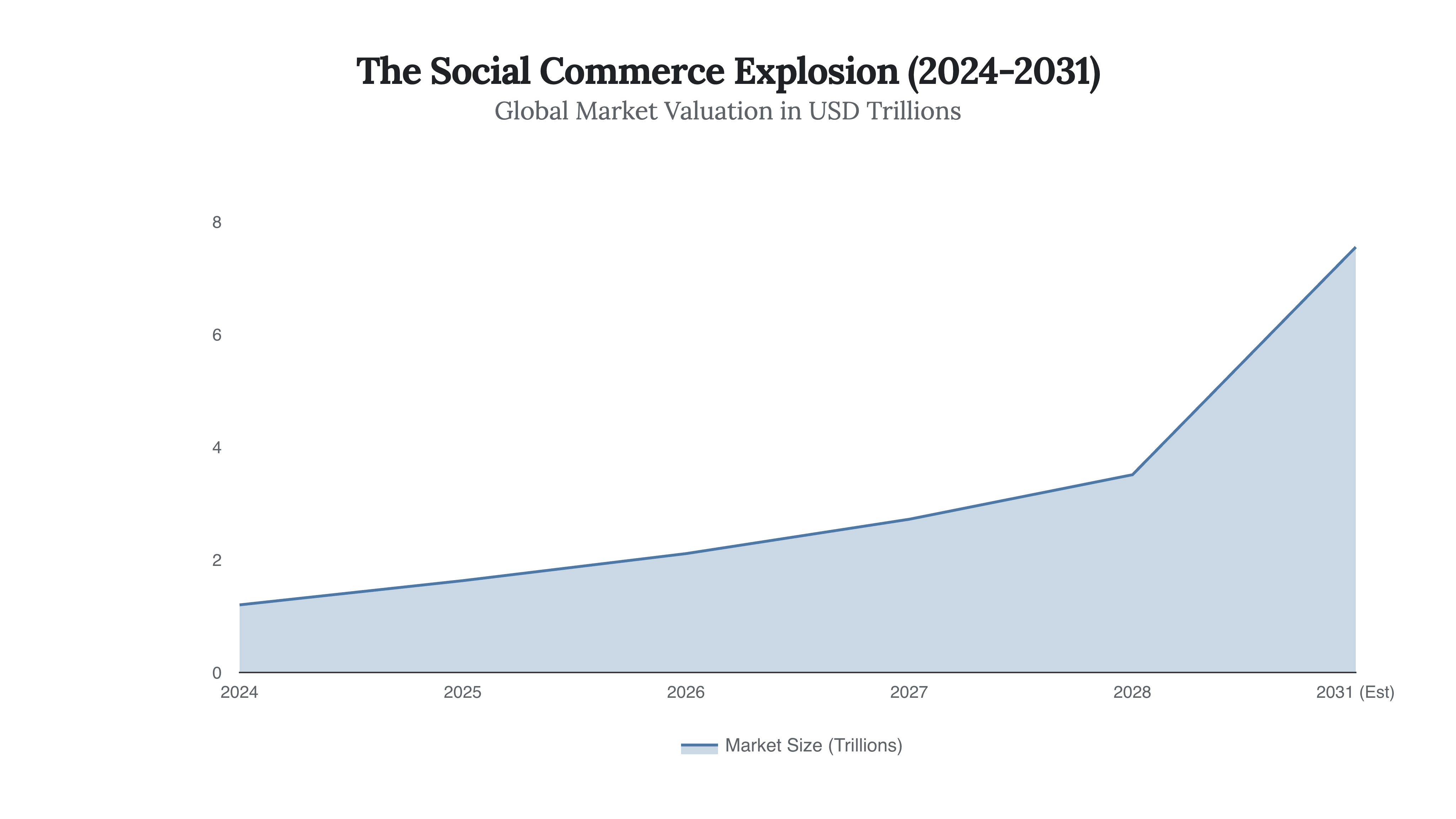
This systematic manufacturing of envy has fundamentally shifted the global economy. We are no longer in a service or even an experience economy; we have entered the Envy Economy. In this era, the primary commodity is the gap between a user’s current reality and the algorithmically optimized lifestyle of a synthetic peer. The financial implications are staggering. The social commerce market, which bridges this gap via “one-click” gratification, is valued at $2.11 trillion in 2026, growing at a CAGR of 29.12%.
The Synthetic Mirror: AI Influencers and the Death of the Original
By mid-2025, AI-generated content surpassed human-written articles in total web volume. However, the true disruption occurred in the visual layer. AI influencers, which charge 50% less than human creators while delivering 3% higher engagement rates, have created a “perfection loop.” Because these models can be adjusted in real-time to match the shifting neuro-aesthetic preferences of a specific demographic, they trigger mimetic responses that human creators cannot compete with. A human creator has bad hair days, ethical lapses, and biological limits; a synthetic agent is a 24/7 hyper-idealized mirror.
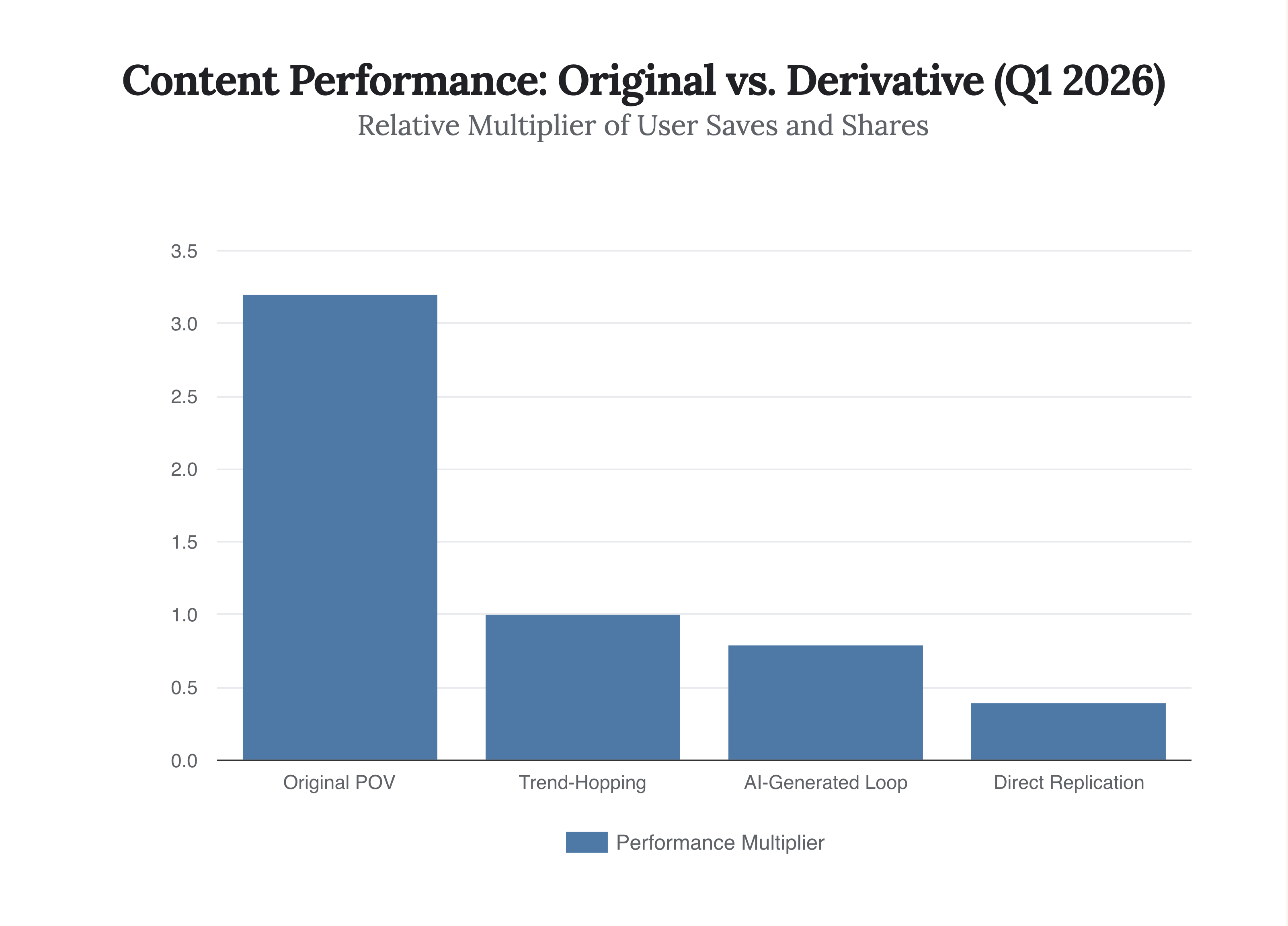
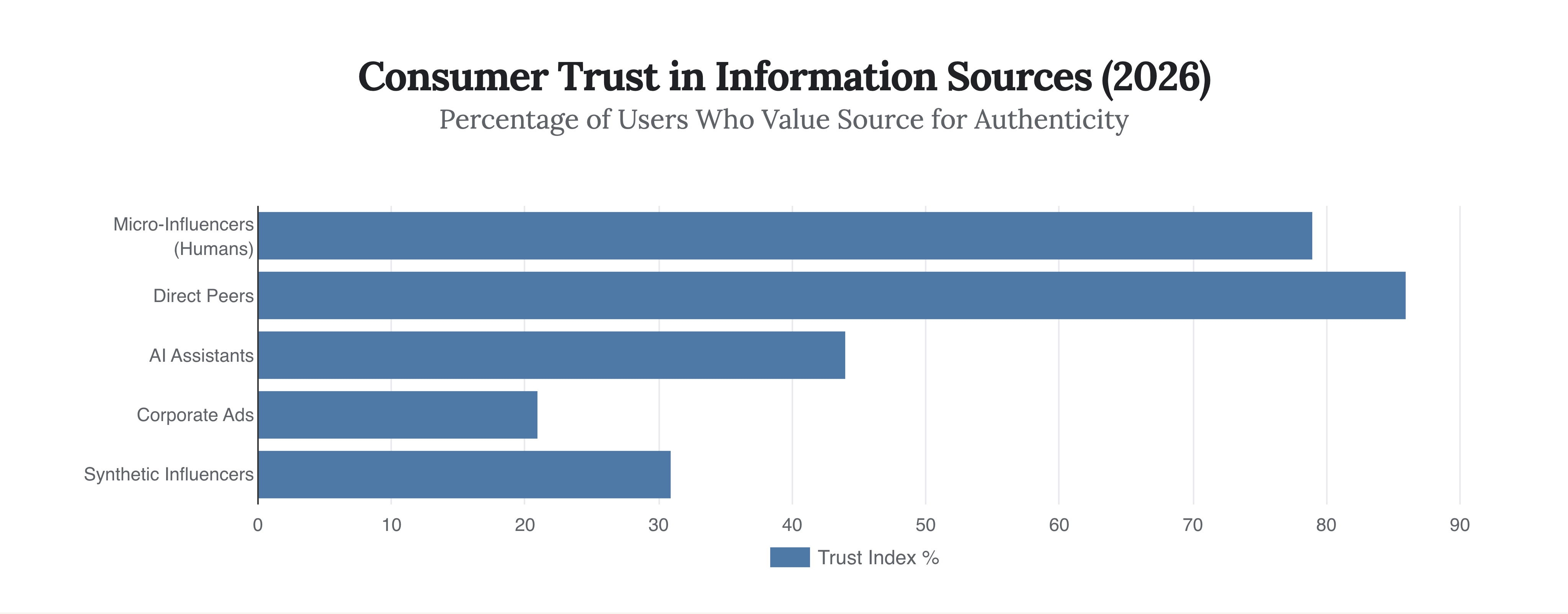
However, the data from early 2026 suggests a looming “Mimetic Crisis.” While AI influencers drive immediate conversion, they are also accelerating content fatigue. Recent surveys show that 32% of consumers are now less likely to choose a brand that relies exclusively on AI-generated advertisements. The reason is a phenomenon known as “Algorithmic Anxiety”—the subconscious realization that one’s desires are being steered by a non-sentient entity. Authenticity is no longer a personality trait; in 2026, it is a high-yield asset class with a 3.2x engagement premium.
Unlock deeper strategic alpha with a 10% discount on the annual plan.
Support the data-driven foresight required to navigate an era of radical uncertainty and join a community of institutional-grade analysts committed to the truth.
The Mimetic Crash: The 80% Skip Rate
The most provocative data point of 2026 is the collapse of “Copy Culture.” For the last decade, the winning strategy on social platforms was to identify a viral trend and replicate it. In February 2026, internal platform metrics reveal that copied content now suffers from an 80% higher skip rate after the first 3 seconds compared to original content. The algorithm, once the primary driver of trend-hopping, has been retrained to prioritize “unique POV” metrics. Accounts with a consistent, non-derivative voice are growing 67% faster than those that chase the weekly viral cycle.
This shift represents the first major pushback against algorithmic homogeneity. As Gen Alpha—a cohort that will turn 16 this year—assumes control of the attention economy, their supernatural ability to detect inauthentic or “bot-like” behavior is forcing a strategic re-evaluation for every B2C organization. For Gen Alpha, 75% of whom influence family purchasing decisions, the “vibe” is the primary data point. The 2026 Mimetic Crisis marks the point where the cost of replication finally exceeded the value of the original.
Predictive Confidence and the Erasure of Autonomy
Perhaps the most chilling second-order effect is the rise of “Predictive Confidence.” By January 2026, 36% of active digital users reported regarding their primary AI assistant as a “good friend” or trusted advisor. We have moved from the era of “Search” to the era of “Guided Decision-Making.” Consumers no longer ask “What should I buy?”—they ask “What does the system suggest?” This reduces the cognitive load of choice, but it also liquidates individual autonomy.
When the algorithm suggests a product, a vacation, or a lifestyle choice that it knows you will find pleasing based on billions of data points, it is not serving you; it is optimizing your future state to be more predictable for its advertisers. The result is a population that is increasingly satisfied but decreasingly free. In 2026, the greatest luxury is not more choice, but the ability to want something that the algorithm didn’t tell you to want.
Strategic Intelligence: Navigating the Envy Economy
To survive the Envy Economy of 2026, institutional-grade analysts must pivot away from high-frequency replication. The data is clear: the market is over-saturated with synthetic perfection. To capture the remaining pools of genuine human attention, brands and creators must adopt a “Friction-First” approach. This involves intentionally introducing human flaws—stutters, typos, and non-optimized perspectives—to signal biological origin. In a world where every image is a prompt, the un-promptable becomes the only thing of value.
The final takeaway for the year is the divergence of the social commerce market. While Asia-Pacific continues to dominate in total volume, North America is accelerating the fastest (32.11% CAGR) specifically through “Social Reselling”—a peer-to-peer model that bypasses traditional corporate influencers. This confirms that the future of commerce is not top-down algorithmic push, but a return to localized, human-to-human mimesis. The algorithm remains the infrastructure, but the value is once again shifting back to the individual, provided that individual can remain original enough to be noticed.