


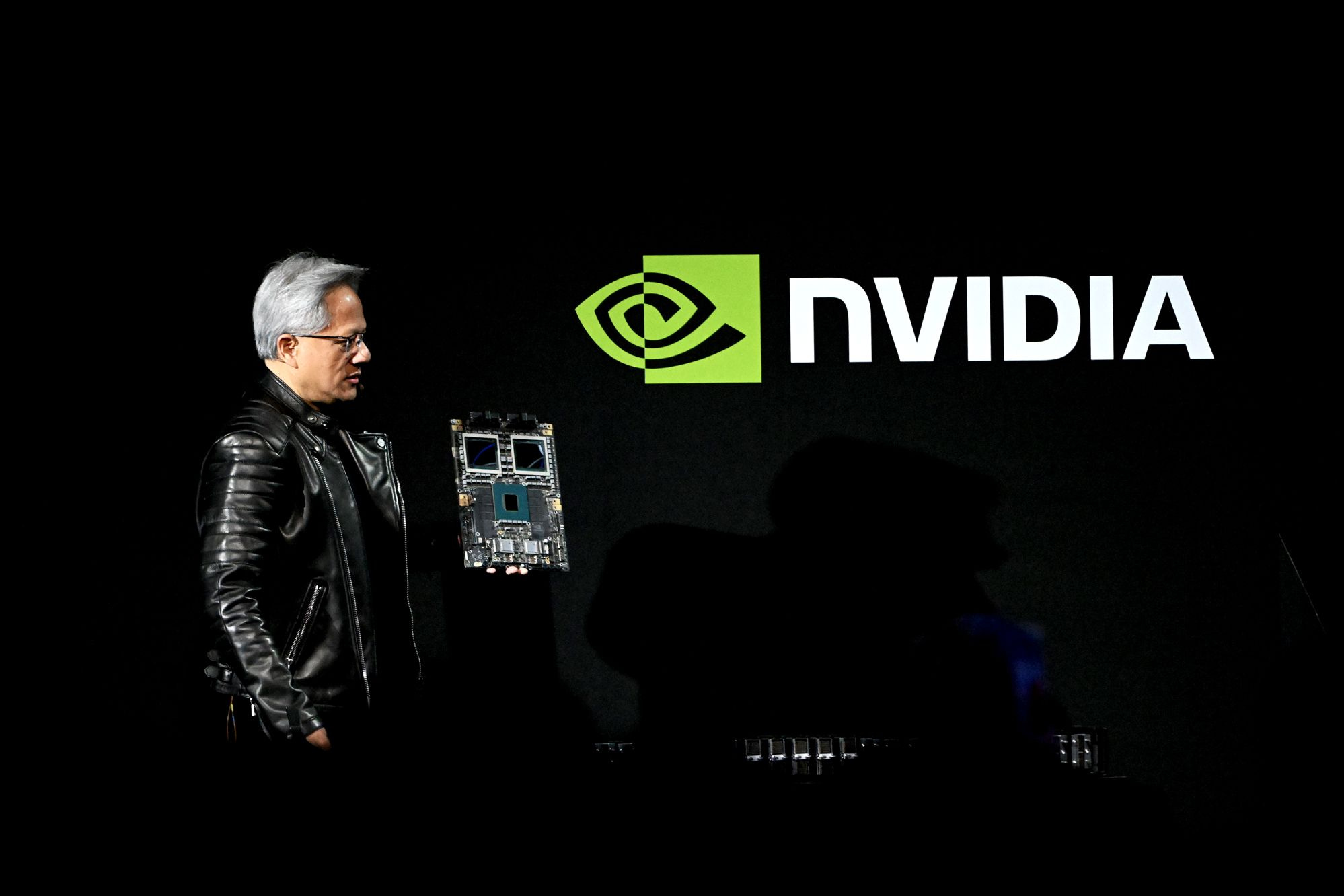
In the world of artificial intelligence, there are chips, and then there is Blackwell. Nvidia’s latest generation of AI processors represents a leap in computational power so significant that it has become a focal point of geopolitical strategy. This was thrown into sharp relief following recent high-level talks between the U.S. and Chinese presidents, where semiconductors were a key topic. The outcome was unambiguous: while general chip sales were discussed, the top-tier Blackwell chips are firmly off-limits to China. After the meeting, the U.S. President confirmed that China would be “talking to Nvidia and others about taking chips,” but emphatically added, “We’re not talking about the Blackwell.”
This decision places Nvidia, the world’s most valuable chipmaker, in a precarious position. The company has a history of navigating U.S. export controls by creating custom, less powerful chips specifically for the Chinese market. The precedent was set with the H20, a significantly downgraded version of its previous-generation H100 processor, designed to comply with earlier restrictions. Now, with the Blackwell architecture, Nvidia is reportedly pursuing a similar strategy, developing a new export-compliant chip—tentatively called the B30A—to maintain a foothold in a market that has historically accounted for a significant portion of its revenue.
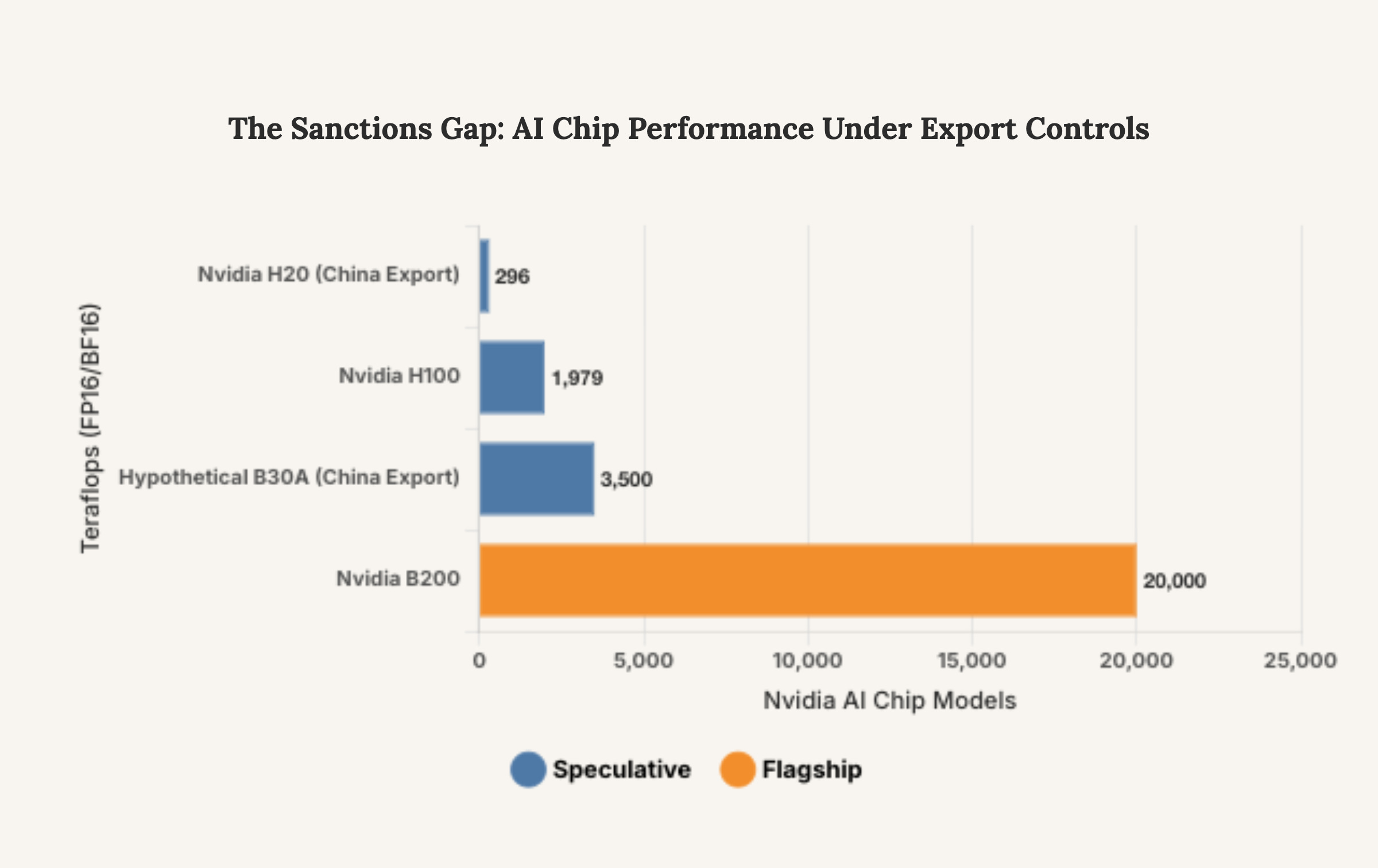
This chart illustrates the stark performance differences created by U.S. export controls. While the H20 offered a fraction of the H100’s power, reports suggest a potential Blackwell variant for China would be a significant upgrade over the H20, yet still fall dramatically short of the flagship B200’s capabilities, creating a clear technological gap.
“I hope the Blackwell can be sold in China but that’s a decision for President Trump to make.”
- Jensen Huang, CEO of Nvidia
The financial stakes for Nvidia are immense. China has consistently been one of its largest markets, representing billions of dollars in annual sales. The implementation of strict export controls has had a direct and severe impact, with CEO Jensen Huang noting the company’s market share in China plummeted from over 90% to nearly zero. This revenue loss is a powerful incentive to develop compliant chips that can keep the company in the game.
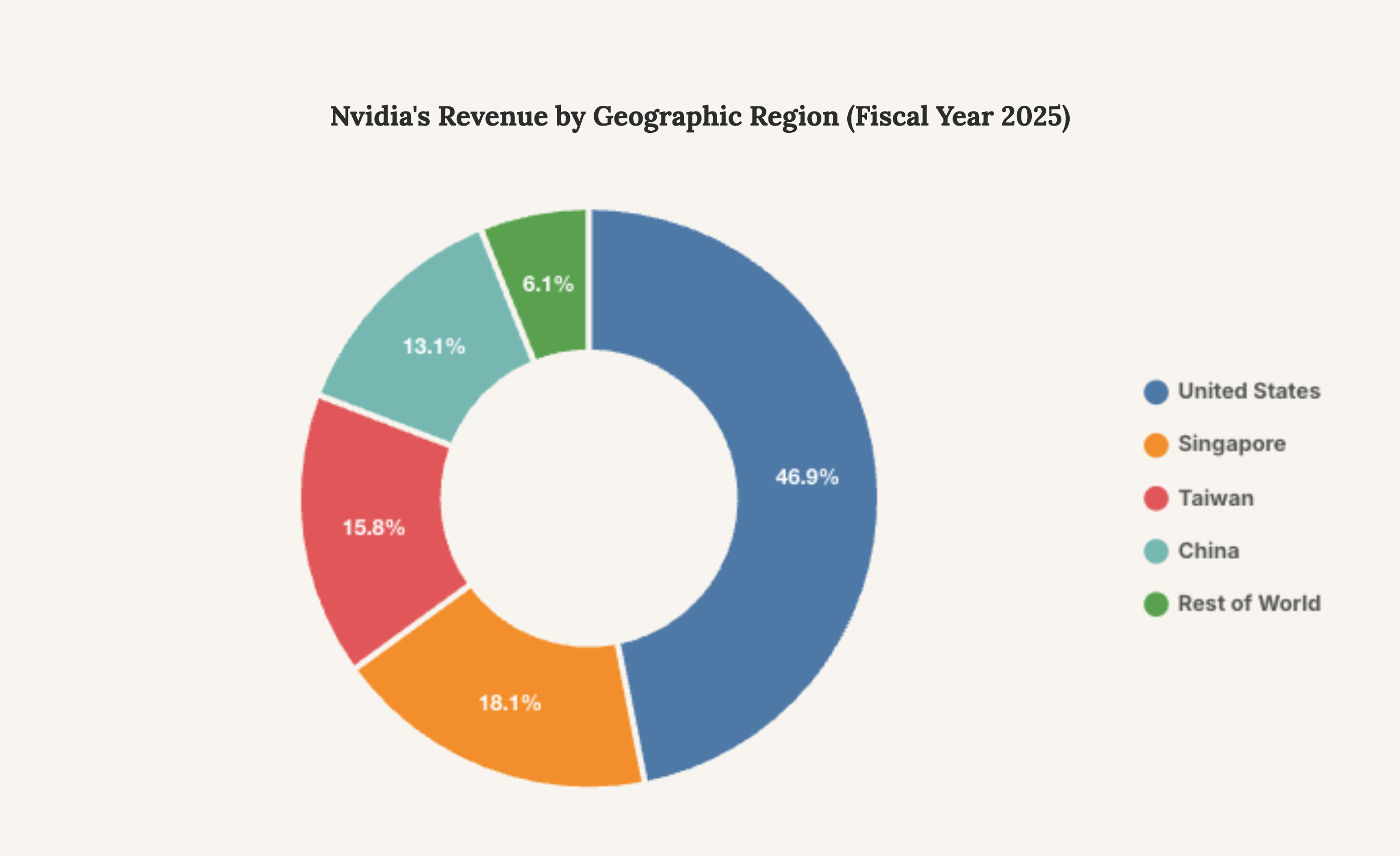
Based on fiscal year 2025 data, China remains a crucial piece of Nvidia’s global revenue puzzle, even with existing restrictions. This highlights the financial imperative behind the company’s efforts to engineer solutions that satisfy both Washington’s security concerns and the demands of the Chinese market.
However, the landscape is shifting rapidly. The cat-and-mouse game of creating export-compliant chips faces a new challenge: China is no longer a passive customer. Beijing is actively promoting a national strategy of technological self-sufficiency. Chinese authorities have reportedly discouraged the purchase of even the downgraded H20 chips, pushing state-backed and private enterprises to adopt domestically produced alternatives. This has catalyzed a surge in China’s own semiconductor industry.
“The U.S. has based its policy on the assumption that China cannot make AI chips... But China has enormous manufacturing capability.”
- Jensen Huang, CEO of Nvidia
Companies like Huawei, with its Ascend AI chips, along with Alibaba’s T-Head unit and startups like Cambricon, are rapidly developing their own capabilities. While these domestic chips still lag behind Nvidia’s top-tier offerings in performance and software ecosystem, the push for their adoption is a powerful force, fundamentally altering Nvidia’s strategic calculations.
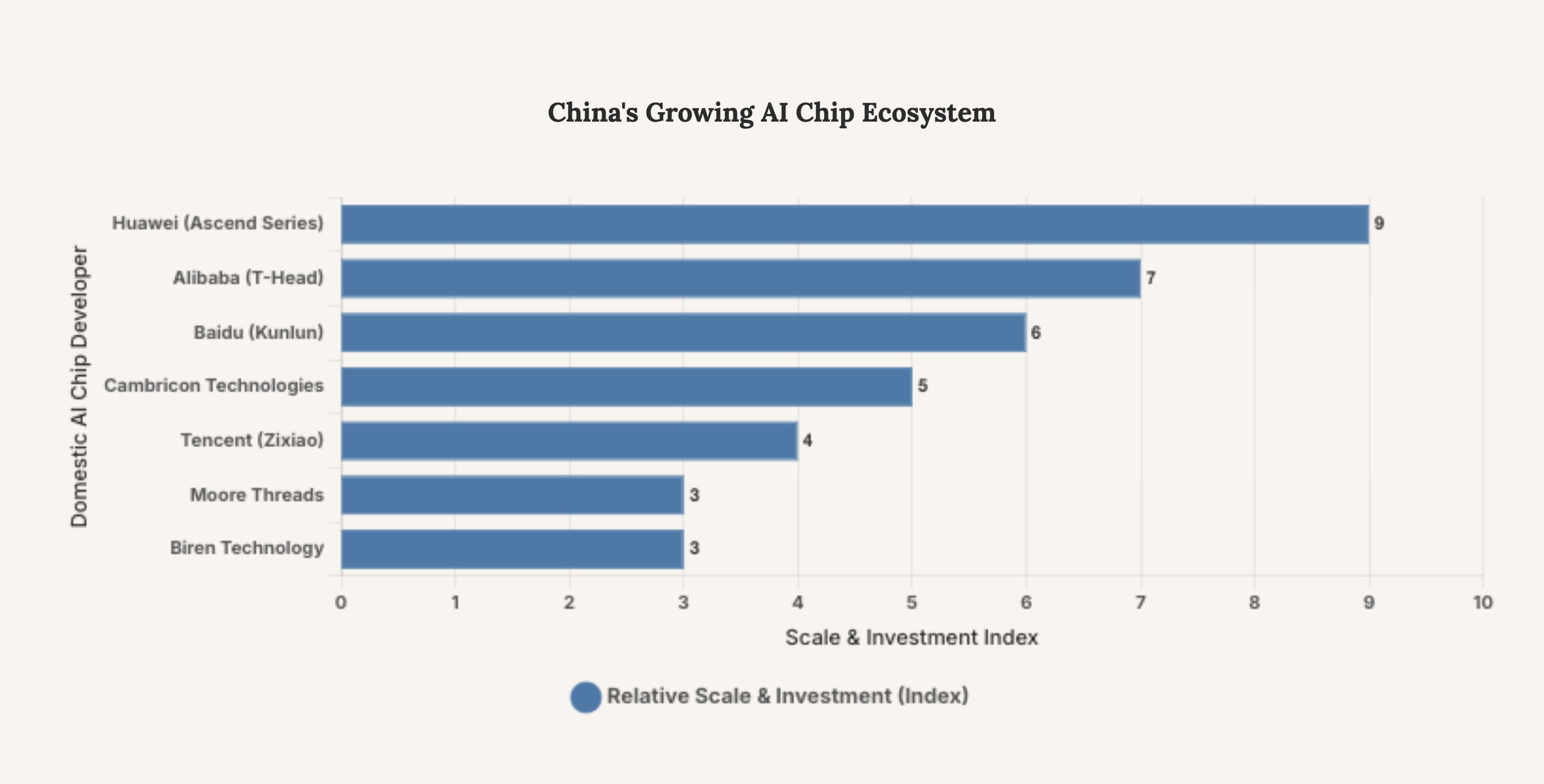
The rise of homegrown competitors, spurred by U.S. sanctions, presents a long-term strategic threat to Nvidia’s market position in China. This trend toward a domestic AI stack means that even if a compliant Blackwell chip is approved, it will enter a far more competitive market than ever before.
Nvidia is therefore navigating a treacherous path between a U.S. government determined to maintain a technological lead and a Chinese government intent on breaking its technological dependence. The fate of a downgraded Blackwell chip for China is more than a business decision; it’s a barometer for the future of global tech supply chains. The very export controls designed to contain China’s AI ambitions may ultimately be the catalyst for creating a powerful, self-reliant competitor.