



Microsoft has firmly established that its high-stakes venture into artificial intelligence is not just a technological moonshot, but a powerful engine for financial growth. In its latest fiscal first-quarter earnings report, the company announced a staggering $77.7 billion in revenue, an 18% increase year-over-year, significantly boosted by surging demand for its cloud and AI services. This impressive performance underscores a pivotal moment for the tech behemoth as its AI-infused products, particularly within the Azure cloud platform, transition from promising experiments to formidable revenue streams.
The standout performer in Microsoft’s financial results was its Intelligent Cloud division, which saw revenues climb to $30.9 billion, a 28% increase. Driving this growth was a remarkable 40% surge in revenue from Azure and other cloud services, a clear indicator that businesses are flocking to Microsoft’s platform to power their own AI ambitions. The demand signals are so strong, in fact, that the company is racing to keep up.
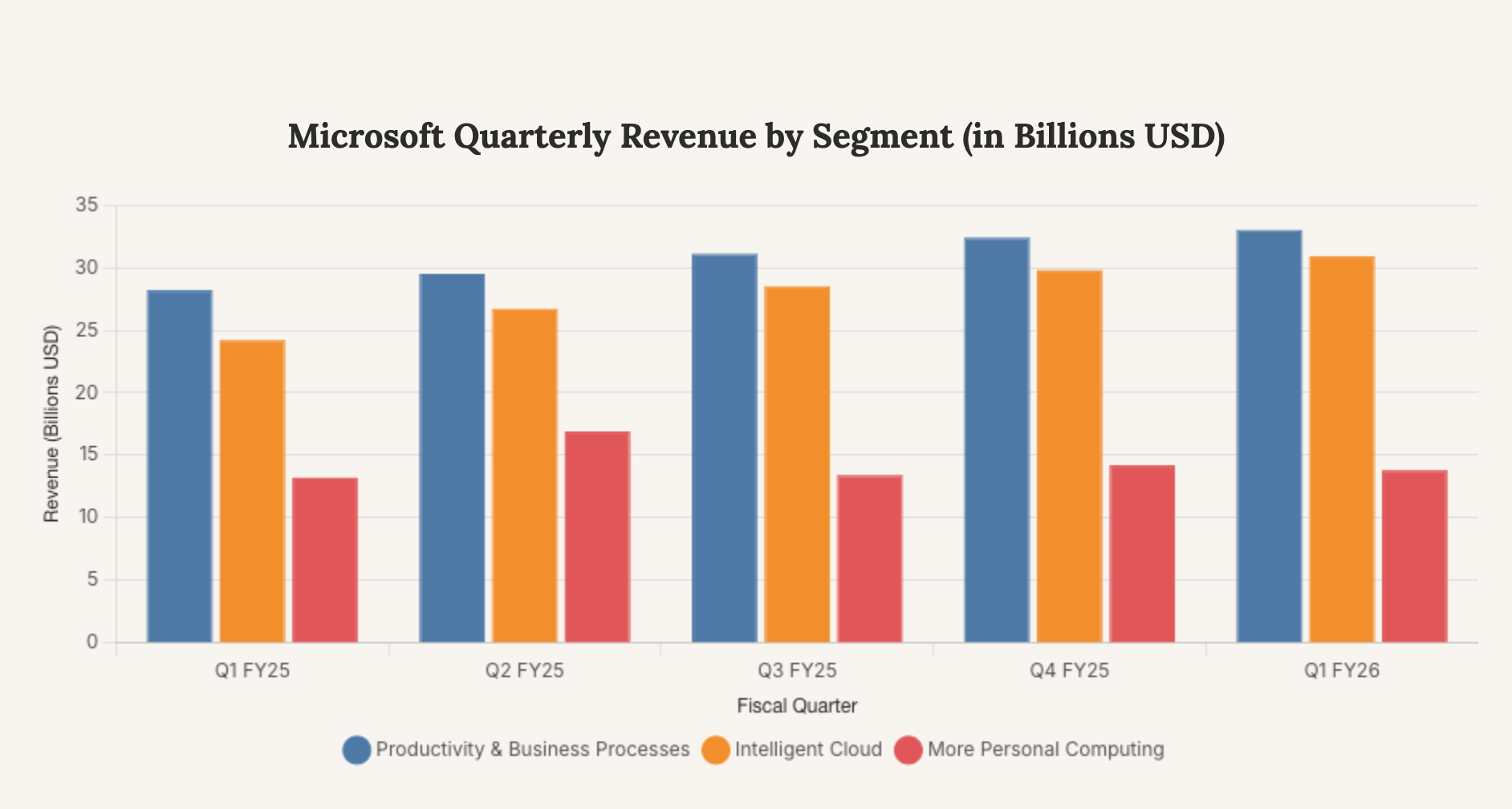
This chart illustrates the consistent growth across Microsoft’s main business segments, with the Intelligent Cloud division, home to Azure, showing a particularly steep upward trajectory, reflecting the successful integration and scaling of AI services.
“Our planet-scale cloud and AI factory, together with Copilots across high value domains, is driving broad diffusion and real-world impact. It’s why we continue to increase our investments in AI across both capital and talent to meet the massive opportunity ahead.”
- Satya Nadella, Chairman and CEO of Microsoft
However, this AI-fueled boom comes with a hefty price tag. Microsoft reported a record $34.9 billion in capital expenditures for the quarter, a 74% increase from the same period a year ago, as it aggressively expands its data center infrastructure to meet the voracious demand for AI computing power. This massive spending has given some investors pause, with the company’s stock dipping slightly in after-hours trading despite the strong earnings.
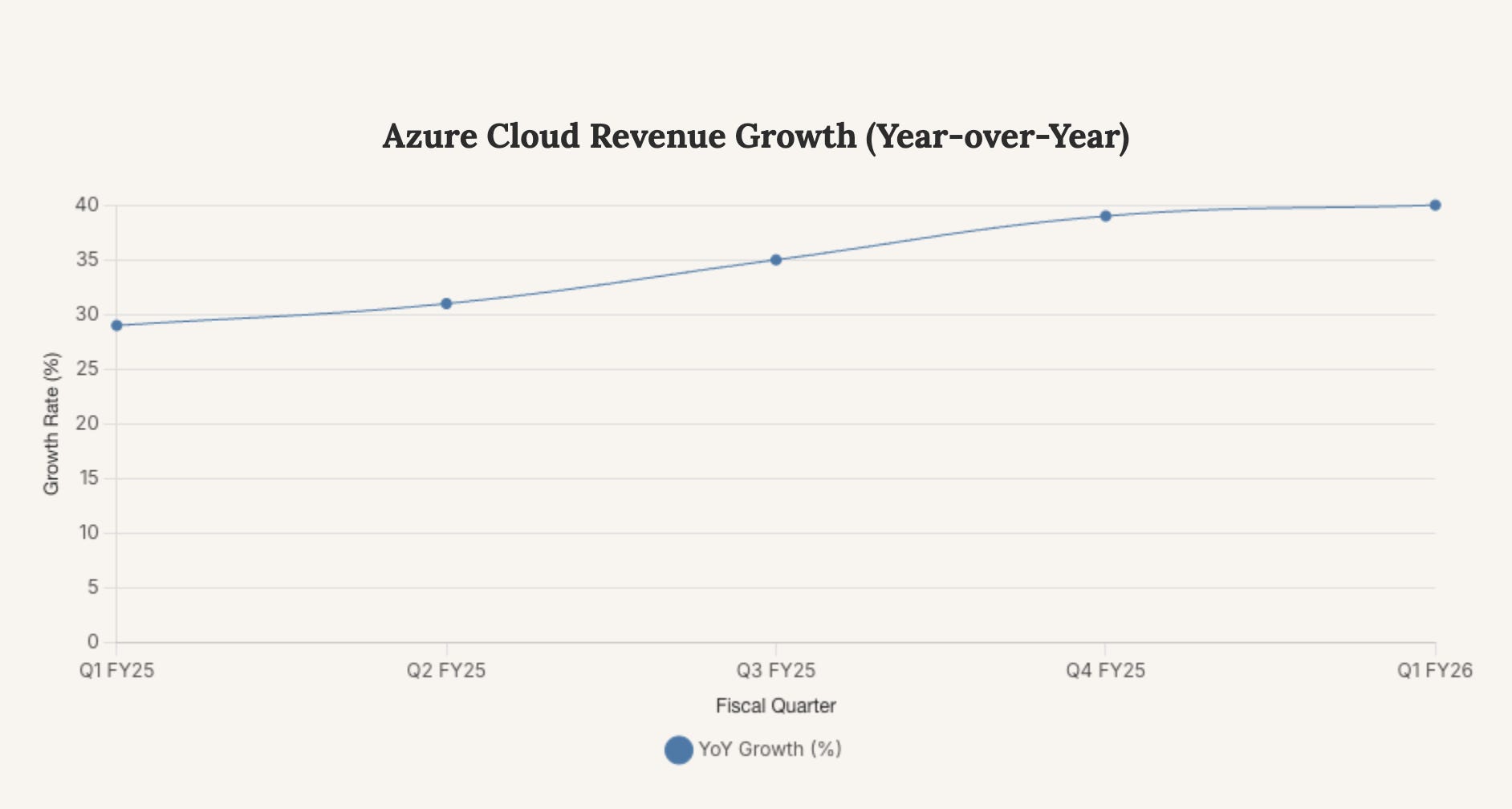
This line chart tracks the accelerating year-over-year growth of Microsoft’s Azure cloud platform, demonstrating the increasing momentum of its AI-driven services quarter after quarter.
“Demand is increasing and usage is increasing very quickly. When you see these kinds of demand signals, and we know are behind, we need to spend. But we’re spending with a different amount of confidence in usage patterns and bookings, and we feel good about that.”
- Amy Hood, Executive Vice President and CFO of Microsoft
The company’s deep partnership with OpenAI remains a cornerstone of its strategy. A recently restructured deal gives Microsoft a 27% stake in OpenAI’s for-profit arm, valued at approximately $135 billion, and exclusive access to its technology through 2032. This symbiotic relationship is crucial, with OpenAI committing to purchase $250 billion in cloud services from Microsoft, fueling further growth for Azure.
While the market weighs the long-term returns against the short-term costs, Microsoft’s leadership is unequivocal. They are building the foundational infrastructure for the next era of computing. The surge in AI-driven earnings suggests their all-in strategy is not just working, but is potentially setting the stage for a new phase of dominance. The key insight is that Microsoft is successfully transforming massive capital expenditure on AI infrastructure into tangible, accelerating revenue growth, positioning its cloud as the indispensable platform of the AI revolution.