


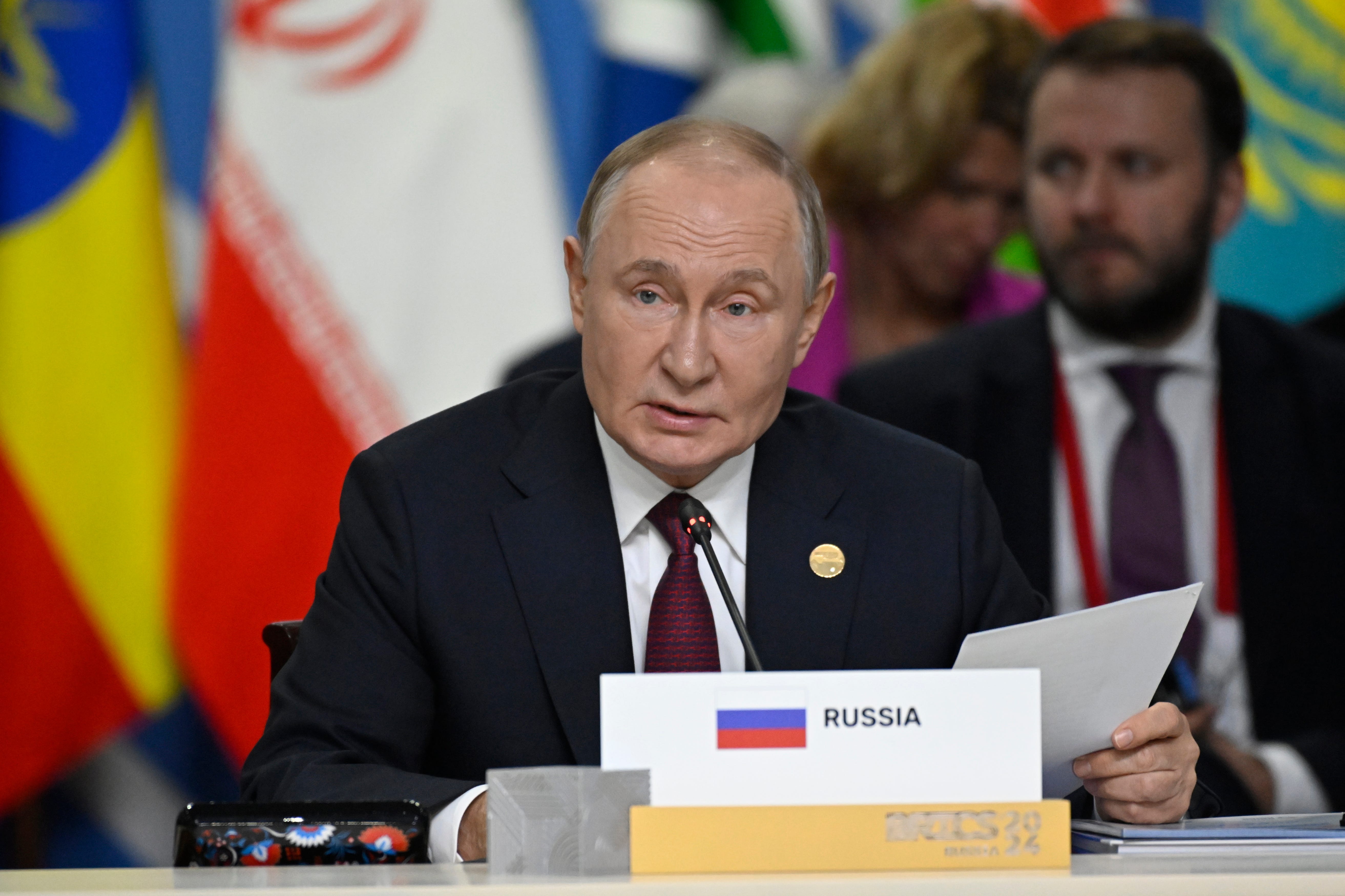
The post-Cold War’s unipolar moment is definitively over. We have entered a period of profound and irreversible transformation, characterized by the diffusion of power and the emergence of multiple centers of economic, military, and technological influence.
This is not a simple reversion to a 19th-century balance-of-power model but a more complex and fluid dynamic that analysts are terming “complex multipolarity.” The transition is marked by heightened competition, the rise of the Global South and influential “middle powers,” and a fundamental challenge to the Western-led international institutions that have governed the global order for decades. This intelligence briefing deconstructs the key vectors of this multipolar shift, analyzes the strategic implications for global stability and commerce, and provides a forward-looking assessment of the emerging geopolitical landscape. The core thesis is that this era of diffusion, while creating significant volatility and risk, also presents unprecedented opportunities for agile actors who can navigate the new, networked, and often-contentious global commons.
The Economic Rebalancing: Deconstructing the New Global Wealth Map
The most visible driver of the multipolar shift is the historic rebalancing of global economic power. For the first time in centuries, the economic center of gravity is moving eastward and southward, powered by the sustained rise of China and the increasing dynamism of other emerging economies. This is not merely a story of China’s ascent but a broader trend of wealth distribution that is creating new poles of growth and investment. Institutions like the World Bank projected as early as 2011 that by 2025, major emerging economies like Brazil, China, India, Indonesia, and Russia would be primary contributors to global growth, a forecast that has largely materialized.
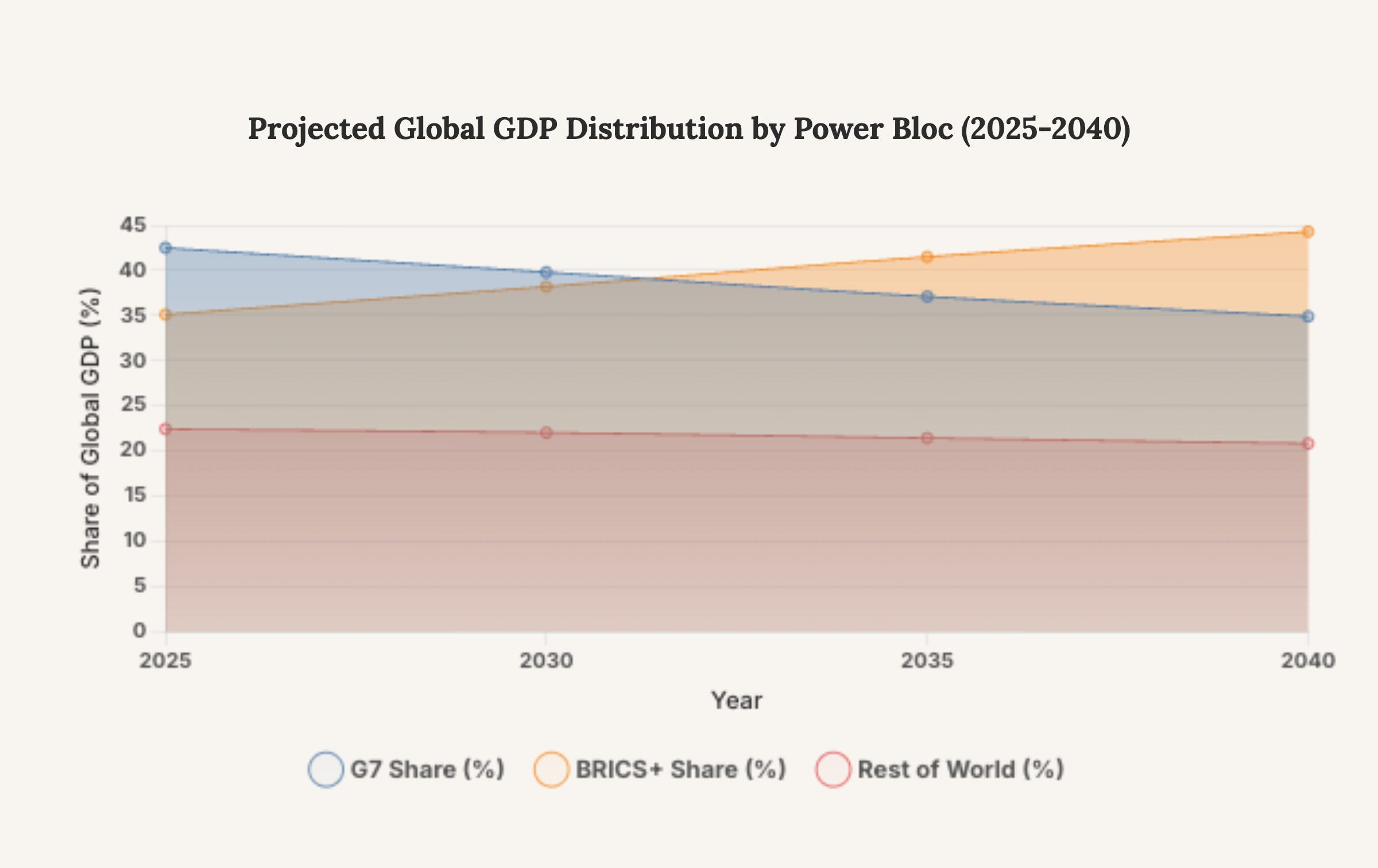
This chart projects the continuing shift in global economic weight, illustrating the crossover point where the expanded BRICS+ bloc is anticipated to surpass the G7 in its share of global GDP. This trend underscores the fundamental economic restructuring at the heart of the multipolar world.
The Rise of Alternative Economic Networks
As economic power diffuses, so too does institutional influence. Dissatisfaction with the perceived Western dominance of Bretton Woods institutions like the IMF and World Bank has fueled the creation of alternative financial and trade architectures. China’s Belt and Road Initiative (BRI), the New Development Bank (formerly the BRICS Bank), and the Asia Infrastructure Investment Bank are prime examples of a parallel system emerging to finance development and integrate economies outside the traditional Western framework. This creates a more fragmented global economic landscape where nations have more options for trade, investment, and financing, reducing the leverage of any single power bloc. The trend toward de-dollarization in South-South trade, while still nascent, is another key indicator of this structural shift.
Techno-Nationalism and the Splintering of the Digital Commons
Technology has become a primary arena for geopolitical competition, fundamentally reshaping global power structures. The race for dominance in critical domains like artificial intelligence, semiconductors, and quantum computing is driving a new era of “techno-nationalism.” This competition accelerates innovation but also leads to significant fragmentation. The Sino-American rivalry, in particular, is creating a bifurcation in the tech world, forcing other nations to make difficult choices about infrastructure, standards, and digital ecosystems. This dynamic challenges the very notion of a global, interoperable internet and creates risks of a “splinternet,” where digital worlds operate under different rules and standards, hampering global commerce and cooperation.
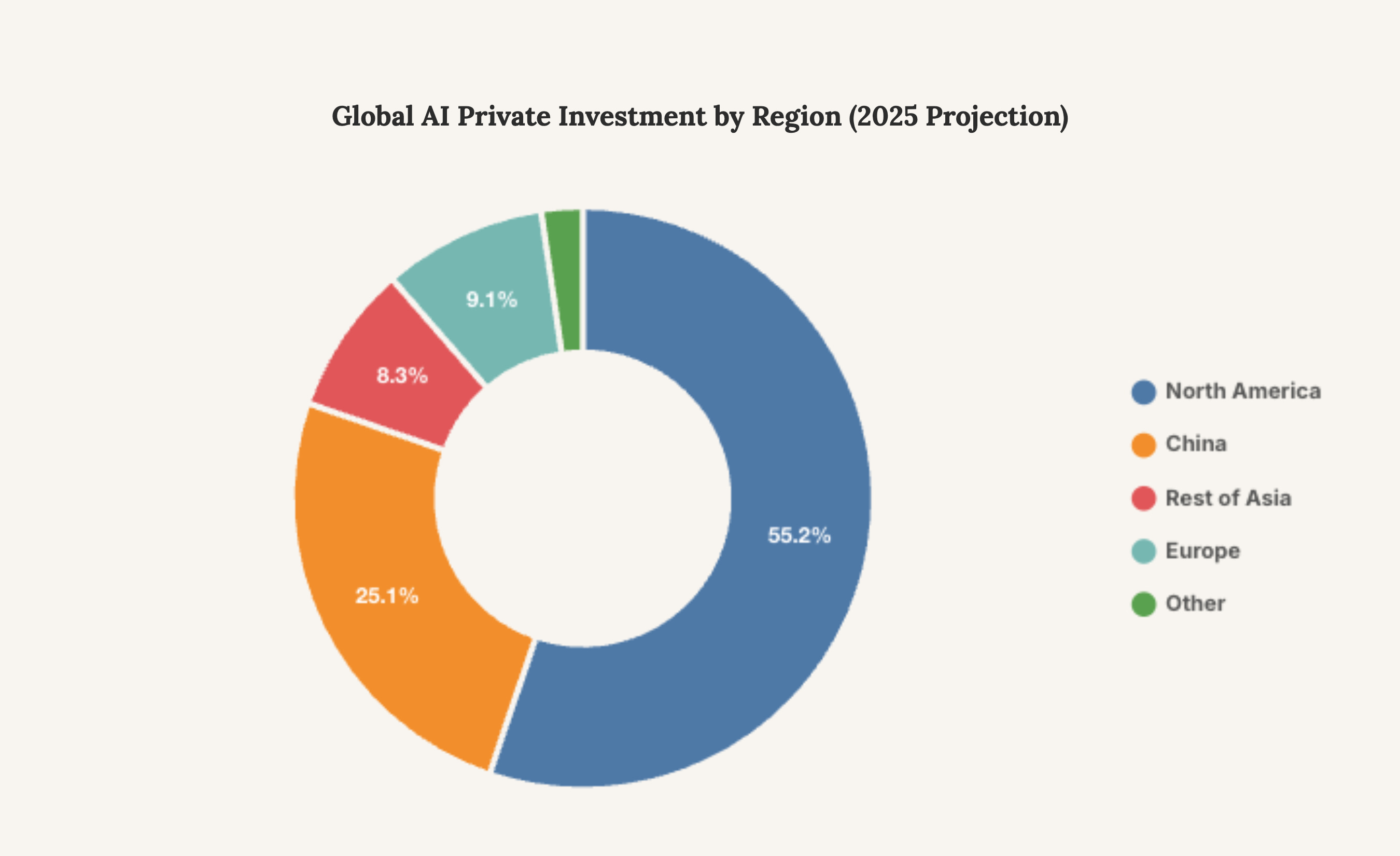
This chart visualizes the current landscape of global AI investment, highlighting the intense concentration within North America and China. This bi-polar dynamic in a key strategic technology is a core driver of fragmentation in the broader multipolar shift.
The New Geostrategic Chessboard: Alliances, Conflicts, and the Role of Middle Powers
The shift to multipolarity is inherently destabilizing in the short to medium term. The absence of a single hegemon creates a more competitive and unpredictable security environment, characterized by a complex web of alliances and rivalries. This increases the risk of miscalculation, regional conflicts, and proxy wars as powers test the boundaries of the new order. The conflicts in Ukraine and the Middle East are not just regional events; they are accelerators of this global reordering, hardening anti-Western positions in parts of the Global South and straining the existing international security architecture.
“The crisis consists precisely in the fact that the old is dying and the new cannot be born: in this interregnum, a great variety of morbid symptoms emerge.”
The Rise of the Agile Middle Powers
A defining feature of the multipolar system is the enhanced influence of middle powers. Countries like Turkey, Brazil, India, Indonesia, and South Korea are no longer passive participants in a system designed by superpowers. They are leveraging their economic strength, strategic geography, and proactive diplomacy to act as mediators, coalition-builders, and agenda-setters on key global issues. Their ability to maintain strategic autonomy—pursuing independent foreign policies rather than aligning strictly with one bloc—allows them to bridge divides and fill diplomatic vacuums left by great power competition. Turkey’s role in mediating the grain deal between Russia and Ukraine is a classic example of this new dynamic in action.
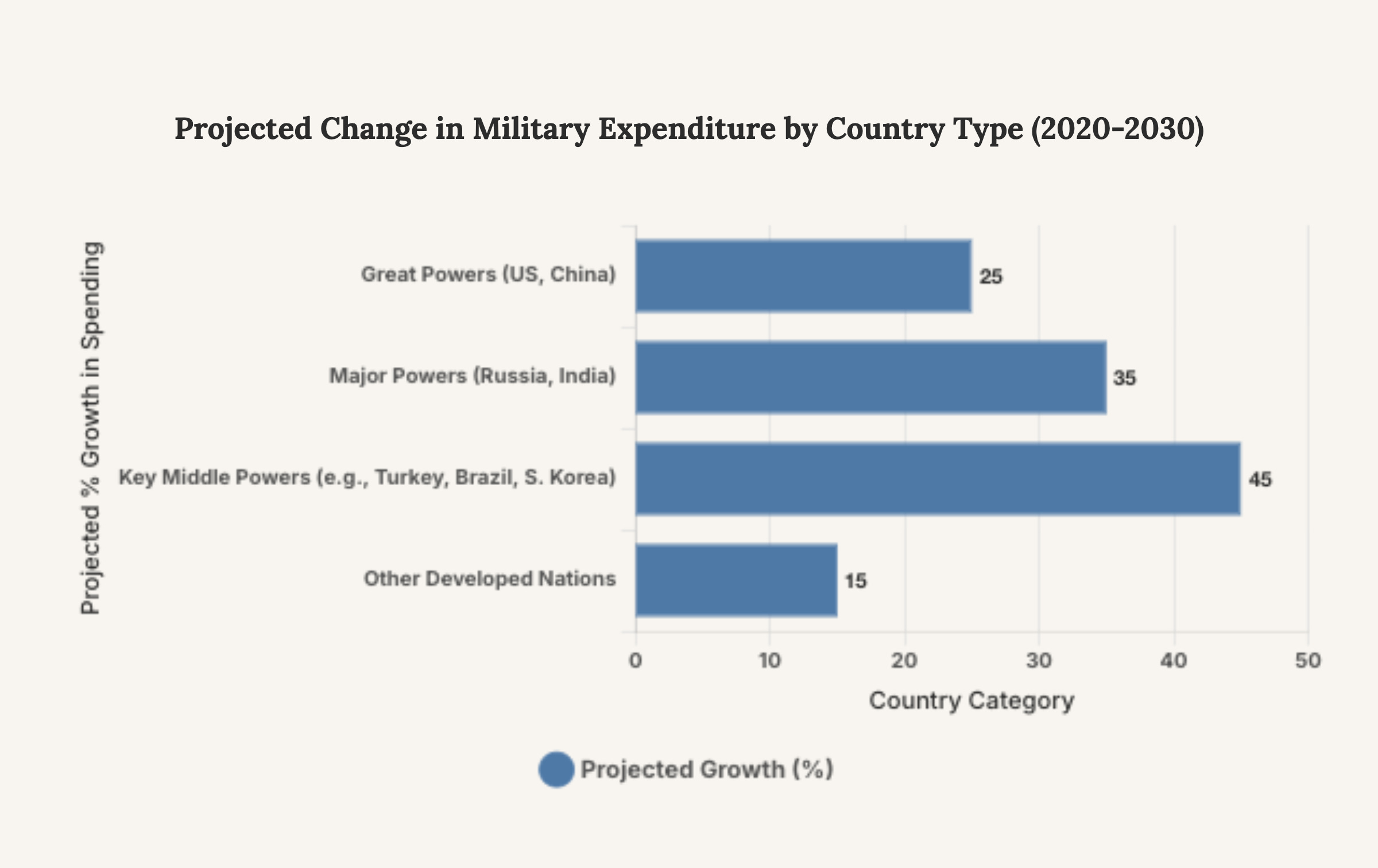
This chart illustrates the anticipated acceleration in military spending, particularly among rising major and middle powers. This trend reflects their growing willingness to project power and secure their interests in a more competitive global security environment.
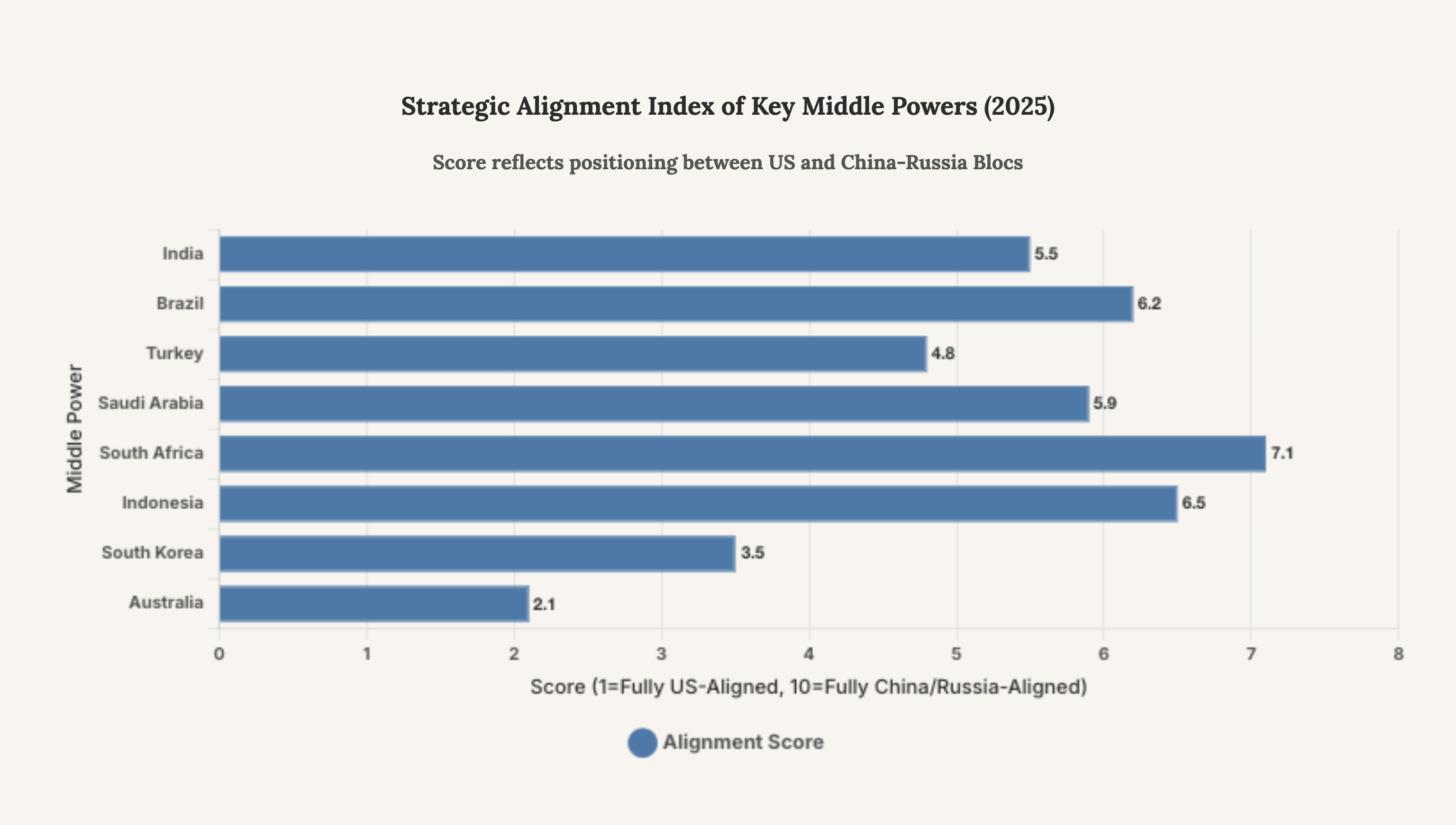
This visualization provides a quantitative assessment of the strategic positioning of key middle powers. Their tendency to avoid firm alignment and maintain flexibility is a core characteristic of the multipolar order, creating a more fluid and less predictable geopolitical map.
The Future of Global Governance: Fragmentation or Transformation?
The multipolar shift places immense strain on the institutions of global governance created in the post-WWII era. The UN Security Council, with its permanent membership frozen in the power dynamics of 1945, increasingly struggles with credibility and paralysis. The Global South is more vocal in its demand for a greater voice in these institutions, reflecting their growing economic and diplomatic weight. The critical question for the next decade is whether this pressure will lead to the managed reform and evolution of these institutions or to their gradual decay and the fragmentation of global governance.
Competitive Multilateralism
Instead of a wholesale collapse, we are witnessing the rise of what can be termed “competitive multilateralism.” Great powers are increasingly using international institutions as arenas for geopolitical rivalry rather than as forums for genuine cooperation. They engage selectively, forming exclusive coalitions like the Indo-Pacific Economic Framework (IPEF) to advance strategic interests while simultaneously working to obstruct or reshape the rules of broader institutions to their advantage. This creates a complex landscape where global cooperation on transnational challenges like climate change and pandemics becomes significantly more difficult, as these issues become entangled with great power competition.
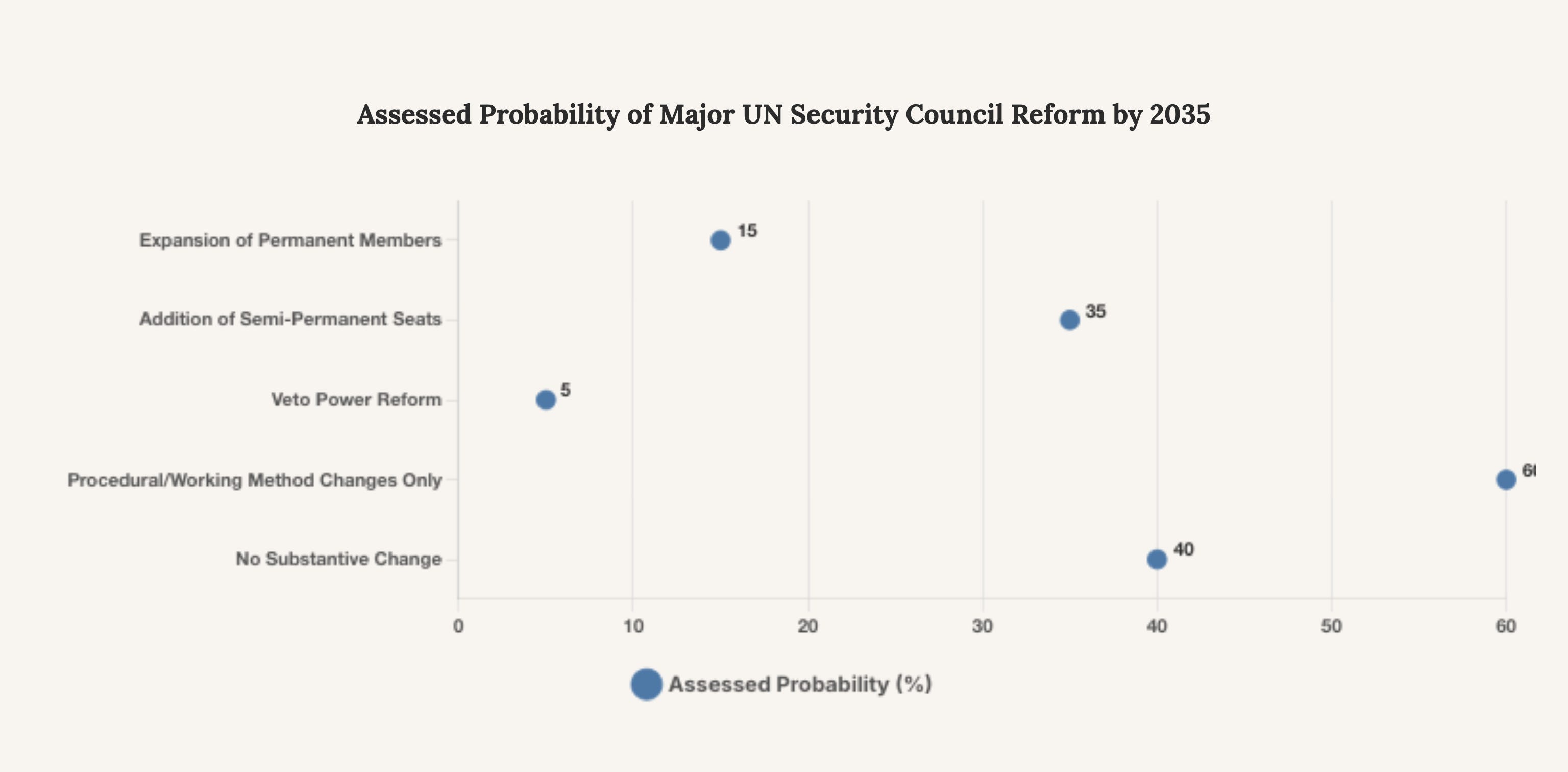
This dot plot assesses the likelihood of different reform scenarios for the UN Security Council. The low probability of fundamental changes, such as to the veto, suggests that global governance structures will likely lag behind the real-world shift in power, increasing institutional strain.
Strategic Outlook and Key Signposts
The transition to a fully established multipolar order will be volatile and defined by ongoing competition. For investors, policymakers, and industry leaders, navigating this environment requires a new playbook that prioritizes resilience, diversification, and strategic agility. The era of a stable, predictable, U.S.-led global order is over, and strategies predicated on its return are destined to fail.
Key Signposts to Monitor:
The Cohesion of Strategic Blocs: Watch for signs of fracture or consolidation within Western alliances (NATO, G7) and competing blocs (BRICS+, Shanghai Cooperation Organisation). The internal dynamics of these groups will determine their external effectiveness.
Middle Power Alignments: Track the diplomatic and security alignments of key middle powers like India, Brazil, and Turkey. Their collective or individual choices to lean toward one pole or another will be a key determinant of the global balance of power.
Progress on Global Governance Reform: The success or failure of efforts to reform institutions like the UN, IMF, and World Bank will indicate whether the existing order can adapt or is fated to fragment further.
Technological Decoupling Milestones: Monitor key policy decisions and market shifts related to semiconductor supply chains, 5G/6G standards, and AI governance. These will be leading indicators of the depth and breadth of the technological divide.
“As global power becomes more distributed, the expectations placed on businesses to uphold economic interconnectedness and stability are growing. Coordinated efforts between the public and private sectors can amplify a country’s or region’s influence in international forums, helping to shape global norms and standards that reflect shared values and interests.”
In conclusion, the multipolar shift is not a future event; it is the central reality of our current global landscape. It is a messy, contested, and ongoing process of recalibration. This diffusion of power introduces significant new risks, from heightened military conflict to the fragmentation of the global economy. However, it also creates a more pluralistic world where new partnerships can be forged and a wider array of voices can shape the future. Success will belong not to those who cling to the paradigms of the past, but to those who understand the new logic of a distributed, networked, and competitive world. The defining challenge of this era is not to resist the diffusion of power, but to manage its consequences and shape its trajectory toward a stable, if more complex, equilibrium.