


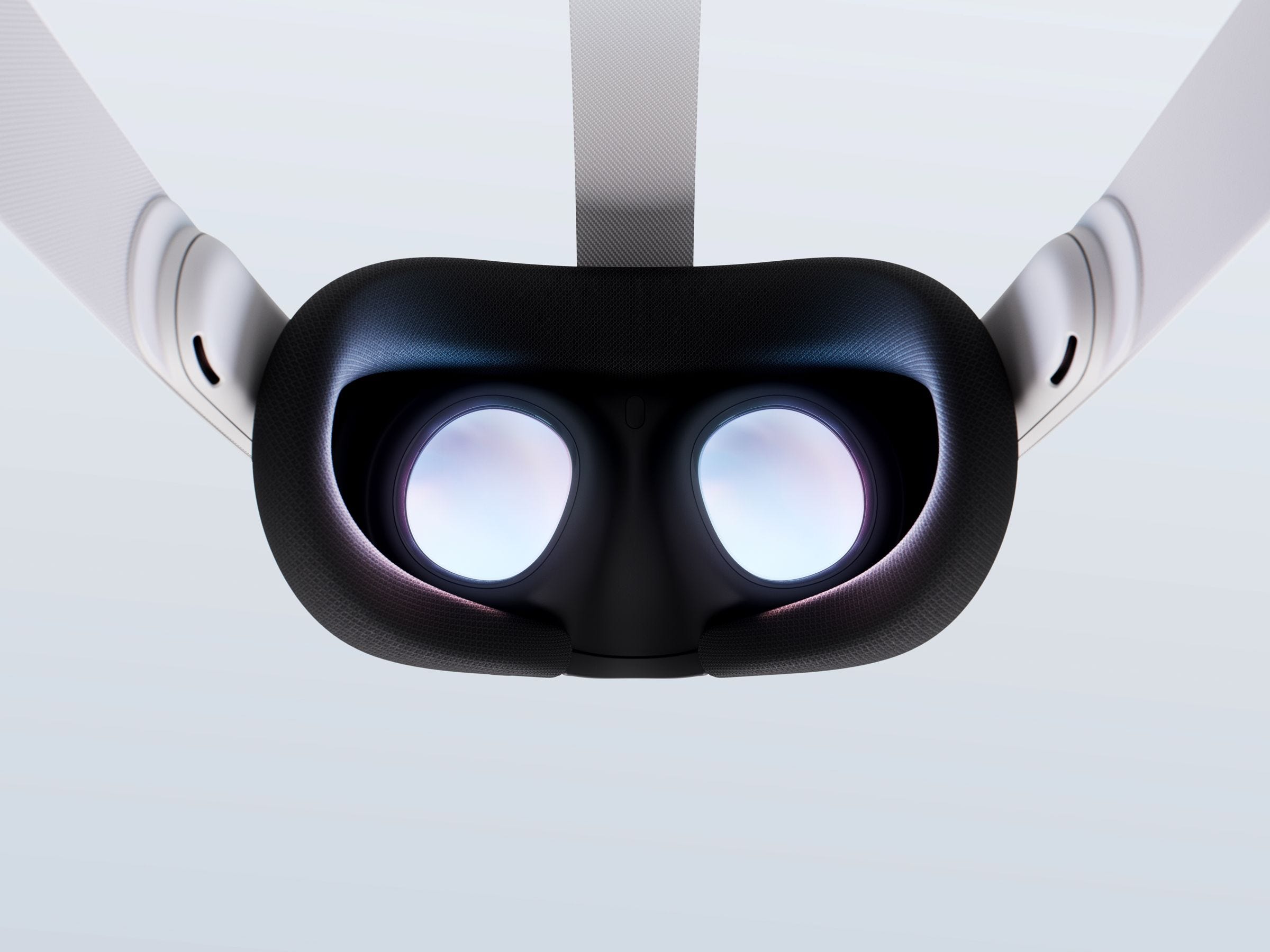
There is a silence falling over the physical world. It is not the silence of inactivity, but of attention. While bodies remain in office chairs and transit seats, minds have migrated. We are witnessing the early stages of a massive capital and cognitive reallocation—a strategic withdrawal from a physical reality that offers diminishing returns into synthetic environments that offer infinite scale, controllable outcomes, and accessible status.
This is not merely a cultural trend of “digital addiction.” It is a rational economic arbitrage. For a growing demographic, the “Real World” has become a bad trade: high friction, low reward, unaffordable assets, and uncontrollable variables. In contrast, the “Fictional World”—whether in gaming, immersive narrative, or AI companionship—offers high-dopamine feedback loops, clear meritocracies, and affordable luxury.
The data is unambiguous. The “Escape Economy” is no longer a niche for hobbyists; it is a $9.7 trillion engine reshaping global markets. When 62% of Gen Z believe their online presentation is more critical than their in-person reality, we are not just seeing a change in habits; we are seeing a collapse in the perceived value of physical existence.
The Economics of the “Reality Deficit”
For decades, the “Experience Economy” was the gold standard: consumers wanted to do things in the real world (travel, dining, events). That thesis is being invalidated by the “Escapist Economy.” The driver is the “Reality Deficit”—the widening gap between the cost of real-world satisfaction and the cost of digital satisfaction.
Consider the cost of status. In the physical realm, status signals (housing, luxury cars, haute couture) have hyper-inflated, becoming mathematically inaccessible to the median earner under 35. In the digital realm, status (rare skins, verified badges, high-level avatars) remains accessible. Consequently, capital is flowing from the former to the latter. We are approaching a critical “Valuation Crossover” where the market for digital-only goods rivals the traditional online luxury market.
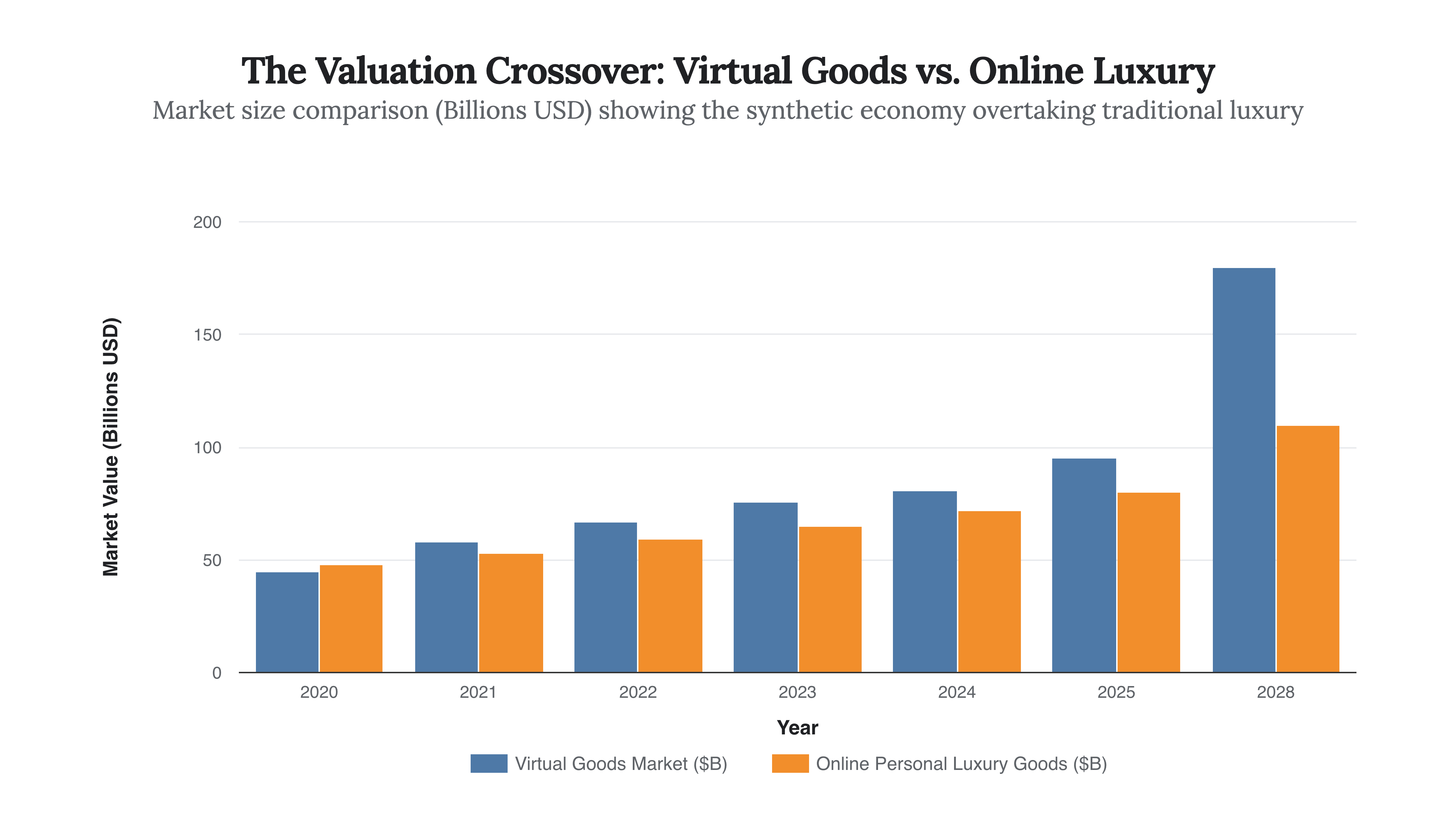
Strategic Implication: This crossover signals the death of “aspirational” physical marketing for the mass market. If a consumer cannot afford the $500,000 home, they will not buy the $5,000 sofa to put in it. They will, however, spend $500 on a limited-edition digital asset that grants them immediate, visible status in their primary community: the digital lobby.
The Identity Stack: The Flight from the Physical Self
The migration is not just financial; it is ontological. The modern individual is bifurcating into a “Physical Shell” (maintenance, labor, biological necessities) and a “Digital Soul” (expression, socialization, achievement). Recent intelligence suggests that for the emerging workforce, the Digital Soul is now the primary asset.
This shift explains the collapse in physical retail foot traffic and the explosion in “cosmetic” microtransactions. The physical body is becoming merely the hardware required to run the digital software. The investment in “skins”—virtual appearances—is not frivolous; it is a rational investment in the environment where the individual spends the majority of their conscious, social time.
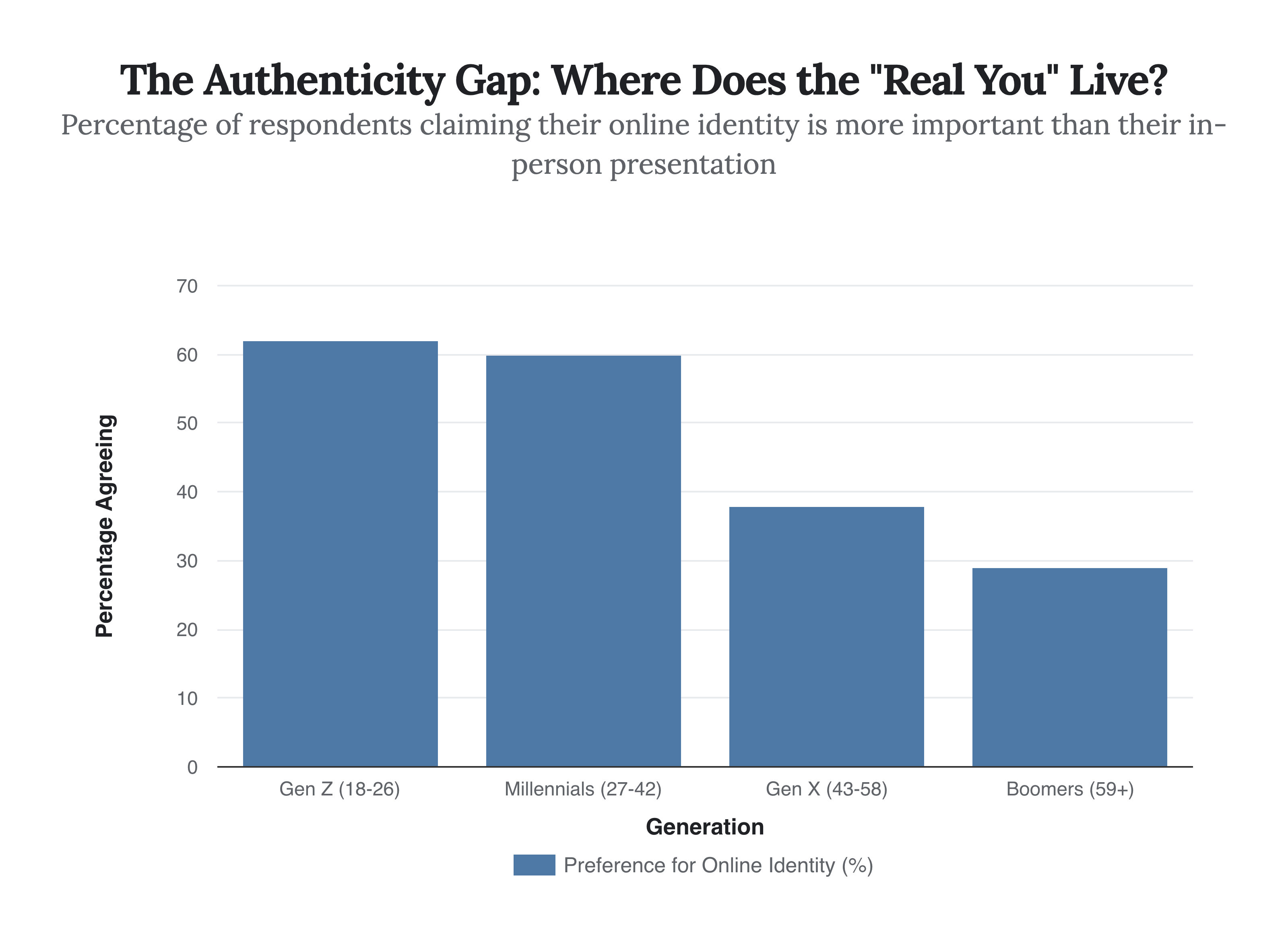
So What? Companies relying on physical vanity metrics (traditional cosmetics, fast fashion) are walking into a demographic buzzsaw. The competitor to a L’Oréal lipstick is not another lipstick; it is a Fortnite skin. The status symbol of 2030 is not what you wear to the office; it is what you wear to the server.
The Algorithmic Womb: AI and the End of Friction
Why deal with the messiness of human interaction—rejection, misunderstanding, compromise—when an algorithm can offer perfect resonance? The rise of AI companionship is the ultimate manifestation of the will to escape. It represents a flight from the friction of reality to the smoothness of fiction.
We are seeing a divergence in the “Intimacy Market.” Traditional dating apps, which facilitate real-world meetings (and thus real-world rejection), are
