


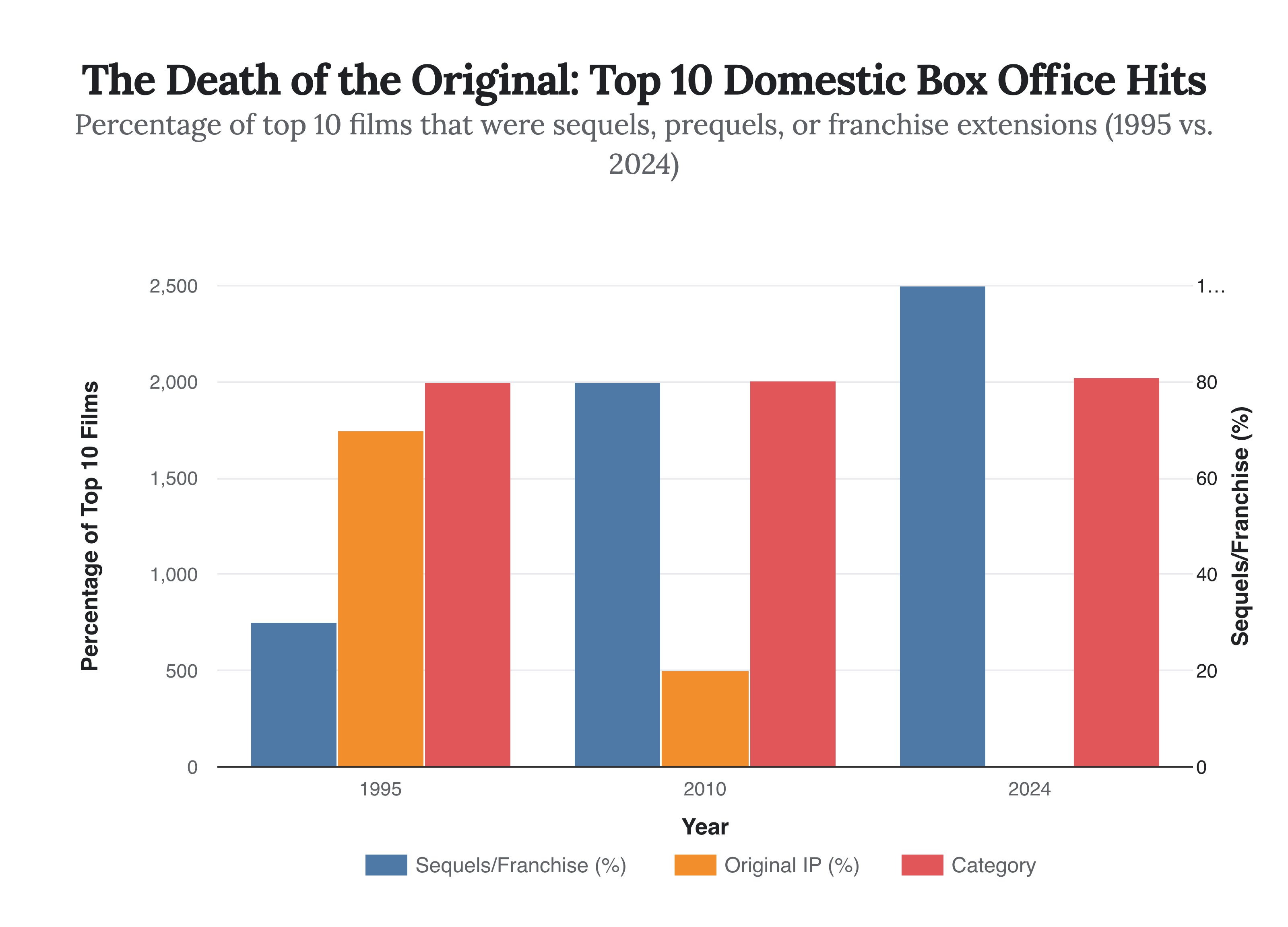
In 2024, a quiet but devastating milestone was reached in the global cultural economy. For the first time in cinematic history, every single one of the top 10 highest-grossing films at the domestic box office was a sequel, prequel, or franchise extension. There were no originals. Zero.
To the casual observer, this is a trivial factoid about the movie business. To the strategic analyst, it is a flashing red light on the dashboard of the global economy. This “100% Sequel” phenomenon is not an artistic failure; it is the visible tip of a massive iceberg of risk aversion that now permeates every layer of capital allocation, from Silicon Valley venture funds to the boardrooms of the S&P 500.
We are witnessing what the late cultural theorist Mark Fisher called “the slow cancellation of the future”—a condition where the new is systematically replaced by the iteration of the old. But this is no longer just a philosophical concept. It is a quantified economic reality. When corporations spend a record $942.5 billion on stock buybacks while scientific disruption metrics plummet to near zero, we are not just failing to imagine the future; we are actively financing its cancellation.
This briefing analyzes the data behind this stagnation, exploring how the “Nostalgia Premium” and the “Optimization Trap” are creating a fragile, feedback-loop economy that looks efficient but is structurally incapable of true growth.
The Cultural Flatline: Monetizing the Past
The most immediate evidence of this trend is in our consumption of culture. The entertainment industry, often a leading indicator of consumer sentiment, has retreated entirely into the safety of the familiar. In 1995, the box office was a mix of fresh IP and sequels. By 2024, the transformation was complete.
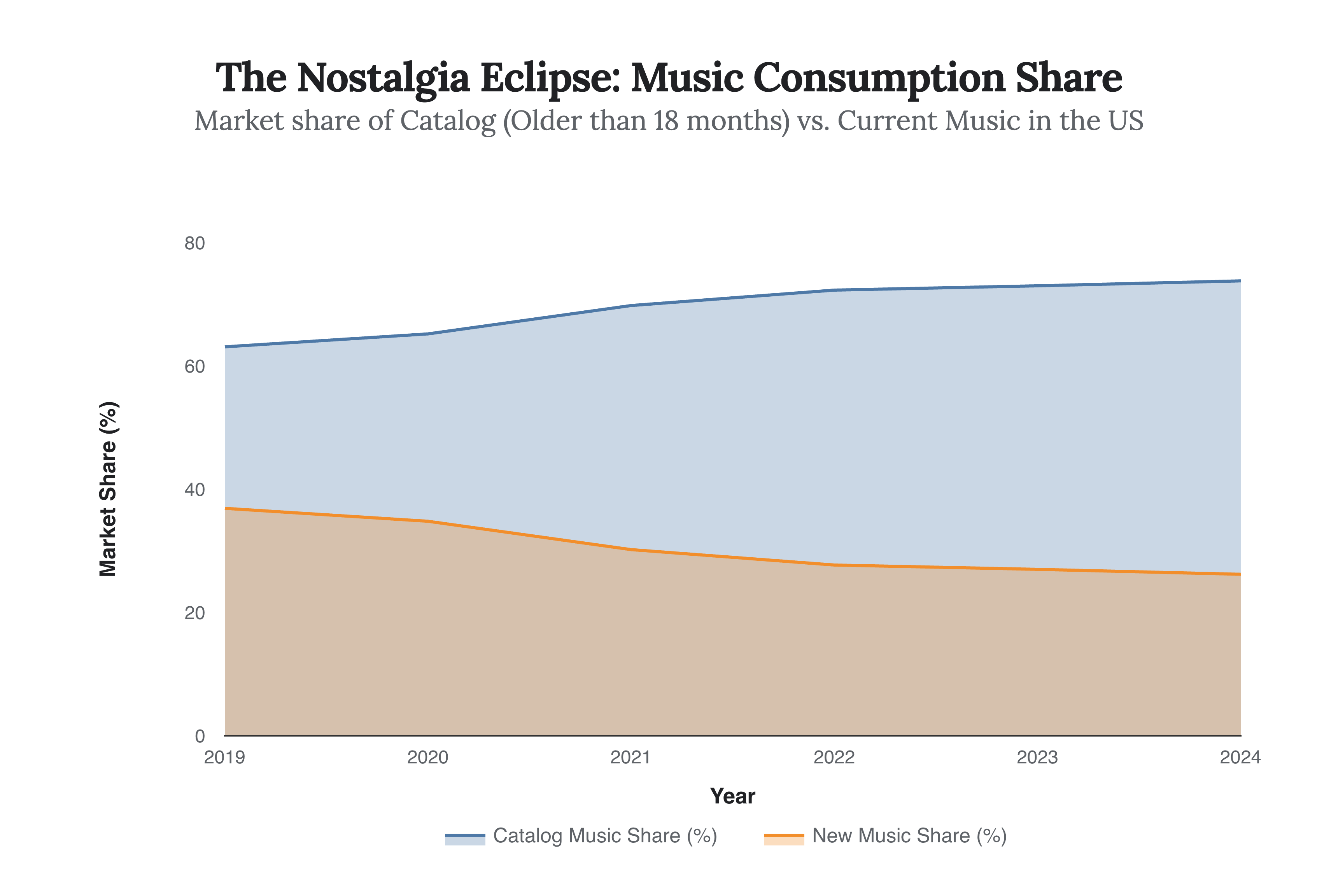
This risk aversion is not limited to film. The music industry has undergone a similar, perhaps more profound, shift. “Catalog music”—defined as songs older than 18 months—now accounts for nearly three-quarters of all audio streaming consumption in the U.S. We are listening to ghosts. The market share of new music is shrinking year over year, creating a “Nostalgia Eclipse” where the back catalog consumes the present.
So What? When culture stops looking forward, it signals a consumer base that is retreating into comfort. For brands and investors, this means the “safe bet” (nostalgia marketing, reboots, legacy IP) will continue to outperform “novelty” in the short term. However, this is a depleting asset. You can only reboot Batman so many times before the returns diminish. We are mining a finite resource of 20th-century culture.
The Corporate Safety Trap: The $942 Billion Buyback Wall
If cultural recycling is the symptom, capital allocation is the cause. Corporate
