


November 19, 2025
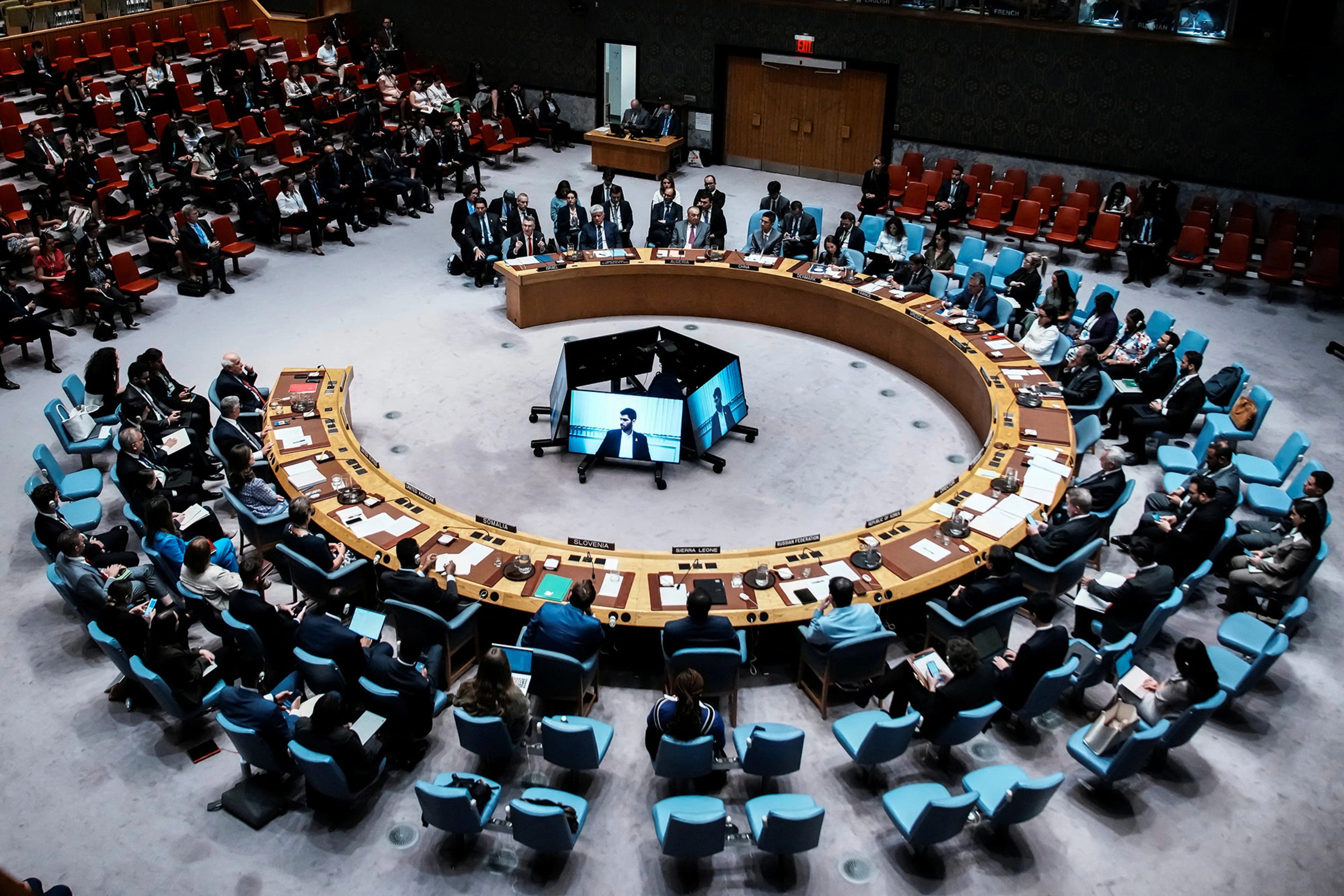
The ink is barely dry on UN Security Council Resolution 2803, adopted late last night by a count of 13-0-2. On the surface, the headline is the rare unanimity—or rather, the absence of a veto—from the P5. But the real story isn’t the diplomatic handshake; it is the terrifying data point that forced it.
Over the last quarter, 88% of all humanitarian aid entering Gaza failed to reach its destination. This single metric—the complete collapse of logistical sovereignty—has forced the Security Council to do the unthinkable: effectively outsource the governance of a conflict zone to an external ‘Board of Peace.’
This briefing analyzes the strategic mechanics behind yesterday’s historic vote, the breakdown of the ‘13-0-2’ consensus, and the harsh economic reality of the $53.2 billion reconstruction bill that no one wants to pay.
The Arithmetic of Collapse: The 88% Vacuum
To understand why Resolution 2803 passed, we must look at the logistics of the preceding six months. Since May 2025, the ‘truck-to-mouth’ ratio in Gaza has inverted. While diplomatic pressure increased the volume of trucks crossing the border, the internal security vacuum meant that the vast majority of this aid evaporated before reaching civilians.
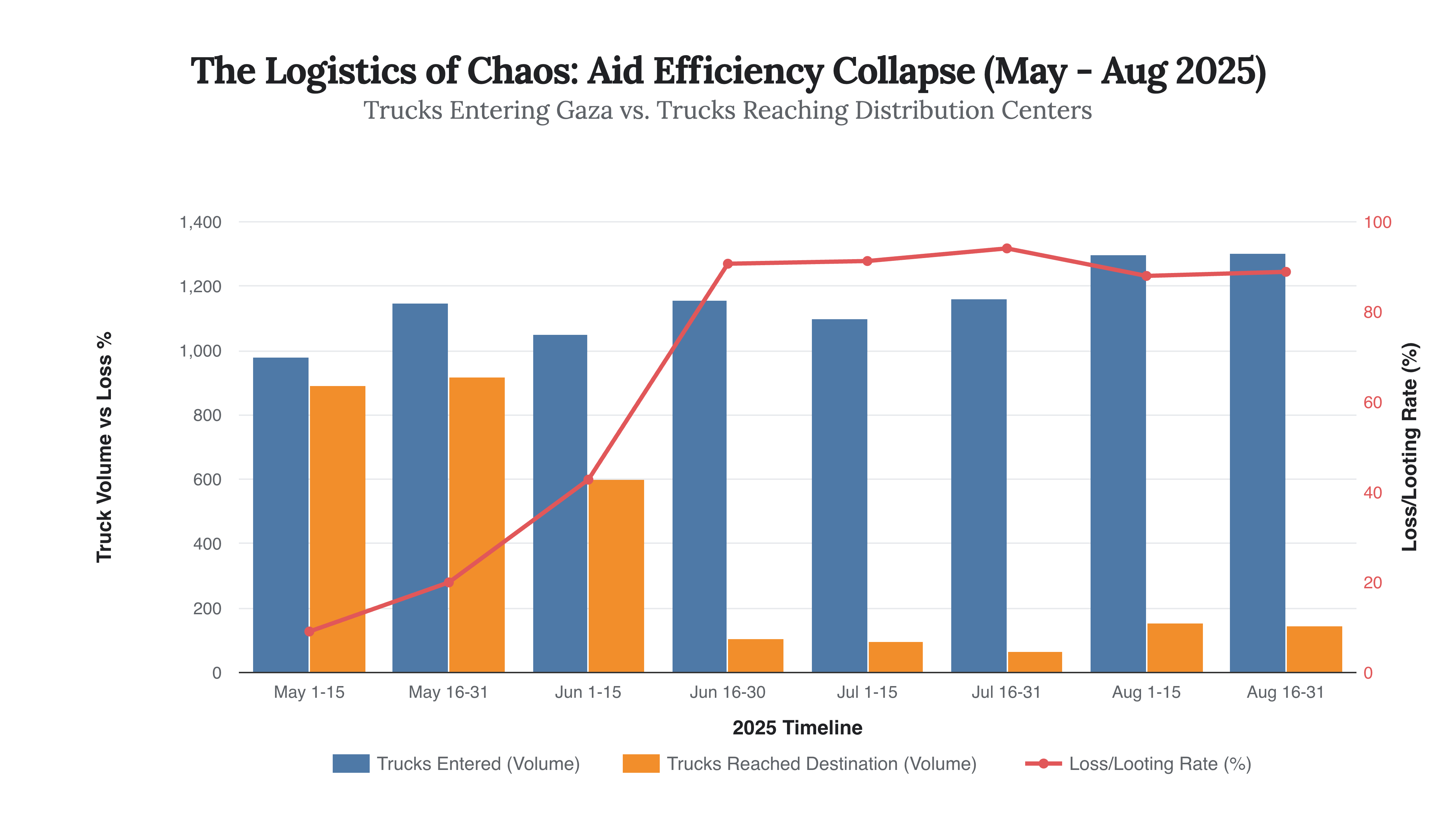
The Strategic Implication: The chart above illustrates a catastrophic inflection point in June 2025. When the loss rate crossed 90%, the UN’s traditional aid mechanisms (UNRWA, WFP) became statistically irrelevant. The “humanitarian pause” debates became moot because the pipes were leaking faster than they could be filled. This 88% failure rate is what broke the diplomatic deadlock; even Russia and China realized that vetoing a new security architecture was effectively voting for a 100% wastage rate of their own aid contributions.
Deconstructing the 13-0-2 Mandate
Resolution 2803 is not a standard peacekeeping mandate. It creates a “Board of Peace,” chaired externally, with an “International Stabilization Force” (ISF) authorized to decommission weapons. The vote count—13 in favor, 0 against, 2 abstentions (Russia, China)—signals a massive geopolitical pivot.
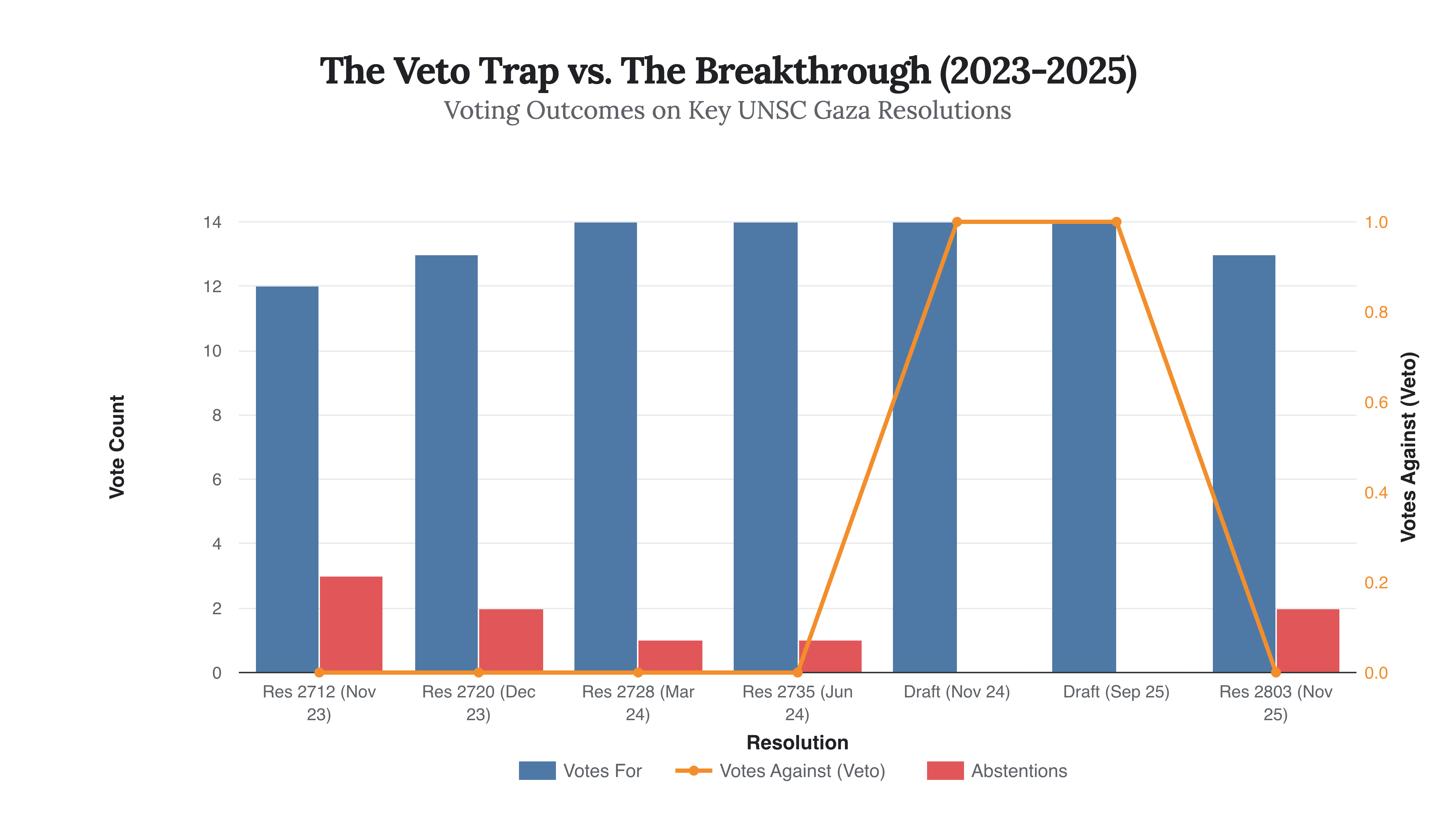
The “Abstention” Strategy: Russia and China’s decision to abstain rather than veto is the key signal. By stepping aside, they have allowed the US and the new “Board” to take full ownership of the Gaza file. If the Board fails, the blame lies solely with Washington. If it succeeds, Beijing and Moscow can claim they didn’t obstruct peace. It is a low-risk, high-reward diplomatic maneuver.
The New Power Structure
The resolution establishes a hierarchy that bypasses standard UN command structures:
Tier 1: The Board of Peace (Chaired by the US/Trump doctrine).
Tier 2: International Stabilization Force (ISF) – Non-UN mandated troops (likely private/contractor heavy or coalition of the willing).
Tier 3: Palestinian Technocratic Committee – Local administration with no security control.
The $53.2 Billion Bill: Dissecting the Destruction
The security arrangement is only the prequel to the real crisis: the reconstruction deficit. The latest Interim Rapid Damage Assessment puts the cost at $53.2 billion over a decade. However, the composition of this damage suggests that the “Board of Peace” is facing an impossible timeline.
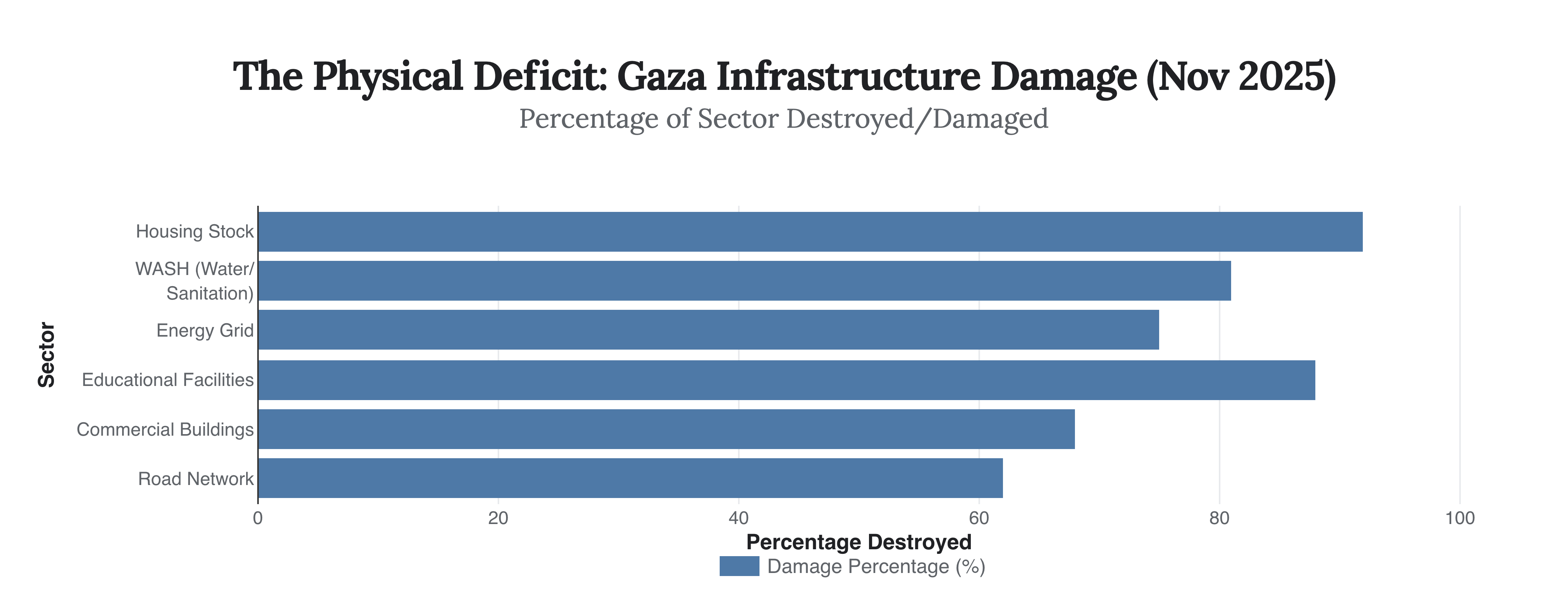
With 92% of housing requiring repair or reconstruction, the “return of civilians” promised in Resolution 2803 is mathematically impossible in the short term. The “Board” isn’t just inheriting a security zone; they are inheriting the world’s largest homeless shelter.
The Funding Gap
The resolution implies funding will follow security. But market data suggests otherwise. Donor fatigue is real, and the “private sector” approach championed by the US requires insurance guarantees that do not exist.
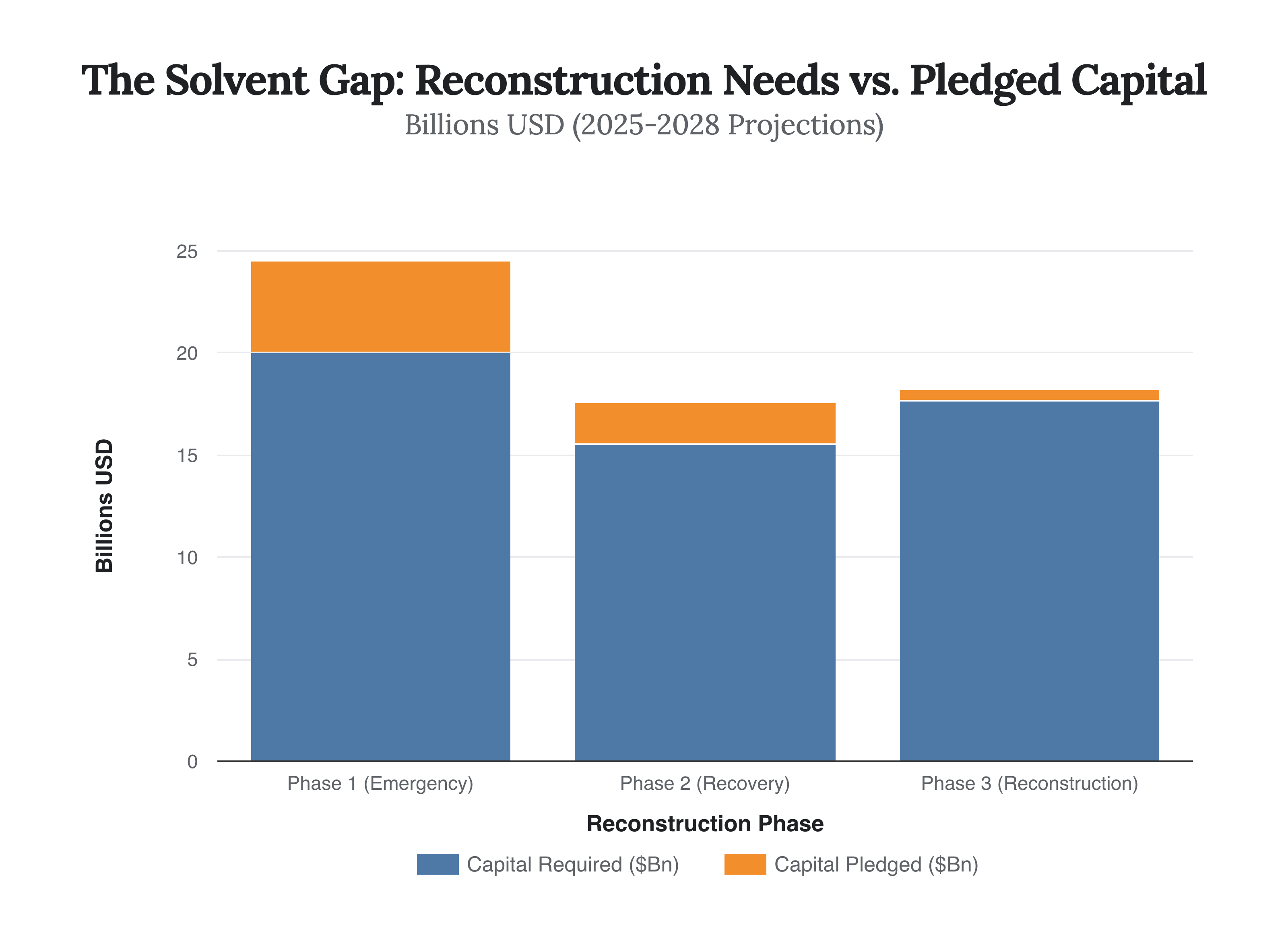
So What? The chart above reveals a $46 billion shortfall. The “Board of Peace” has the mandate but not the money. This mismatch will likely force the Board to monetize Gaza’s assets—specifically offshore gas reserves or trade routes—to fund the reconstruction, creating a new vector for conflict.
The Human Cost of Diplomatic Latency
The delay between Resolution 2735 (June 2024) and Resolution 2803 (November 2025) was not free. It was purchased with time, and paid for in casualties. The correlation between Security Council vetoes/inaction and the rising death toll offers a grim view of diplomatic latency.
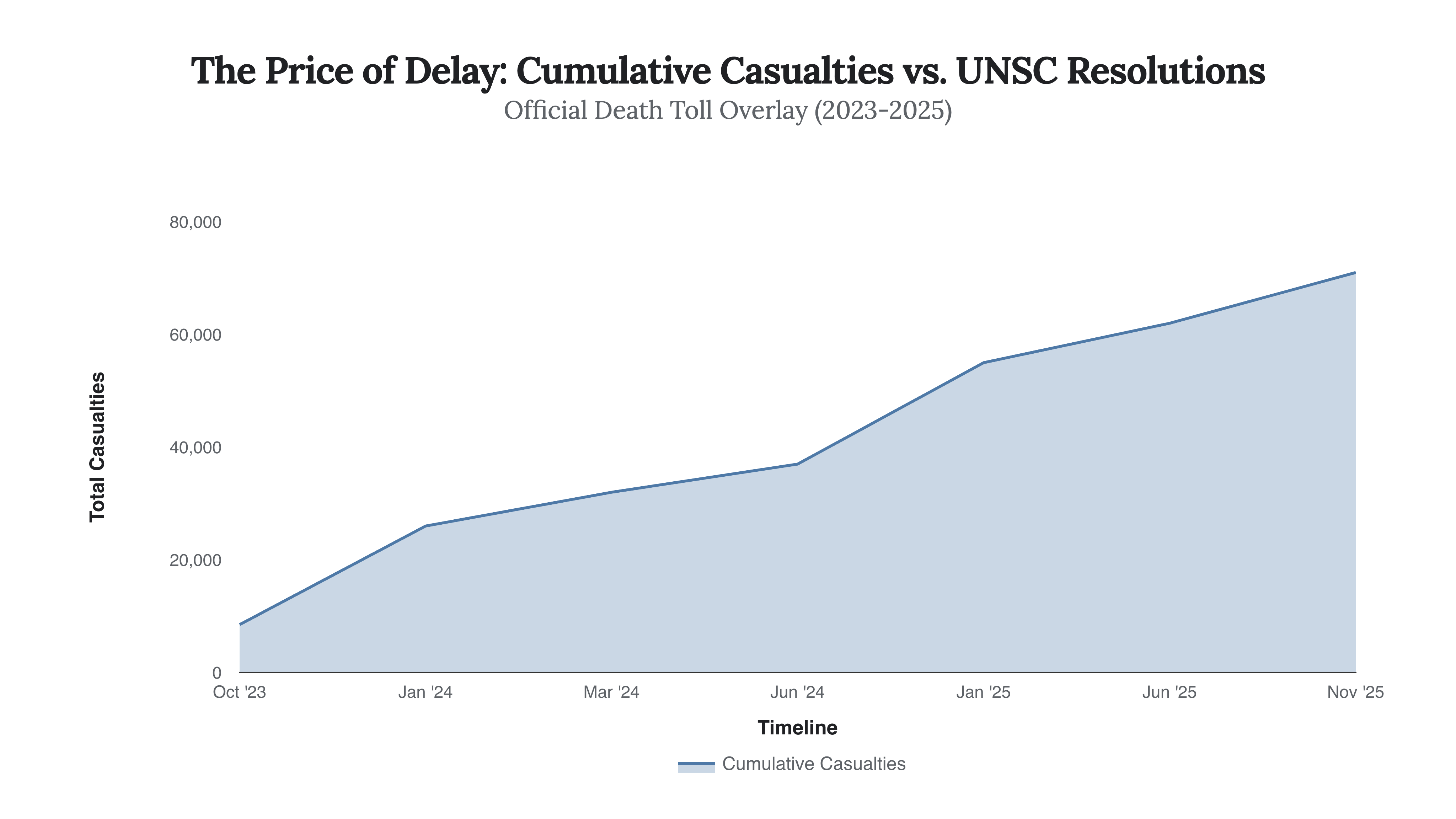
The slope of the curve steepened in 2025 not due to high-intensity combat, but due to the secondary effects of the aid collapse—disease, malnutrition, and infrastructure failure. Resolution 2803 is less a peace treaty and more a quarantine measure.
Conclusion: The Outsourced Sovereignty Model
Resolution 2803 marks the end of the “Two-State Solution” as a near-term operational framework and replaces it with the “Board-State Solution.” The Security Council has effectively admitted that it lacks the mechanism to enforce peace in non-state actor conflicts.
By creating a “Board of Peace” chaired by a single national figure (Trump) rather than a UN appointee, the UNSC has set a new precedent: Bankruptcy Receivership for Failed States. Gaza is no longer being treated as a proto-state; it is being treated as a distressed asset under new management.
“The perfect is the enemy of the good. This resolution is not justice; it is a foreclosure on the status quo.” — Anonymous E10 Diplomat, Post-Vote Briefing
The bottom line: The 88% aid failure rate didn’t just starve Gaza; it starved the UN’s credibility, forcing it to hand the keys to a private board. Watch the ‘International Stabilization Force’ closely—if it works, this is the new blueprint for Haiti, Sudan, and beyond.