


Behind the pageantry of the May 2026 Beijing Summit lies a stark reality: a stalled 50-bcm pipeline and a predatory trade architecture that exposes Russia’s terminal asymmetry.
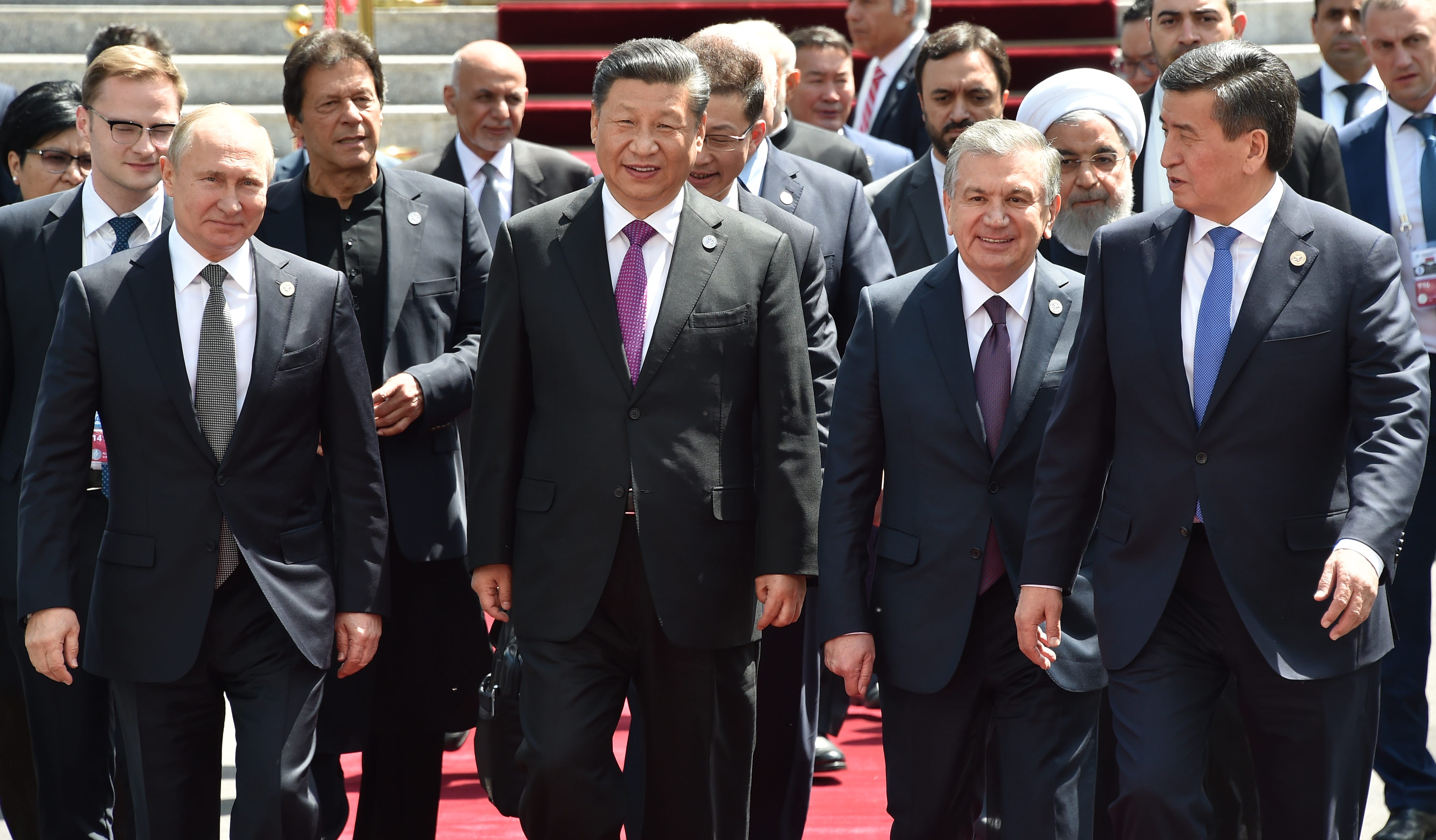
The contrails from Air Force One had barely dissipated over Beijing’s skies when Russian President Vladimir Putin touched down on May 19, 2026. Arriving just four days after the departure of US President Donald Trump, the optics of Putin’s twenty-fifth state visit to China were meticulously stage-managed. Yet, the diplomatic choreography betrayed a subtle shift in hierarchy: while Trump was greeted on the tarmac by Chinese Vice-President Han Zheng, Putin was met by the lower-ranking Foreign Minister Wang Yi.
This discrepancy in protocol served as a quiet prelude to the summit itself. The two leaders signed over forty cooperative agreements, celebrating the thirtieth anniversary of their strategic partnership. They issued a sweeping joint declaration condemning US foreign policy, warning of a global drift back toward the “law of the jungle.” But beneath the rhetoric of a “limitless” friendship, a deeper, far more calculated reality is unfolding. Far from a coalition of equals, the current Sino-Russian dynamic is a masterclass in mercantilist leverage. Beijing is systematically exploiting Moscow’s geopolitical isolation to extract unprecedented economic concessions, stall critical infrastructure projects, and charge extortionate premiums on the very technology keeping the Russian war machine afloat.
The Illusion of Parity and the Trade Plateau
To understand the sheer scale of the asymmetry, one must look past the headline numbers. It is true that China has been Russia’s largest trading partner for sixteen consecutive years. In the immediate aftermath of the 2022 invasion of Ukraine, bilateral trade exploded, peaking at roughly $245 billion in 2024 as Russia aggressively reoriented its economy eastward to survive Western sanctions.
However, that explosive growth has hit a structural ceiling.
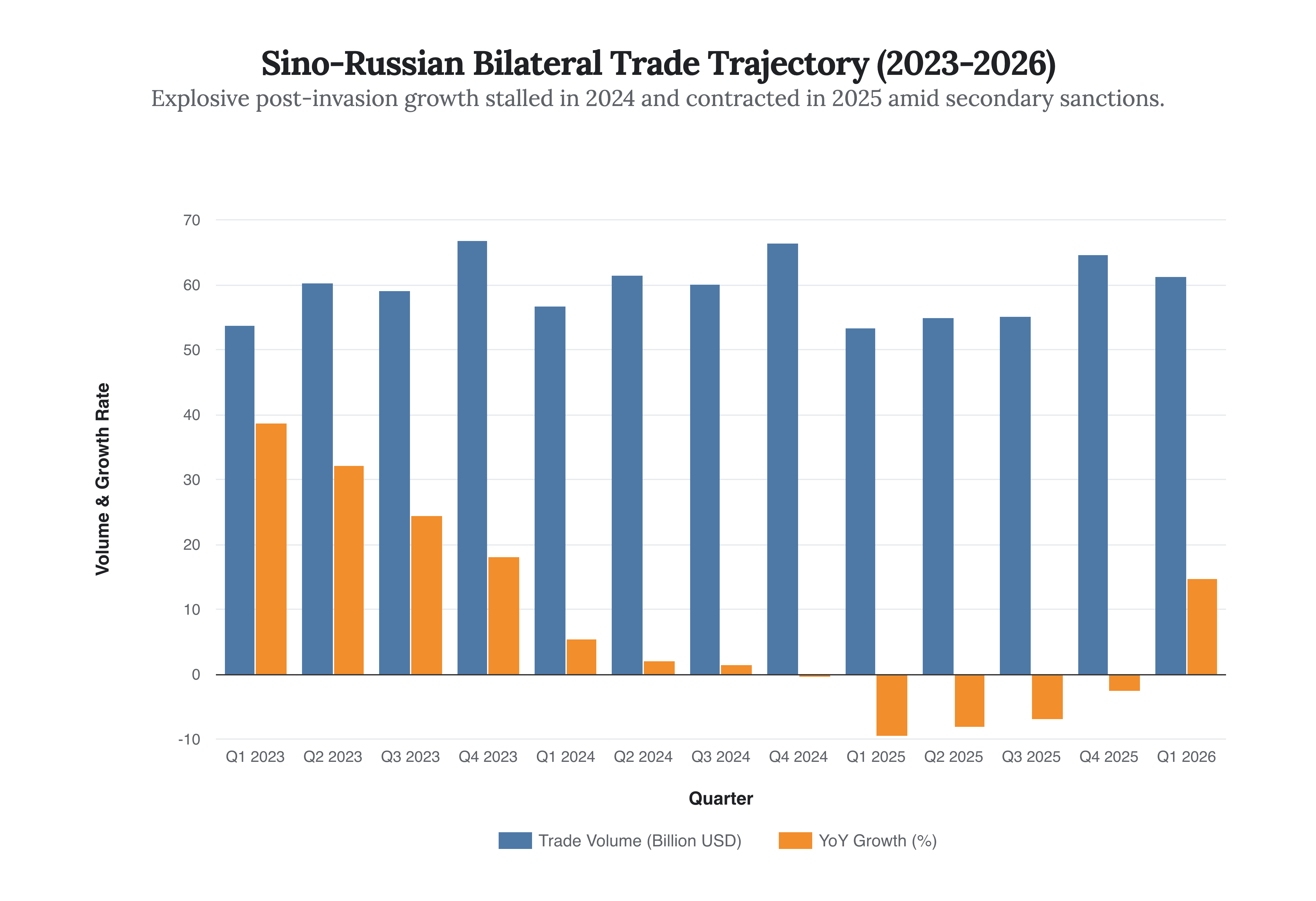
In 2025, total bilateral trade actually contracted by 6.9% year-over-year, falling to $228.1 billion. While the first four months of 2026 have seen a 19.7% rebound—driven largely by aggressive Chinese exports of automobiles and agricultural integration in the Russian Far East—the 2025 contraction reveals a critical vulnerability. When the US Treasury announced the expansion of secondary sanctions in late 2024, targeting global financial institutions that facilitate Russia’s military-industrial base, Chinese megabanks did not hesitate. Institutions like the Industrial and Commercial Bank of China and the Bank of China quietly prioritized their access to the US dollar system over their loyalty to Moscow, resulting in massive payment bottlenecks that throttled Russian imports.
The Power of Siberia 2 Paradox
The most glaring evidence of Beijing’s upper hand at the May 2026 summit was the dog that didn’t bark: the Power of Siberia 2 (PoS 2) natural gas pipeline. The Kremlin arrived in Beijing hoping to secure a finalized deal on the 2,600-kilometer mega-project, which is designed to pump 50 billion cubic meters (bcm) of gas annually from Russia’s Yamal fields through Mongolia to China.
Instead, Putin left empty-handed. The negotiations hit a dead end over a brutal pricing dispute. China is reportedly demanding that Russia sell the gas at heavily subsidized, near-domestic Russian prices, and is currently only committing to buy a fraction of the pipeline’s total capacity.
“China believes time is on its side. It has room to wait to squeeze the best conditions out of the Russians and wait for attention on the China-Russia relationship to move elsewhere,” noted Alexander Gabuev, director of the Carnegie Russia Eurasia Centre.
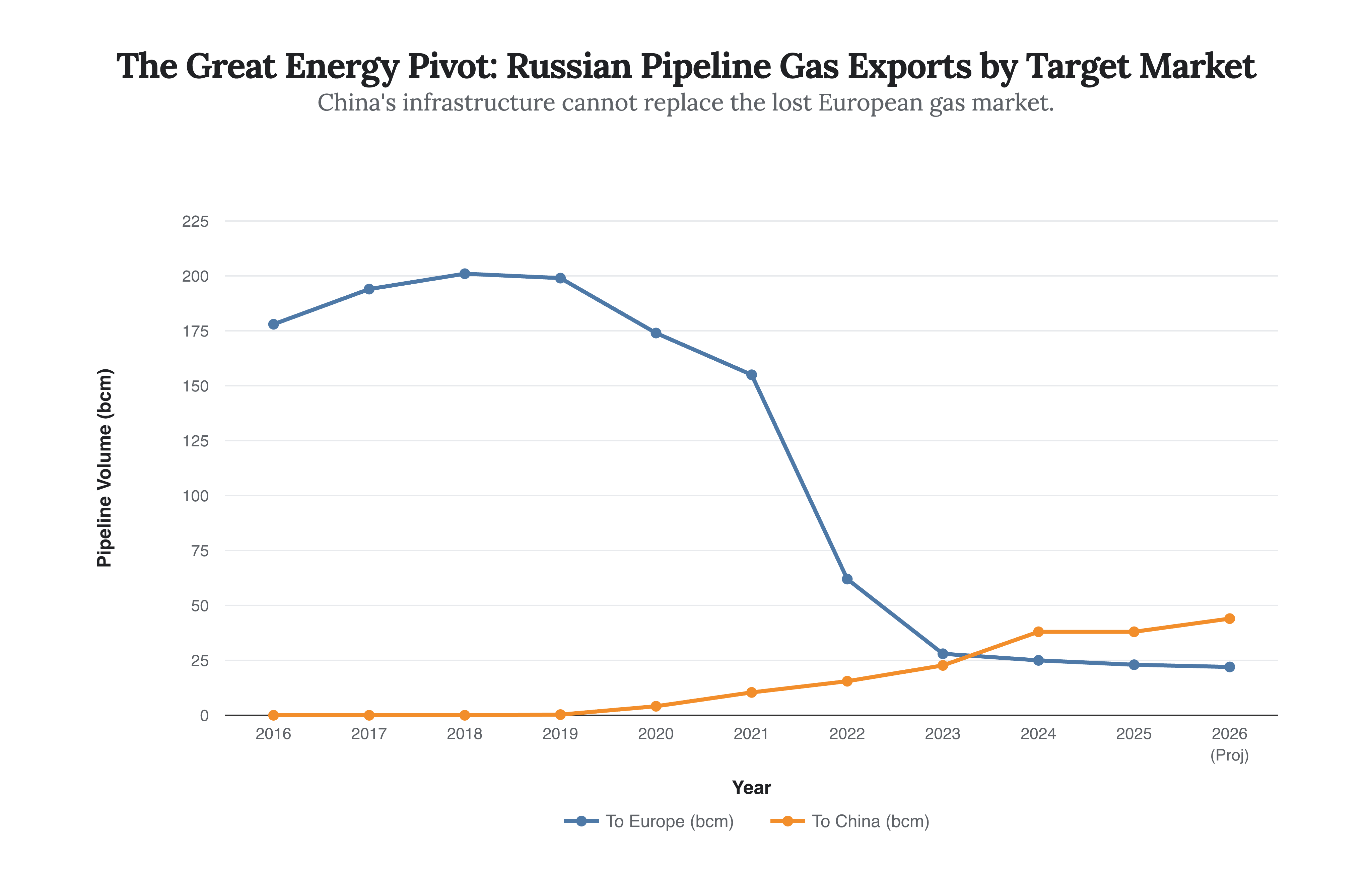
This pipeline is not optional for Moscow; it is an existential requirement. Russia permanently lost a European market that once consumed upwards of 150 bcm of its piped gas annually. The existing Power of Siberia 1 pipeline, which maxed out at roughly 38 bcm last year and is expanding to 44 bcm, cannot bridge the chasm. Beijing knows that Russia’s Yamal gas fields have virtually no other viable overland market. Consequently, China is weaponizing this geographic and geopolitical reality to lock Russia into a decades-long, low-margin energy servitude.

The “Sanctions Premium” and Dual-Use Extortion
If the stalled pipeline highlights Beijing’s willingness to wait out Moscow, the trade in high-tech and dual-use components highlights its willingness to actively exploit it. China has emerged as the primary lifeline for Russia’s defense sector, exporting over $4 billion annually in critical components—microelectronics, CNC machine tools, and telecommunications gear—that Russia cannot produce itself and can no longer import from the West.
But this lifeline is highly conditional, and obscenely expensive. A groundbreaking study by the Bank of Finland Institute for Emerging Economies revealed a shocking discrepancy in Chinese export behavior. Between 2021 and 2024, Chinese exporters hiked prices on critical, military-applicable goods sold
