


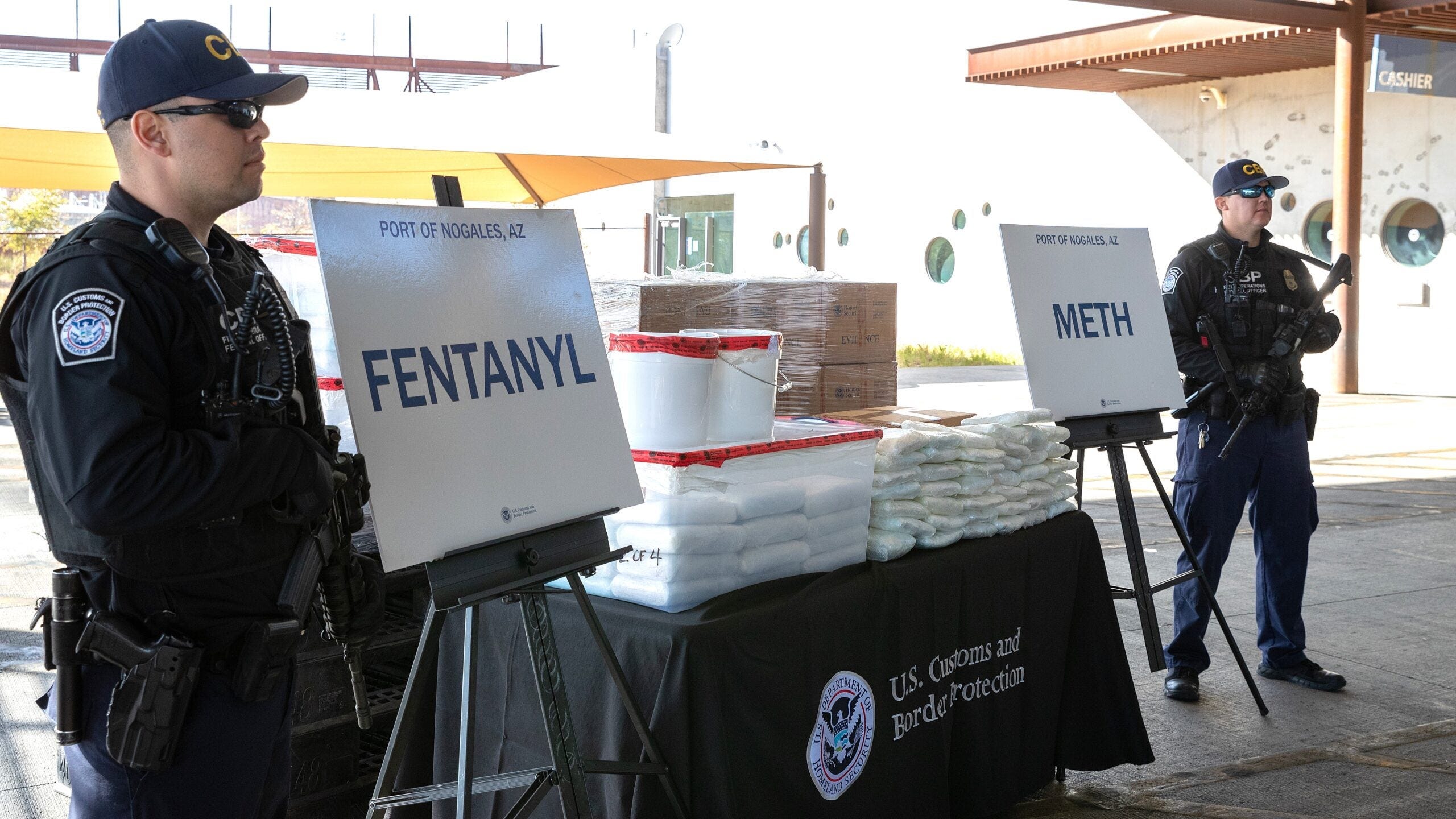
In the high-stakes battle against the opioid crisis, a startling figure reveals a critical misunderstanding of the fentanyl smuggling apparatus: 86% of all fentanyl seizures at the U.S. southern border in fiscal year 2025 occurred at official ports of entry, not in the remote stretches of desert between them. This intelligence, confirmed by the latest data from U.S.
Customs and Border Protection (CBP), forces a strategic reassessment. The dominant narrative of traffickers trekking through unguarded territories is largely a diversion from the sophisticated reality. Transnational Criminal Organizations (TCOs) are exploiting the massive volume of legitimate trade and traffic, concealing their deadly product within passenger vehicles and commercial trucks, predominantly driven by U.S. citizens. This briefing deconstructs the modern fentanyl supply chain, from the chemical precursors sourced in Asia to its digital distribution on American streets, providing a data-driven analysis of a crisis that has become more complex, adaptable, and digitally integrated than ever before. The data indicates a potential turning point, with overdose deaths and seizure volumes showing recent declines, yet the underlying criminal networks continue to evolve, posing a persistent and dynamic threat to national security and public health.
The Anatomy of the Smuggling Machine: From Precursors to Ports
The fentanyl crisis is underpinned by a global and remarkably agile supply chain. Understanding its structure is paramount to developing effective countermeasures. The journey of illicit fentanyl is not a simple linear path but a complex network of chemical manufacturing, clandestine production, and multi-modal transportation, dominated by Mexico’s Sinaloa and Jalisco New Generation Cartel (CJNG).
The Chemical Lifeline: The Precursor Connection
The genesis of the vast majority of illicit fentanyl lies not in Mexico, but in China. Chemical companies, operating in a loosely regulated environment, manufacture and export the precursor chemicals necessary for fentanyl synthesis. While U.S.-China counternarcotics cooperation has been recently rekindled, leading to China agreeing to control additional precursor chemicals, the effectiveness of these measures is an ongoing challenge. Traffickers have demonstrated an ability to adapt quickly, shifting to non-scheduled “pre-precursors” to circumvent regulations. This chemical adaptability represents a significant intelligence challenge for global law enforcement.
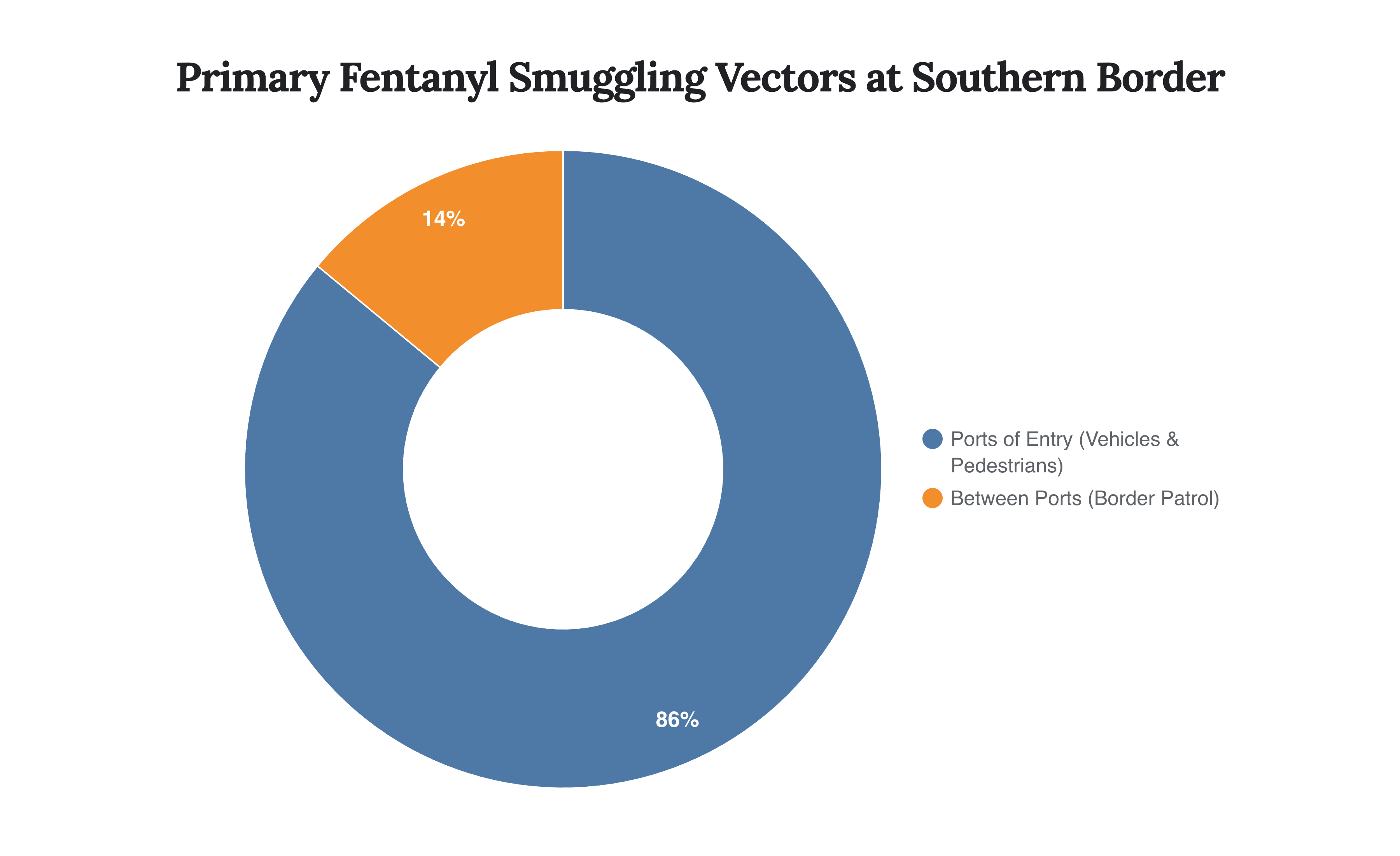
This chart illustrates the overwhelming prevalence of fentanyl smuggling through official ports of entry, challenging the common misconception that the majority of illicit narcotics are trafficked through remote, unmonitored border regions. Data from FY2025.
Mexico’s Production Hubs and the Cartel Engine
Once precursors arrive in Mexico, the Sinaloa and Jalisco cartels orchestrate the production phase in clandestine labs. These TCOs have transformed the drug trade, shifting from plant-based drugs like heroin and cocaine to the more profitable and easier-to-produce synthetic opioids. A kilogram of fentanyl, costing around $6,000 to produce, can be worth over $100,000 on the U.S. market, creating immense profit incentives. These organizations are not merely drug producers; they are sophisticated logistical and financial networks that control transportation routes, launder vast sums of money, and engage in a wide array of criminal activities.
“The Sinaloa Cartel and Jalisco New Generation Cartel... are the primary groups producing the illicit synthetic drugs driving U.S. drug poisoning deaths and trafficking these drugs into the United States.”
The Port of Entry Paradox: A Trojan Horse Strategy
The latest seizure data presents a clear and urgent paradox: the most heavily fortified points along the border are the most exploited channels for fentanyl smuggling. This is not a failure of border security in isolation, but a testament to the traffickers’ strategy of hiding in plain sight.
Exploiting the Haystack
Every day, hundreds of thousands of vehicles and pedestrians legally cross the U.S.-Mexico border. This sheer volume creates an operational challenge for CBP, which must balance security with the facilitation of legitimate trade and travel. Cartels exploit this by concealing fentanyl within elaborately modified passenger vehicles or co-mingled with legitimate goods in commercial trucks. The potency of fentanyl means a potentially catastrophic amount can be hidden in a very small space, making detection extraordinarily difficult without specific intelligence. Analysis of CBP data shows passenger vehicles are the single most common method of smuggling through ports of entry.
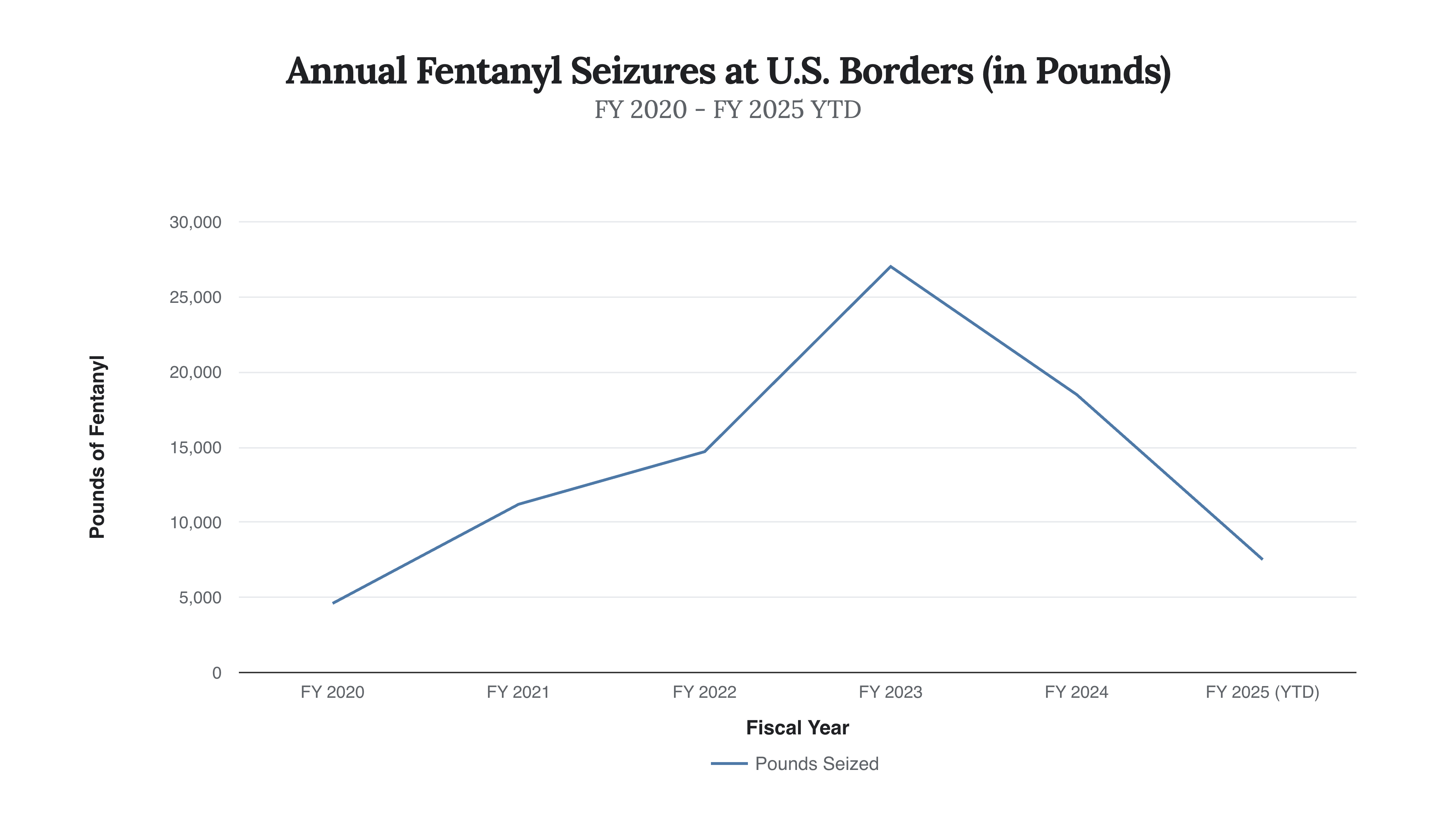
This chart tracks the dramatic escalation of fentanyl seizures, peaking in FY 2023. While 2024 and 2025 show a decline, the total volume remains historically high, indicating a persistent and severe threat. Data is based on CBP and DHS reports.
The Surprising Smuggler: U.S. Citizens
Counter to prevailing political narratives, the primary smugglers are not migrants seeking asylum. An analysis of apprehension data reveals that roughly four out of five individuals caught smuggling fentanyl at southern border ports of entry are U.S. citizens. Cartels recruit American citizens, who generally face less scrutiny at checkpoints, to transport narcotics across the border. This demographic reality complicates enforcement efforts that are often narrowly focused on non-citizen populations.
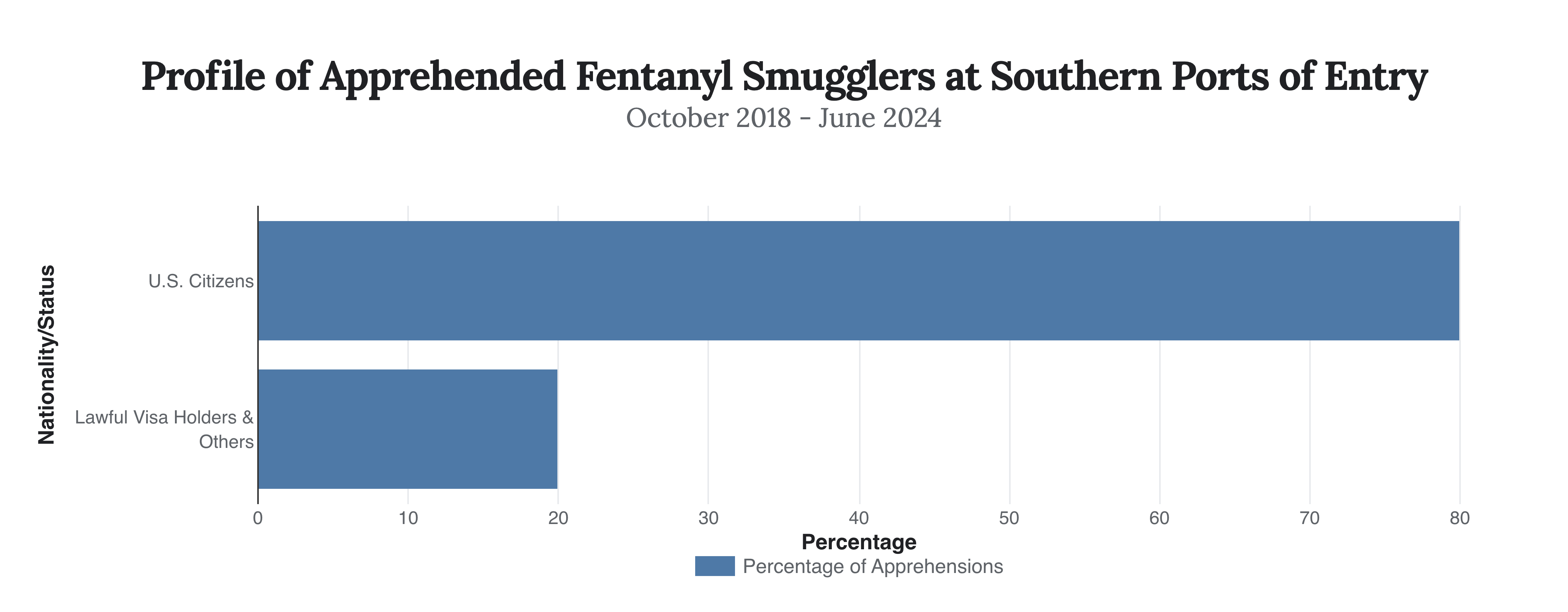
This chart highlights that U.S. citizens constitute the vast majority of individuals apprehended for fentanyl smuggling at official border crossings, debunking the myth that migrants are the primary culprits.
The Digital Frontier: A New Era of Distribution
Once inside the United States, the distribution model for fentanyl has been radically reshaped by technology. The era of relying solely on street-corner deals is over. Social media and encrypted messaging apps have become the new storefronts for retail-level drug trafficking, presenting a grave danger, particularly to younger Americans.
Social Media as a Marketplace
Platforms like Instagram, Snapchat, TikTok, and Telegram are now primary venues for drug distribution. Dealers use coded language, emojis, and hashtags to advertise illicit substances, including counterfeit prescription pills laced with fentanyl. For young people, acquiring these deadly drugs can be as easy as ordering food delivery.
“Where once a teen might have had to seek out a street dealer, hassle friends, or learn to navigate the dark web to access illicit drugs, young people can now locate drug dealers using their smartphones — with the relative ease of ordering food delivery or calling a ride-share service.”
This digital shift poses an immense challenge for law enforcement. The anonymity and ephemeral nature of these platforms make it difficult to track and dismantle these online drug networks. The National Crime Prevention Council estimates that 80% of fentanyl poisoning deaths among teens and young adults can be traced back to a social media connection, highlighting the urgency of this digital threat.
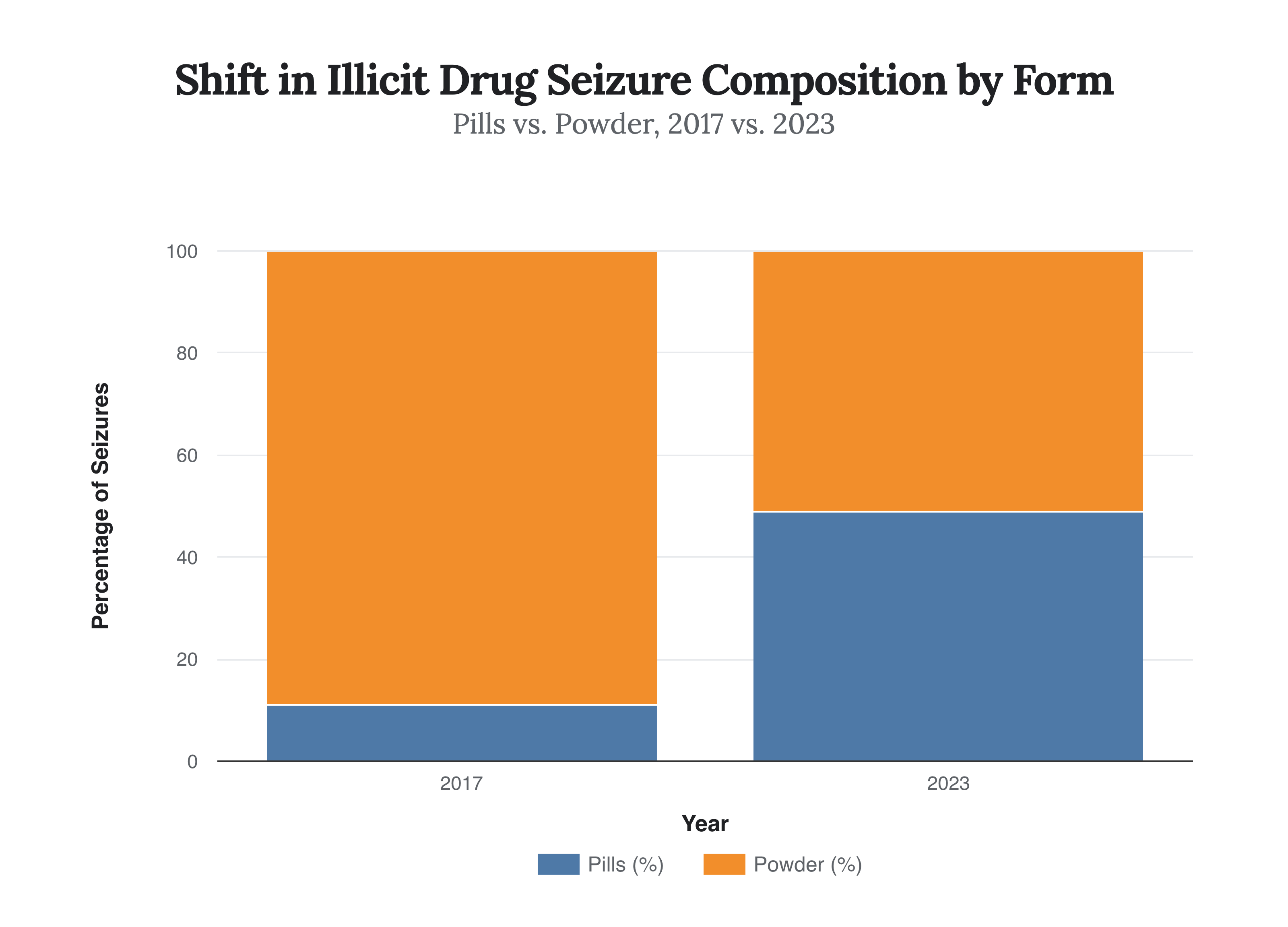
This chart reveals the dramatic strategic shift by traffickers towards pressing fentanyl into counterfeit pills. In 2023, pills accounted for nearly half of all fentanyl seizures, a quadrupling share since 2017, posing a deceptive threat to unsuspecting users.
Strategic Outlook: A Glimmer of Hope Tempered by Evolving Threats
Recent data provides a complex but cautiously optimistic picture. For the first time in over a decade, overdose deaths, driven primarily by fentanyl, have started to decline. Provisional CDC data showed a significant drop in 2024, a trend that appears to be continuing into 2025. This decline coincides with a drop in fentanyl seizures from their 2023 peak, suggesting a potential reduction in supply or demand.
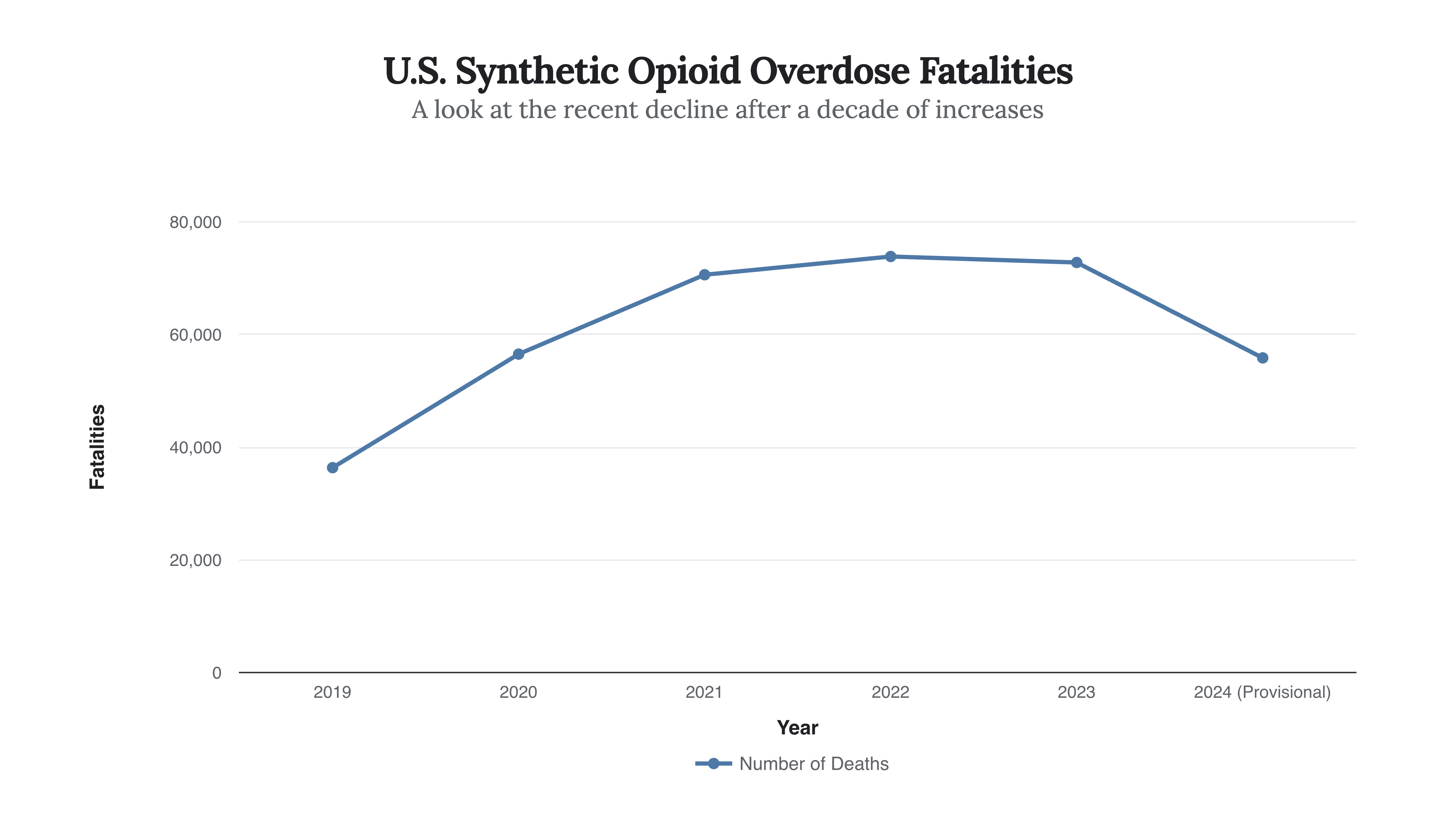
This line chart illustrates the alarming growth in overdose deaths attributed to synthetic opioids like fentanyl, which peaked in 2022. The subsequent decline in 2023 and 2024, while positive, still represents a public health crisis of historic proportions.
Future Scenarios & Key Signposts
Chemical Arms Race: The primary signpost to watch is the adaptability of cartels to international pressure on precursor chemicals. A shift to new, uncontrolled pre-precursors or the emergence of new production hubs in countries like India would signal a new phase in the supply chain.
The Rise of Adulterants: Law enforcement is increasingly finding fentanyl mixed with other dangerous substances, such as the veterinary tranquilizer xylazine and the more powerful medetomidine. The prevalence of these “drug cocktails” increases the risk of overdose and complicates treatment, representing a dangerous evolution of the street-level product.
Digital Enforcement: The response of social media companies to the rampant drug dealing on their platforms will be critical. Increased regulation, proactive content removal, and cooperation with law enforcement could disrupt these new digital supply lines. Failure to act will cede this ground to the traffickers.
Geopolitical Leverage: Counternarcotics cooperation between the U.S. and China will remain a crucial, albeit fragile, component of any long-term strategy. This cooperation is often used as a bargaining chip in the broader context of U.S.-China relations, and its stability cannot be taken for granted.
In conclusion, the fentanyl smuggling crisis has evolved far beyond a simple border interdiction problem. It is a multi-faceted challenge involving global chemical supply chains, sophisticated transnational criminal syndicates leveraging legitimate infrastructure, and a rapidly expanding digital marketplace. While recent declines in seizures and overdose deaths offer a glimmer of hope, they should not be misinterpreted as victory. The underlying criminal infrastructure remains intact and highly adaptable. The data clearly shows that the primary battlefield is not the remote desert but the bustling ports of entry and the ubiquitous social media platforms on our phones. Future success will depend on a sophisticated, intelligence-led strategy that targets these critical nodes.
The greatest strategic vulnerability is no longer just the physical border, but the digital and logistical seams in the global system that traffickers have become experts at exploiting.