


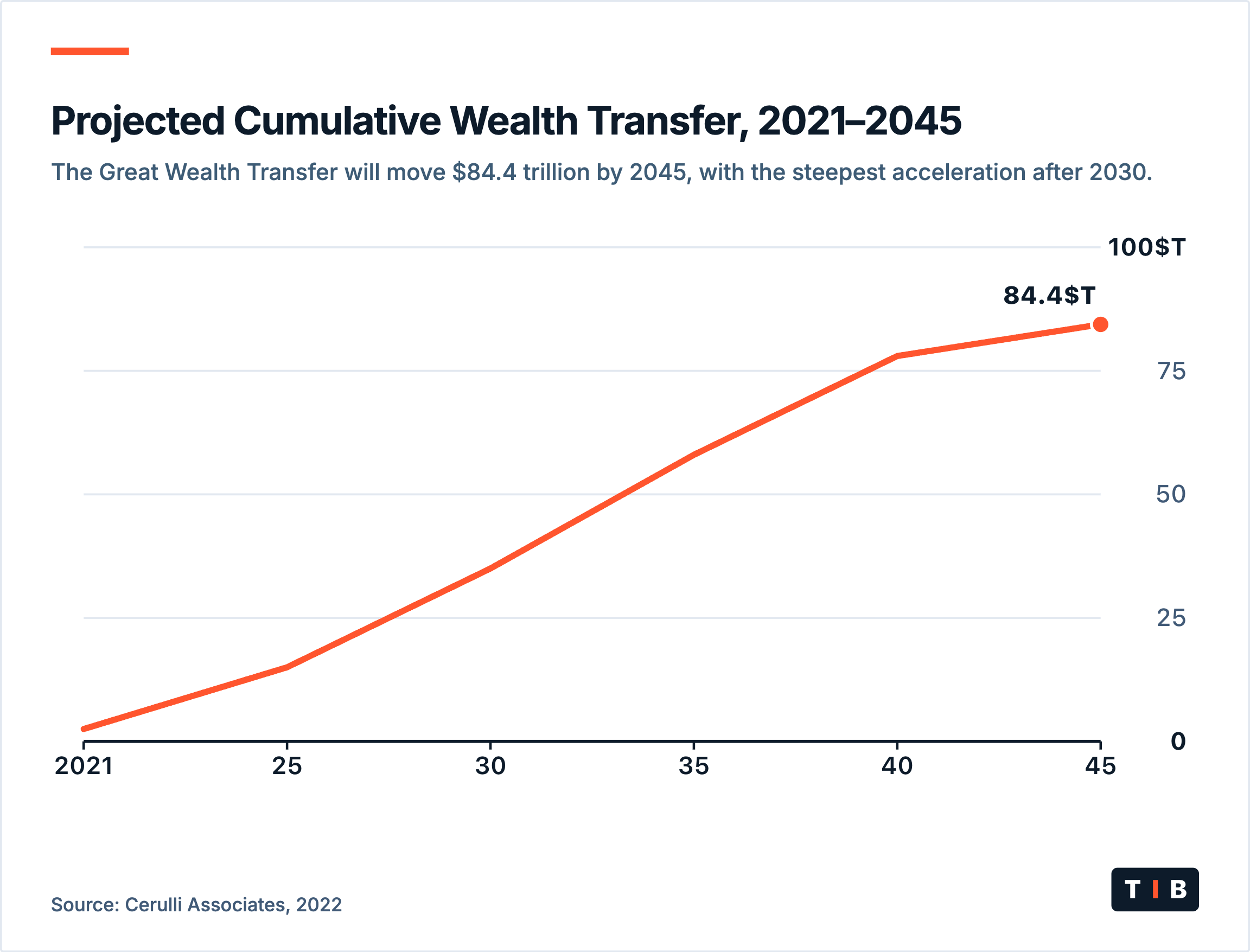
Cerulli Associates’ 2022 report on the Great Wealth Transfer projects $84.4 trillion will pass from older Americans to younger heirs between 2021 and 2045, the largest intergenerational transfer of assets in U.S. history. This is not a ripple; it is a firehose aimed at a generation already anxious about work, housing, and identity. The median inheritance will skew small, but the concentrated blocs of unearned capital—the top 10% of transfers—will reshape both the labor market and the emotional economy. The question Seneca raised two thousand years ago is now pressing: what does a fortune do to someone who did not earn it? The data below shows the cumulative scale of the transfer, and the answer is not what the beneficiaries expect.
Seneca’s Inversion of Fortune
Seneca, writing to Lucilius in the first century AD, delivered the verdict in one line: ‘A great fortune is a great slavery’ (Epistulae Morales ad Lucilium, trans. Richard Mott Gummere). The Stoics classified wealth as an indifferent—it is neither good nor bad; what matters is the use to which it is put. The inheritance itself is neutral, but the manner of acquiring it changes its psychic weight. Earned wealth is evidence of competence and discipline; unearned wealth arrives without that evidence. Seneca’s warning was not moralistic; it was diagnostic. He understood that a fortune received without the struggle that typically produces it becomes a psychological liability, not an asset. The heir inherits the money but not the skills, the failures, or the feedback loops that made the money possible. This is not a metaphor; it is a mechanism.
The Hollow Heir
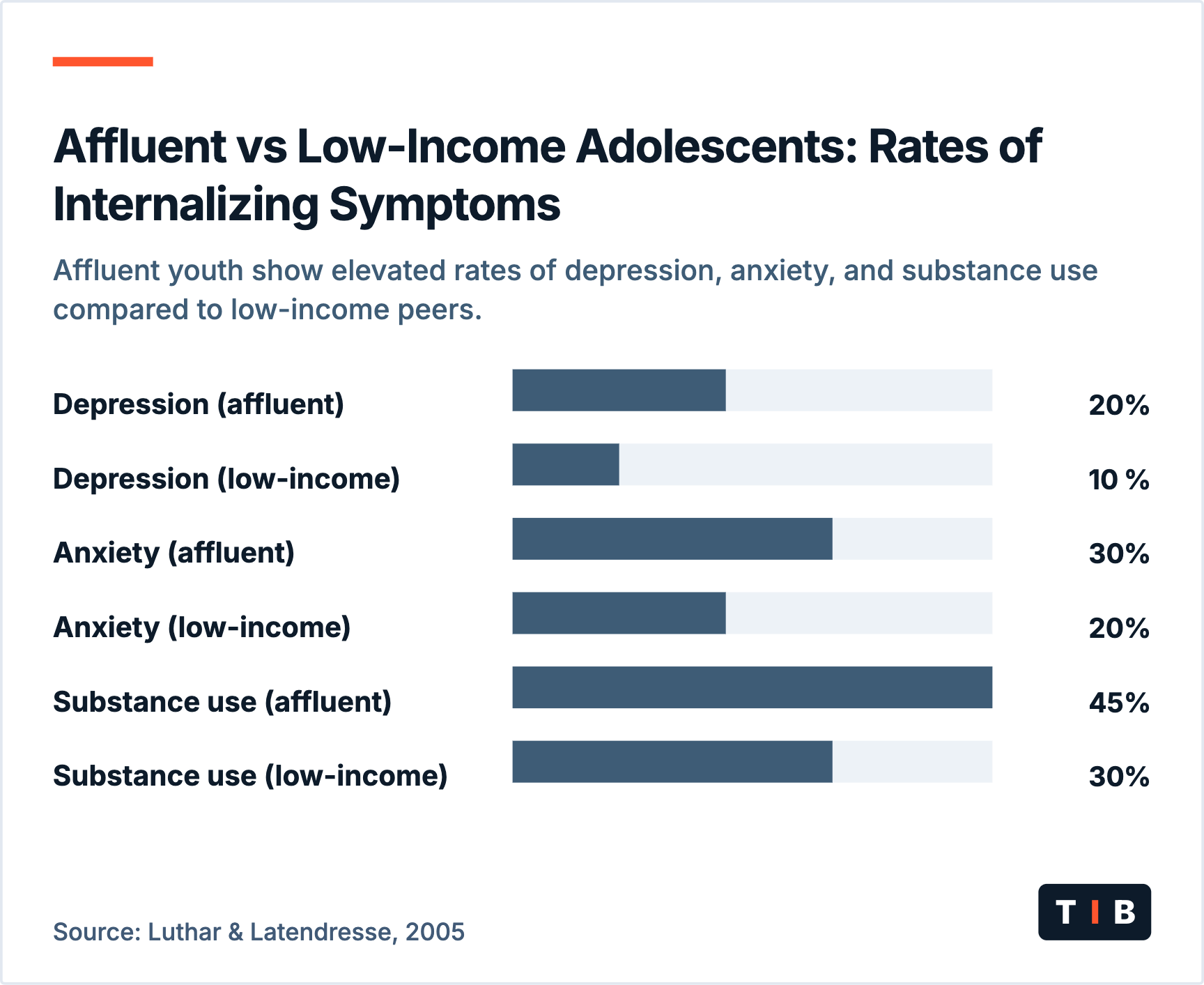
The empirical record confirms Seneca’s inversion. Suniya Luthar and Shawn Latendresse, in their 2005 review ‘Children of the Affluent’ (Current Directions in Psychological Science), documented that adolescents from wealthy families report higher rates of depression, anxiety, and substance use than their lower-income peers. In one suburban sample, 20% of affluent girls met criteria for clinically significant depression, double the rate among inner-city girls; substance use among affluent boys ran well above national norms. The data force a conclusion Seneca would have reached: the size of the inheritance is inversely correlated with the emotional capacity to manage it. The children of the wealthy are not miserable despite their resources; they are miserable partly because their resources insulate them from the ordinary struggles that build emotional regulation and self-worth.
Seneca understood that an inheritance without philosophical guardrails is a burden disguised as a gift; subscribe to The Intel Briefing for the data-driven synthesis of the $84 trillion transfer—its psychological, financial, and moral implications—so you can inherit without losing the good life.
The rest of this briefing — the synthesis, the implications, and what to do with it — is for paid subscribers.
