


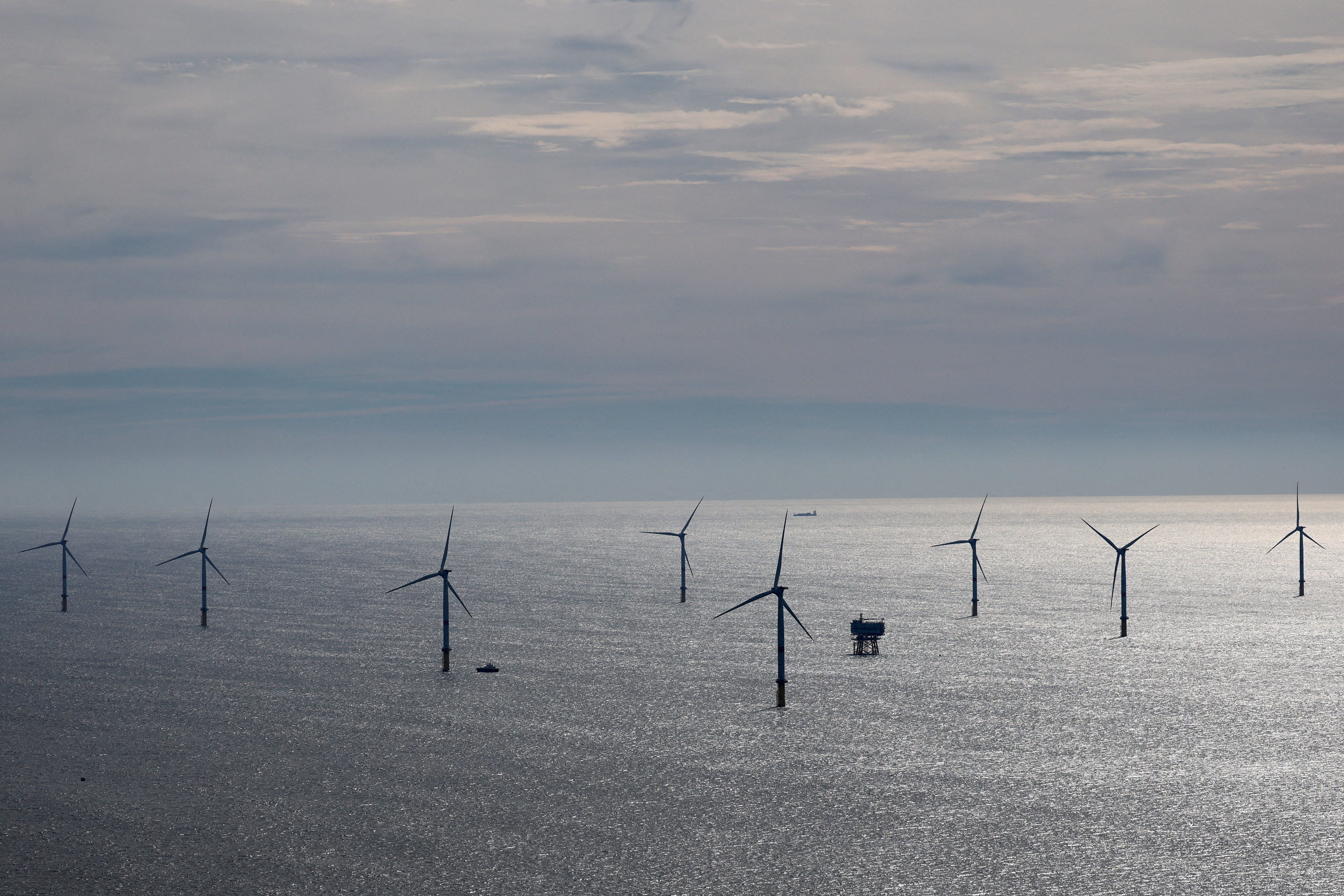
The global push towards a green future, long championed by the World Economic Forum, is facing a stark new reality. Despite a record $2 trillion invested in clean energy in 2024, the momentum of the energy transition is slowing under the weight of geopolitical instability, economic volatility, and a daunting resource gap.
A series of recent reports from the Forum reveals a complex and increasingly fractured landscape, where progress in renewable energy adoption is being undermined by profound challenges in financing, resource availability, and equity. The transition is no longer a simple question of environmental will; it is now a matter of economic survival and competitive fairness.
According to the Forum’s “Fostering Effective Energy Transition 2025” report, while 65% of countries improved their Energy Transition Index (ETI) scores, the overall pace has decelerated. Northern European nations like Sweden, Finland, and Denmark continue to lead, demonstrating the benefits of long-term policy stability and diversified low-carbon energy systems. However, these leaders represent a tiny fraction of global energy demand and CO2 emissions, highlighting the scale of the challenge ahead.
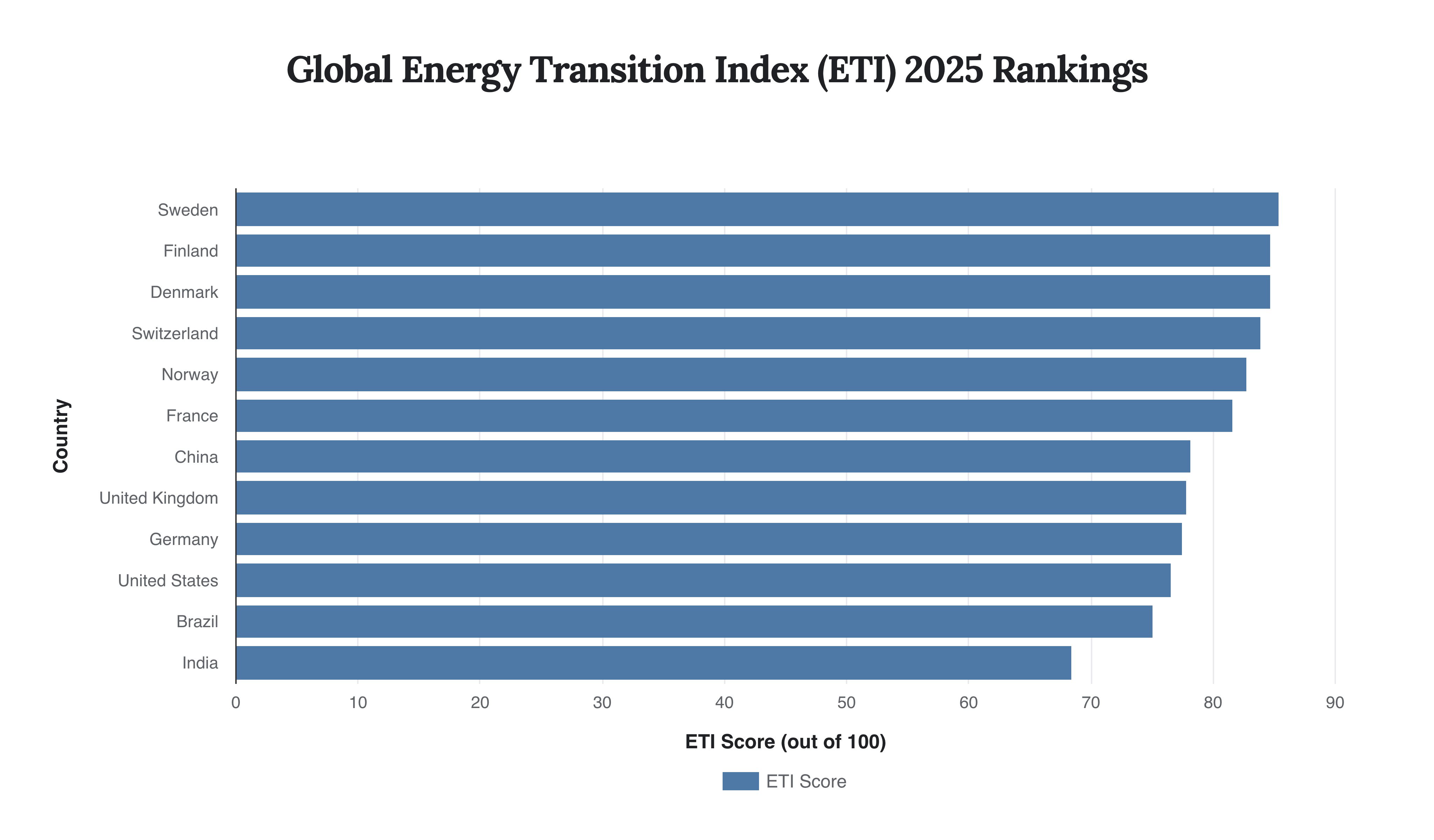
The Energy Transition Index benchmarks countries on the performance of their energy systems and their readiness for transition. While European nations dominate the top spots, the progress of major economies like China is a key factor in the global shift.
Perhaps the most alarming finding comes from a joint report by the World Economic Forum and McKinsey, which lays bare the socioeconomic risks of a lopsided transition. The report, drawing on a survey of over 11,000 executives across 126 countries, reveals a deep-seated anxiety about fairness and access. A staggering 80% of executives now believe that unequal access to financing poses a significant risk to competitiveness in their country. This financial divide is a critical barrier, stalling projects and preventing the widespread adoption of green technologies where they are needed most.
“Critical minerals are the backbone of the energy transition, yet the current supply shortfalls threaten to slow global climate progress.”
- Roberto Bocca, Head of Centre for Energy and Materials, World Economic Forum
The survey pinpoints the primary obstacles hindering corporate climate action. While rising energy and commodity costs are the top concern for 37% of business leaders, regulatory uncertainty and the slow, often unpredictable, returns on green investments follow closely behind. These barriers create a vicious cycle: uncertainty deters investment, which in turn slows the development of the very technologies needed to bring down costs and accelerate returns.
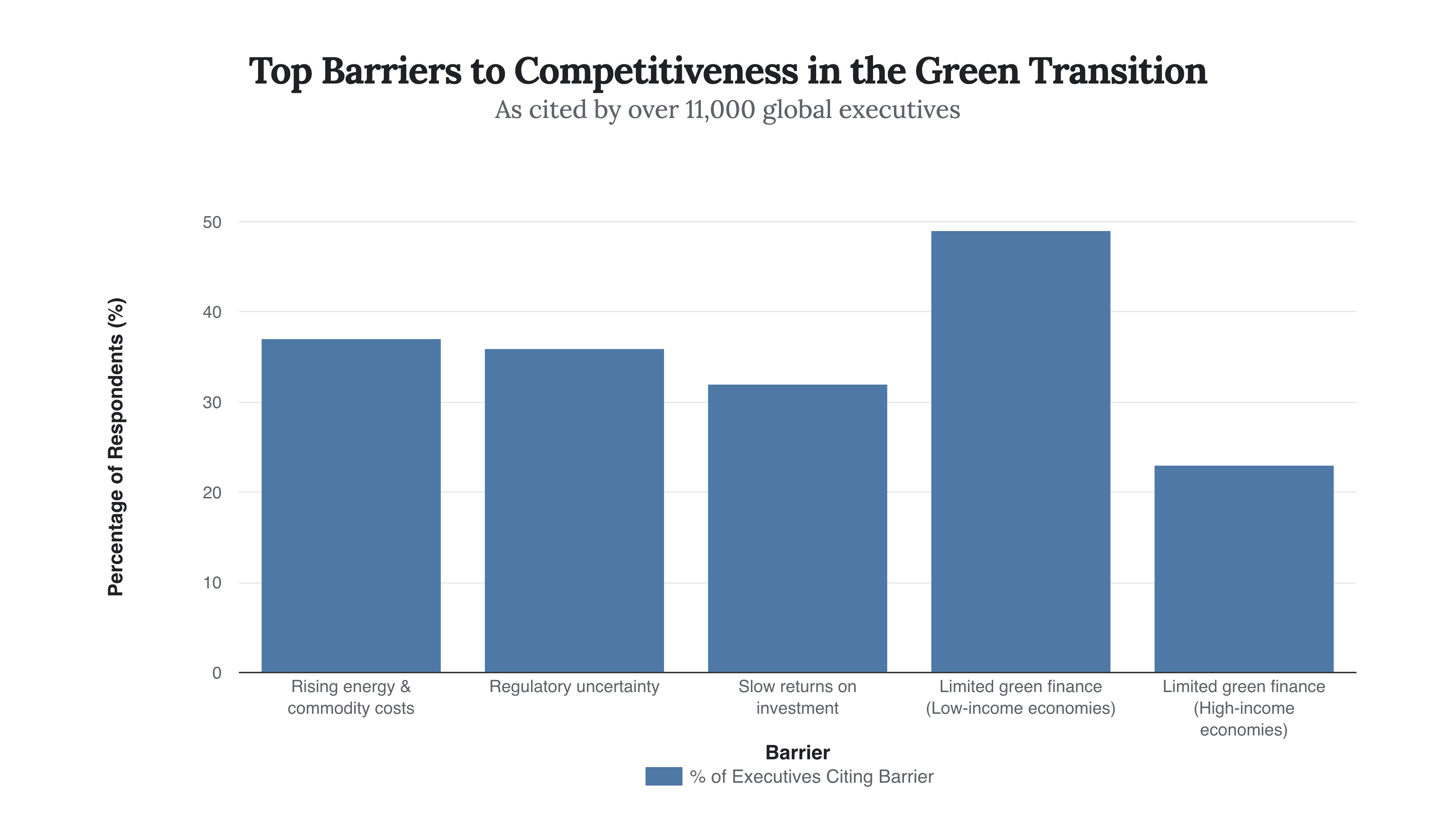
A survey of global executives highlights the key challenges to pursuing the green transition. The gap in access to green finance between high-income and low-income economies is particularly stark.
This financing gap is compounded by another looming crisis: a shortage of the critical minerals essential for batteries, wind turbines, and electric vehicles. The Forum warns that without a dramatic increase in the supply of materials like lithium, cobalt, and copper, projected supply-demand imbalances could create acute risks, potentially delaying the energy transition and triggering significant price volatility. The International Energy Agency (IEA) forecasts that demand for these minerals will need to triple by 2030 to meet net-zero emissions targets.
“We are seeing more holistic approaches and visible progress. It is encouraging that 28% of countries... have advanced across multiple dimensions. Staying on track demands urgent investment in fast-growing emerging economies.”
- Roberto Bocca, Head of Centre for Energy and Materials, World Economic Forum
The path forward, as outlined by the World Economic Forum, requires a fundamental shift in approach. The transition can no longer be viewed solely through an environmental lens; it is a profound socioeconomic transformation. Addressing the vast investment gap, estimated to be in the trillions, requires innovative mechanisms like blended finance and public-private partnerships to de-risk projects and attract private capital, particularly in developing nations. Without a concerted effort to ensure the green transition is equitable and economically viable for all, the world risks not only failing to meet its climate goals but also deepening the economic divides that already plague the global landscape.
Ultimately, the World Economic Forum’s latest findings suggest that the greatest threat to the green transition is not a lack of technology, but a failure to create a system where the benefits, opportunities, and financial resources are shared globally.