


The average smartphone user checks their device 144 times per day, a compulsive rhythm that fragments attention and reconfigures the very texture of lived experience. This constant checking is not merely a habit; it represents a fundamental assault on our capacity for sustained thought, interrupting the internal flow that constitutes genuine subjective duration. The expectation of perpetual notification cultivates a state of readiness, a superficial alertness that diverts cognitive resources from depth to breadth, perpetually scanning for the next incoming signal. This perpetual readiness has rewired our neural pathways, favoring rapid context-switching over the cultivation of deep, uninterrupted focus.
The Undermining of Pure Duration
Henri Bergson posited a crucial distinction between ‘scientific time’—measurable, divisible, spatialized—and ‘duration’ (durée), which he described as the continuous, indivisible flow of subjective experience. For Bergson, true duration is a qualitative succession of states of consciousness that interpenetrate and flow into one another, forming an organic, living whole. He articulated this in Time and Free Will: “Pure duration is the form which the succession of our conscious states assumes when our ego lets itself live, when it refrains from separating its present state from its former states.” This concept of pure duration is fundamentally incompatible with a cognitive landscape defined by ceaseless digital interruptions.
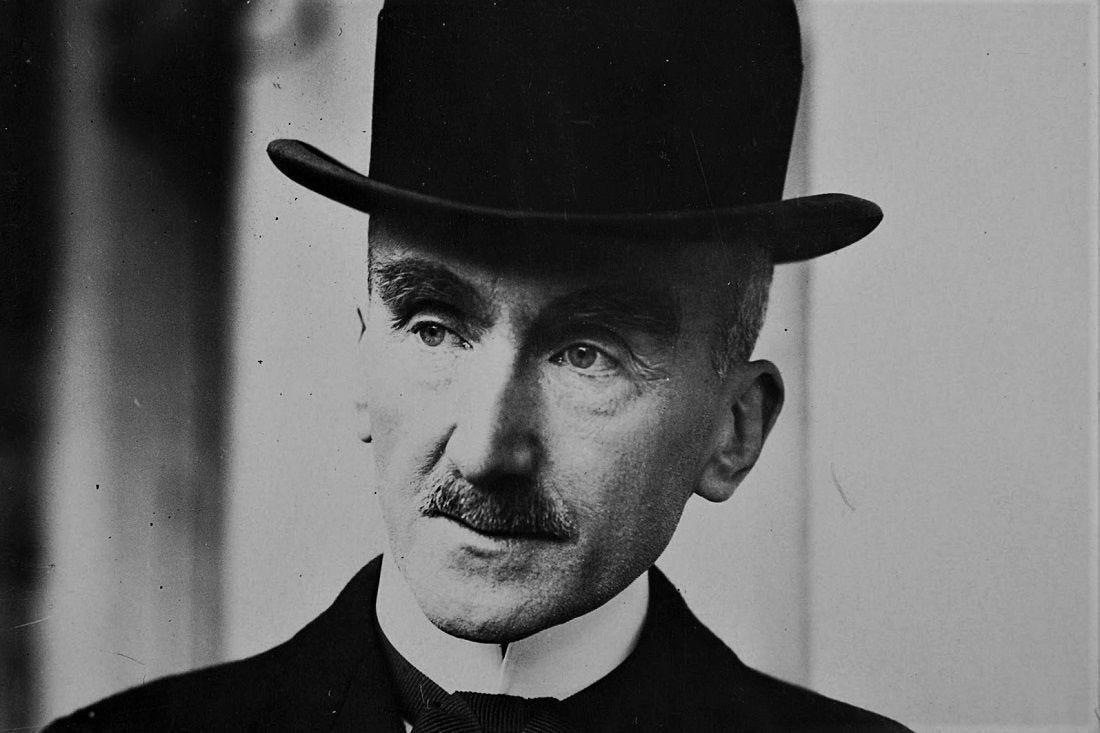
Each notification acts as a micro-rupture, tearing the fabric of subjective continuity and forcing the mind to re-orient. The ‘self’ is constantly being yanked out of its lived flow, compelled to address external demands, preventing the accretion of experience that defines Bergson’s ‘concrete self’. The internal coherence that allows for complex thought, emotional resonance, and creative problem-solving is systematically undermined by the demands of instantaneous digital response, making the experience of genuine, unfettered duration increasingly rare.
The Economic Cost of Perpetual Interruption
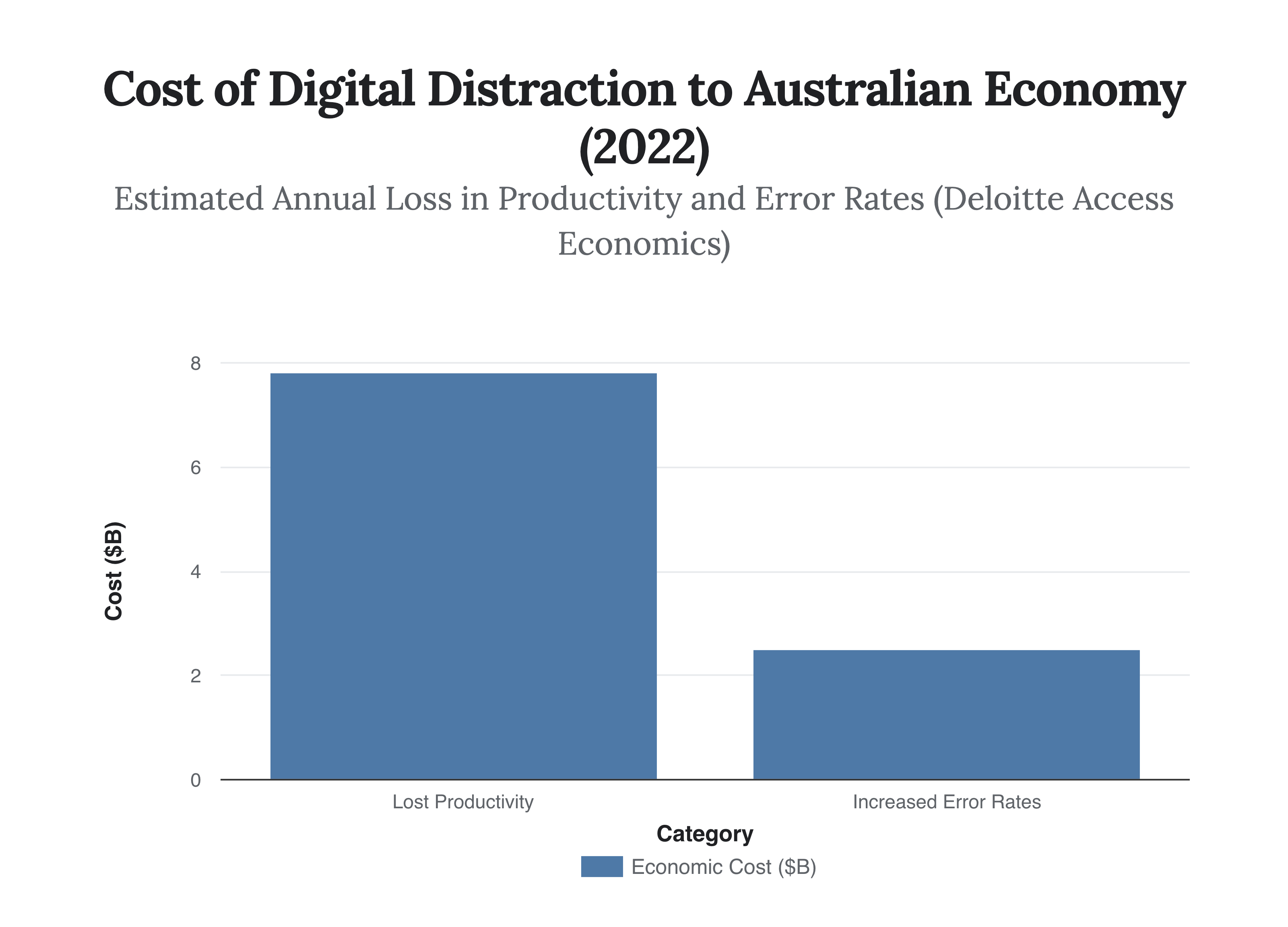
The pervasive nature of digital interruptions carries a measurable economic and cognitive cost. Research by Gloria Mark at the University of California, Irvine, revealed that it takes an average of 23 minutes and 15 seconds to return to the original task after an interruption, regardless of its brevity. This ‘attention residue’ significantly diminishes productivity and cognitive efficiency. In professional settings, this translates into billions in lost output. A 2022 report by Deloitte Access Economics estimated the cost of digital distraction to the Australian economy alone at $10.3 billion annually, primarily through reduced productivity and increased error rates. This economic drain underscores the tangible consequences of failing to protect sustained attention, revealing that the ‘free’ flow of information comes with a hidden tax on deep work and complex problem-solving. **The illusion of hyper-connectivity masks a profound efficiency deficit, where constant communication paradoxically hinders effective collaboration.**
The Algorithmically Sculpted Mind
The architecture of digital platforms is explicitly designed to maximize engagement through intermittent reinforcement, mirroring the principles of behavioral psychology. Notifications, alerts, and dynamic content feeds are optimized to capture and sustain attention, frequently at the expense of user autonomy. A 2023 study by Statista found that 80% of smartphone users check their devices within 15 minutes of waking, signaling the deep integration of digital stimuli into the very first moments of conscious experience. This constant external prompting shapes a mind accustomed to external cues rather than internal motivation. The subjective experience of time shifts from Bergson’s continuous flow to a series of discrete, externally triggered events, each demanding a micro-decision or reaction. This re-sculpting of cognitive habits fosters an external locus of control, where internal states of focus become increasingly difficult to maintain without deliberate, often strenuous, effort. The capacity for internally generated thought, reflection, and the quiet cultivation of ideas diminishes under the relentless barrage of algorithmically determined stimuli.If our subjective experience of time is increasingly dictated by the temporal squeeze of constant notifications, what is the long-term cost to individual agency and the collective capacity for profound intellectual and creative work?
Creating private time is the solution helpful to this hardship. Carving out space at the local library for reading, leaving the phone out of reach and silent for a time, a walk outside in Nature. Your post comes on a quiet day of reading after weeks of events filling the days. What amuses me is the anticipated instant response that others expect. That said, schedules can be aligned and problems solved quickly in this new era. Building balance is the key.