


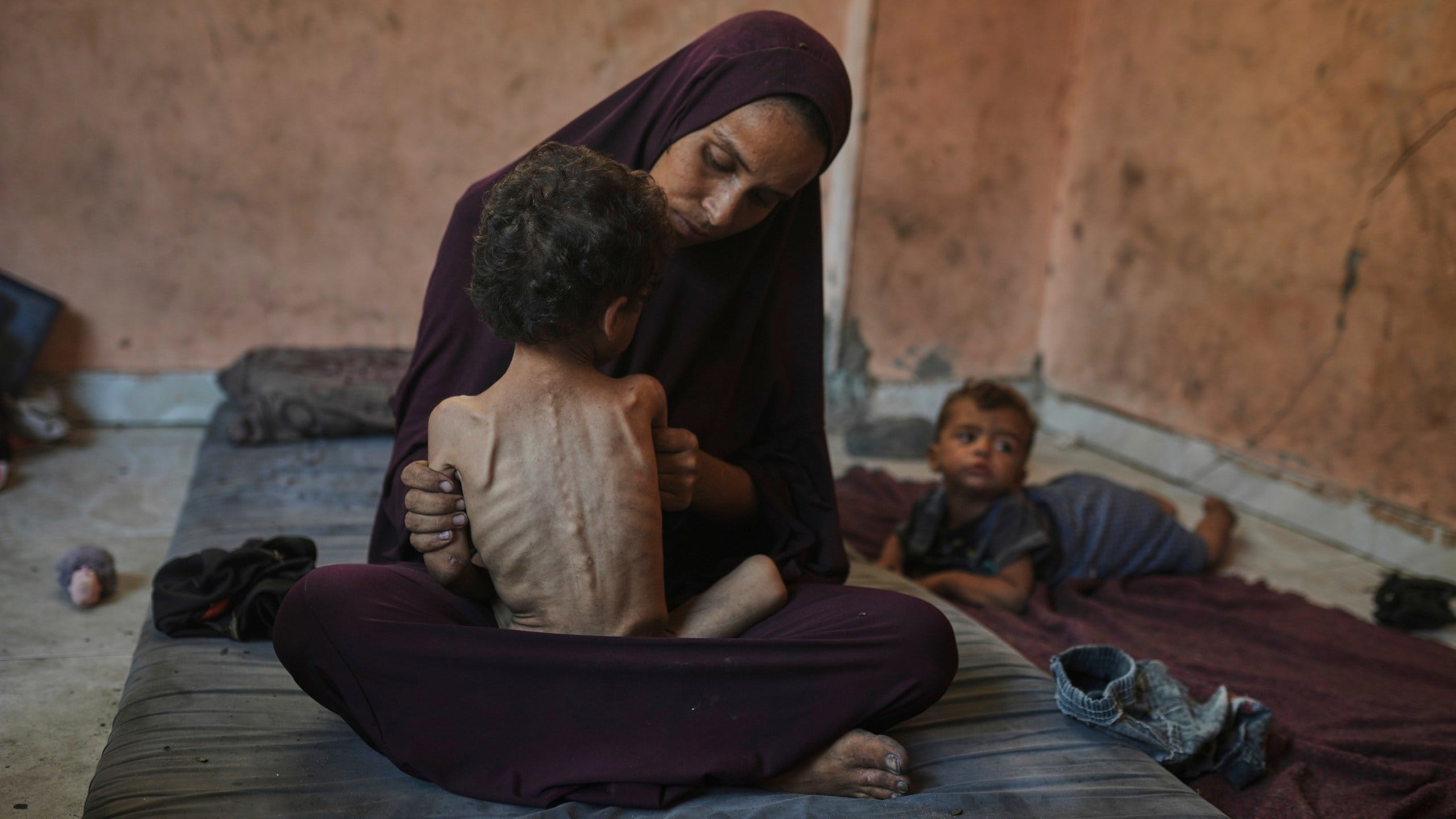
The international community is not just failing Sudan; it is presiding over the systematic unraveling of a nation of 48 million people. As of November 2025, the UN’s $4.2 billion Humanitarian Response Plan for Sudan is a staggering 75% unfunded, a $3 billion chasm between solemn promises and life-saving action. This is not a passive oversight; it is an active catalyst in what has become the world’s most extensive and fastest-growing humanitarian crisis.
The catastrophic shortfall in aid is directly enabling the weaponization of hunger, the collapse of civic infrastructure, and the eruption of preventable diseases. While global attention remains fragmented, the metrics of Sudan’s descent are terrifyingly clear: official famine declarations in besieged cities, a mass displacement event unmatched anywhere on the planet, and a public health system targeted for annihilation. This briefing deconstructs the anatomy of this multi-faceted collapse, revealing how diplomatic paralysis and financial neglect have become accelerants in a man-made disaster of historic proportions.
The Anatomy of Neglect: A Crisis Engineered by Apathy
The defining feature of Sudan’s humanitarian catastrophe is not just the scale of suffering, but the cavernous gap between needs and the global willingness to respond. The 2025 humanitarian appeal lays bare a crisis of priorities where Sudan’s agony is tragically undervalued. This financial abandonment has immediate, tangible consequences, transforming dire need into active starvation and manageable disease outbreaks into uncontrolled epidemics.
The $3 Billion Chasm
The failure to fund the humanitarian response is the central gear in Sudan’s machinery of suffering. With only a quarter of the necessary $4.2 billion provided, aid agencies are forced into an impossible triage, deciding which starving communities to feed and which to leave to their fate. This deficit cripples every aspect of the relief effort, from food distribution and medical supply chains to the provision of clean water and shelter.
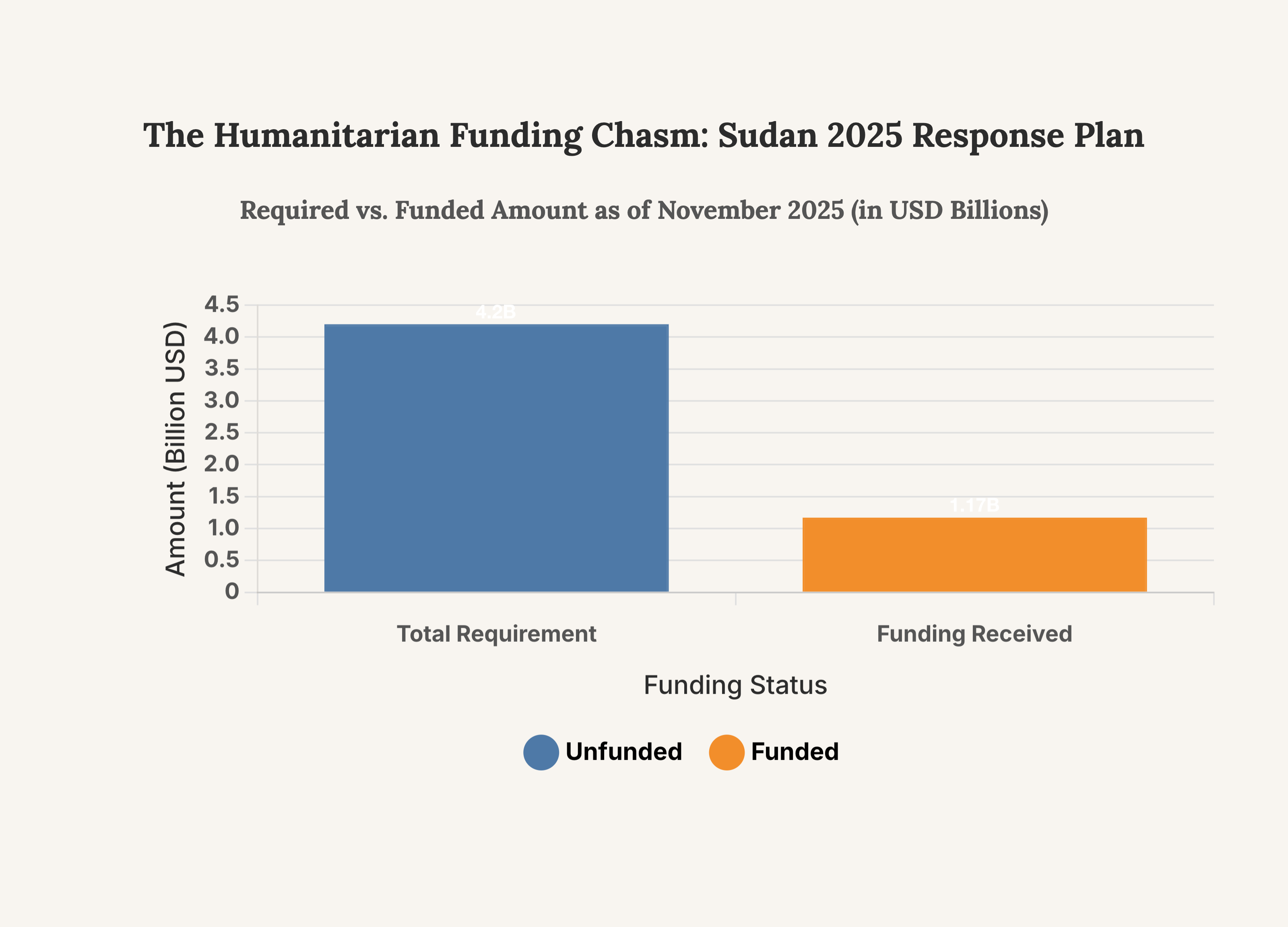
Caption: The chart illustrates the catastrophic shortfall in the 2025 Humanitarian Needs and Response Plan for Sudan. This funding gap of over $3 billion directly translates to millions of people being denied life-saving assistance.
“This crisis is entirely man-made. The ongoing conflict has decimated livelihoods, displaced millions, and blocked life-saving aid from reaching those in desperate need.”
- Eatizaz Yousif, IRC Country Director for Sudan
The consequences of this underfunding are not abstract. They are measured in the rising rates of Severe Acute Malnutrition (SAM), the spread of cholera, and the millions left without shelter. The international community’s inaction is effectively a policy choice, one that accepts the preventable deaths of thousands as a cost of doing business in a world of competing crises.
Displacement at an Unprecedented Scale
The conflict has triggered the largest displacement crisis on Earth. More than 12 million people have been torn from their homes since the war erupted in April 2023, a figure that dwarfs other global hotspots. This includes nearly 9 million people displaced internally and another 3-4 million who have fled into neighboring countries, many of which are already grappling with their own instability and resource scarcity. The sheer velocity and volume of this human exodus have overwhelmed the region’s capacity to respond, creating sprawling, underserviced camps where disease and hunger thrive.
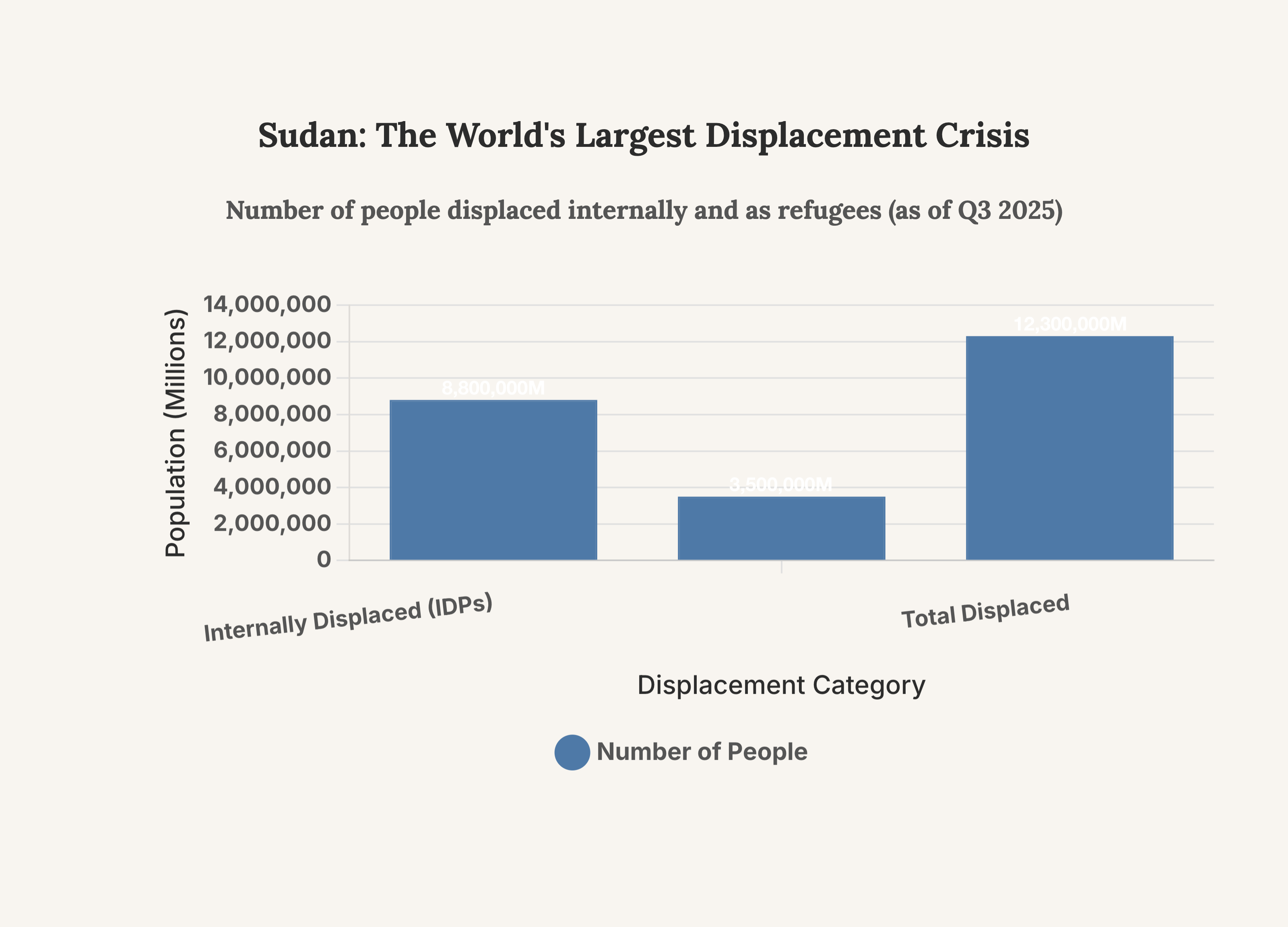
Caption: Since April 2023, the conflict in Sudan has forced over 12 million people from their homes, creating a humanitarian catastrophe of unparalleled scale.
The Regional Spillover Effect
The crisis is not contained within Sudan’s borders. Countries like Chad, South Sudan, and Egypt are absorbing millions of refugees, placing immense strain on their fragile infrastructures. Chad, for instance, has seen its Sudanese refugee population triple, with nearly a million people seeking sanctuary. These host nations, lacking sufficient international support, are struggling to provide basic necessities, leading to a secondary humanitarian crisis that threatens to destabilize the entire region. The refugee response plan is as critically underfunded as the internal one, receiving only 21% of the required $1.18 billion.
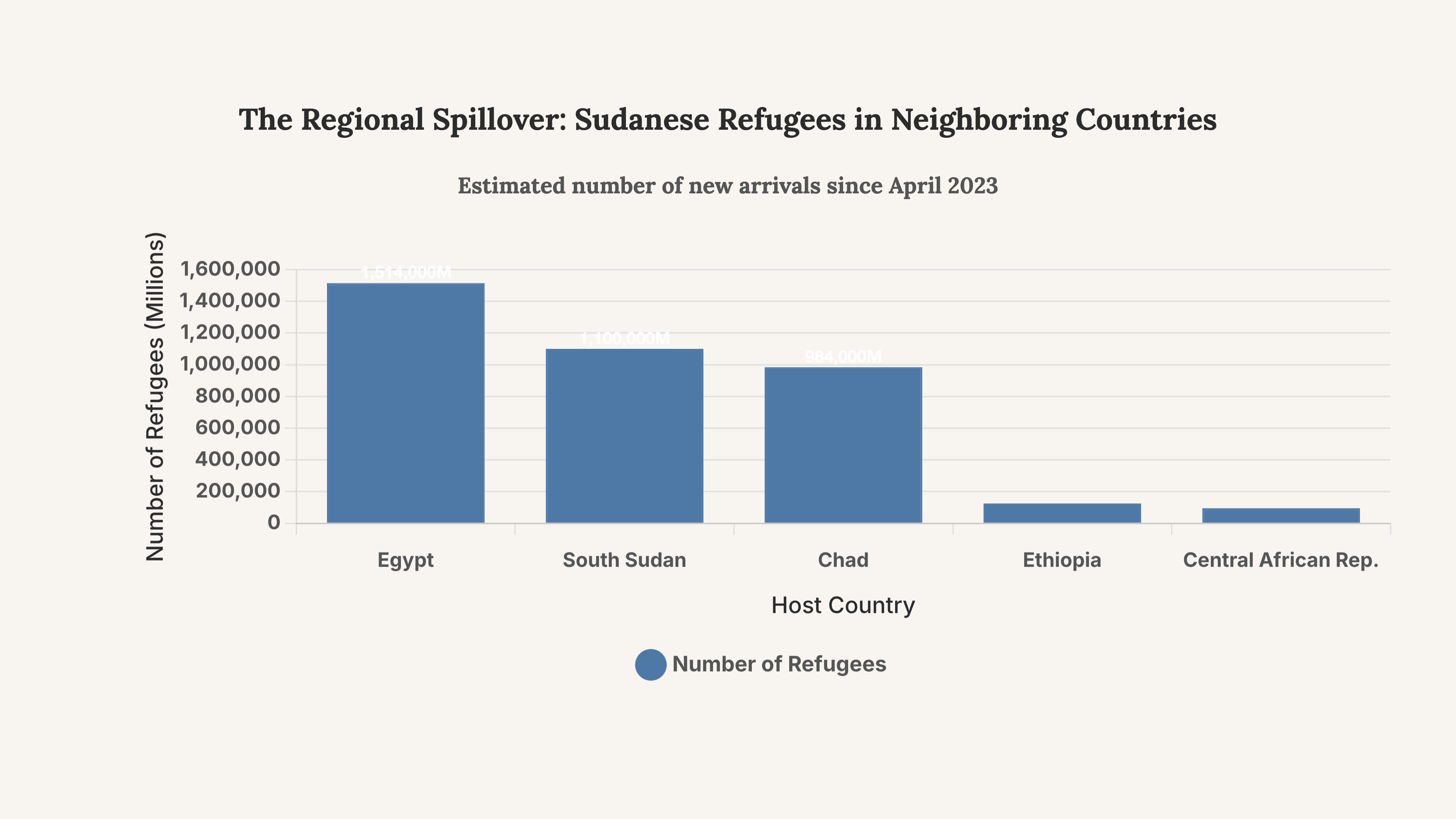
Caption: The exodus from Sudan has placed an enormous burden on its neighbors, with millions fleeing across borders in search of safety.
The Deliberate Annihilation of Civil Society
The humanitarian crisis in Sudan is compounded by a systematic war on the very systems that sustain a civilian population. Healthcare, food systems, and public health infrastructure are not merely collateral damage; they are strategic targets in a conflict that weaponizes civilian suffering.
A War on Healthcare
An estimated 70-80% of hospitals and health facilities in the hardest-hit areas are non-functional, having been damaged, destroyed, or abandoned. This systematic destruction is accompanied by a shocking escalation in direct attacks. In the first half of 2025 alone, at least 933 people were killed in over 38 incidents targeting healthcare facilities, personnel, and ambulances—a nearly 60-fold increase in fatalities compared to the same period in 2024. This brutal campaign against medical care paralyzes the ability to treat war wounds, manage chronic illnesses, or respond to disease outbreaks.
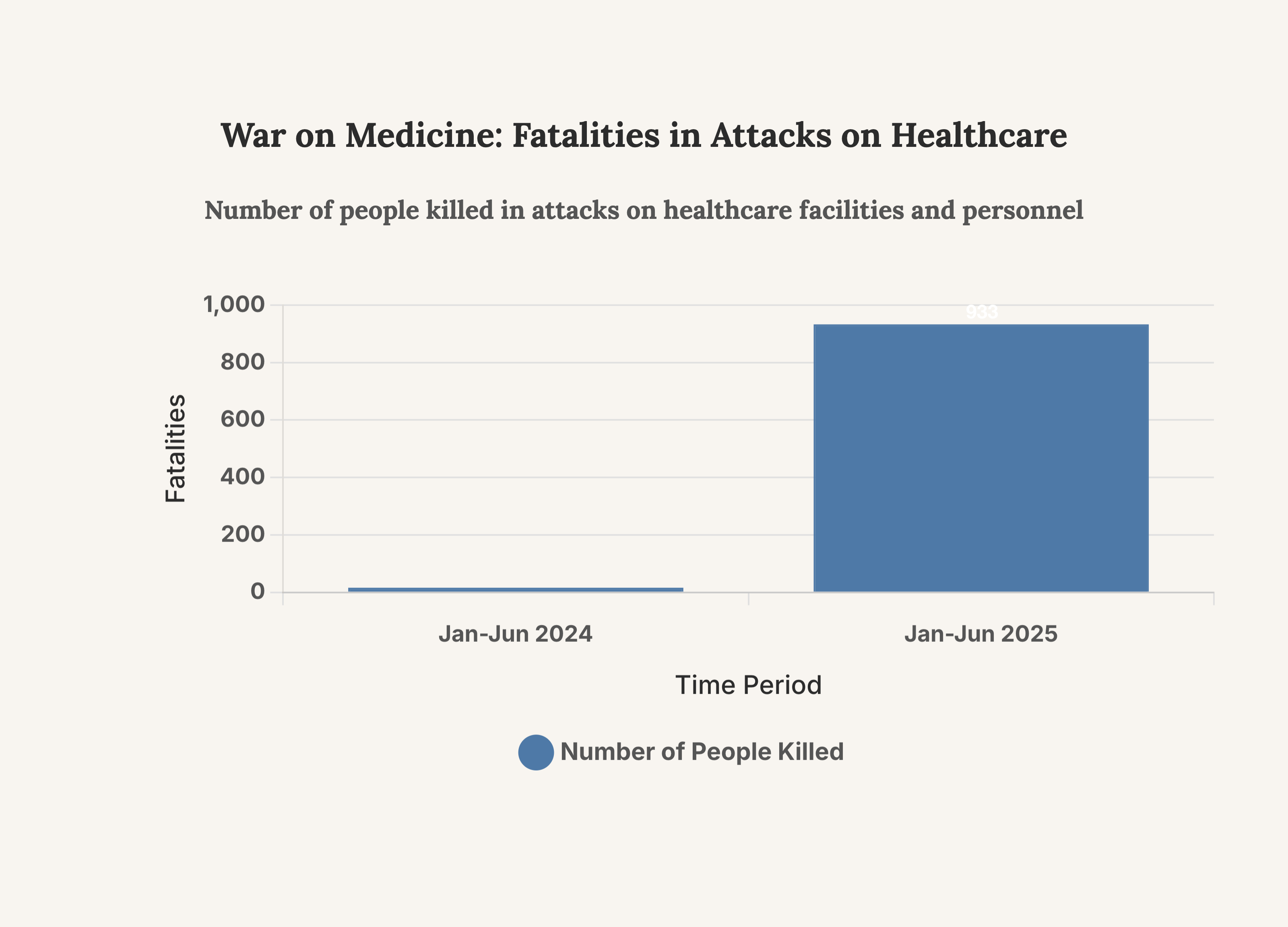
Caption: The dramatic spike in fatalities from attacks on healthcare in 2025 highlights the deliberate targeting of medical infrastructure and personnel, a grave violation of international humanitarian law.
Famine by Design
In November 2025, the Integrated Food Security Phase Classification (IPC) officially confirmed that famine is underway in the besieged cities of El Fasher and Kadugli. More than 21 million people—45% of the population—face high levels of acute food insecurity nationwide. This is not an unfortunate byproduct of war; it is a strategy. The blockading of aid routes, looting of harvests, and destruction of markets have created a man-made famine. The nutritional impact on children is catastrophic. Across Darfur, admissions for Severe Acute Malnutrition (SAM) surged by 46% in early 2025 compared to the previous year. In states like Al Jazirah, the increase is a staggering 683%. An estimated 3.2 million children under five are facing acute malnutrition in 2025, a generational crisis in the making.
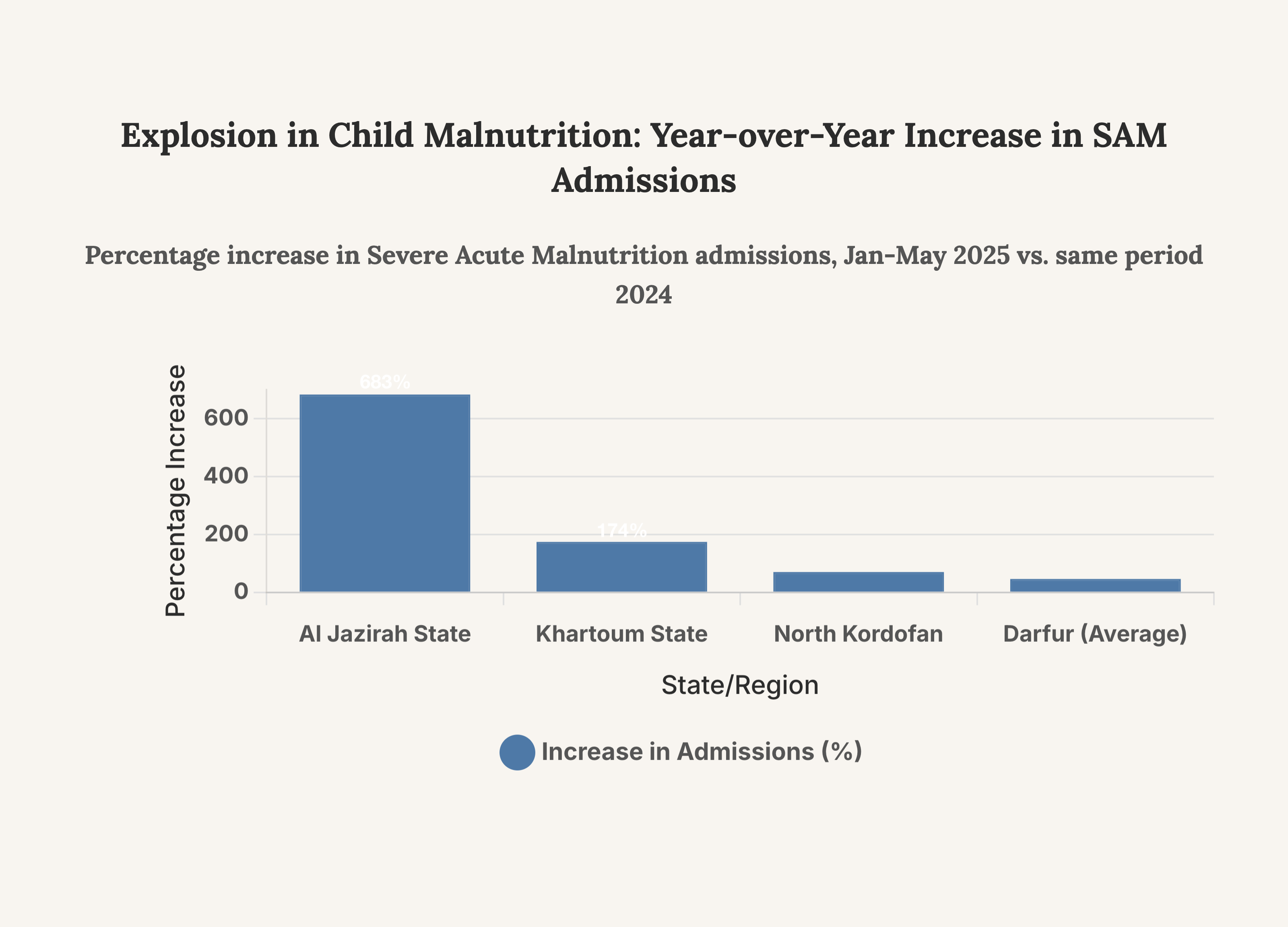
Caption: The astronomical rise in admissions for the most life-threatening form of malnutrition reveals the devastating impact of the conflict on Sudan’s youngest and most vulnerable.
System Collapse and the Cholera Contagion
The destruction of water and sanitation systems has created a perfect breeding ground for disease. A massive cholera outbreak is sweeping the nation, exacerbated by the collapsed healthcare system. By October 2025, over 120,000 suspected cases and more than 3,300 deaths had been recorded, with the disease present in nearly all of Sudan’s 18 states. The case fatality rate (CFR) of over 2% is double the emergency threshold, signaling a health response in total collapse.
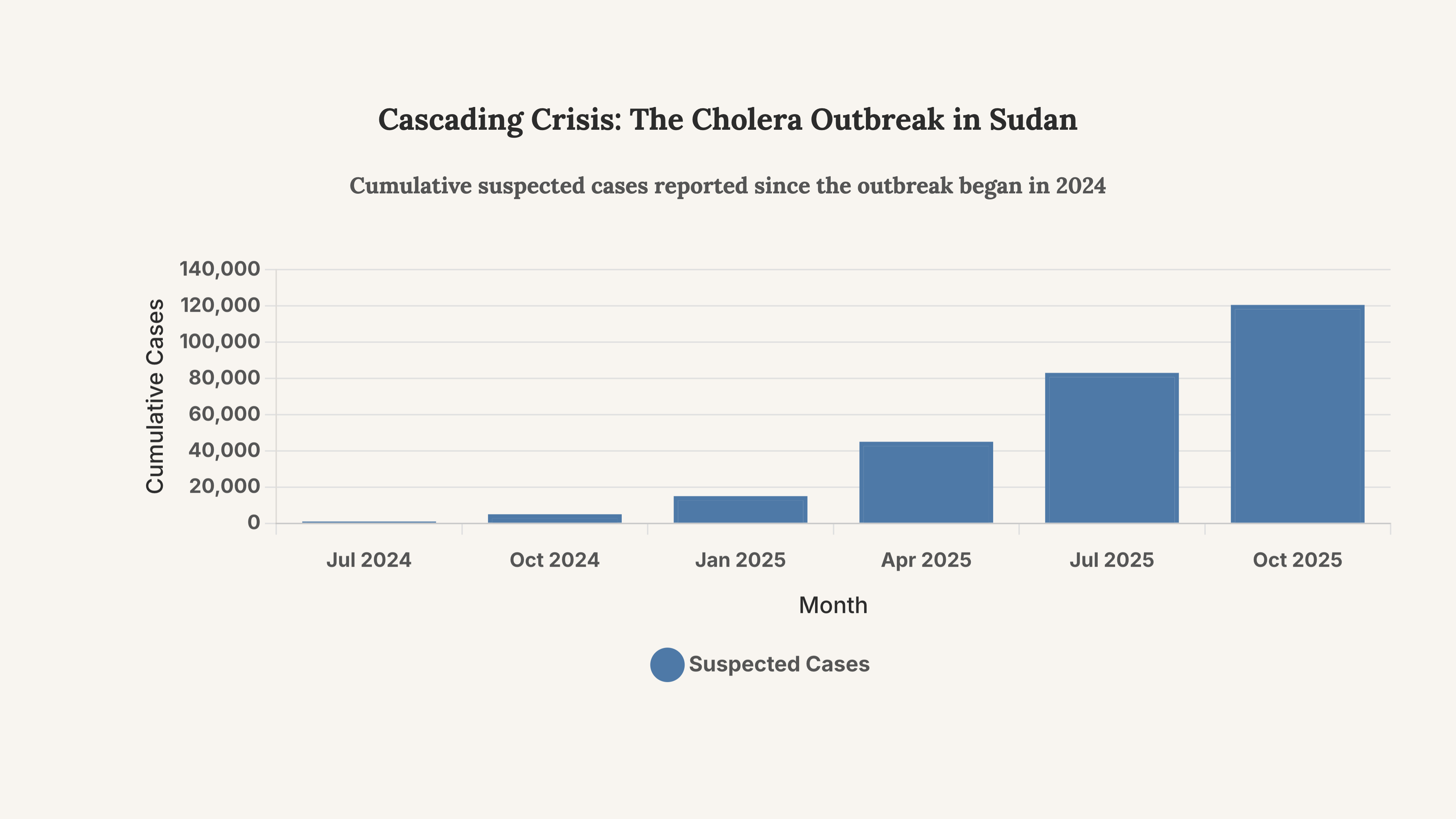
Caption: The rapid spread of cholera across Sudan is a direct consequence of the collapse of public health infrastructure, with caseloads climbing relentlessly through 2025.
Strategic Outlook: The High Cost of Inaction
The international community’s profound failure in Sudan is not merely a moral catastrophe; it is a strategic blunder with long-term consequences. The current trajectory points toward state fragmentation, regional destabilization, and the creation of a permanent humanitarian dependency that will cost far more to manage in the future than it would to mitigate today. The sieges of cities like El Fasher, where Global Acute Malnutrition rates have hit an almost unbelievable 75% in some areas, are a grim blueprint for the future if the conflict and the funding crisis are not addressed.
“Sudan’s conflict is a forgotten one, and I hope that my Office’s report puts the spotlight on this disastrous situation where atrocity crimes, including war crimes, are being committed.”
- Volker Türk, UN High Commissioner for Human Rights
The lack of a unified diplomatic effort to force a ceasefire, combined with the financial abandonment of the humanitarian response, sends a dangerous signal that such levels of brutality will be met with impunity. It creates a vacuum that will be filled by extremist groups and regional actors with interests antithetical to stability. The economic collapse—a projected 42% contraction in GDP—is erasing decades of development and creating a generation lost to war, displacement, and starvation. Reversing this damage will require a level of political will and financial investment that is currently nowhere in sight.
The world is witnessing the creation of a failed state in real-time, driven by internal conflict but accelerated by external indifference. The immediate imperatives are clear: fully fund the humanitarian appeal, force the delivery of unimpeded aid to all regions, and apply meaningful diplomatic pressure to halt the fighting. Failure to act is not a neutral position; it is complicity in the destruction of a nation. The choice is no longer between intervention and non-intervention, but between a costly, concerted effort to save lives now or facing the incalculable strategic and human cost of a collapsed state in the Horn of Africa tomorrow.