


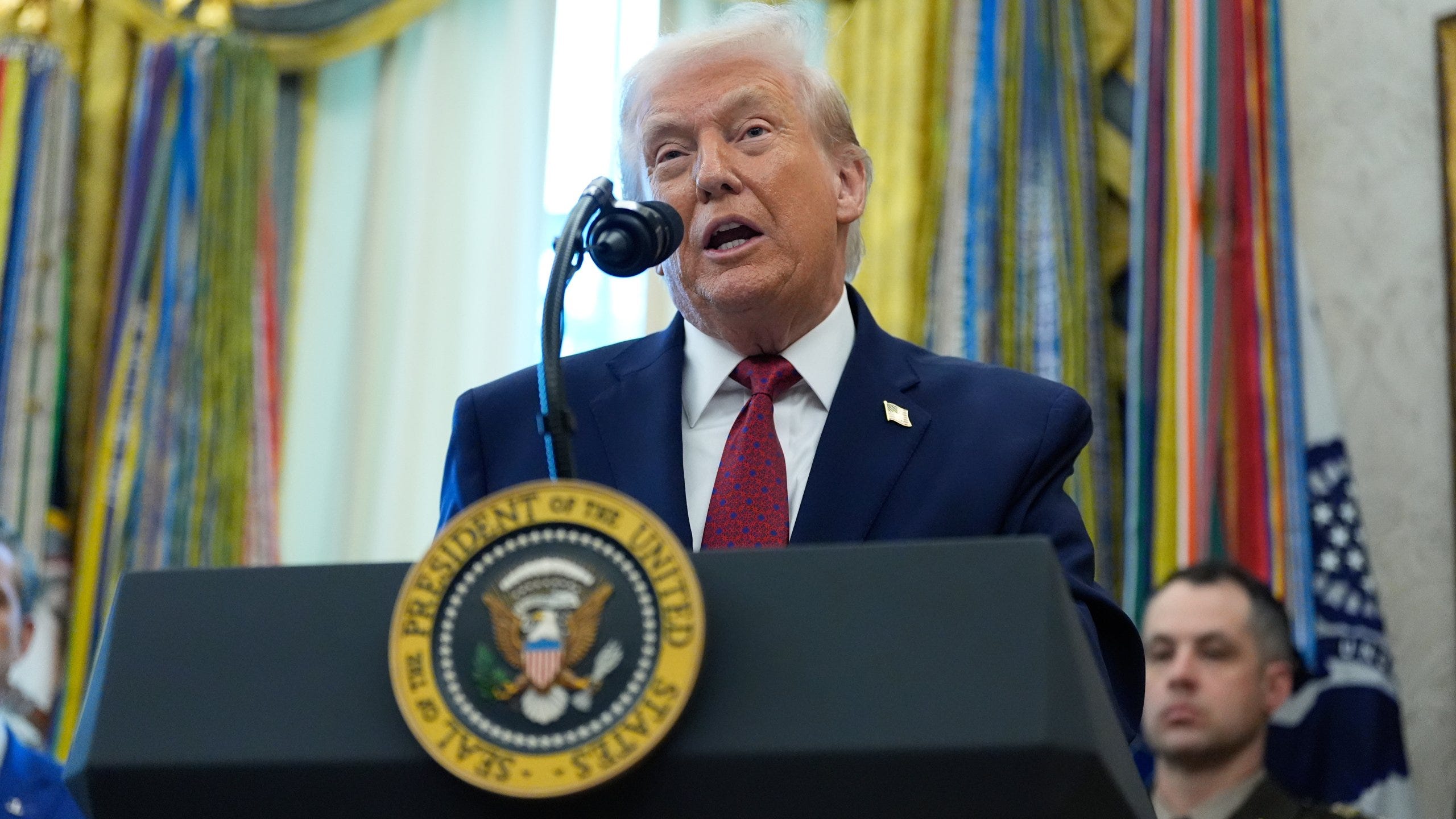
On the morning of January 17, 2026, the notification that lit up phones across Washington and Brussels wasn’t a diplomatic cable, but a Truth Social post that threatened to upend the transatlantic alliance. In a move that has left global markets reeling, President Donald Trump issued a stark ultimatum to eight European nations: facilitate the sale of Greenland to the United States, or face a punishing trade war. The President’s demand, seemingly triggered by a perceived snub regarding the Nobel Peace Prize and a NATO military exercise dubbed “Operation Arctic Endurance,” has placed a $700 billion valuation on the world’s largest island—and a ticking clock on the global economy.
The threat is specific and escalating. Effective February 1, 2026, imports from Denmark, Norway, Sweden, France, Germany, the United Kingdom, the Netherlands, and Finland will face a 10% tariff. If a deal for the “Complete and Total purchase” of Greenland is not reached by June 1, that rate climbs to 25%. This rapid escalation would effectively subject America’s closest allies to trade barriers steeper than those currently imposed on geopolitical rivals.
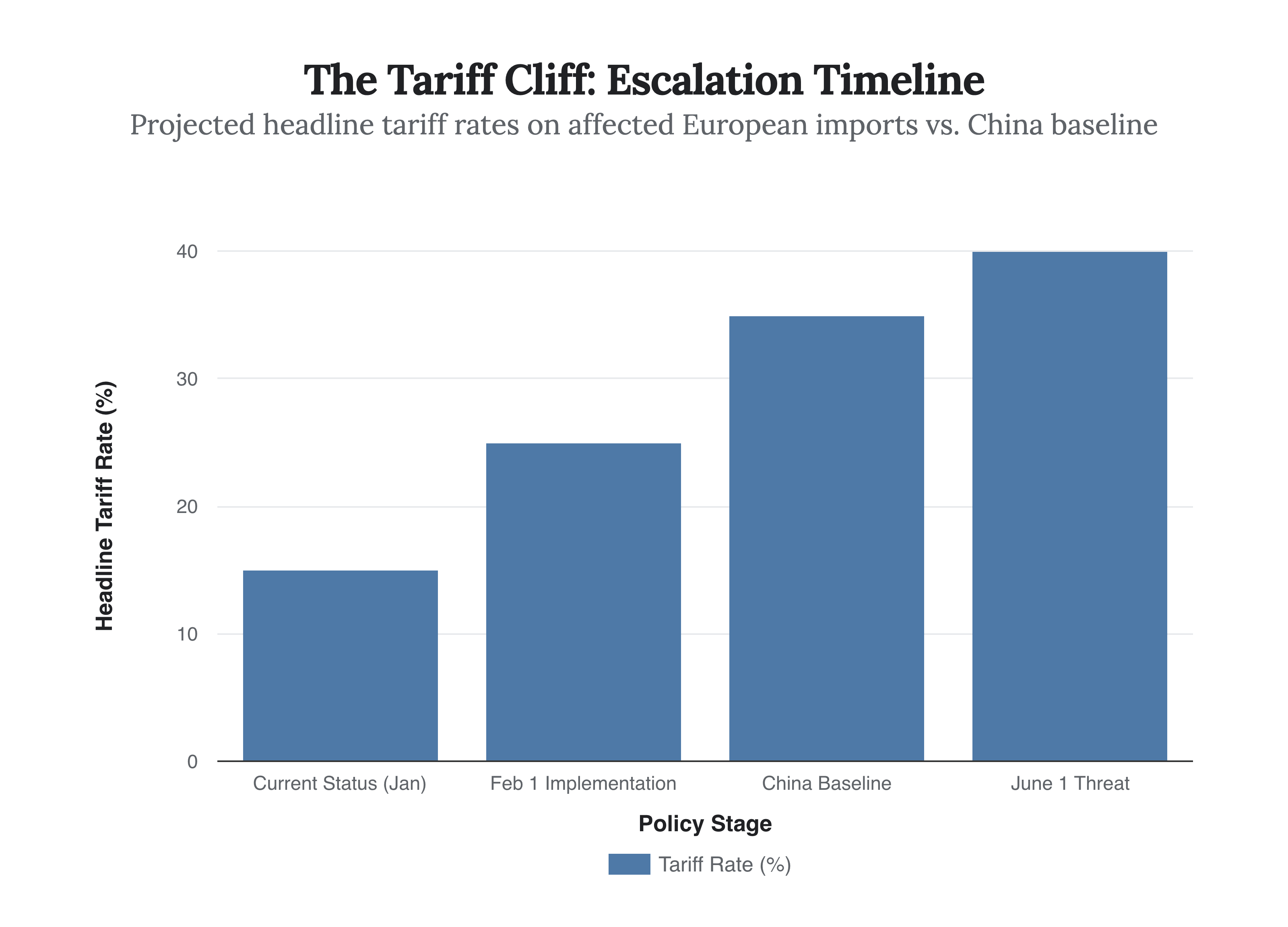
The proposed tariff regime represents a dramatic shift in U.S. trade policy. While the current effective tariff rate on European goods sits near 15% due to various existing agreements and exemptions, the June 1 escalation would push the headline rate to 40%. This figure surpasses the average duties levied on Chinese imports, signaling that the administration views the acquisition of Greenland not merely as a real estate deal, but as a non-negotiable national security imperative comparable to the containment of adversarial superpowers.
“We are living in 2026, you can trade with people, but you don’t trade people.”
The catalyst for this confrontation was “Operation Arctic Endurance,” a Danish-led NATO security exercise intended to demonstrate allied unity in the High North. Instead, the White House interpreted the maneuver as a provocation. In a text message to Norwegian Prime Minister Jonas Gahr Støre, President Trump linked his hardened stance directly to personal grievances, stating that because he was not awarded the 2025 Nobel Peace Prize, he no longer felt an “obligation to think purely of Peace.”
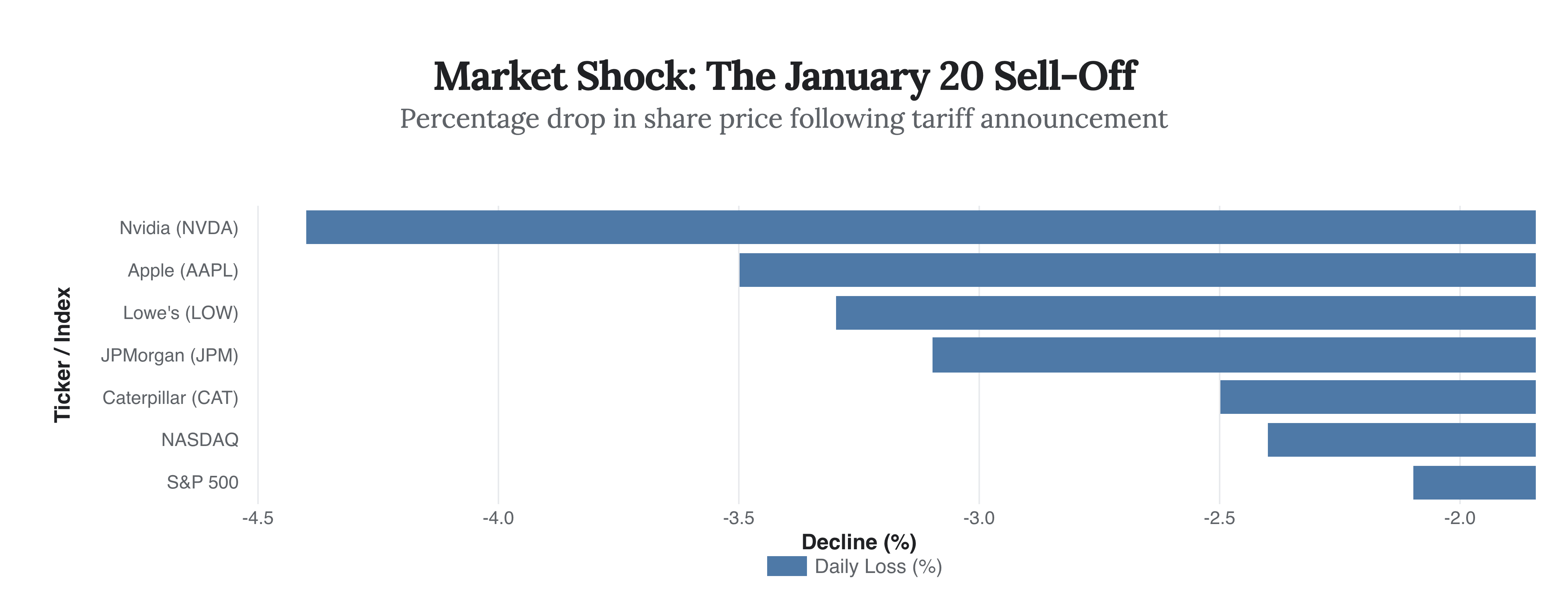
The economic fallout was immediate. By Tuesday, January 20, Wall Street had registered its dismay, with the S&P 500 suffering its steepest drop since the previous October. The uncertainty hit every sector, but technology and retail stocks—heavily reliant on global supply chains—bore the brunt of the sell-off. Nvidia, a bellwether for the tech sector, plunged over 4%, while major retailers and banks saw billions in market capitalization erased in hours.
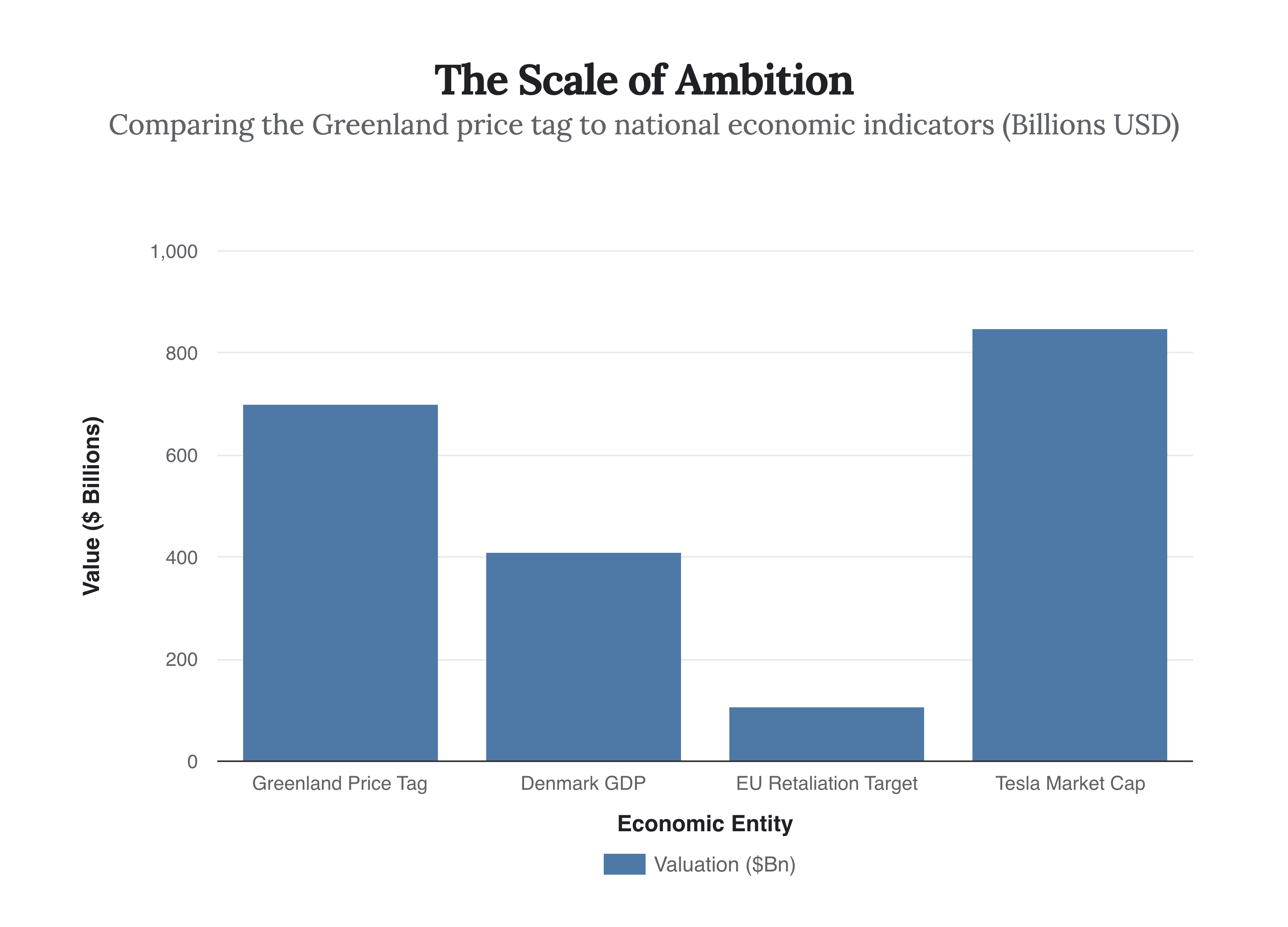
At the heart of this dispute lies a figure that seemingly defies economic gravity: $700 billion. This is the estimated price tag for Greenland reportedly circulated by White House advisors and scholars. To put this number in perspective, it dwarfs the annual GDP of Denmark itself, the very sovereign nation from which the U.S. is demanding the sale. It is a sum that exceeds half of the United States’ own annual defense budget, underscoring the administration’s view of the island as an invaluable strategic asset in the Arctic competition with Russia and China.
European leaders have responded with a mix of disbelief and preparation. The EU is reportedly readying its “Anti-Coercion Instrument” (ACI), a policy tool designed specifically for such scenarios, with retaliatory tariffs targeting up to €93 billion ($108 billion) in U.S. exports. The disparity between the economic reality of the nations involved and the astronomical valuation placed on the territory highlights the dangerous disconnect driving this crisis.
As the February 1 deadline approaches, the transatlantic alliance faces a test unlike any since the Cold War. The commodification of sovereignty—treating a self-governing territory as a real estate asset to be leveraged with tariffs—sets a volatile precedent. If the administration proceeds with the June escalation, the resulting trade wall will not only isolate the U.S. economy but may permanently fracture the political cohesion of the West.